Key takeaways
- Start with small rooms where your sound already fits.
- A 30-minute demo mix is stronger than a long unfocused upload.
- Tailored venue pitches beat mass messages every time.
- Test your USBs, files and gain staging before show day.
- Follow-up is part of the gig, not an optional courtesy.
Your first DJ gig comes from proof, not luck. Before you ask for a first DJ gig, you need three things on the desk: a sharp 30-minute demo mix, a short pitch that sounds like a human wrote it, and a realistic list of rooms where your sound actually fits.
Open a notes app. We are going to treat this like a session, not a wish. You will define the slot, build the mix, package your artist identity, send the message, then prepare the handover so the venue does not regret saying yes. If you produce your own tracks, good. If you use custom music production or ghost production support, also fine. The room only cares whether the set works at 11:30 p.m. on their system.
1. Set the Target for Your first DJ gig
Do not aim at the biggest club in town first. Aim at the room where a booker can risk 30 minutes on you without risking the whole night. That is usually a bar with a small dancefloor, a warm-up slot, an art opening, a private party, or a support slot for a local promoter.
Your first DJ gig should match your current proof. If your only public evidence is a bedroom mix recorded on a Pioneer DDJ-FLX10, ask for a small opening slot. Take the win. Build from there.
Write the first DJ gig brief
Write one sentence that describes the slot you want. Be blunt. For example: 30-minute warm-up house set, 118 to 124 BPM, for a 60-capacity cocktail bar on a Thursday. That sentence keeps you from pitching the wrong rooms.
Now list ten venues that already book music near that lane. Do not guess from Instagram aesthetics. Check past flyers. Look at residents. Listen to the openers, not just the headliners. If the bar runs disco edits and low-slung house, do not send them a peak-time hard techno mix.
Pick the room before the ego
I would rather see you play a clean warm-up to 40 people than blast a mismatched set in a room that never wanted your sound. The first one creates a reference. The second one creates awkward silence.
- Choose rooms under 150 capacity first.
- Target warm-up and early support slots before headline slots.
- Match BPM, genre and crowd age to the venue.
- Avoid cold-pitching festivals until you have local proof.
- Track every venue, contact and reply in one spreadsheet.
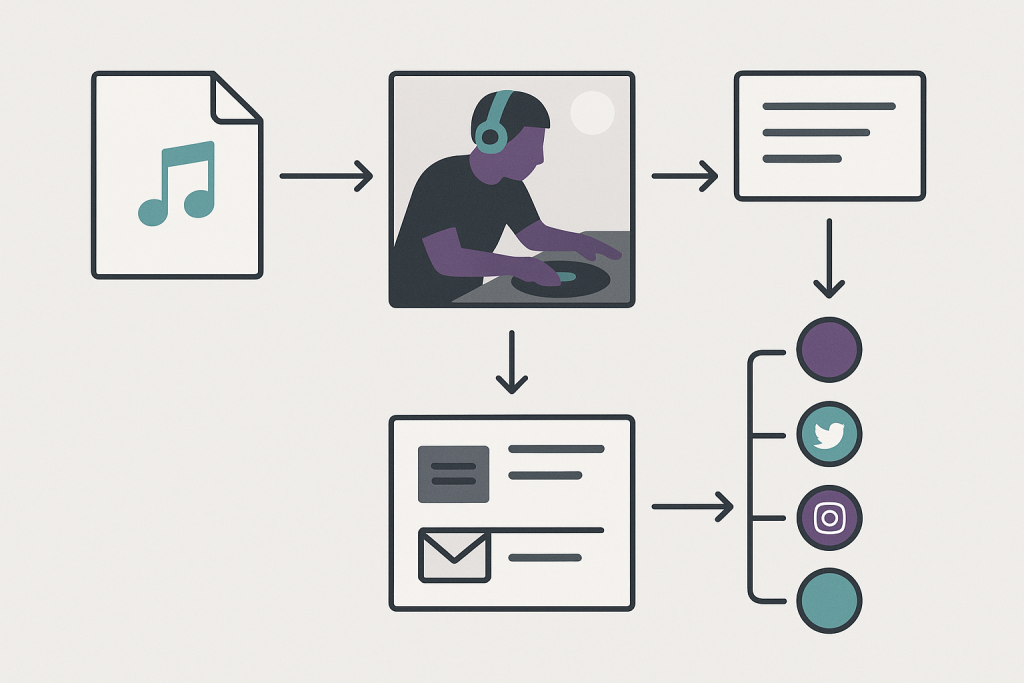
2. Build a Small Artist Pack That Does Not Look Amateur
A booker does not need your life story. They need to know what you play, whether you can hold a room, and how to contact you without chasing missing links. Your first DJ gig pitch gets easier when your links do half the talking.
Use one clean link hub
Set up a simple page with your DJ name, a short bio, one press photo, your demo mix, your social links, and an email address. No autoplay. No huge background video. No broken Dropbox folder with file names like FINAL_mix_NEW2.wav.
Your bio should be two lines. Example: Manchester-based house DJ playing warm, percussive club sets from 118 to 126 BPM. Recent mixes include deep house, garage-influenced edits and original productions. Good. Done.
Show production taste without overexplaining
If you are a bedroom producer, include one or two unreleased IDs in your mix if they are strong. If you work with ghost production or custom music production services, make sure the tracks still fit your set identity. A great record that sounds nothing like you will confuse the pitch.
Export clean. WAV for the master file, 320 kbps MP3 for easy sharing. Leave about -1 dB true peak on the demo export. Do not squash it to death with Ozone just because the limiter looks exciting.
- One demo mix link.
- One short bio.
- One clean press photo.
- One email address.
- One sentence describing your sound.
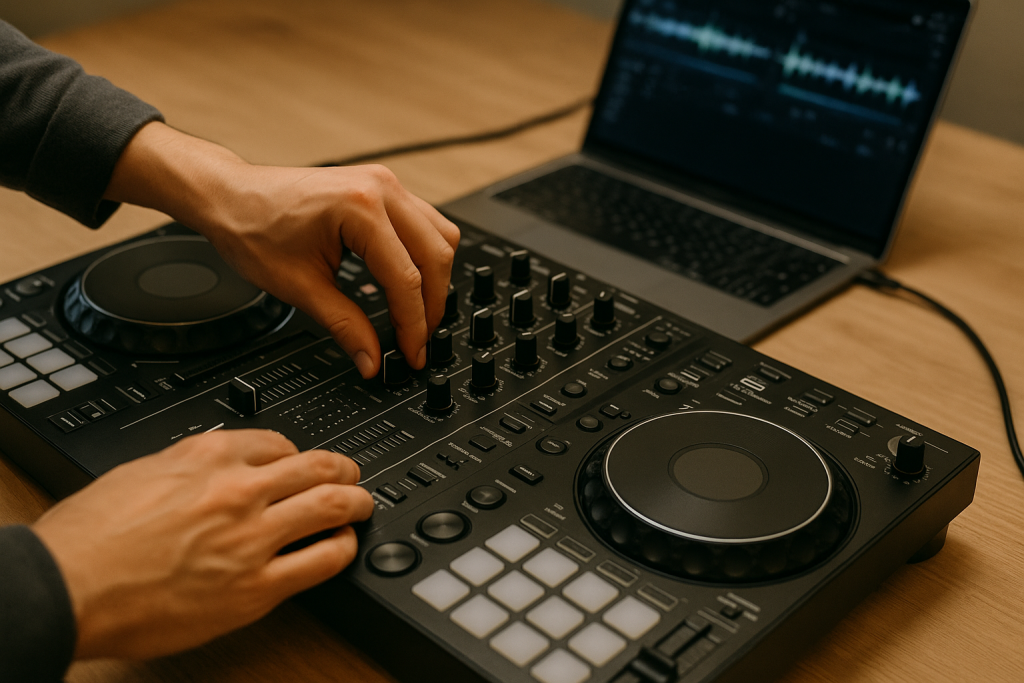
3. Record a Demo Mix That Sounds Like a Real Slot
Your demo mix is not a flex reel. It is a trust test. The person booking your first DJ gig wants to hear whether you can start, build, transition and leave space for the next DJ.
Use the same style of set you are pitching. If you want a terrace bar opening, do not record 30 minutes of festival drops. If you want a sweaty basement slot, do not send cafe lounge music.
The first DJ gig practice take
Set a timer for 30 minutes. Use Rekordbox, Serato, Traktor, or CDJ-3000s if you have access. Record the whole thing in one pass. No edits. No fake crowd noise. If you train on Ableton Live, map a MIDI controller and still perform the transitions by hand.
- Pick 12 tracks in the same energy lane.
- Set memory cues on the first clean downbeat and the best mix-out point.
- Sort by key and energy, not only BPM.
- Start at 118 or 120 BPM if the slot is warm-up house.
- Mix in 4-bar and 8-bar phrases. Count them out loud if you must.
- Keep channel trims out of the red. Leave about -6 dB headroom on your recording input.
- Listen back on headphones, laptop speakers and one cheap Bluetooth speaker.
Fix one transition, not the whole personality
Find the roughest blend. Open the EQ. If the incoming track has a boxy kick, cut 4 to 6 dB around 220 Hz before the blend. If the basslines fight, kill the low EQ on one channel until the phrase turn. Listen. The goal is control, not tricks.
A first DJ gig mix should prove timing and taste. Fancy loops are optional. Clean exits are not.
4. Build a 30-Minute Mix That Sells Your first DJ gig
A tight 30-minute mix beats a wandering two-hour upload. Nobody booking your first DJ gig has time to audit your entire library. Give them the useful version.
Use a simple energy curve
Think in three blocks. First 10 minutes: settle the room. Second 10 minutes: show momentum. Final 10 minutes: prove you can land the plane without rinsing the headline energy.
For a house slot, that might mean starting at 119 BPM with a warm groove, moving to 123 BPM with tighter drums, then finishing with a hooky but controlled record. Do not end with the biggest weapon in your folder unless the venue books that sound.
Reference the room, not Beatport charts
Pull up two recent mixes from DJs who already play that venue. Compare your intro length, drum weight and vocal density. If their openers leave 16 bars before the first big vocal, copy that discipline. Your first DJ gig pitch should sound like you understand the night.
- Keep the demo between 25 and 35 minutes.
- Use 10 to 14 tracks, not 28 micro-drops.
- Avoid long breakdowns in the first five minutes.
- Check every file for clipping before recording.
- Name the file clearly: DJName_VenueStyle_30minMix.mp3.
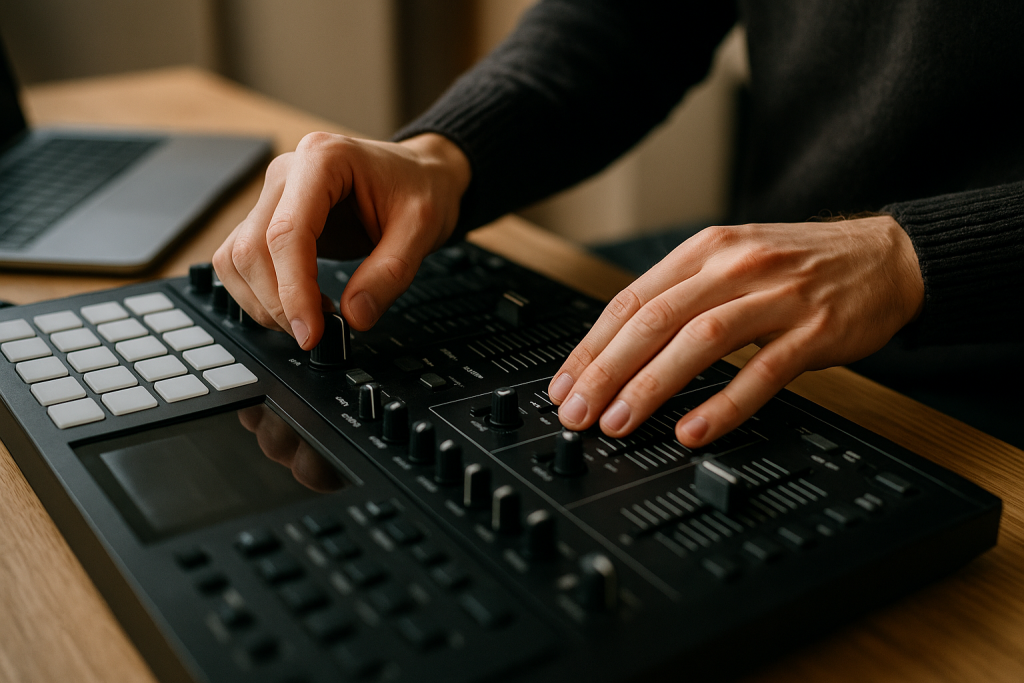
5. Pitch Venues With One Useful Message
Most bad DJ pitches are too long, too vague, or too needy. Your job is to make saying yes feel low-risk. The first DJ gig message should read like a practical offer, not a plea.
Pitch the first DJ gig in one message
Use this structure. Personal line. Fit line. Proof link. Simple ask. That is enough.
Example: Hi Sam, I caught the early set at The Yard last Friday and the 120 BPM house lane is exactly where I play. I am a local DJ/producer with a 30-minute warm-up mix built for that kind of room: [link]. If you ever need an opener for a Thursday or early Friday, I would love to be considered.
That message works because it names the room, names the slot, and gives the booker a clean action. No essay. No fake hype.
Send fewer, better pitches
Send five tailored messages before you send fifty lazy ones. Use email where possible. Instagram DMs are fine for small promoters, but do not bury your mix under six fire emojis and a paragraph of compliments.
Wait seven days before following up. One follow-up is professional. Four is noise.
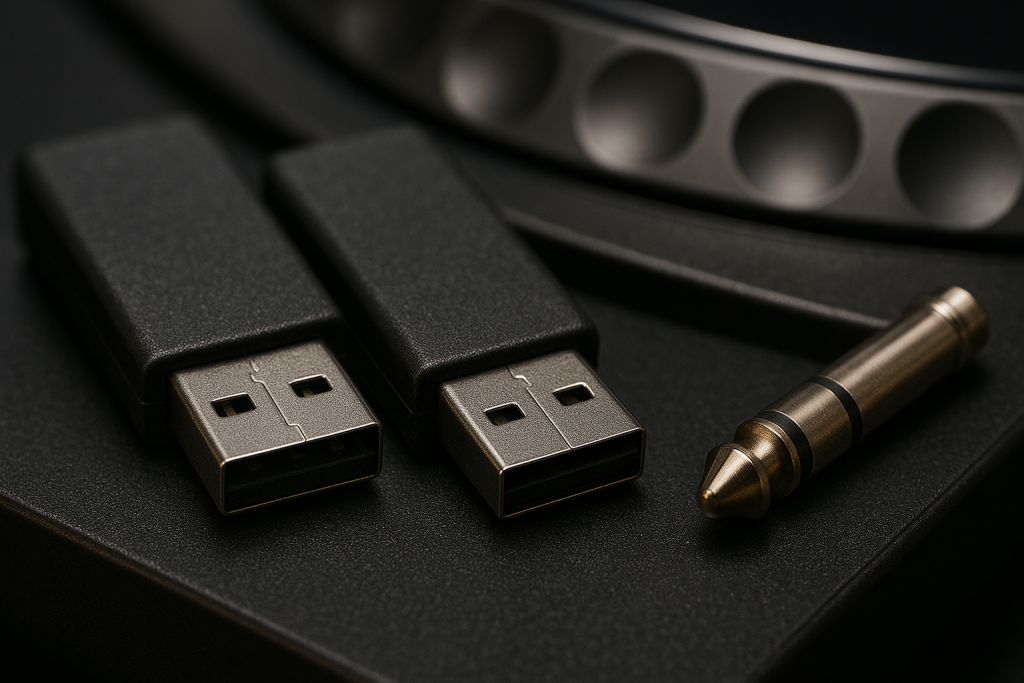
6. Prepare the Gear Handover Before You Walk In
The room may say yes before you feel ready. Good. Now remove the avoidable disasters. A first DJ gig can survive nerves. It struggles with missing USBs, unreadable files and mystery gain staging.
Pack like the booth is hostile
Bring two exported USB sticks from Rekordbox if the booth runs Pioneer gear. Test both. Use FAT32 or exFAT if the system supports it, and keep a folder of emergency WAV or AIFF files. If you use a controller like the DDJ-FLX10, confirm whether you are bringing your own laptop, power supply, USB-C cable and audio routing.
Print or save a small set list with BPM and key. Yes, even if you know your music. Nerves make smart people stupid.
Soundcheck with boring discipline
Arrive early. Load one track. Set channel trim so the meter sits healthy without redlining. Keep the master where the venue tech wants it. If a DJ before you is clipping, do not copy them. Clean gain makes you sound bigger than panic volume.
For custom edits, check the intro and outro. Give yourself at least 16 bars of drums where possible. Four bars can work, but not when your hands are shaking.
- Two tested USB sticks.
- Headphones with a spare jack adaptor.
- Laptop charger if using a controller.
- Short emergency playlist.
- Phone on silent, not in your hand.
- Contact name for the promoter or bar manager.

7. Follow Up Like a Working DJ, Not a Fan
The booking does not end when you unplug. Your first DJ gig is also the start of your reputation. Be easy to work with and you move from random opener to useful contact.
After the first DJ gig
Send a short thank-you message the next day. Mention one specific thing that worked: the crowd filling after 11, the bar staff helping with the booth, the resident DJ giving you the handover. Keep it human.
If you recorded the set, listen before sharing. Cut dead air. Normalize gently. If the limiter is working harder than 2 or 3 dB on the loudest peaks, back off. A clean recording helps you book the second date.
Ask for the next useful thing
Do not immediately ask for Saturday headline money. Ask whether they need another warm-up next month, or whether another promoter handles similar nights. That is how working DJs build a calendar. Small steps, repeated properly.
| Route | Best For | What To Send | My Take |
|---|---|---|---|
| Local bar warm-up | House, disco, open-format DJs | 30-minute room-specific mix and short email | Best starting point because the risk is low and repeat bookings are realistic. |
| Private party | Bedroom DJs testing crowd control | Short mix, availability and basic gear list | Good practice, but do not let requests train you into bad club habits. |
| Support slot for local promoter | Genre-focused DJs with a clear sound | Artist pack, demo mix and past production links | Harder to land, stronger credibility if the promoter trusts you. |
| Art opening or brand event | Lower-volume selectors and producers | Tasteful 25-minute mix with clean transitions | Useful if your sound has restraint. Bad fit for peak-time rave sets. |
| Livestream or radio guest mix | Artists building proof before a venue pitch | Recorded mix and concise bio | Not a substitute for a room, but it gives bookers something public to check. |
Further reading
- Pioneer DJ Rekordbox — Official Rekordbox source for preparing USB libraries, cue points and Pioneer DJ workflows.
- Sound On Sound — Long-running professional audio publication with trusted technical coverage for recording, mixing and production.
Frequently asked questions
How do I get my first DJ gig with no experience?
Record a focused 30-minute demo mix, build a simple artist pack, and pitch small rooms where your sound fits. Start with warm-up slots, local bars, private events and promoter support slots. You need proof of taste and reliability before anyone trusts you with a bigger room.
How long should my DJ demo mix be?
Keep it around 25 to 35 minutes. That is long enough to show phrasing, transitions and energy control without asking a booker for an hour of attention. Make the mix match the exact slot you want, not your entire musical identity.
Should I play my own tracks in a first booking?
Yes, if they fit the set and sound finished beside released records. Test them against reference tracks at the same volume. If your original or custom-produced track feels weak in the low end, leave it out until the mix, master and arrangement are ready.
What gear should I know before playing a club?
Learn the basics of Pioneer CDJs and a DJM-style mixer because many venues still use that layout. Know how to load from USB, set cue points, beatmatch manually, control gain and recover from a bad transition without freezing.
Is it better to pitch by email or Instagram DM?
Email is cleaner for venues and established promoters. Instagram DMs can work for small local nights, but keep them short and specific. Name the event, explain your fit, include one mix link, and avoid sending repeated messages if they do not reply.
How much should a beginner DJ charge?
For an early local slot, payment varies by city and venue size. Do not play every event for free, but be realistic. A modest fee, travel covered, drinks policy clarified and a useful recording can be fair for a first small booking.
Conclusion
Your first DJ gig is a workflow problem. Define the slot, record the right demo, package your links, pitch the correct rooms and prepare the booth handover like a professional. None of that requires fame. It requires evidence.
Do the work in order. This week, pick ten realistic venues, record one 30-minute mix for one type of room, and send five tailored messages. Then listen back, adjust the weak transition, and repeat. Try this in your next session before you send another random DM.
First dj gig — Quick Recap
The fastest way to lock in first dj gig is to internalise the workflow above and repeat it on every project. Start small: pick one technique from this first dj gig guide, apply it to your next session, and audit the result against a reference track.
- Start with small rooms where your sound already fits.
- A 30-minute demo mix is stronger than a long unfocused upload.
- Tailored venue pitches beat mass messages every time.
- Test your USBs, files and gain staging before show day.
Treat first dj gig as a habit, not a one-off — the producers who consistently nail first dj gig are the ones who run the same checks on every track. That’s the difference between a clean, club-ready master and a track that sounds great at home but falls apart on a real system.
In a real studio session, first dj gig comes down to the order in which you make decisions: reference first, gain stage second, then the creative work. Producers who treat first dj gig as a checklist instead of a vibe end up shipping more tracks.
Most producers and DJs undervalue first dj gig because the wins are invisible until the track plays back on a real system. Bake first dj gig into your template and the next ten projects benefit automatically.
My Career makes videos from your own track and posts them for you, pitches your release to 34,000+ labels, playlists, radio stations, YouTube channels and blogs, puts it in every store and briefs you every morning. Free plan, no card, two minutes to set up.