Festival DJ secrets are usually less glamorous than TikTok makes them look: clean timing, disciplined song choice, controlled energy, and tracks that hit hard without clutter. The useful festival DJ secrets are not magic buttons on a CDJ. They are habits that make a 20,000-person field feel like one moving room.
Think of a festival set like driving a bus at night. The crowd trusts you because the turns feel smooth, not because they can see every tiny steering correction. You need to know where the next drop is, when the vocal will land, how much bass the PA can take, and whether the screen behind you is helping or distracting. If you are a bedroom producer or an artist considering ghost production or custom music production, this matters even more. A festival-ready track is built for timing, contrast, and impact before anyone presses play.
Festival DJ Secrets Start With the Rule of 32
Think of dance music like a set of Lego bricks. Most festival records are built from chunks that snap together in predictable lengths. The most common chunk is 32 beats, often called the rule of 32. A beat is the pulse you nod to. In 4/4 dance music, four beats make one bar, and eight bars make 32 beats.
This is one of the least flashy festival DJ secrets, but it explains why big transitions feel tidy. DJs are usually not guessing. They are lining up the building blocks so the outgoing track and incoming track change sections at the same time.
Festival DJ secrets beginners should learn first
Start counting from the first kick drum after a breakdown, vocal, fill, or obvious change. Count: 1, 2, 3, 4. Do that eight times. That is one 32-beat phrase. A phrase is a musical sentence. When the sentence ends, the next idea usually begins.
On CDJ-3000 players or in rekordbox, you can see waveforms (the colored shape of the audio over time), but do not depend on the screen first. Count out loud while practicing. It feels childish for five minutes, then your mixes stop landing late.
Why drops land cleaner when phrases match
A drop is the moment where the drums and main hook return after tension. If Track A drops while Track B is still halfway through a vocal, the crowd hears a traffic jam. If both records hit a new section together, the transition feels intentional.
- Start the incoming track on the first beat of an 8-bar phrase.
- Use hot cues (saved jump points) at intros, breakdowns, and drops.
- Mark 16-bar and 32-bar mix points in rekordbox before the show.
- Practice without sync once in a while so your ears stay awake.
- 32 beats usually equals eight bars in 4/4 dance music.
- Big-room transitions often work because phrases change together.
- Hot cues are memory points, not cheat codes.
- Counting beats beats staring at a waveform under pressure.
Build a Festival Crate Like Packing a Tool Bag
A festival crate is your prepared pool of tracks. Think of it like a tool bag, not a playlist. A carpenter does not bring only hammers. A DJ should not bring only peak-time drops. You need openers, builders, release moments, rescue tracks, and a few weapons that nobody else on the lineup has.
Music festival DJ secrets often start here, hours before the set. The strongest performers do not carry a messy USB full of 4,000 maybes. They build smaller, labeled folders so decisions are easier when the booth is dark, the monitors are loud, and the stage manager is pointing at the clock.
The three-folder system that saves panic
Use three simple folders: Open and Settle, Build and Hold, and Peak and Exit. Open and Settle tracks help the crowd lock into your tempo. Build and Hold tracks raise energy without blowing the roof off too early. Peak and Exit tracks are for your biggest moments and final handoff.
BPM means beats per minute, the speed of the track. Key means the musical home note or scale. Sort by both, but do not become a spreadsheet DJ. If a record feels wrong for the room, the correct key will not save it.
Why private edits beat random downloads
A private edit is a version made for your set, often with a longer intro, shorter breakdown, cleaner outro, or different drop. This is where custom music production becomes practical. A track that sounds fine on headphones can still fail on a festival system if the intro is too short to mix, the vocal arrives too early, or the low end fights the previous record.
For big stages, I prefer edits with 16-bar drum intros, clear 32-bar builds, and no surprise half-time section unless the whole set is built for that switch.
- Carry fewer tracks than you think, but know them better.
- Prepare clean intros and outros for faster stage mixing.
- Use private edits when a great idea has weak DJ structure.
- Keep one rescue folder for technical or crowd problems.

Transitions Work Like Two People Taking Turns Talking
A transition is the move from one track to another. Think of it like two people in a conversation. If both talk loudly at once, nobody understands either person. Good DJ transitions make one record speak while the other steps back.
This is where EQ, filters, loops, and effects matter. EQ means equalization, the control of bass, mids, and highs. Filters remove part of the frequency range. A loop repeats a short section. Effects such as echo and reverb can help hide a change, but they also expose weak timing when overused.
EQ is traffic control, not decoration
On a DJM-A9 or similar club mixer, the low EQ controls the kick and bass weight, the mid EQ controls much of the vocal and synth body, and the high EQ controls hats, noise, and brightness. Two full basslines at once usually sound like mud, especially on a festival PA.
Try this beginner move: bring Track B in with its low EQ fully cut, blend the mids and highs for 16 bars, then swap the bass on the first beat of a new phrase. Do not twist every knob. One clean bass swap beats five nervous gestures.
Echo outs are useful until they become fingerprints
An echo out repeats the last sound while fading away. It is handy when a vocal, snare fill, or crash needs to disappear cleanly. The trap is using it every four minutes. Crowds may not know the term, but they recognize the habit.
- Use a 1/2 or 3/4 echo for short exits.
- Kill the low EQ before echoing a bass-heavy sound.
- Loop 4 or 8 beats if you need extra time to align phrases.
- Avoid long reverb tails before a hard drop, unless the silence is the point.
- Let one bassline own the low end at a time.
- Swap bass on phrase starts, not halfway through a vocal.
- Use loops to buy time, not to cover bad preparation.
- Effects should solve a problem, not announce your hands.
Energy Control Is More Important Than Constant Drops
Energy in a DJ set is like water pressure in a shower. Too weak and nobody feels it. Too strong for too long and people step away. Festival crowds need contrast, even when the booking says you are playing peak time.
A beginner mistake is playing only the hardest parts of every track. That can work for ten minutes. After that, the crowd has no sense of lift because everything is already at maximum. Real festival DJ secrets live in restraint: when to hold back, when to tease, and when to let a simple kick drum reset the field.
Read three zones, not just the front row
The front rail is not the whole audience. They are often the most committed fans, the most filmed, and the easiest to misread. Look at the middle of the crowd and the edges. If the middle is bouncing but the edges are leaving, you may be too intense too early.
Stage lights can make this hard, so use simple signs: hands up during builds, phones appearing during recognizable hooks, people turning to friends after a drop, and the speed of movement after a breakdown.
Leave headroom for your biggest record
Headroom means unused loudness or intensity. In a mix file, it can mean leaving peaks below 0 dB. In a DJ set, it means not spending every emotional trick in the first 15 minutes. If your third track is already the hardest ID in your folder, your final section has nowhere to go.
Plan one or two false peaks. A false peak feels big, then pulls back slightly. The real peak lands later, when the audience has been trained to expect release.
- Front-row reaction can lie, so check the middle and sides.
- Contrast makes drops feel bigger than volume alone.
- Plan at least one reset section in a long festival set.
- Save your most recognizable custom track for a useful moment.
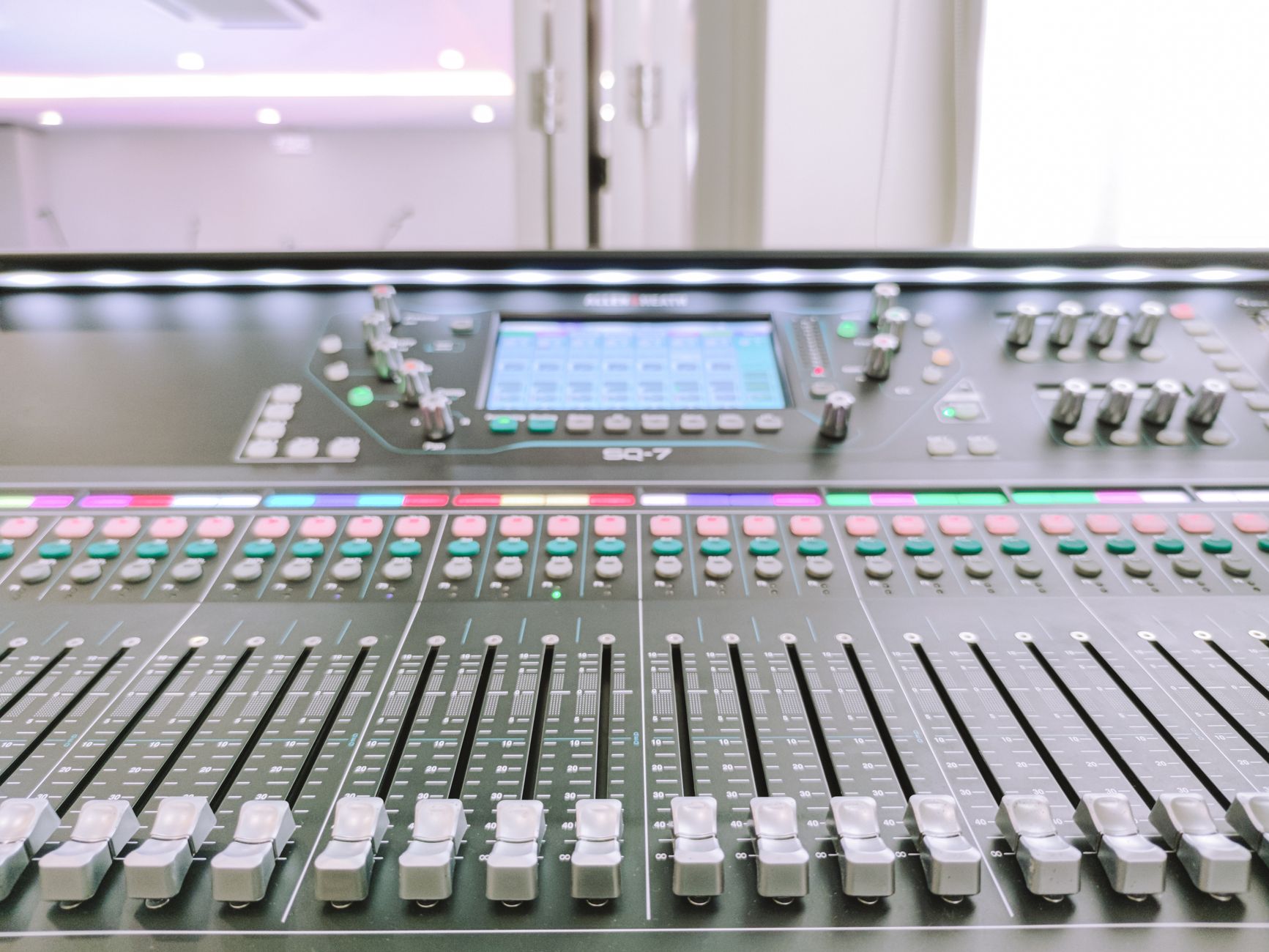
Visuals Behind DJ Sets Are Timed Like Music
The visuals behind DJ performances are not random screensavers. Think of them like lighting in a film scene. The image tells the crowd what kind of moment they are inside before the drop even arrives.
On larger shows, visuals are often run by a VJ, meaning a visual performer who triggers clips, cameras, logos, and effects in time with the music. Software such as Resolume Arena is common for this job. The DJ may not personally press the visual buttons, but the set structure gives the visual team the map.
Why Anyma-style moments feel so synchronized
Anyma shows made many newer artists pay attention to stage visuals because the screen content behaves like part of the arrangement. The huge figure, the movement, and the drop timing all point to the same beat. That works because audio and video are arranged around phrases, not because a random clip looks expensive.
If you are making custom tracks for a visual-heavy act, leave obvious cue points: a vocal one-shot before the build, a clean 8-bar tension ramp, or a one-beat silence before the drop.
Meme visuals can work, but timing still wins
Shrek rave visuals, old internet clips, and deliberately silly screen content can crush when the event calls for it. The secret is commitment. If the music is playful, the crowd accepts the joke. If the DJ is trying to look serious while a meme loops behind them, it feels confused.
Visuals behind DJ sets should support the emotional lane: dark, euphoric, funny, aggressive, nostalgic, or strange. One lane at a time usually lands better than ten unrelated clips per minute.
- Visual teams follow musical phrases and cue points.
- One-beat silences give screens and lights room to hit.
- Funny visuals need a set that agrees with the joke.
- The best screen moment still needs the right record under it.

Festival DJ Secrets Reddit and TikTok Get Half Right
Social advice is like a group chat before a gig. Some of it saves you. Some of it gets louder every time it is repeated. Searches like festival DJ secrets Reddit, festival DJ secrets TikTok, and festival DJ secrets 2021 bring up a mix of useful survival notes and bad shortcuts.
The good posts usually talk about preparation, backups, earplugs, phrase mixing, and crowd reading. The weak ones make it sound like festival DJs only press play or fake every knob turn. Yes, pre-planned sets exist. No, that does not mean the craft is fake.
Useful hacks that are not embarrassing
Bring two tested USBs, not one. Export from rekordbox and test on a second machine if possible. Use colored cue points with a consistent system: red for drop, blue for breakdown, green for safe mix-in, yellow for vocal danger. Label tracks with energy notes if the title does not tell you enough.
- Keep your USBs on separate keyrings or pockets.
- Carry foam earplugs and proper filtered earplugs.
- Set all beatgrids before the festival, then check them by ear.
- Bring a short intro edit of your most important original track.
Bad shortcuts that cause real problems
Do not rely on streaming libraries at a festival. Internet access can fail, logins can expire, and booth computers may not allow your workflow. Do not play unreleased tracks from a messy downloads folder. Do not assume the previous DJ will finish in your preferred key or BPM.
The 2021 advice era had many bedroom livestream habits baked into it. Festival booths are less forgiving. You have changeovers, stage managers, shared mixers, sun on screens, rain covers, and monitor systems that may sound nothing like your room.
- Test USBs on real DJ hardware before the show.
- Use cue colors the same way in every track.
- Do not build a festival set around an internet connection.
- Treat social hacks as ideas to test, not rules to trust.

Festival-Ready Tracks Are Built for the Booth
A finished track is not automatically a festival track. Think of it like a sports car that still needs tires for the road. A beautiful mix can fall apart in a DJ set if it has no clean intro, no usable outro, no phrase logic, or a low end that turns huge systems into soup.
This is where producers, artists, and ghost production clients should think like DJs before the master is finished. The track has to survive CDJs, festival limiters, short changeovers, and a crowd that decides within eight bars whether the energy is moving.
Arrangement choices that help DJs trust the record
Arrangement means the order of sections in a track. For festival use, clarity beats cleverness. Give the DJ a 16-bar or 32-bar drum intro. Keep the first vocal hook away from the first four bars unless it is meant to be slammed in cold. Make breakdowns long enough to create tension but not so long that the field starts chatting.
A reliable structure is intro, first groove, short break, main drop, second break, bigger drop, outro. You can bend that shape, but understand it before you break it.
Low end and loudness need discipline
Low end means the bass and kick area, roughly below 120 Hz. On huge systems, small problems get magnified. If the kick tail is too long, it masks the bass. If the sub jumps between notes with no control, the limiter clamps down and the whole track feels smaller.
For a festival master, leave a little breathing room. A crushed file may sound impressive for five seconds on laptop speakers, then lose punch on a large PA. The best custom records feel loud because the kick, bass, vocal, and lead are not fighting for the same space.
- Give DJs clean intro and outro sections.
- Make phrase changes obvious enough to mix under pressure.
- Control sub energy before chasing loudness.
- Create one memorable hook that survives a noisy field.
- Test the track inside a real DJ transition, not only as a solo bounce.
| Technique | Plain-English Meaning | Best Use | Common Mistake |
|---|---|---|---|
| Rule of 32 | Mixing around eight-bar musical sentences | Starting transitions so drops and breaks line up | Counting from a random beat instead of a clear section start |
| Bass swap | Moving the low end from one track to another | Clean handoff during a new phrase | Letting two basslines play full volume together |
| Hot cues | Saved jump points inside a track | Marking intros, breakdowns, drops, and danger vocals | Using too many colors with no consistent meaning |
| Private edit | A custom version made for DJ use | Fixing weak intros, long breaks, or awkward endings | Changing the track so much that the hook loses impact |
| Visual cue point | A musical moment that helps screens and lights hit | One-beat silences, vocal shots, and phrase starts | Adding visuals that fight the mood of the record |
Sources worth your time
- How to DJ at a festival — blog.pioneerdj.com
- Secret DJ — apps.apple.com
FAQ
What is the rule of 32 in DJing?
The rule of 32 means many dance tracks change sections every 32 beats, or eight bars in 4/4 time. DJs use it to start mixes at the right moment, so intros, breakdowns, vocals, and drops line up cleanly instead of colliding halfway through a phrase.
How much does a festival DJ make?
Festival DJ pay varies wildly. A local opener might get a few hundred dollars plus travel support, a strong touring act can earn several thousand, and major headliners can command six figures for large events. Fee depends on billing position, ticket sales, territory, exclusivity, and the artist’s draw.
What are some must-have hacks for festivals?
Bring two tested USBs, use filtered earplugs, prepare cue points, pack weather-safe backups, and know your first two tracks before stepping into the booth. For DJs, the best hacks are boring: reliable exports, clean edits, labeled crates, and enough sleep to make decisions under pressure.
Who is the number 1 DJ in the world?
The answer depends on the ranking. DJ Mag’s Top 100 DJs poll is the most quoted public list, and the winner changes by year. Other people judge by ticket sales, streaming numbers, cultural impact, or technical ability, so treat any single number one claim as one measurement, not absolute truth.
What festival DJ secrets help beginners sound more professional?
The biggest beginner improvements are phrase counting, clean bass swaps, consistent hot cues, and better track selection. Do not chase complicated effects first. A simple 32-beat transition with the low end controlled will sound more professional than a messy mix covered in echo and filter sweeps.
Are festival DJ sets pre-recorded?
Some heavily synchronized headline shows use planned sections, timecode, or partial playback for lighting, pyro, and visuals. Many festival sets are still mixed live from prepared crates. Planning does not automatically mean fake. The real question is whether the performance responds to the room and delivers the music well.
Festival DJ secrets are not hidden buttons or fake stage rituals. They are practical systems: count phrases, prepare crates, control the low end, leave energy headroom, and make tracks that behave well in a booth. The flashy parts only work because the quiet parts were handled first.
If you are preparing your first serious set, pick ten tracks and mark 32-beat mix points for each one. Practice only intro-to-drop and drop-to-outro transitions for an hour. If you are producing music for bigger stages, test every track inside a DJ mix before calling it finished. That one habit will expose weak arrangements faster than any comment thread.
My Career makes videos from your own track and posts them for you, pitches your release to 34,000+ labels, playlists, radio stations, YouTube channels and blogs, puts it in every store and briefs you every morning. Free plan, no card, two minutes to set up.