Key takeaways
- Start catchy melodies with a small motif, not a long piano-roll run.
- Rhythm usually decides whether a hook sticks before note choice does.
- Sound design changes the way a melody wants to be written.
- Test hooks against drums, references, mono playback, and small speakers.
- Arrangement can make a simple melody feel bigger than extra layers can.
- Delete the clever decoration if it weakens the main phrase.
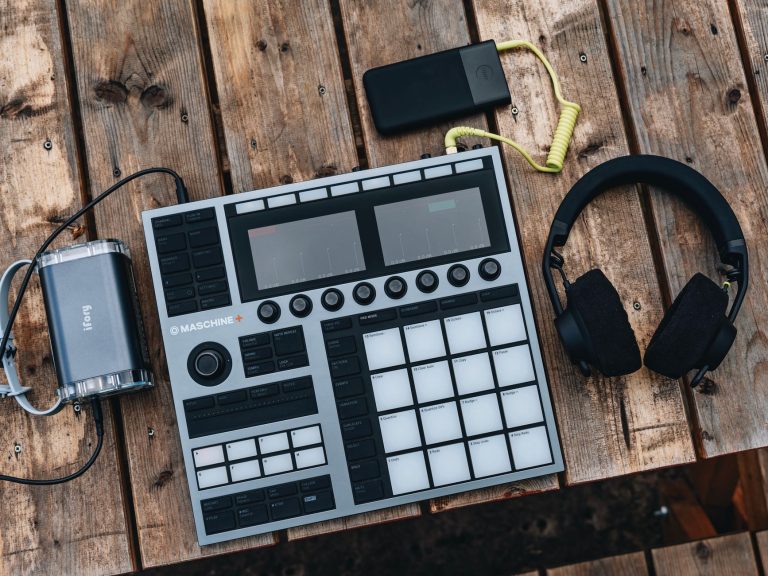
Catchy melodies stopped feeling mysterious for me when I began treating them like small, repeatable studio tests instead of divine messages from the ceiling. catchy melodies usually arrived after I cut the idea down, not after I added more notes. Last month I kept a notebook open through a run of house, melodic techno, and pop-leaning EDM sessions. Same room, same monitors, same bad coffee. Ableton Live 12 was the main DAW, with Serum 2, Diva, FabFilter Pro-Q 4, Soothe2, and an Ableton Push 3 sitting beside the keyboard.
The pattern was annoyingly consistent. The hooks that worked were short, rhythmically clear, and slightly stubborn. They left room for the kick. They survived being played on a phone. They still made sense when I muted the fancy reverb tail. That is the stuff worth writing down.
Catchy melodies started smaller than I wanted
I kept catching myself writing eight-bar lines when the track only needed a two-bar idea. The better move was to make one tiny shape speak clearly, then let arrangement do the heavy lifting. catchy melodies rarely needed twelve notes. Most of the keepers used three to six notes and one rhythm I could tap on the desk.
On a recent tech house sketch, the hook was just G, Bb, C, Bb over a tight offbeat rhythm. Boring on paper. Over a swung 909 hat and a short sub, it started to feel like a record.
The two-bar loop did not lie
I set Live 12 to loop two bars and refused to move on until the idea worked without automation, risers, or a second synth layer. That restriction exposed weak writing fast. If a melody needs a 12-second Valhalla VintageVerb wash to feel emotional, the notes probably are not carrying enough weight.
The test was simple: write a motif, duplicate it, change one thing. Usually the change was the last note, the length of the rest, or a tiny push before beat one. catchy melodies often came from that one controlled variation.
My rough motif rules
I did not treat these as law, just rails for sessions where the room started getting foggy.
- Start with rhythm, then choose notes.
- Use one leap, then answer it with stepwise motion.
- Repeat the first half, then twist the ending.
- Leave a rest before the vocal or snare fill.
- Sing it badly. If I cannot mumble it, I probably overwrote it.
- Loop two bars before building an eight-bar phrase.
- Write the rhythm on one note first.
- Change only the final note on the repeat.
- Mute effects while judging the hook.
- Keep the melody clear at low monitor volume.
The rhythm carried more than the notes
One night I pulled up three sketches that all had decent note choices and none of them stuck. The problem was not key, scale, or synth preset. The rhythm was polite. Too many notes landed exactly where the piano roll grid expected them.
catchy melodies need a physical rhythm. I mean the kind you feel in your shoulder before you care what scale degree it is. For dance records, the hook has to negotiate with the kick, clap, and bass before it negotiates with music theory.
I stole from the drum groove first
I started copying the top-line rhythm from the percussion instead of inventing it separately. If the shaker had a nice 16th-note skip before beat three, I used that skip in the melody. If the clap left a pocket after beat two, I let the hook answer there.
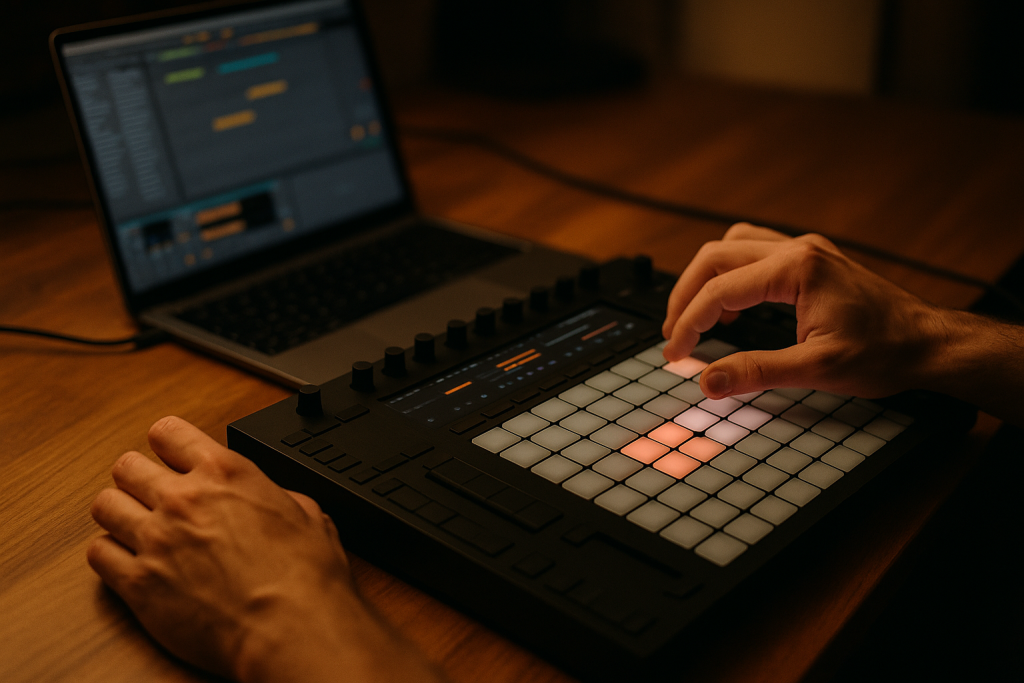
On the Push 3, I tapped the rhythm into a single note with quantise at 70 percent. Full quantise made the idea stiff. No quantise made it sloppy. That middle setting gave me enough human lean without pretending I was a jazz pianist.
The grid setting changed the hook
For house and tech house, I liked 1/16 grid with a little swing from the drum rack. For melodic techno, I often wrote on 1/8 notes and used longer ties. For pop-EDM, I tested the melody against a fake vocal rhythm, even when no singer was booked.
One trick kept paying off: shift one note 10 to 20 ms late. Not every note. Just the one that answers the snare or clap. catchy melodies can feel more human from one lazy note than from a whole track of random timing.
- Tap the melody rhythm before choosing notes.
- Borrow one rhythmic detail from hats or percussion.
- Keep strong notes away from kick-heavy moments.
- Try 70 percent quantise before manual nudging.
- Delay one answer note by 10 to 20 ms.
Sound choice kept changing the writing
I used to write melody on a piano, then search for a synth later. That still works for ballads. For club tracks, it can lie. A line that sounds elegant on a grand piano may collapse when played by a plucky Serum patch with a 90 ms decay.
catchy melodies changed shape when I changed the envelope. A long Diva pad encouraged slow movement. A short FM pluck forced cleaner rhythm. A mono portamento lead made me write fewer notes because the glide had its own sentence.
The patch was part of the melody
I kept three starter sounds ready: a short pluck, a plain saw lead, and a soft square pad. Nothing fancy. The pluck exposed timing. The saw exposed pitch. The pad exposed whether the phrase had any emotional weight.
Serum 2 with one saw, one square an octave down, a 24 dB low-pass around 6 kHz, and a short decay gave me a clean writing patch. I added chorus only after the notes held up. For a deeper record, Diva’s Juno-style patch with slow attack made the same phrase feel older and less needy.
Tools I reached for when catchy melodies went flat
When a line felt right but still did not speak, I did not add five layers straight away. I checked the envelope, register, and masking first. A 2 dB cut around 220 Hz on the melody bus often cleared boxiness. FabFilter Pro-Q 4 in mid/side mode helped me keep the centre clean while letting a stereo layer breathe.
Soothe2 was useful on bright leads, but I had to back off. Too much resonance control shaved the teeth off the hook. For club music, a melody can be slightly annoying in solo and perfect in the mix.
- Write with a short pluck to expose rhythm problems.
- Check the same notes on a pad before committing.
- Keep mono leads below heavy stereo effects.
- Cut mud near 220 Hz before adding another layer.
- Leave some edge on bright hooks.
The best notes were usually obvious
There was a depressing beauty to this. Every time I tried to be clever with borrowed chords and scale tricks, the strongest melody usually returned to the root, third, fifth, or seventh at the phrase point that mattered.
catchy melodies do not hate theory. They just punish theory used as decoration. In one melodic house idea, I had a lovely F# over an E minor chord. It sounded cool for two loops. By loop ten, it felt like homework. Moving the landing note to G made the whole track relax.
Call-and-response beat fancy note runs
The phrase that worked most often was almost conversational: ask in bar one, answer in bar two. I used a higher note for the question and a lower, more stable note for the answer. Simple. Slightly childish. Very effective.
For DJs and producers writing for vocalists, this matters because the topline needs space to breathe. If the instrumental hook already says everything, the singer has nowhere to stand. I left gaps on purpose, especially at the end of four-bar phrases.
A note map for catchy melodies
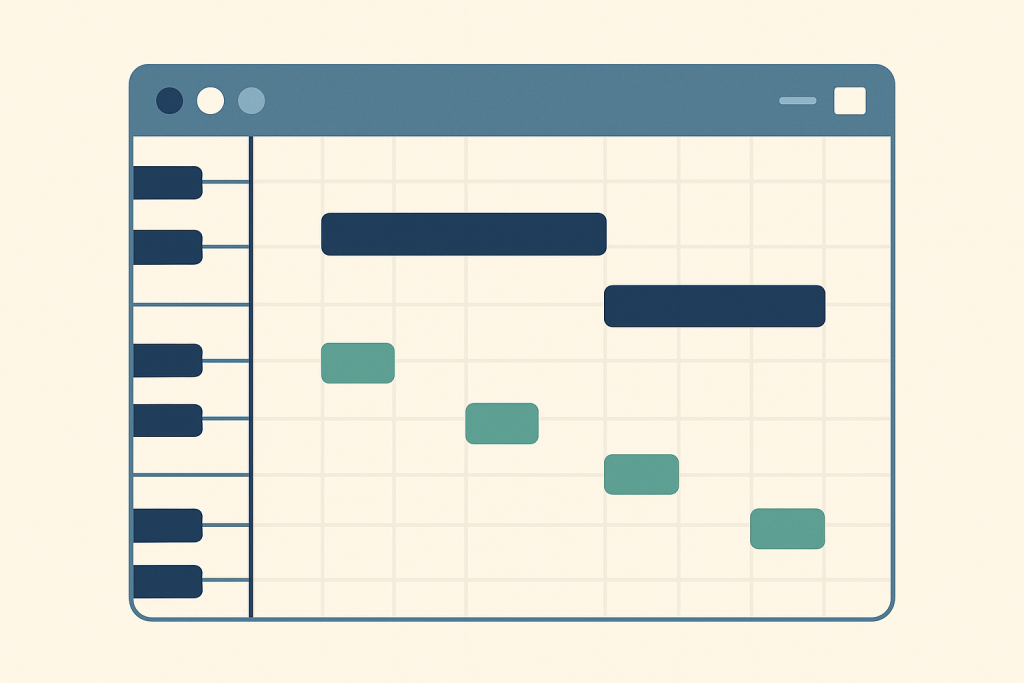
When I got lost, I made a tiny map rather than scrolling presets. In A minor, I marked A, C, E, and G as safe landing notes. B and F became passing notes. D became a tension note if the chord underneath could handle it.
The map kept me from throwing every scale note into the hook. It also made custom music production sessions faster because the client could react to a clear idea instead of a noodle.
- Land phrase endings on chord tones first.
- Use passing notes between stable targets.
- Keep one tension note special.
- Answer a high phrase with a lower phrase.
- Leave bar four open if a vocal may arrive.

I tested hooks like a DJ, not a pianist
The piano roll is a comfort trap. A melody can look balanced and still die in a DJ set. I started exporting rough loops early and dropping them into a Rekordbox playlist beside finished tracks. The test was brutal, but fair.
catchy melodies had to survive the CDJ-3000 mindset: intro, blend, drop, crowd memory. If the hook only worked after 90 seconds of context, it was not doing enough. A dance record needs a hook that can flash past someone in a loud room and still leave a fingerprint.
The 30-second club check
I bounced a 30-second section with kick, bass, drums, and the hook. No breakdown. No cinematic intro. Then I played it after a reference track at roughly matched loudness. If the energy sagged, I fixed arrangement before touching mastering.
This is where sidechain ducking mattered. I usually started with 2 to 4 dB of ducking on the melody bus from the kick, fast attack, release timed to the groove. Too much pumping turned the hook into a wobbling mess. Just enough made the kick and melody stop fighting.
Reference tracks told the truth
I used references for density, not theft. A Fisher-style tech house loop taught me how little a hook can be. A Lane 8-style record reminded me how long notes can carry emotion when the chord bed moves underneath.
On smaller monitors, catchy melodies with too much low-mid information blurred into the bass. On AirPods, over-wide chorus sometimes vanished. I kept a mono button on the monitor controller and used it more than I wanted to admit.
- Bounce a 30-second hook loop before arranging the full track.
- Test after a loud reference at matched volume.
- Use 2 to 4 dB sidechain ducking on busy melody buses.
- Check mono before widening the lead.
- Judge the hook on AirPods and small speakers.

Finishing meant removing the clever bit
The final pass was rarely glamorous. I opened the session, played the hook for ten minutes, and deleted the thing I had been defending all afternoon. Usually it was a harmony layer, a fill, or a turnaround note that made me feel smart.
catchy melodies like confidence. If the main shape is good, too many decorations make it nervous. I started printing a version called HOOK_SIMPLE before the last production pass. Half the time, that version beat the decorated one.
Arrangement made the hook feel bigger
I did not need the melody playing all the time. Bringing it in for four bars, dropping it out for four, then returning it with a harmony or octave felt stronger than looping it for a full minute. Absence did useful work.
For a recent custom track, I muted the lead in the first half of the drop and let the bass answer the vocal chop. When the lead returned, the client thought I had added a new synth. I had not. I had only made the hook scarce.
The last checklist before I printed
Before bouncing, I ran the hook through a boring but reliable check: melody bus peaking around -10 dB, full premaster leaving about -6 dB headroom, no rogue resonance screaming at 3 kHz, and the main phrase still clear with the reverb muted.
I have not tested the same routine on Logic 11 yet. On Live 12, it kept me honest. catchy melodies are not just written. They are edited until the listener thinks they were obvious from the start.
- Save a simple hook version before adding layers.
- Mute the lead for four bars to create appetite.
- Check the phrase with all reverb bypassed.
- Leave about -6 dB headroom on the premaster.
- Delete one clever note before the final bounce.
| Tool or technique | Best use | What I watched for | My take |
|---|---|---|---|
| Ableton Push 3 | Tapping rhythm before pitch choices | Over-quantised stiff timing | Best when I treated it like a drum instrument |
| Serum 2 pluck | Testing short hook clarity | Too much brightness above 8 kHz | Fastest way to hear weak rhythm |
| FabFilter Pro-Q 4 | Mid/side EQ and low-mid cleanup | Cutting body out of the lead | A 220 Hz cut saved several crowded hooks |
| Soothe2 | Taming harsh lead resonances | Over-smoothing the attitude | Useful in small amounts, dangerous when lazy |
| Sidechain ducking | Making kick and melody share space | Excessive pumping | 2 to 4 dB was usually enough |
Further reading
- Ableton Live manual — Ableton's official documentation is the primary source for Live 12 workflow, MIDI editing, clips, and timing tools.
- Sound On Sound synthesis — Sound On Sound is a long-running technical music production publication with detailed synthesis and arrangement education.
Frequently asked questions
How do I make catchy melodies from scratch?
I start with rhythm, not notes. Tap a two-bar pattern on one pitch, then choose three to six notes from the chord. Repeat the first half and change the ending. If the line still works with reverb muted and drums low, it is probably worth developing.
Why do my melodies sound boring even when they are in key?
Being in key only prevents obvious wrong notes. Boring melodies usually have flat rhythm, no phrase shape, or too many similar note lengths. I would check where the melody lands against the kick and clap before changing the scale.
What scale is best for EDM melodies?
Minor and natural minor modes work well for house, techno, and EDM, but the scale matters less than the landing notes. I usually mark the root, third, fifth, and seventh first, then use other notes as passing colour.
Should I write melodies on piano or synth?
I like starting on a plain synth patch for club music because envelope and tone affect the writing. Piano can make weak dance hooks feel more musical than they really are. A short pluck exposes timing problems faster.
How long should a melody loop be?
Most strong dance hooks can be reduced to two or four bars. Eight bars can work, but only if the first two bars already have identity. I write short first, then extend only when the track asks for it.
How do I know if a melody is too busy?
Mute the effects, lower the monitor volume, and play the drums with the melody. If the hook fights the vocal, kick, or bass, it is too busy. I usually delete notes before changing plugins.
Conclusion
The sessions reminded me that catchy melodies are usually the result of subtraction, testing, and a bit of stubborn looping. I trusted the small motif, borrowed rhythm from the drums, chose sounds early, and checked the hook like a DJ would hear it on a CDJ-3000. The best ideas did not need much jewellery. They needed space, timing, and a landing note that felt inevitable.
Try this in your next session: write a two-bar rhythm on one note, turn it into a three-to-six-note motif, mute the effects, then bounce a 30-second club check beside a reference. If it survives that, build the track around it.
Catchy melodies — Quick Recap
The fastest way to lock in catchy melodies is to internalise the workflow above and repeat it on every project. Start small: pick one technique from this catchy melodies guide, apply it to your next session, and audit the result against a reference track.
- Start catchy melodies with a small motif, not a long piano-roll run.
- Rhythm usually decides whether a hook sticks before note choice does.
- Sound design changes the way a melody wants to be written.
- Test hooks against drums, references, mono playback, and small speakers.
Treat catchy melodies as a habit, not a one-off — the producers who consistently nail catchy melodies are the ones who run the same checks on every track. That’s the difference between a clean, club-ready master and a track that sounds great at home but falls apart on a real system.
In a real studio session, catchy melodies comes down to the order in which you make decisions: reference first, gain stage second, then the creative work. Producers who treat catchy melodies as a checklist instead of a vibe end up shipping more tracks.
Most producers and DJs undervalue catchy melodies because the wins are invisible until the track plays back on a real system. Bake catchy melodies into your template and the next ten projects benefit automatically.
When you struggle with catchy melodies, the fix is rarely a new plugin. Loop a problem section, A/B against a reference, and isolate which element is breaking your catchy melodies.
My Career makes videos from your own track and posts them for you, pitches your release to 34,000+ labels, playlists, radio stations, YouTube channels and blogs, puts it in every store and briefs you every morning. Free plan, no card, two minutes to set up.