
 By Emma Carter · October 19, 2026
Chord progressions are usually where a good track either starts moving or dies as an eight-bar loop. The annoying part is that chord progressions can sound fine on their own, then feel flat once the kick, bass, vocal chop and lead arrive. That is not a talent problem. It is usually a decision problem.
For DJs turning into producers, bedroom producers chasing finished tracks, and artists briefing custom music production, the useful question is simple: what chord choices give the session a direction fast? I care less about clever theory flexing and more about progressions that survive drums, low-end, arrangement edits and toplines. The workflow below is how I pick them, bend them, and stop tweaking when the loop is already doing its job.
Which chord progressions should I try when the loop feels dead?
Start with the emotional job. Do you need lift, sadness, tension, release, or something that leaves room for a vocal? Random chord hunting is slow because every option sounds possible for thirty seconds. A small menu beats a blank piano roll.
For most dance and pop-leaning sessions, I test the same few shapes in the key that suits the vocal or main synth. In C major or A minor, that means white notes first, then colour notes only after the groove speaks.
Which chord progressions I reach for first
My first pass is not exotic. I want a loop that tells the bass where to move and gives the topline a clear landing note. These are the starters I trust before I touch inversions:
- I-V-vi-IV: C-G-Am-F, huge for emotional pop, melodic house and festival hooks.
- vi-IV-I-V: Am-F-C-G, darker at the front, brighter by the end.
- i-VI-III-VII: Am-F-C-G, the minor-key version every producer should know.
- ii-V-I: Dm-G-C, smooth, jazzy, and great for piano-led sections.
- i-v-VI-iv: Am-Em-F-Dm, moody without sounding melodramatic.
The trick is to stop judging them as block chords. Put the bass on roots first, then move the top note like a melody. A plain C-G-Am-F loop can sound cheap as four triads, but with E-D-C-C on top it suddenly behaves like a hook.
- Pick the key before auditioning too many loops.
- Test major and minor versions of the same movement.
- Write the bass movement separately from the chord names.
- Judge the top note like it is a vocal melody.
- Change voicing before changing the whole progression.

Why do the same four chords still work in club tracks?
Because the crowd does not hear Roman numerals. They hear motion, tension, release, and whether the next section feels earned. Four familiar chords can still hit hard when the rhythm, bass relationship and sound choice carry the identity.
The mistake is assuming common means finished. A stock progression needs a producer decision: a pedal bass, a suspended chord, a rhythmic stab pattern, a break in bar four, or a topline that refuses to land where expected.
How do I stop a familiar loop sounding like a preset demo?
Change one layer at a time. Keep the chord progression, then rewrite the rhythm. If the chords hit on every bar, try syncopated stabs on the offbeats, or hold bars one and two, then push bar three an eighth-note early.
For club music, the bass often matters more than the chord label. Over Am-F-C-G, hold an A pedal under the first two bars, then walk A-G-F-E before the drop. The listener feels movement, but the harmonic frame stays simple enough for a vocal or lead.
I usually avoid making every chord thick. Three-note voicings are enough for a busy arrangement. If the pad, piano and pluck all play full chords, the midrange turns cloudy around 200-500 Hz before the track even reaches mixing.
- Keep common harmony, change the rhythm.
- Use a pedal bass to make basic chords feel intentional.
- Leave one bar thinner before the hook returns.
- Remove notes below middle C from pads if the bass is active.
- Let the vocal own the most memorable note.
What chord progression formula stops me guessing?
A useful chord progression formula is just a map of scale degrees. In a major key, I is home, V wants to pull back home, vi gives emotional weight, and IV opens the window. In minor, i feels like home, VI and VII add lift, and v or V creates tension.
Do not start with every possible chord. Start with a role: home, lift, tension, return. Once you hear those jobs, you can move the loop to any key without rewriting your brain.
How do scale degrees become usable chords?
Take C major. The diatonic triads are C, Dm, Em, F, G, Am and B diminished. Number them as I, ii, iii, IV, V, vi and vii°. That gives you a portable system. I-V-vi-IV in C is C-G-Am-F. In F major, it becomes F-C-Dm-Bb.
For minor writing, use natural minor first. In A minor the chords are Am, B diminished, C, Dm, Em, F and G. The i-VI-III-VII formula becomes Am-F-C-G. It feels strong because the bass drops, opens, resolves sideways, then climbs.
When the formula sounds stiff, invert the chords. Keep C in the top voice while the harmony moves underneath: Am/C, F/C, C, G/B. Same progression, smoother voice leading.
- Major key formula: I, ii, iii, IV, V, vi, vii°.
- Minor key formula: i, ii°, III, iv, v, VI, VII.
- Home chords feel stable, usually I or i.
- Tension chords pull forward, usually V, v, VII or ii°.
- Inversions fix awkward jumps without changing the progression.

How do I turn a chord progression list into a finished hook?
A chord progression list is only useful if you treat it as raw material, not a menu of finished songs. The list gives you direction. The hook comes from rhythm, register, sound choice and the one note the listener remembers.
Pick one progression and force it through three different jobs: pad bed, piano riff and short stab. If it only works as sustained chords, it may be too dependent on pretty voicing. If it works as a rhythm, you have something you can arrange.
What is the fastest test before arranging?
Run a four-pass test. First, play the chords as whole notes. Second, mute every note except the top voice and check whether it feels like a melody. Third, write a bassline using only roots and fifths. Fourth, mute the chords and see if the bass plus top line still implies the movement.
If the track survives that test, arrange it. If it collapses, the progression is probably not the issue. The voicing may be too wide, the bass may be fighting the kick, or the top note may be wandering without a phrase.
I like four-bar phrases for dance music, with a small change in bar four. Add a sus4 before a major chord, delay one chord by an eighth note, or remove the third from the final chord so the loop breathes before repeating.
- Test sustained chords first.
- Check the top voice alone.
- Write the bass without passing notes.
- Add rhythm before adding more harmony.
- Make bar four answer bars one to three.

What beautiful chord progressions piano producers can program fast?
Piano exposes weak harmony fast. If a loop sounds good on a plain piano patch at low volume, it has a decent chance of working once you dress it with pads, plucks or a vocal chop. If it only sounds good under a huge reverb tail, be suspicious.
For beautiful chord progressions piano parts need close voice leading more than complicated theory. Keep one or two notes common between chords. Move the other notes by step. The hands can be fake, but the motion should feel playable.
Which piano voicings make simple chords feel expensive?
Try Am9-Fmaj7-Cadd9-Gsus4 in A minor. The basic movement is still Am-F-C-G, but the extra colour notes give the top line something to sing. Program it around middle C, then keep the bass an octave lower and simple.
Another strong one is Fmaj7-G6-Em7-Am9. It avoids the obvious hard reset to C, so it feels more wistful. For house, play it as short offbeat stabs. For a breakdown, open the voicing and let the top notes ring.
Do not stack every extension below 300 Hz. Put sevenths and ninths in the upper middle, roughly C4 to A5. Low extended chords sound impressive solo and messy with a kick and sub.
- Use sevenths for warmth, ninths for air.
- Keep extensions out of the sub and low-mid range.
- Repeat one top note across two chords for glue.
- Split bass and chords into separate parts.
- Check the loop on a dry piano before adding effects.
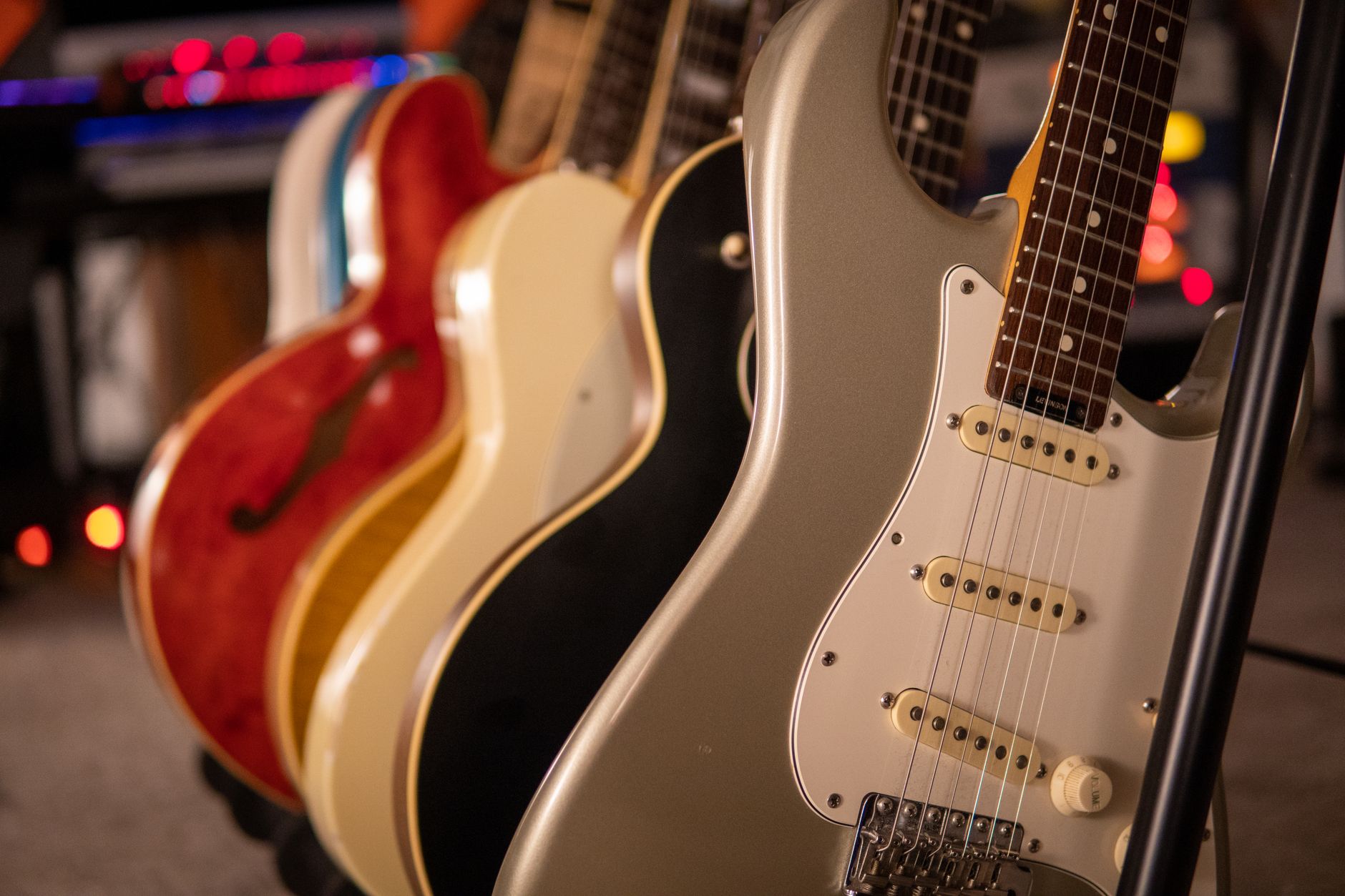
How do guitar chord progressions that always work translate to MIDI?
Guitar voicings feel different because they are limited by fingers and strings. That limitation is useful. It creates open strings, repeated tones and uneven spacing, which often sounds more human than perfect block chords in a piano roll.
When translating guitar chord progressions that always work, do not just copy chord names. Copy the behaviour. Let one note ring through the changes, keep some voicings open, and avoid moving every note at once.
How do I fake guitar logic without fake guitar sounds?
Take G-D-Em-C. On guitar, the note G often hangs around across the shapes. In MIDI, keep G as a common tone in the upper voice while the harmony moves underneath. That gives your pad or pluck the same glued-together feeling without pretending to be a strummed instrument.
For beautiful chord progressions guitar players love, try D-A-Bm-G or C-G-Am-F with suspended notes. Program Dsus2-Aadd4-Bm7-G6, then remove one or two middle notes so the voicing breathes. Dense MIDI chords rarely feel like guitar. Open spacing does.
If you need chord progressions that always work guitar tabs can be a starting point, but translate them by ear. Tabs show fingering, not arrangement. A producer still has to decide octave, rhythm and whether the bass should follow the root every bar.
- Keep one common tone across several chords.
- Use sus2 and sus4 shapes for guitar-like colour.
- Avoid perfectly even stacked thirds.
- Separate strum rhythm from synth rhythm.
- Let the bass simplify busy guitar-style movement.
How do I make unique chord progressions guitar or piano without getting weird?
Unique does not mean random. The best unusual progressions usually keep one familiar anchor, then bend one chord. If every bar surprises the listener, nothing feels like a surprise anymore.
Start with a normal loop, then change one chord quality, borrow one chord from the parallel key, or shift the bass while the upper notes stay put. That gives you flavour without losing the room.
Which single changes give the most character?
Borrowing from the parallel minor is the cleanest move. In C major, replace F with Fm before returning to C. C-G-F-Fm has that sad lift because Ab appears for one moment, then resolves down to G. It is simple, but it feels written.
For unique chord progressions piano parts, try a descending bass under mostly stable upper notes: C-G/B-Am-Am/G-F-C/E-Dm-G. The harmony feels richer because the bass tells a story. The right hand can stay calm.
For unique chord progressions guitar parts, use open-string thinking. E-B-C#m-A is common. Change it to E-B/D#-C#m7-Aadd9 and keep E ringing on top. Same emotional lane, more identity.
- Borrow one chord from the parallel minor.
- Use slash chords for smoother bass movement.
- Change chord quality before changing all four chords.
- Keep one repeated note as the listener’s anchor.
- Save the strangest chord for bar four or the pre-chorus.

When should I call a progression finished and move on?
Call it finished when the progression gives the track a clear emotional lane, leaves room for the main hook, and does not fight the bass. Waiting for the perfect chord loop is how sessions become folders full of eight-bar sketches.
A finished progression is not always exciting on mute-solo. It is finished when it supports the record. If the vocal, lead or bassline becomes stronger because the chords are predictable, that is a win.
What are my hard stop checks?
I use three checks before moving on. First, can I hum the top note rhythm after one listen? Second, does the bass avoid ugly clashes with the kick around the drop? Third, does bar four make me want bar one again?
If the answer is yes, print the MIDI, duplicate the section, and arrange. You can still vary the second half with inversions, a suspended chord, or a thinner breakdown voicing. Do not keep swapping the entire foundation because a new loop sounded exciting for one minute.
For custom music production briefs, this matters even more. A clear harmonic direction helps everyone talk about the same track. Words like darker, more uplifting or less cheesy become easier to action when the progression is stable.
- The top voice is memorable.
- The bass has a clear role.
- The loop survives without heavy effects.
- The progression supports the hook instead of competing.
- The fourth bar points back to the first.
| Progression | Feel | Best Use | Producer Move |
|---|---|---|---|
| I-V-vi-IV | Open, emotional, familiar | Pop dance hooks, melodic house leads | Put a stepwise melody in the top voice |
| vi-IV-I-V | Minor start, major lift | Breakdowns, vocal drops, topline writing | Hold the first bass note for two bars |
| i-VI-III-VII | Dark but anthemic | EDM, trance, future bass, cinematic sections | Use octave bass movement before the drop |
| ii-V-I | Smooth, resolved, jazzy | Piano hooks, soulful house, bridges | Add sevenths and keep the voicing tight |
| I-bVII-IV-I | Rock-leaning, wide, confident | Guitar-based toplines, indie dance | Let the bVII arrive as the colour chord |
| i-iv-VI-V | Tense, dramatic, forward | Pre-choruses, darker drops | Raise the V chord for stronger pull |
Worth a deeper read: Chord progression.
Questions producers actually ask
What is the best chord progression of all time?
If I had to pick one, I-V-vi-IV is the safest answer. In C major that is C-G-Am-F. It works because it starts stable, creates pull, drops into emotion, then opens back up. It is common, but rhythm, voicing and melody decide whether it feels fresh or lazy.
What is a forbidden chord?
There is no chord you are banned from using in modern production. Historically, people sometimes point to the tritone or strict classical rules around parallel fifths, but those are style rules, not music law. If a so-called forbidden chord creates the tension your track needs, use it and resolve it with intent.
What is the 1/3/5 rule for chords?
The 1/3/5 rule means a basic triad is built from the first, third and fifth notes of a scale. In C major, 1/3/5 gives C, E and G, which makes a C major chord. Change the third to Eb and you get C minor.
What are the 10 most popular chord progressions of all time?
Ten common progressions are I-V-vi-IV, vi-IV-I-V, I-IV-V, ii-V-I, i-VI-III-VII, I-vi-IV-V, i-iv-VI-V, I-bVII-IV-I, vi-V-IV-V, and I-V-ii-IV. Their popularity comes from clear tension and release, not magic. The production around them makes the record.
Which chord progressions should a beginner producer learn first?
Learn I-V-vi-IV, vi-IV-I-V, i-VI-III-VII, ii-V-I and I-IV-V first. Those five cover pop, dance, house, guitar writing and piano-led ideas. Once you can move them through keys, practice inversions so the notes connect smoothly instead of jumping around.
Are chord progressions that always work guitar tabs enough for production?
Tabs are useful for finding shapes, but they are not enough for a finished production. They do not tell you register, bass design, synth voicing, groove or arrangement. Use the tab to understand the movement, then rebuild the part around your kick, bass and topline.
What to remember
- Reliable progressions work because they create clear roles: home, lift, tension and return.
- Voicing often matters more than swapping to a new set of chords.
- A strong top voice can turn a plain four-chord loop into a hook.
- Piano writing benefits from close voice leading and controlled extensions.
- Guitar-style progressions translate better when you copy common tones and open spacing.
- Call the progression finished once it supports the hook and leaves room for the bass.
Wrapping up
Chord progressions do not need to be rare to carry a serious track. They need a job, a top voice, a bass relationship and one decision that makes the loop belong to your session. Start with the proven formulas, then change rhythm, inversion, one borrowed chord or the bass path before you throw the whole idea away.
The next time a loop stalls, pick one progression from the table, write the top voice first, and keep the bass simple for four bars. If bar four pulls you back to bar one, arrange it before your ears talk you into another hour of browsing.
My Career makes videos from your own track and posts them for you, pitches your release to 34,000+ labels, playlists, radio stations, YouTube channels and blogs, puts it in every store and briefs you every morning. Free plan, no card, two minutes to set up.