Key takeaways
- Small paid services often create steadier cash than chasing one huge placement.
- Ghost production works best with strict references, deposits and revision limits.
- Custom artist work can build repeat clients faster than anonymous beat sales.
- DJ gigs help test tracks, but travel time must be counted honestly.
- Clean labels, stems and split notes protect future royalty and resale value.
- A narrow service menu is easier to sell than claiming you can do everything.
Music producer income looked less romantic after I wrote down every paid session, DJ fee, ghost brief, stem fix and royalty statement from the last eight weeks. The pattern was plain: music producer income did not come from one heroic placement. It came from small jobs finished cleanly, repeat clients who trusted the files, and a few tracks that kept earning after the bounce.
I had a Pioneer DDJ-FLX10 on one desk, Ableton Live 12 on the other, and a folder called April invoices that made me slightly nervous. A bedroom producer asked me how to get paid without faking a lifestyle online. Fair question. I answered from the notebook, not from theory. The money came from edits, ghost production, custom artist tracks, DJ sets, sample work, and boring admin done before midnight.
Music producer income starts with boring session math
I used to treat music producer income like a vibe. If the month felt busy, I assumed it was healthy. Then I checked the actual numbers and saw the trap: twelve half-paid jobs can feel louder than three properly scoped ones.
Last month I set a rough floor. If a task needed more than two hours, it needed a fixed price, a delivery date, and one revision limit. When music producer income depends on memory, the client always remembers a cheaper version of the deal.
Where music producer income leaked first
My music producer income leaked through revisions. Not bad clients, mostly vague briefs. A singer wanted a darker drop, a rapper wanted the beat more expensive, a DJ wanted the intro longer but not clubby. I had no checklist, so I kept opening the session.
Now I write the job as a sentence before I touch a compressor: 124 BPM tech house ghost track, F minor, two drops, 30-second DJ intro, reference track is not copied, final WAV and stems delivered at -6 dB peak headroom.
The numbers I actually watched
I tracked three things only: paid hours, unpaid revision hours, and work that could earn again later. That last one mattered. A custom track is usually one payment. A loop pack, a co-write split, or a finished ghost production slot can keep earning if the paperwork is clean.
- Two-hour edit: price it like a service, not a favor.
- Full custom production: collect a deposit before the arrangement pass.
- Royalty split: confirm percentages before the master leaves your drive.
- Set a minimum fee before taking small edits.
- Cap revisions in writing, even with friends.
- Track unpaid hours because they hide inside enthusiasm.
- Quote by outcome, not by how hard the job feels.
- Keep a dated folder for invoices, references and final bounces.
The fastest cash came from edits, not epics
The quickest music producer income I saw was not from full tracks. It was from tight, boring fixes: DJ intros, radio edits, clean versions, beat switches, acapella alignment, and stem repairs. Nobody brags about these jobs. Good. Less competition.
One Friday I had three edits before dinner. A 128 BPM Afro house intro extended to 32 bars, a vocal hook cleaned with iZotope RX, and a bass-heavy demo rebuilt so the kick stopped folding under a club limiter. None of it was glamorous. All of it was paid.
Edit work rewards speed
For edits, I stayed in Ableton Live 12 because the warp markers are fast under pressure. I used Complex Pro for vocals, Beats mode for drums, and checked every transition at 16-bar and 32-bar phrase points. On a CDJ-3000, a bad edit announces itself in public.
This is where music producer income becomes practical. If you can turn a messy artist demo into a playable file by tonight, you are useful. Useful gets booked again.
My small-job menu stayed narrow
I stopped offering everything. No podcast cleanup. No film mix. No vague production coaching at 1 a.m. The small jobs that paid were close to club music and custom production, which meant every file also improved my main workflow.
- DJ intro or outro edit, usually 16 or 32 bars.
- Radio edit with clean ending and no lazy fade.
- Vocal timing fix against a finished instrumental.
- Stem balance pass with kick, bass and vocal checked first.
- Build templates for DJ edits at 124, 128, 140 and 174 BPM.
- Keep a clean limiter chain ready, but do not master smashed demos.
- Print reference MP3s and full WAVs in one export pass.
- Name files like a sober adult: artist_song_edit_bpm_key_date.
- Charge rush fees when the deadline is same-day.

Ghost work paid when the brief was painfully clear
Ghost production can be real music producer income, but only when the brief is boring enough to survive contact with the session. The best client I had this stretch sent three references, a target label, vocal or no vocal, key preference, and where they planned to play it.
The worst brief was just one sentence: make it sound like Afterlife but more me. I passed. That sentence contains three unpaid nights.
Reference tracks are not decorations
I pulled the references into Live 12 and marked energy, not melody. Kick length, sub pattern, percussion density, breakdown length, first-drop timing. If the reference had a 49-second breakdown and a dry 909 hat at -14 LUFS short-term, I wrote that down before opening Serum.
music producer income from ghost work improves when the buyer hears what they asked for on the first bounce. Not a clone. A functional track with the right lane markers.
I kept the chain simple
Most ghost tracks did not need exotic tools. Kick 2 or a clean sample, Serum or Diva for the main synth, FabFilter Pro-Q 4 for cuts, Soothe2 only when the vocal or lead got spiky, and Pro-L 2 for a loud but movable preview.
I left -6 dB headroom on pre-master exports. I printed stems from the same session, not from a later rescue copy. That one habit saved me more time than any new plug-in.
- Ask for three references and reject ten.
- Confirm whether the client wants exclusivity.
- Deliver stems, mixdown and pre-master as separate files.
- Keep MIDI for melodic hooks unless the deal says otherwise.
- Do not start without a deposit on full-track ghost work.
Custom tracks beat beat packs for serious artists
I still like beat packs, but custom tracks brought steadier music producer income because the artist had skin in the session. A pack buyer might vanish after downloading ten loops. A custom client sends voice notes, rough vocals, references, and usually returns if the song lands.
There is friction, yes. More talking. More revisions. More psychology. Still, I would rather build one useful artist relationship than chase fifty anonymous beat store clicks.
The first demo mattered too much
I learned to send a rough sketch early, usually drums, bass, chords and one melodic idea. No polished mix. No twelve-hour sound design rabbit hole. If the artist disliked the pocket, I wanted to know before I had parallel-compressed the snare bus for no reason.
For custom music production, the first bounce is a compass. I printed it low enough that nobody confused it for the final, then wrote exactly what was missing: vocal space at 220 Hz, intro too long, chorus lift still weak.
Logic 11 changed client expectations
I had one singer send a vocal idea split out of a phone demo using Logic Pro 11 Stem Splitter. I have not tested Logic 11 hard enough to trust it for every job, but the shift is obvious: artists now expect rough parts to become usable faster.
That helps music producer income if you build around it. I ask for anything they have, even ugly files. A noisy hook, a piano memo, a TikTok draft, a rehearsal room bounce. Sometimes the paid job is translating that mess into a record.
- Send rough demos before polishing.
- Leave vocal space around 150 to 350 Hz.
- Use reference tracks for structure, not theft.
- Charge more for attended sessions than remote feedback.
- Keep alternate hooks because artists change their mind late.

DJ gigs fed the studio, then stole the studio
DJ sets helped my music producer income in two ways. They paid directly, and they told me which tracks actually worked. The danger was travel eating the studio week. A Saturday fee looks smaller when Sunday disappears and Monday starts with broken sleep.
I still take gigs because the feedback is brutal and useful. A bassline that felt huge on Adam A7X monitors might turn soft on a club rig. A 4-bar fill that sounded clever at home might empty the floor by the booth.
The booth became quality control
I tested unreleased versions from Rekordbox USBs on a CDJ-3000 pair and a DJM-A9. Nothing romantic happened. The weak tracks sounded weak. The good ones survived bad monitoring, impatient dancers, and a warm limiter on the house system.
Those notes fed the next paid session. I cut low-mid fog at 220 Hz, shortened two breakdowns by 16 bars, and backed a ride cymbal down 2 dB because it became sandpaper at volume.
I separated gig money from studio money
This was dull but necessary. Gig fees paid travel, USB replacements, headphones, and some marketing. Production fees paid plug-ins, sample clearance, mix time, and taxes. Once I separated them, music producer income stopped feeling like one mystery pile.
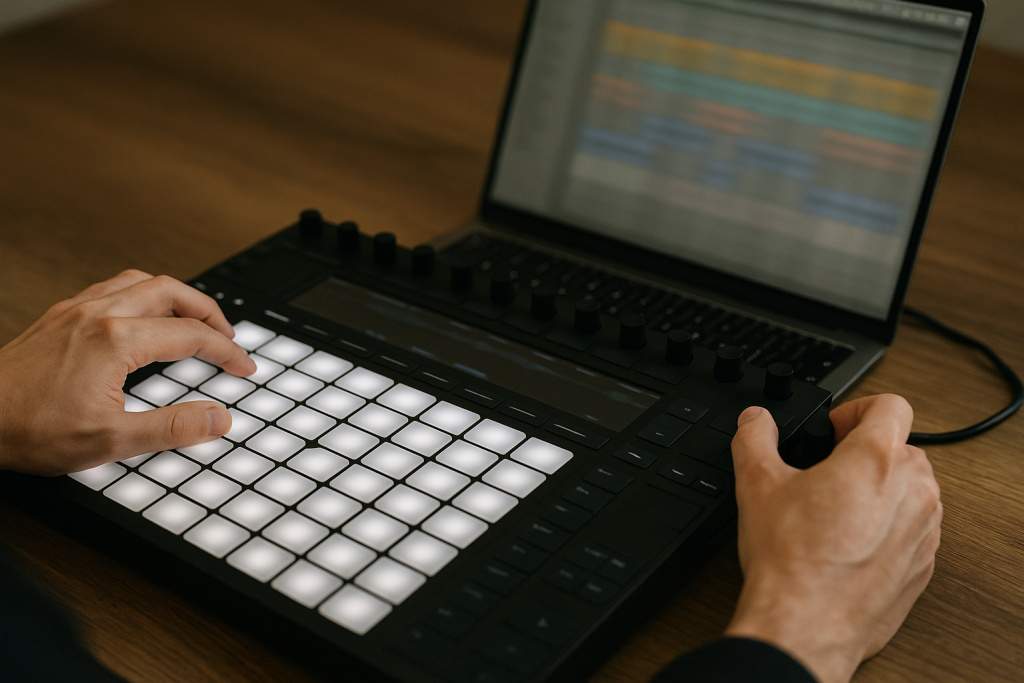
It also kept me from buying gear after every good weekend. The Ableton Push 3 was worth it for sketching and performance ideas. A third boutique compressor was not.
- Test unfinished tracks in low-pressure sets first.
- Write booth notes before leaving the venue.
- Do not spend gig cash twice in your head.
- Keep USB folders clean: current, test, archive.
- Use club reactions to fix arrangements, not your ego.

Rights only mattered after the files were labelled
Rights felt abstract until a track started earning. Then every lazy filename became a small legal fog machine. music producer income from royalties, publishing, master ownership or resale only works if the session paperwork makes sense six months later.
I am not a lawyer. I am a producer who got tired of searching old chats for who owned what. Now every paid project gets a simple text file inside the session folder: client name, date, BPM, key, fee, ownership, splits, deliverables.
Stems are part of the deal
I exported stems dry and wet when the fee justified it. Kick, drums, bass, music, lead, FX, vocal chops, returns. If the client needed DJ-friendly stems, I kept them musical rather than microscopic. Nobody wants 63 files called Audio 47.
Clean delivery protects music producer income because it reduces unpaid support. If someone can open the folder and understand it without messaging you, you have done the job properly.
The trade-off I actually believe
For newer producers, I would take clear paid work over imaginary royalty upside most of the time. Not always. If the artist has real momentum and the song feels strong, a fair split can matter. But vague exposure is not a currency. It never bought my SSDs.
My rule now: if no one can explain how the track will earn, charge the proper fee. If there is a real release plan, then talk about splits with numbers on the page.
- Save every agreement inside the project folder.
- Label pre-master, master and stems clearly.
- Write ownership terms before delivery.
- Keep split sheets simple and dated.
- Back up final sessions to an SSD and cloud storage.
| Income route | Best fit | Realistic first target | My take |
|---|---|---|---|
| DJ edits | Fast Ableton users and working DJs | $30 to $100 per edit | Low glamour, reliable cash, great practice for arrangement. |
| Ghost production | Producers who can follow references without copying | $300 to $1500 per track | Strong music producer income if the brief and revisions are controlled. |
| Custom artist tracks | Producers who can communicate with singers and rappers | $250 to $2000 per song | Best long-term client path, but it needs patience. |
| Beat packs and loops | Makers with a consistent sound library | $10 to $50 per sale | Scales better later, slow at the start. |
| DJ gigs | Producers who can perform and network locally | $100 to $1000 per night | Feeds the studio, but travel can wreck production time. |
Further reading
- Ableton Live — Ableton is the official source for Live features, workflow updates and production tools referenced in the article.
- Pioneer DJ CDJ-3000 — Pioneer DJ is the manufacturer source for the club player used as a real-world testing reference.
Frequently asked questions
How do I build music producer income as a beginner?
Start with small services you can finish cleanly: DJ edits, vocal timing, stem balancing, basic mix prep and custom beat sketches. Charge fixed prices, limit revisions and keep files labelled. Big placements are rare early. Repeatable paid work builds confidence faster.
Can bedroom producers really make money from ghost production?
Yes, if the work sounds release-ready and the brief is clear. You need strong references, clean stems, reliable delivery and written ownership terms. Bedroom setup is not the issue. Weak arrangement, messy files and endless unpaid revisions are the real killers.
Should I sell beats or offer custom music production?
I would start with custom production if you can handle feedback. Beat sales need traffic and volume. Custom work pays sooner because one artist has a specific problem. Keep beat packs as a side catalog, but use custom sessions to build relationships.
How much should a new producer charge for a full track?
For a serious full track, many newer producers start around $250 to $500, then raise prices as results improve. If the job includes stems, mix revisions, sound design and exclusivity, charge more. Always take a deposit before starting.
Do I need expensive gear before charging clients?
No. A stable DAW, decent headphones, a reliable interface and honest monitoring beat a flashy room. Ableton Live, FL Studio, Logic or Bitwig can all deliver paid work. Spend money where clients hear it: arrangement, mix decisions and clean exports.
Are royalties better than upfront production fees?
Usually not for beginners. Upfront fees pay rent and prove the client values the work. Royalties matter when the artist has reach, the release plan is real and the splits are written. Exposure without numbers is just unpaid hope.
Conclusion
The useful thing about music producer income in 2026 is that it is less mysterious than it looks from outside. The money sits in finished edits, clean ghost briefs, custom tracks that solve an artist’s problem, DJ sets that teach you what hits, and files organised well enough to earn later. I would not build a plan around one viral moment. I would build it around repeatable sessions.
Try this in your next session: write the job in one sentence, set the revision limit, name the deliverables, and track the unpaid minutes. The notes will tell you what to charge next time.
Music producer income — Quick Recap
The fastest way to lock in music producer income is to internalise the workflow above and repeat it on every project. Start small: pick one technique from this music producer income guide, apply it to your next session, and audit the result against a reference track.
- Small paid services often create steadier cash than chasing one huge placement.
- Ghost production works best with strict references, deposits and revision limits.
- Custom artist work can build repeat clients faster than anonymous beat sales.
- DJ gigs help test tracks, but travel time must be counted honestly.
Treat music producer income as a habit, not a one-off — the producers who consistently nail music producer income are the ones who run the same checks on every track. That’s the difference between a clean, club-ready master and a track that sounds great at home but falls apart on a real system.
In a real studio session, music producer income comes down to the order in which you make decisions: reference first, gain stage second, then the creative work. Producers who treat music producer income as a checklist instead of a vibe end up shipping more tracks.
Most producers and DJs undervalue music producer income because the wins are invisible until the track plays back on a real system. Bake music producer income into your template and the next ten projects benefit automatically.
When you struggle with music producer income, the fix is rarely a new plugin. Loop a problem section, A/B against a reference, and isolate which element is breaking your music producer income.
My Career makes videos from your own track and posts them for you, pitches your release to 34,000+ labels, playlists, radio stations, YouTube channels and blogs, puts it in every store and briefs you every morning. Free plan, no card, two minutes to set up.