 By Emma Carter · October 4, 2026
EDM ghost production is no longer just a back-room shortcut for DJs who need a release before festival season. EDM ghost production now sits next to avatar performances, virtual artist projects, and custom show music, where the track is only one part of the package.
That changes the buying decision. A finished exclusive track might get you moving fast, but it will not automatically give you stems for a motion-captured set, 8-bar transition edits, or a clean rights chain for a faceless project. I am comparing three routes here: ready-made exclusive tracks, custom ghost production, and avatar-first performance packages. They are not equal. One is fast, one is flexible, and one is built for the stage screen first. Pick wrong and you spend twice.
EDM Ghost Production Routes for Avatar Performances
The three routes solve different problems. A ready-made exclusive track is a finished record you can buy and release under your name. Custom ghost production starts with your references, your brief, and your artist direction. An avatar-performance package treats the music like show material, with edits, stems, and scene timing considered from the start.
If you are building a DJ identity, the ready-made route is hard to beat for speed. If you are building a character with a visual narrative, custom work usually wins. If your avatar has scenes, gestures, transitions, and recurring motifs, the avatar-first route is the only one that does not feel bolted together later.
Route A: Ready-Made Exclusive Tracks
This is the cleanest buyout model. You audition tracks, choose one that fits your lane, then secure rights according to the contract. For a bedroom producer trying to move from unfinished loops to real releases, it removes the hardest bottleneck: finishing.
Dock it for identity, though. A finished track can sound strong and still miss your visual brand. If your avatar is cyber-pop and the track screams generic mainstage 2016, the mismatch will show in the first 30 seconds.
Route B: Custom Ghost Production
Custom ghost production is the better middle lane. You bring three to five references, a target BPM, a rough key range, and a short artist brief. The producer builds around that instead of forcing you into an existing record.
This is where edm ghost production starts feeling like artist development rather than shopping. You can request a 16-bar intro for DJ mixing, a shorter radio edit, a harder second drop, or dry vocal chops so the avatar visuals can breathe.
Route C: Avatar-First Performance Package
The avatar-first package is not just a longer custom track. It is show design with music attached. You need full stems, alternate builds, stingers, impact hits, loopable 4-bar sections, and maybe clean musical cues for visual scene changes.
This route costs more because the deliverables are wider. Fair. You are not buying one stereo master. You are buying the musical skeleton for a performance system.
- Ready-made tracks win when you need a release this month.
- Custom ghost production wins when your artist identity matters.
- Avatar-first packages win when visuals, timing, and stems drive the show.
- If you need only a Spotify-ready single, do not overbuy show assets.
- If you need an avatar set, do not underbuy a single stereo bounce.
Originality, Ownership, and the Legal Paper Trail
The legal side is where weak ghost deals fall apart. The music can slap, the master can be loud, and the artwork can look expensive, but none of that helps if the rights are vague.
My blunt take: a boring contract beats a friendly DM every time. You want ownership terms, writer splits, usage scope, exclusivity, payment terms, revision limits, and delivery files listed clearly.
Ready-Made Tracks Need Clean Exclusivity
For ready-made EDM ghost production, the big question is whether the track is truly exclusive after purchase. The file pack should not be floating around with ten other buyers. Ask for a written transfer or license that says what you can do with the master and composition.
Watch the sample situation. If the track uses a vocal from a questionable pack or an uncleared acapella, the risk lands on your release. A cheap banger becomes expensive fast when a distributor flags it.
Custom Tracks Need Split Clarity
Custom work can involve more moving parts: topliners, session vocalists, additional engineers, and the producer who builds the instrumental. If the agreement says buyout, confirm what that means for master ownership and publishing.
Do not assume silence means zero splits. Some ghost producers sell full copyright. Others sell the master but keep a publishing share. Either can be workable, but hidden splits are poison.
Avatar Packages Need Usage Scope
Avatar performances create extra usage cases. The music may appear in livestreams, ticketed virtual shows, short clips, teaser trailers, game-like environments, or brand collaborations. Your agreement should cover those uses in plain language.
If your avatar project might become merchandise, sponsorship, or a paid digital event, secure that scope early. Retrofitting permissions after a campaign lands is amateur hour.
- Ask whether the master, composition, or both are included.
- Confirm exclusivity before announcing a release date.
- Request stems, MIDI where relevant, instrumental, extended, and clean edits.
- Put avatar livestream and short-form content usage in writing.
- Keep invoices, contracts, and final file dates in one folder.

Sound Design: Club Track vs Avatar Moment
A normal club track is built around DJ utility, drop impact, and replay value. Avatar performances need those things too, but they also need musical cues that match a visual body. A faceless avatar standing still over a massive supersaw stack feels dead. The sound has to give the visuals something to do.
This is where I dock many ready-made tracks. They may work in a DJ set, but they often lack moments that a virtual performer can own.
How EDM Ghost Production Handles the Drop
A good drop still needs the boring technical wins: kick and sub separation, sidechain ducking that breathes with the groove, controlled 120 Hz to 300 Hz low-mid energy, and a master that leaves enough room before final limiting. If the pre-master is already brickwalled at -5 LUFS, ask for a cleaner version.
For avatar use, the drop also needs recognisable motion. A 1-bar fill before the second 8 bars, a call-and-response lead, or a chopped vocal tag gives animators and editors clear hit points.
Ready-Made Sound Design Is Fixed
Ready-made tracks can sound polished, but you inherit every choice. If the lead is too bright at 6 kHz, the snare reverb is too long, or the breakdown is too empty for your avatar scene, you may not get meaningful changes unless revisions are included.
That is fine for release-only use. It is weaker for shows. A stereo master gives you almost no control once visuals enter the picture.
Custom and Avatar-First Tracks Can Be Scored
Custom work lets the producer build moments around your brief. Want a darker first breakdown, a half-time fakeout, and a 4-bar loop for an avatar entrance? Put it in the brief before production starts.
Avatar-first work goes further. The producer can deliver stems grouped as drums, bass, music, FX, vocals, and risers, then create alternate sections for camera cuts or motion loops. That is the difference between a track and a usable performance bed.
- Club-ready does not automatically mean avatar-ready.
- Ask for 24-bit WAV stems, not only MP3 previews.
- Keep drops readable: one main hook, one bass idea, one clear rhythm.
- Build visual hit points into fills, risers, impacts, and vocal tags.
- Avoid over-limited pre-masters if the show needs extra processing.
Release Speed, Budget, and Revision Pain
Money is only half the budget. Time, revision energy, and decision fatigue count too. This is where the comparison gets simple.
If you need a track this week, buy ready-made. If you need the track to sound like your artist identity, commission custom. If you need a show system, pay for avatar-first deliverables from the start.
Ready-Made Is the Speed Pick
Ready-made tracks can move in 24 to 72 hours if the paperwork and payment are clean. That makes sense for DJs who have a release slot, a content calendar, or a label pitch deadline.
The trade-off is creative control. You might get minor tweaks, but you should not expect the producer to rebuild the arrangement, swap the drop, and write a new hook for the same price.
Custom Production Takes Two to Six Weeks
Custom ghost production usually needs a proper loop of briefing, first demo, feedback, arrangement, mix, and final delivery. Two weeks is fast. Four to six weeks is more realistic when the track has vocals, detailed references, or multiple edits.
The best briefs are specific. Say 126 BPM melodic techno with a restrained vocal hook, not make it emotional and huge. Producers cannot mix feelings. They can mix references, keys, arrangement lengths, and sonic targets.
Avatar Packages Need Calendar Space
Avatar-first music can take four to ten weeks because the track has to survive more than Spotify playback. It needs to support visual timing, teaser edits, livestream cues, and sometimes multiple versions for different platforms.
Rush this and you will pay later. The most common failure is commissioning a normal track, then asking for stems, loops, and transitions after the mix is finished. That is backwards.
- Under one week: pick ready-made and accept the fixed identity.
- Two to six weeks: pick custom and write a tight brief.
- Four to ten weeks: pick avatar-first and plan show deliverables early.
- Do not request unlimited revisions unless the budget supports them.
- Lock reference tracks before the producer starts, not halfway through.

Reddit Rumours, Detectors, and Reputation Risk
Searches like avatar performances and ghost production opportunities reddit, ghost producer Reddit, and ghost production detector tell you one thing: artists are nervous about being exposed. That fear is understandable, but most of the online noise is low-grade speculation.
A public career should not be built around forum paranoia. Build it around contracts, originality checks, credible files, and a story you can defend.
Reddit Is Useful for Warnings, Not Verdicts
Reddit can show you patterns: bad communication, recycled tracks, missing stems, late delivery, or vague rights language. Use that as a smoke alarm, not a court ruling.
The worst move is choosing a producer only because a thread says everyone uses ghost producers anyway. That attitude makes artists lazy. You still need taste, direction, and quality control.
A Ghost Production Detector Cannot Prove Much
A so-called ghost production detector might compare waveform fingerprints, metadata leftovers, or upload history, but it cannot reliably prove authorship. Similar drops, shared sample packs, and common genre templates can trigger false suspicion.
Real protection is boring: exclusive contracts, clean delivery folders, project stems, dated invoices, and original artwork. Those carry more weight than a mystery tool guessing from a stereo file.
Reputation Comes From Consistency
If every release sounds like a different artist, people notice. That is the real risk with random ghost produced tracks. One month you are festival big room, the next you are deep house, then suddenly cyber bass for an avatar project.
Custom work reduces that problem because you can build a repeatable sonic fingerprint: similar drum pressure, recurring vocal treatment, consistent BPM range, and a recognisable harmonic mood.
- Treat Reddit as research, not evidence.
- Ignore detector drama and demand better paperwork.
- Build a consistent artist sound across three to five releases.
- Keep screenshots of briefs and approval messages.
- Do not chase every trending subgenre under one artist name.

Publishing, Credits, and Metadata for Silent Writers
Ghost production gets messy when artists think silence means nothing needs to be documented. Even if a producer is uncredited publicly, the business details still need a paper trail.
Metadata is not glamorous, but it is where money and disputes start. ISRCs, writer names, publisher fields, version names, artwork files, and release dates all matter once a track leaves your hard drive.
Ready-Made Tracks Need File Discipline
For ready-made tracks, make sure the final delivery is more than one WAV called final_master_v7. You want the master, instrumental if relevant, radio edit, extended mix, stems when included, artwork specs if bundled, and a rights document.
In our own catalogue, we see this constantly when reviewing audio quality, originality, included files, artwork, and metadata before approving releases. The track is only one checkpoint. The release package has to be clean too.
Custom Tracks Need Credit Decisions Early
If a producer stays silent, write that into the agreement. If they keep a publishing share, register it correctly. Services such as Songtrust can help writers and publishers manage publishing administration, but they do not fix a vague deal after the fact.
If you want to sell alternate versions, demos, or fan extras through Bandcamp, confirm your license allows that. Direct sales are still exploitation of the recording and composition.
Avatar Projects Need Version Control
Avatar performances create many files: show intro, teaser edit, loop A, loop B, full master, clean version, instrumental, stems, stingers, and short-form cuts. Name them properly from day one.
Use version labels that make sense six months later: 126BPM_Amin_ShowIntro_24bit, not newnewfinal. Bad naming wastes more time than most artists admit.
- Store contracts beside the final audio files.
- Keep ISRC, release title, artist name, and version names consistent.
- Separate public credits from private rights ownership.
- Confirm whether direct sales, sync, and livestream use are allowed.
- Archive stems before mastering changes the final balance.
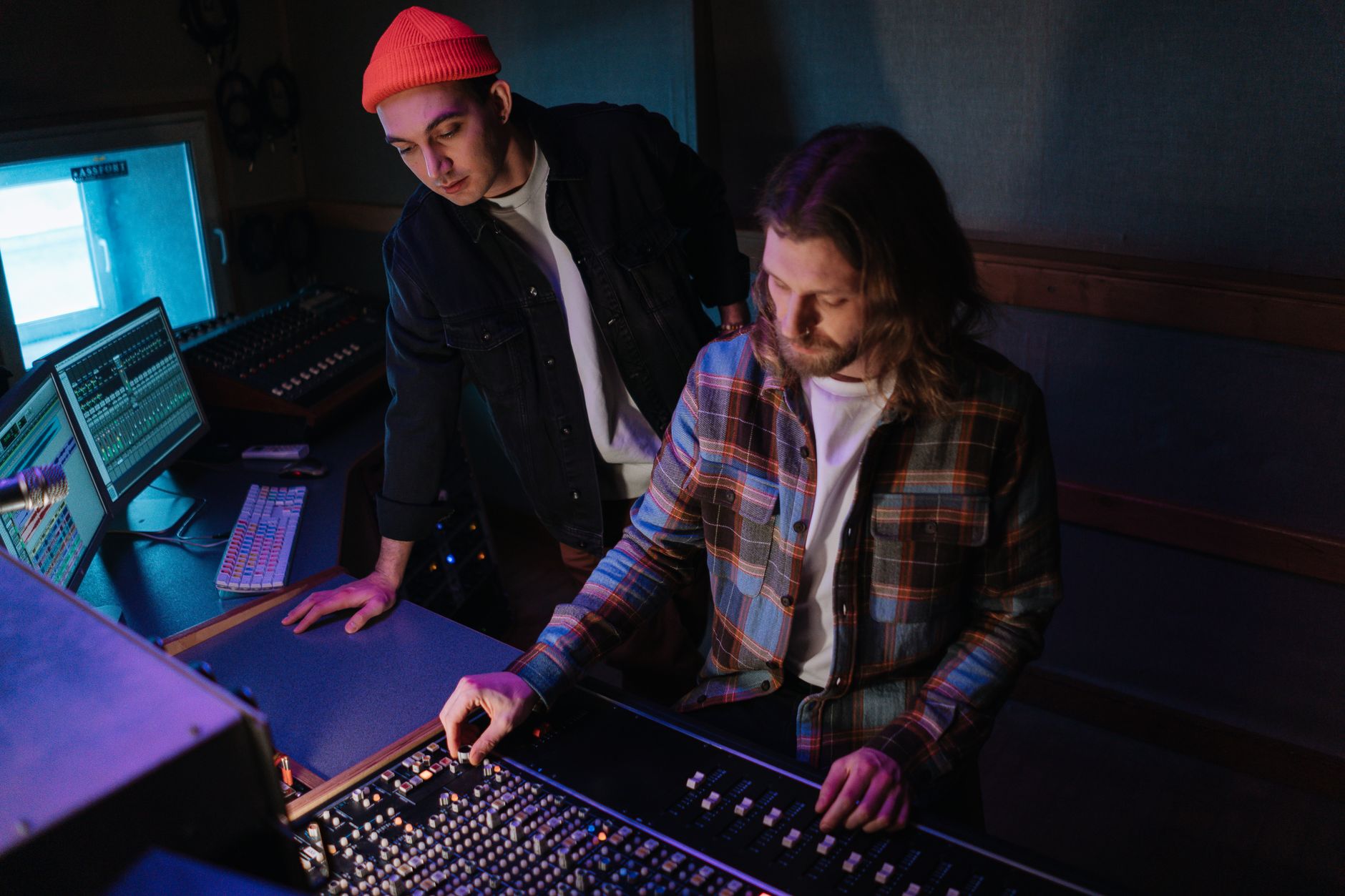
Who Should Pick Which Route
Here is the no-fence verdict. Most aspiring DJs should start with a ready-made exclusive track if they need momentum and do not yet have a finished release standard. Most artists with a defined identity should skip that and commission custom production. Avatar performers should not cheap out with a stereo-only track.
The wrong route is obvious after the first revision. If you keep asking for identity changes, you should have gone custom. If you keep asking for show edits, you should have gone avatar-first.
Pick Ready-Made if You Need Proof of Movement
Ready-made is the correct choice for a DJ who needs to release, pitch, and learn the business rhythm. You will get more from one finished track than from twenty unfinished loops on your laptop.
Pick it when the track already fits your brand at 80 percent or better. If it needs a new drop, new breakdown, and new vocal idea, it is not a bargain anymore.
Pick Custom if You Are Building a Real Artist Lane
Custom ghost production is the strongest long-term route for most serious artists. It lets you shape tempo, arrangement, sound palette, vocal attitude, and release strategy without pretending you can produce every detail alone.
This is my default recommendation once an artist has references and taste. It creates better continuity than random shopping, and it costs less than fixing a confused catalogue later.
Pick Avatar-First if the Performance Is the Product
If the avatar show is the thing people buy into, music cannot be an afterthought. Pay for stems, transitions, cues, and alternate edits. Demand files that serve the visual system, not only streaming platforms.
For avatar performances, edm ghost production should feel like scoring a character. The track has to move the crowd, but it also has to give the avatar a body, a rhythm, and a reason to exist on screen.
- Bedroom DJ with no releases: ready-made exclusive.
- Artist with references and a visual lane: custom ghost production.
- Virtual performer or avatar act: avatar-first package.
- Label pitch with a tight deadline: ready-made if the rights are clean.
- Long-term brand build: custom wins over catalogue shopping.
| Decision Point | Ready-Made Exclusive | Custom Ghost Production | Avatar-First Package |
|---|---|---|---|
| Best use | Fast release, DJ credibility, label pitch | Artist identity, consistent catalogue, stronger references | Virtual shows, character-led sets, visual cue timing |
| Typical delivery speed | 24 to 72 hours after payment and paperwork | Two to six weeks depending on revisions | Four to ten weeks with show assets |
| Creative control | Low, mostly fixed arrangement and sound design | High, brief-led production and targeted revisions | Very high, music built around scenes and performance timing |
| Files to demand | Master, extended mix, contract, stems if included | Master, pre-master, stems, instrumental, edit versions | Grouped stems, loops, stingers, transitions, show intro, short edits |
| Main risk | Generic identity or unclear exclusivity | Weak brief causing revision drift | Under-scoped rights for livestreams and branded content |
| My verdict | Best for speed, weakest for identity | Best all-round choice for serious artists | Best for avatar acts, overkill for simple releases |
FAQ
Is EDM ghost production legal?
Yes, edm ghost production is legal when the rights, payment, ownership, and credit terms are agreed in writing. The risky part is not the concept. The risky part is vague contracts, uncleared samples, fake exclusivity, or hidden writer claims. Get the master and publishing terms clear before release.
Is Ghost Productions an NM AI?
No. That search phrase usually mixes unrelated business-name and location results around Ghost Productions NM. It is not a standard term for EDM ghost production or avatar performance music. Always check the actual company, service terms, and rights documents instead of trusting a confusing search snippet.
Which are the best ghost production sites?
The best ghost production sites are the ones that show real previews, specify exclusivity, provide clear contracts, deliver proper files, and explain what happens with publishing. Do not judge only by price. A strong site should make ownership, revisions, stems, artwork, and metadata boringly clear.
Which EDM DJs use ghost producers?
Some producers and DJs have publicly discussed ghost production, and Maarten Vorwerk is one of the best-known names connected with the topic. Be careful with rumour lists, though. Many claims about famous DJs are unverified, and repeating them as fact can make you look careless.
Can I release ghost produced tracks under my artist name?
Yes, if your agreement allows it. Many ghost produced tracks are specifically sold so the buyer can release them under an artist name. Confirm whether the deal covers the master, composition, artwork, stems, direct sales, livestream use, and avatar performance use before uploading anything.
Do ghost production detectors actually work?
Not reliably. A ghost production detector may spot similarities, reused samples, or metadata clues, but it cannot prove who wrote a track. Contracts, project files, stems, dated communication, and payment records are stronger evidence than a tool guessing from a finished stereo master.
EDM ghost production can get you from bedroom intent to release-ready material, but the right route depends on what you are actually building. A DJ who needs momentum should buy a strong ready-made exclusive. An artist shaping a serious catalogue should commission custom work. An avatar act should pay for performance assets from the first brief, because stems and cues are not optional extras.
Do not choose based on fear, forum gossip, or the cheapest listing. Choose based on files, rights, delivery scope, and whether the track supports the identity you want people to remember. For your next session, write a one-page brief with references, usage needs, revision limits, and must-have files before you spend a dollar.
My Career makes videos from your own track and posts them for you, pitches your release to 34,000+ labels, playlists, radio stations, YouTube channels and blogs, puts it in every store and briefs you every morning. Free plan, no card, two minutes to set up.