Key takeaways
- Music motivation works better as a system than as a feeling.
- Ableton Note, Splice, and Push 3 reduce the friction of starting.
- DJ playback on a DDJ-FLX10 exposes arrangement problems quickly.
- Pro-Q 4 and Soothe2 can save a session by removing one painful sound.
- Trello, Notion, and calendar blocks make unfinished progress visible.
- Reference tracks give you measurable targets without copying the record.
Music motivation dies when the session feels too large, so use tools that shrink the next move to something you can do in ten minutes. Music motivation is not a mood you wait for. It is a chain of low-friction decisions: open Ableton Note, grab a rough drum loop from Splice, tap Push 3 pads, record one ugly pass, then fix one thing.
That matters for bedroom producers, aspiring DJs, artists writing briefs for ghost production, and anyone staring at a blank DAW. The goal is not to feel inspired all day. The goal is to keep contact with the track long enough for taste to wake up. These are the tools I would actually use when the coffee has worn off and the eight-bar loop is starting to annoy me.
Music Motivation Tools That Remove Blank-Page Friction
The right tool gives you a first action before your brain starts negotiating.
Most people lose music motivation before sound comes out. They open a blank Ableton Live set, scroll presets for 18 minutes, check their phone, then call it a bad day. That is not a talent problem. It is a setup problem.
Build a start chain. One mobile sketch app. One sample source. One controller. One reference folder. One place to track progress. If the first action is obvious, you have a shot.
Why Music Motivation Fails After Eight Bars
The eight-bar loop feels safe because nothing has to be judged yet. The moment you arrange it, the track becomes real. That is where music motivation usually drops.
Force the next decision smaller. Duplicate the loop to 32 bars. Mute the clap for bars 1-8. Bring the bass in at bar 17. Add a 4-bar fill before the drop. You are not finishing the track yet. You are giving it somewhere to go.
- Save one blank template per genre.
- Keep -6 dB headroom on the master while writing.
- Start with drums, bass, or vocal hook, not all three.
- Arrange to 32 bars before judging the idea.
Ableton Note: Catch Ideas Before They Go Cold
A phone sketch beats a perfect idea you forgot by lunch.
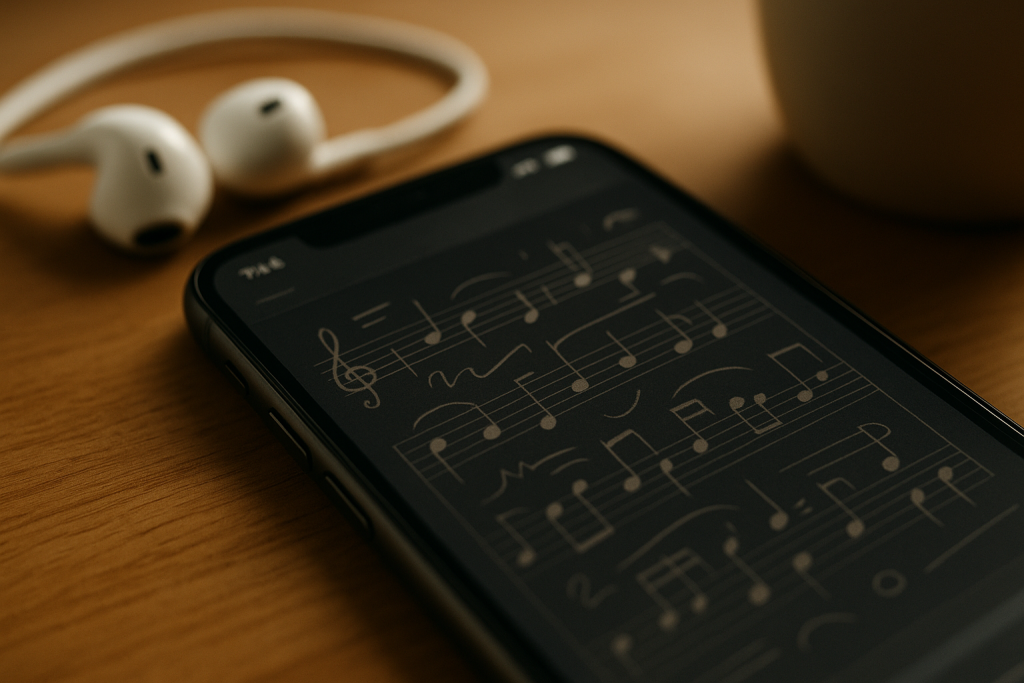
Ableton Note is useful because it removes the studio from the start of the process. Tap a kick, hum a bass rhythm, sample a street sound, then sync it into Ableton Live later. That little bridge protects music motivation when you are away from your monitors.
Use it for rough shapes, not polished production. Eight bars of drums and one hook is enough. If you try to mix on your phone, you are avoiding the real session.
Set a Two-Minute Capture Rule
Open Note, make one clip, name it badly, move on. The name can be “rubber bass train” or “warehouse toms 124.” Clarity can come later.
When you get back to Live, drag the idea into your template and make three decisions fast: tempo, key, and groove. A 124 BPM tech house sketch does not need a cinematic pad hunt. It needs a kick, a bass lane, and a reason to loop twice.
- Keep sketches under 16 bars.
- Record voice notes for bass rhythms.
- Sync only the ideas you still like after 24 hours.
- Delete weak sketches weekly so the folder stays useful.
Splice: Use Loops as Matches, Not Crutches
A loop should start the fire, not become the whole record.
Splice is dangerous when you scroll it like social media. It is brilliant when you search with a job in mind. Need a 909 top loop at 126 BPM? Find one, chop it, move on. Need a dry vocal stab in F minor? Set the filter and stop auditioning after ten results.
For music motivation, the value is speed. A good loop can get your hands moving before taste turns into overthinking.
Chop Before You Commit
Drag the loop into Simpler, slice by transient, and play a new pattern. Nudge one hit late by 10 ms. Pitch one slice down 2 semitones. High-pass percussion around 220 Hz if it fights the bass.
If the sample still sounds like a stock loop after five minutes, replace it. The point is movement, not ownership anxiety. Artists hiring ghost production or custom music production services should think the same way: bring references and hooks, not a folder of random loops with no brief.
- Search by BPM, key, and instrument.
- Limit auditioning to ten samples.
- Resample the loop after chopping.
- Keep only one main borrowed hook per idea.

Ableton Push 3: Make Starting Feel Physical
Hands on pads can beat another hour of mouse clicks.
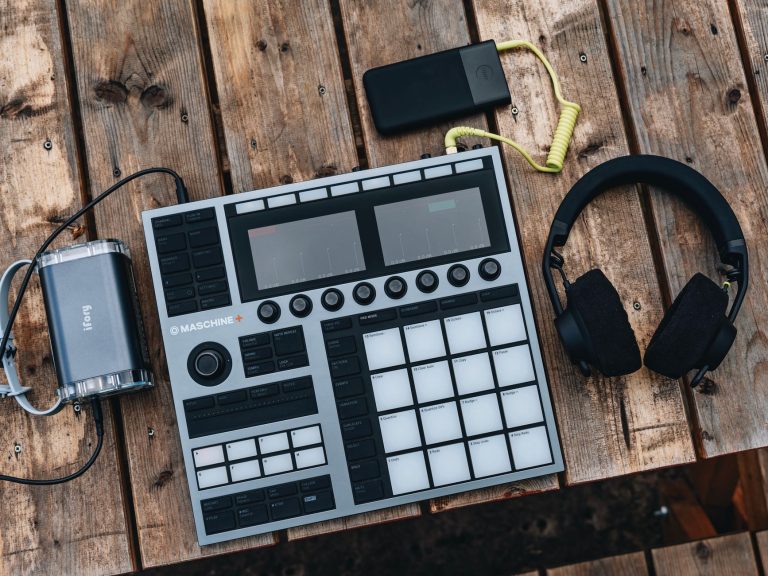
Ableton Push 3 helps because rhythm becomes physical again. Finger-drum a bad pattern, quantize it to 70 percent, then pull the best two bars into the arrangement. This is proper music motivation for people who think better by touching gear.
Do not treat Push like a magic box. Treat it like a decision surface. Pick a Drum Rack, set scale mode, record without stopping, and clean the MIDI afterward.
Record First, Edit Second
Set a 4-bar loop. Turn on capture MIDI. Play ghost notes, clumsy fills, and wrong accents. Keep the human bits that survive playback.
For house and tech house, try velocity layers on claps and hats instead of adding more sounds. A clap at 96 velocity followed by one at 72 can feel better than another percussion loop. Tiny performance differences keep the track alive.
- Use scale mode for fast bassline sketches.
- Map macro 1 to filter cutoff.
- Record automation passes in real time.
- Delete half the notes after recording.

Pioneer DDJ-FLX10: Practice Like a Real Set
DJ motivation grows when practice feels like a gig, not homework.
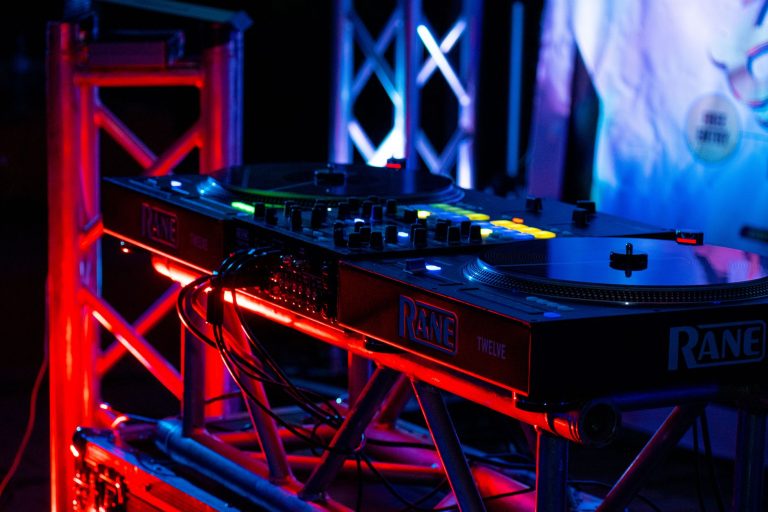
The Pioneer DDJ-FLX10 gives aspiring DJs enough club logic to train properly: full-size jogs, four channels, stems control, and a layout that makes CDJ-3000s less scary later. Use it to test your own tracks inside a set, not just to blend Beatport Top 100 records.
Music motivation gets stronger when you hear your unfinished idea between two released tracks and know exactly what is missing.
Record Ten-Minute Pressure Sets
Pick six tracks. Include one of yours. Record ten minutes with no restart. Listen back once, write three notes, and fix only those.
If your drop disappears after a reference track, check kick length, bass note choice, and midrange energy around 700 Hz to 2 kHz. If the intro is impossible to mix, add a cleaner 16-bar DJ intro. Real playback exposes weak arrangement faster than solo looping.
- Record every practice set.
- Test one unfinished track per mix.
- Use 16-bar and 32-bar phrase markers.
- Check your transitions without staring at waveforms.

FabFilter Pro-Q 4 and Soothe2: Fix the Annoying Part Fast
Nothing kills a session quicker than one harsh sound you refuse to fix.
FabFilter Pro-Q 4 and oeksound Soothe2 are not motivation plugins. They just remove the irritants that make you quit. A piercing vocal chop at 3.5 kHz or a boxy stab around 450 Hz can poison the whole loop.
Use surgical moves early enough to keep writing. Music motivation is easier when the track stops hurting your ears.
Use Repair EQ, Then Stop
Pull up Pro-Q 4, sweep narrow, cut 2-4 dB, and leave. If the bass and kick blur, use mid/side EQ and keep sub information mono below 120 Hz. If a synth keeps spitting harsh peaks, use Soothe2 lightly rather than carving ten static cuts.
Do not mix for two hours during writing. Fix the blocker, print the idea, and return to arrangement. Momentum beats perfect tone at this stage.
- Cut mud around 220-350 Hz only when you hear it.
- Keep sub bass mono below 120 Hz.
- Use Soothe2 for moving harshness, not dullness.
- Stop EQ work after the problem is gone.
Trello, Notion, and Calendar Blocks: Make Progress Visible
If progress is invisible, your brain will call the project dead.
Trello and Notion are boring in the best way. They show that “not finished” is not the same as “going nowhere.” Make columns for Sketch, Arrange, Rough Mix, Test in Set, Final Notes, and Done. Move the card after every real change.
This kind of tracking supports music motivation because it replaces vague guilt with proof. You can see the track moved from loop to arrangement, even if the snare still needs work.
Use Calendar Blocks, Not Marathon Promises
Book 45 minutes for one job: bass edit, vocal comp, intro arrangement, reference check. Do not write “finish track” on the calendar. That task is too big, so you will dodge it.
For artists preparing a ghost production brief, use the same board. Put references, BPM, key, vocal notes, drop energy, and deadline in one place. Clear briefs save energy on both sides.
- One card per track.
- One checklist per session.
- One calendar block per task.
- Move cards manually so progress feels real.

Reference Tracks and Rekordbox: Keep the Target Honest
Reference tracks stop you from chasing a sound that only exists in your head.
Rekordbox is not just for DJs. It is a strong sorting tool for producers. Build playlists by energy: warm-up, groove, peak, afterhours. Then tag tracks with notes like “short vocal hook,” “wide hats,” “dry kick,” or “bass enters bar 17.”
When music motivation fades, references give you one measurable target. Not a copy. A target.
Steal the Structure, Not the Song
Drop a reference into your DAW and place markers every 8 or 16 bars. Where does the first break land? How long is the main drop? Does the bass leave before the vocal enters?
Then apply the map to your own idea. If your track feels flat, it may not need a new synth. It may need a 4-bar drum pull, a filtered noise lift, or a cleaner breakdown exit. Arrangement fixes often restore energy faster than sound design.
- Keep three references per project.
- Match energy, not exact sounds.
- Mark 8-bar and 16-bar sections.
- Check your track after the reference, not before.
| Tool | Best Use | When to Avoid |
|---|---|---|
| Ableton Note | Capturing hooks, rhythms, and rough ideas away from the studio | When you are pretending phone mixing is real mixing |
| Splice | Finding fast drum, vocal, and texture starters with BPM and key filters | When scrolling replaces writing |
| Ableton Push 3 | Finger-drumming, bassline sketching, and live automation passes | When you need detailed editing more than performance |
| Pioneer DDJ-FLX10 | Testing unfinished tracks inside realistic DJ transitions | When you have not arranged enough intro or outro to mix |
| FabFilter Pro-Q 4 | Fast surgical EQ, mid/side cleanup, and headroom control | When you are mixing to avoid arranging |
| Trello or Notion | Tracking project stages, briefs, deadlines, and session tasks | When organizing becomes the session |
Further reading
- Ableton Note overview — Official Ableton product page for the mobile sketching tool discussed in the workflow.
- Pioneer DJ DDJ-FLX10 — Official Pioneer DJ product page with specifications for the controller referenced in the DJ practice section.
Frequently asked questions
What are the best music motivation tools for producers?
The best music motivation tools remove friction fast: Ableton Note for capture, Splice for starter material, Ableton Push 3 for hands-on ideas, Pro-Q 4 for quick repair EQ, and Trello or Notion for visible progress. Pick one tool per problem instead of stacking ten apps.
How do I stay motivated when I keep making eight-bar loops?
Duplicate the loop to 32 bars before judging it. Mute parts, add a 4-bar fill, bring the bass in later, and create one breakdown marker. Arrangement creates feedback. A loop feels stuck because it has no timeline, not because the idea is automatically weak.
Can DJ practice help me finish more tracks?
Yes. Playing your unfinished track inside a recorded ten-minute DJ set exposes weak intros, thin drops, bad kick length, and missing phrase structure. A controller like the DDJ-FLX10 makes that test practical at home before you risk the track in a real room.
Is Splice bad for creativity?
Splice is only bad when browsing becomes the session. Use it with a target: one top loop, one vocal stab, one texture. Chop, pitch, filter, or resample the sound quickly. If it still feels generic after five minutes, delete it and keep moving.
How can artists prepare better briefs for ghost production?
Use a simple board with references, BPM, key, vocal direction, energy level, deadline, and notes on what to avoid. Three focused reference tracks beat twenty random links. A clear brief keeps the creative target tight and prevents endless revisions later.
What should I do when a track sounds annoying but the idea is good?
Fix only the blocker. Use Pro-Q 4 to cut a harsh peak or Soothe2 to control moving resonance, then return to writing. Do not turn a creative session into a full mixdown. Momentum matters more than a perfect snare at the sketch stage.
Conclusion
Music motivation is easier when every tool has a job. Ableton Note catches the spark. Splice gets sound moving. Push 3 makes ideas physical. DDJ-FLX10 playback tells the truth. Pro-Q 4 and Soothe2 remove the stuff that makes you quit. Trello or Notion shows that the track is still alive.
Do not install everything and hope the mood changes. Pick one weak point in your current workflow and fix that first. If you keep stalling at the loop stage, arrange 32 bars tonight. If your tracks collapse in a mix, record a ten-minute DJ test. Try one small tool change in your next session and measure what actually gets finished.
Music motivation — Quick Recap
The fastest way to lock in music motivation is to internalise the workflow above and repeat it on every project. Start small: pick one technique from this music motivation guide, apply it to your next session, and audit the result against a reference track.
- Music motivation works better as a system than as a feeling.
- Ableton Note, Splice, and Push 3 reduce the friction of starting.
- DJ playback on a DDJ-FLX10 exposes arrangement problems quickly.
- Pro-Q 4 and Soothe2 can save a session by removing one painful sound.
Treat music motivation as a habit, not a one-off — the producers who consistently nail music motivation are the ones who run the same checks on every track. That’s the difference between a clean, club-ready master and a track that sounds great at home but falls apart on a real system.
In a real studio session, music motivation comes down to the order in which you make decisions: reference first, gain stage second, then the creative work. Producers who treat music motivation as a checklist instead of a vibe end up shipping more tracks.
Most producers and DJs undervalue music motivation because the wins are invisible until the track plays back on a real system. Bake music motivation into your template and the next ten projects benefit automatically.
My Career makes videos from your own track and posts them for you, pitches your release to 34,000+ labels, playlists, radio stations, YouTube channels and blogs, puts it in every store and briefs you every morning. Free plan, no card, two minutes to set up.