
Key takeaways
- DIY is best when you finish fast and judge your own mixes honestly.
- DJ-first growth wins when you can test records in real rooms.
- Custom production is strongest for a flagship release that needs professional finish.
- A serious catalog needs connected singles, not random genre hopping.
- Written ownership terms matter before any custom or collaborative release.
- One anchor record plus regular testing beats scattered weekly uploads.
Independent artist growth in 2026 is a straight shootout between three routes: build everything yourself, earn proof through DJ culture, or work with a custom production partner when the record has to hit harder than your current skill set allows.
The old plan, post a track, spam links, hope a label replies, is cooked. Platforms got noisier. Short-form clips became less forgiving. DJs still care about records that work on CDJ-3000s at 1:30 a.m., not backstories. For an independent artist, the question is not whether to work hard. Everyone is working. The question is which workflow gives you the cleanest music, strongest audience signal and least wasted time.
I am comparing three named routes: the DIY Content Machine, the DJ-First Club Route and the Custom Production Partner model.
The independent artist Growth Shootout: Three Routes
The three routes solve different problems. The DIY Content Machine gives you speed and control. The DJ-First Club Route gives you taste, testing and real crowd feedback. The Custom Production Partner model gives you polish when your ideas are better than your engineering.
For an independent artist, picking the wrong route usually looks like motion without traction. You finish 20 loops, post 40 clips and still have no record worth pitching. That is not a branding issue. That is a workflow issue.
How the independent artist DIY route handles control
The DIY Content Machine is Ableton Live 12, FL Studio, Logic Pro, CapCut, Canva and a calendar. You write, mix, bounce stems, cut clips and post. It is cheap if you do not count your own hours.
I dock points for finish quality. Most bedroom producer tracks fail in the same places: low-end masking around 90 to 180 Hz, harsh synth stacks at 3.5 kHz and drops that feel eight bars too long. FabFilter Pro-Q 4 and Soothe2 help, but they do not fix weak arrangement instincts.
How the DJ-First Club Route handles proof
The DJ-First Club Route starts with testing records, not polishing a grid. You make edits, bootleg-style practice versions, intro-friendly mixes and 4-bar phrase fixes. Then you play them through Rekordbox, Serato or a Pioneer DDJ-FLX10 before anyone on social media sees them.
This route exposes weak drums fast. If your kick loses authority after a breakdown, the room tells you. No comment section is as honest as a dead floor.
How the Custom Production Partner model handles finish
The Custom Production Partner model is for artists who have direction but need execution. You bring references, vocal ideas, DJ identity, tempo range and arrangement notes. A producer builds a release-ready record around that brief.
This is not magic. Bad briefs produce bland records. Strong briefs mention exact targets: a 124 BPM tech house groove, sub held under -6 dB peak headroom, a dry vocal hook, a 16-bar DJ intro and a cleaner second drop.
- Pick DIY if you can finish two solid demos per month.
- Pick DJ-first if you play out or can test with DJs you trust.
- Pick custom production if your concept is strong but the mix collapses.
- Do not chase all three at once during a launch month.
Release Quality: DIY Ableton vs Custom Production
Release quality is where the shootout gets ugly. An independent artist can survive a rough logo or a basic press photo. A weak master, phasey low-end and flat drop cost you every time.
Ableton Live 12 made MIDI work smoother in the last 12 to 24 months, especially for fast idea generation. That helps. It does not replace translation checks on small speakers, club systems and headphones.
How DIY Ableton handles sound quality
DIY wins on iteration. You can test three basslines in 20 minutes, sidechain the bass with Kickstart 2 or ShaperBox, and cut mud at 220 Hz before your coffee goes cold. Ableton Push 3 also makes sketching less mouse-heavy, which matters when ideas are still alive.
Where DIY loses is objectivity. You will stop hearing the problem after six hours. The vocal feels exciting because you recorded it. The clap feels wide because you boosted it too much at 8 kHz. That is how an independent artist ends up defending a mix instead of fixing it.
How custom production handles sound quality
Custom production wins when the reference is specific. Give a producer three tracks, not thirty. Say what each one is for: kick weight from one, bass movement from another, vocal space from the third. Then leave room for them to make a record, not clone a playlist.
Good custom work should return organised stems, a mix with at least -6 dB headroom before mastering, and versions you can actually use: extended mix, radio edit, instrumental and clean if the vocal needs it.
My score on quality
For release-ready sound, I give DIY a 6.5 if you are disciplined and an 8.5 for custom production with a sharp brief. If you are still guessing where the sub should sit, stop pretending mastering will save it.
- DIY strength: fast edits and total control.
- DIY weakness: blind spots in low-end and arrangement.
- Custom strength: translation and finish.
- Custom weakness: poor briefs waste the session.
- Check mono below 120 Hz before approving any mix.
- Leave -6 dB peak headroom before mastering.
- Export 24-bit WAV stems, named clearly.
- Test the drop after a 32-bar build, not only from bar one.
Visibility: TikTok Clips vs DJ Booth Proof
Visibility changed hard. A 15-second clip can still move, but lazy studio footage with a fake shocked face is dead weight. The better play for an independent artist is matching the content format to the record’s actual strength.
Some tracks sell through a hook. Others sell through movement in a room. Confusing those two creates bad content and bad release choices.
How the DIY Content Machine handles attention
DIY content works best when the track has a visible moment: a vocal flip, a weird synth stab, a before-and-after mix fix, or a build that changes clearly over four bars. Screen captures from Ableton Live 12 can work if the audio payoff is obvious.
I would post fewer clips and make them cleaner. One hook, one camera angle, one reason to keep watching. If the first two seconds do not show the payoff, cut the clip again.
How the DJ-First Club Route handles attention
The DJ-First Club Route is slower online but stronger in reputation. A record tested on a CDJ-3000, mixed after a known track and still holding energy has evidence behind it. That matters when sending to DJs, playlist curators or small labels.
The catch is access. If you never play shows and know no working DJs, this route becomes fantasy. You need actual booth feedback, not a private SoundCloud link played through laptop speakers.
What changed this year
More artists are using short loops as market research before committing to a full arrangement. I like that only if the loop is real. Fake virality around an unfinished chorus can trap an independent artist into finishing the wrong record.
My rule: if a clip gets saves and the 64-bar arrangement still works in Rekordbox, continue. If only the 8-second hook works, treat it as content, not a release.
- Post the hook if the hook is the selling point.
- Send the extended mix if the groove is the selling point.
- Use DJ feedback before finalising intros and outros.
- Do not build a release around one lucky clip.
Catalog Strategy: Singles, Edits and Exclusive Records
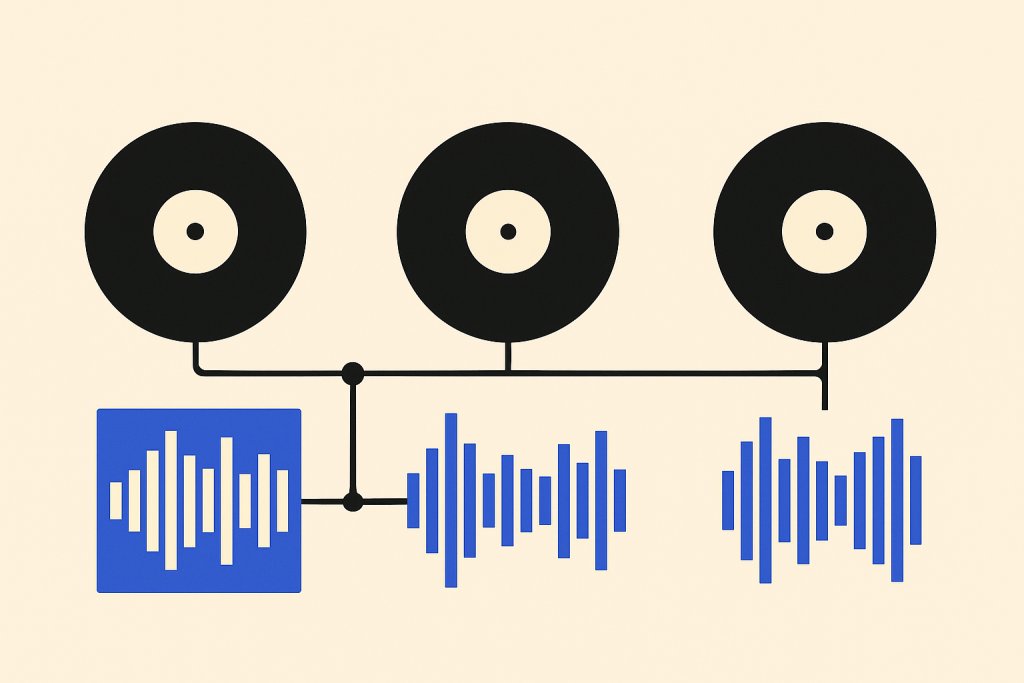
A catalog is not a folder of finished WAV files. It is a set of records that tell bookers, fans and collaborators what lane you own. This is where independent artist decisions need to get colder.
The DIY route often produces too many half-related tracks. The DJ-first route can over-focus on tools. Custom production can become expensive if you order songs without a release map.
How DIY handles catalog building
DIY catalog building is flexible. You can write a melodic house single on Monday, a tech house tool on Wednesday and an ambient intro on Sunday. That freedom is also the problem.
An independent artist needs a three-release arc. Same rough tempo zone, compatible drum taste, similar vocal attitude. Not identical. Related. If your first track is 126 BPM peak-time house and the next is sad trap at 70 BPM, you are making discovery harder than it needs to be.
How DJ-first handles catalog building
The DJ-First Club Route builds useful records. Extended intros, clean 16-bar outros, less clutter in the first minute and drops that mix well after commercial tracks. That gets DJs interested.
The downside is personality. Some DJ tools are so functional they say nothing about the artist. If your record could be by anyone with Splice drums and a Serum 2 bass preset, the club test passed but the artist test failed.
How custom production handles catalog building
Custom production is strongest when used as a catalog anchor. One serious record can define the sound, then your DIY follow-ups can orbit around it. That is smarter than commissioning five unrelated tracks and hoping they become a brand.
Ask for stems and MIDI where possible. Not to steal the process, but to learn the arrangement grammar. A serious independent artist studies the delivered session like a mix lesson.
- Plan three releases before polishing the first master.
- Keep BPM, drum style and vocal attitude connected.
- Use DJ edits to test catalog direction.
- Let one flagship record set the sonic standard.

Money and Ownership: Streaming, Shows and Licensing
Growth without ownership math turns into a vanity project. Streams help, but most independent artist income still comes from a mix of shows, direct fan support, licensing, production work, edits, sample packs and private opportunities.
This section is where I dock the DIY-only route. It often treats revenue like something that happens later. Later is how artists stay broke.
How DIY handles money
DIY has the best margins if the music is good. You own the masters, control the release pace and can register properly with your distributor, publisher and performing rights organisation. Keep split sheets. Keep ISRCs. Keep session backups.
The weakness is time. If you spend 40 hours fixing a kick drum that a better producer could solve in 15 minutes, the cheap route becomes expensive. An independent artist should cost their own time honestly.
How DJ-first handles money
DJ-first growth monetises through gigs faster than streaming. A record that helps you get booked has value even if the platform numbers look modest. Promoters care that you can move a room, bring a few people and sound professional.
Still, DJ-first artists sometimes ignore rights paperwork. Do not. If you make edits, know what you can and cannot release. If you collaborate, write splits before the track gets mastered.
How custom production handles ownership
Custom production can be clean or messy depending on the agreement. You want written terms covering master ownership, publishing splits, credit, revisions, vocal rights and whether the track is exclusive. Vague promises are useless.
For an independent artist buying custom music production, exclusivity matters if you plan to build a brand around the record. Non-exclusive tracks can work for practice, DJ sets or content, but I would not build a serious debut around one.
- Use written agreements before release day.
- Confirm master ownership and publishing splits.
- Register songs before pitching them.
- Treat show income and licensing as part of the plan.
- Do not confuse cheap production with smart budgeting.
Who Should Pick What in 2026
No fence-sitting. The best route depends on your current bottleneck, and most artists know the answer if they stop protecting their ego.
If the song ideas are weak, no producer can save you. If the ideas are strong but the mix is amateur, stop hiding behind independence as an excuse for bad sound.
Pick the DIY Content Machine if you finish fast
Choose DIY if you can finish records, make content without freezing, and judge your mixes brutally. You should know how to high-pass non-bass elements, manage sidechain ducking, reference at matched loudness and cut a 4-bar section without killing energy.
This is the best route for a technically curious independent artist who needs volume and practice. It is the wrong route if you have 80 unfinished projects named final_v7.
Pick the DJ-First Club Route if you have access
Choose DJ-first if you can test music in real settings. That might be your own gigs, a trusted resident DJ, a college radio mix show or a small promoter who will give honest feedback.
This route is best for house, techno, trance, drum and bass and club-focused pop records. If your music lives or dies on dancefloor response, booth proof beats bedroom certainty.
Pick Custom Production Partner if quality is blocking you
Choose custom production when the record concept is real but the execution is not there yet. This is especially true for vocal dance tracks, festival-leaning EDM and polished tech house where kick, bass and arrangement have no hiding places.
My strongest recommendation: use custom production for the flagship record, then use DIY and DJ feedback to support it. That gives an independent artist a professional benchmark without outsourcing their whole identity.
- DIY wins for speed and skill-building.
- DJ-first wins for club credibility.
- Custom production wins for release quality.
- The best 2026 plan is one anchor record plus consistent testing.
- If you cannot finish, simplify the route.
| Decision Area | DIY Content Machine | DJ-First Club Route | Custom Production Partner |
|---|---|---|---|
| Best for | Artists who finish fast and can edit clips weekly | DJs with access to booths, radio shows or trusted testers | Artists with strong direction but weak final production |
| Main tools | Ableton Live 12, FL Studio, CapCut, Pro-Q 4, Soothe2 | CDJ-3000, Rekordbox, Serato, Pioneer DDJ-FLX10 | Reference playlist, stems, written brief, revision notes |
| Biggest strength | Control, speed and low upfront cost | Real crowd proof and better arrangement instincts | Cleaner mixes, stronger masters and usable release versions |
| Biggest weakness | Blind spots after long sessions and inconsistent finish | Needs real access, not imaginary industry connections | Bad briefs and unclear ownership terms can waste money |
| Release quality score | 6.5/10 unless your mix discipline is serious | 7.5/10 if the track survives proper booth testing | 8.5/10 when the brief and agreement are tight |
| My verdict | Pick it for practice and content volume | Pick it if dancefloor response is your edge | Pick it for the record that defines the project |
Further reading
- Ableton Live 12 — Official Ableton product source for the current Live workflow referenced in the article.
- Pioneer DJ CDJ-3000 — Official Pioneer DJ product page for the club player discussed in the DJ testing workflow.
Frequently asked questions
How does an independent artist grow in 2026?
An independent artist grows by choosing one main bottleneck and attacking it. If sound quality is weak, improve production or use custom production. If visibility is weak, build better clips around stronger hooks. If credibility is weak, test records with DJs and collect real feedback before release.
Is ghost production a good idea for new artists?
Ghost production can help if you already know your sound and need a professional record. It is a bad shortcut if you have no direction. Use it for a flagship release, study the stems and keep building your own taste so the project still feels like you.
Should I release singles or wait for an EP?
Release singles first unless you already have a real audience. Three connected singles give you more testing points, more content and cleaner feedback. An EP makes sense when the songs share a sound and you have enough listeners to care about a bigger statement.
How often should a bedroom producer release music?
A realistic pace is one strong release every six to eight weeks. Faster only works if quality stays high. Use the gaps for DJ testing, short-form clips, playlist pitching, mix revisions and collecting feedback. A rushed weak record hurts more than a slower good one.
What should I send to a custom music producer?
Send three reference tracks, BPM, key if known, vocal notes, target genre, arrangement goals and examples of what you dislike. Mention technical needs too, such as extended mix, instrumental, clean version, stems and headroom for mastering. A tight brief saves revisions.
Do DJs still matter for artist growth?
Yes, especially for dance music. DJ support proves that a track works outside your studio. A record that mixes cleanly, holds energy and gets crowd reaction is easier to pitch than a track with only polite comments from friends.
Conclusion
independent artist growth now comes down to choosing the route that fixes your real bottleneck. DIY is the training ground. DJ-first testing is the truth serum. Custom production is the quality accelerator when the idea deserves a better finish than you can currently deliver.
My pick for most aspiring DJs and bedroom producers is simple: build one flagship record with the best production standard you can reach, then support it with DIY content and DJ feedback. Do not spread energy across five half-finished identities. Pick a lane for the next two weeks, test one record properly, and make the next decision from evidence rather than nerves.
Independent artist — Quick Recap
The fastest way to lock in independent artist is to internalise the workflow above and repeat it on every project. Start small: pick one technique from this independent artist guide, apply it to your next session, and audit the result against a reference track.
- DIY is best when you finish fast and judge your own mixes honestly.
- DJ-first growth wins when you can test records in real rooms.
- Custom production is strongest for a flagship release that needs professional finish.
- A serious catalog needs connected singles, not random genre hopping.
Treat independent artist as a habit, not a one-off — the producers who consistently nail independent artist are the ones who run the same checks on every track. That’s the difference between a clean, club-ready master and a track that sounds great at home but falls apart on a real system.
In a real studio session, independent artist comes down to the order in which you make decisions: reference first, gain stage second, then the creative work. Producers who treat independent artist as a checklist instead of a vibe end up shipping more tracks.
Most producers and DJs undervalue independent artist because the wins are invisible until the track plays back on a real system. Bake independent artist into your template and the next ten projects benefit automatically.
When you struggle with independent artist, the fix is rarely a new plugin. Loop a problem section, A/B against a reference, and isolate which element is breaking your independent artist.
Treat independent artist as a craft, not a chore. The producers releasing on the biggest labels lock independent artist in early so they can spend their energy on melody and arrangement instead of fighting the mix.
My Career makes videos from your own track and posts them for you, pitches your release to 34,000+ labels, playlists, radio stations, YouTube channels and blogs, puts it in every store and briefs you every morning. Free plan, no card, two minutes to set up.


