Key takeaways
- An exclusive sale does not automatically transfer every copyright.
- The cheapest track is the one with complete rights, stems, and useful versions.
- Finished exclusive tracks can beat custom work when you need certainty fast.
- A loud master is not proof of clean mix translation.
- Originality needs sample checks and source-level edits, not just exclusive wording.
- A proper delivery pack should support DJ sets, label pitches, and future edits.
Exclusive music purchase gets sold as the cleanest answer for DJs who need a finished record without sharing it with every other artist on the internet. That belief is too neat. An exclusive music purchase can be the smartest move you make before a label pitch, or it can be an expensive WAV with weak paperwork, recycled sounds, and no useful mix assets.
The myth I want to push back on is simple: pay once, own the track, release it anywhere. That is not how rights, masters, publishing, or DJ-ready delivery actually work. A one-time exclusive music purchase only makes sense when the agreement, files, and production quality survive boring checks: written rights transfer, stem access, originality screening, loudness headroom, and a master that behaves on CDJ-3000s as well as it does in headphones.
Myth: an exclusive music purchase means you own everything
The phrase sounds total. It is not. An exclusive music purchase usually means the same instrumental or finished track will not be sold again by that provider. That does not automatically hand you the composition copyright, the publishing share, the sample clearance, or permission to register yourself as the sole writer.
This matters because distribution platforms, labels, publishers, and Content ID systems do not care what the product page implied. They care what the written license says. If the contract does not name the master rights, composition rights, royalty splits, and territory, the exclusive music purchase is weaker than it looks.
Where exclusive music purchase rights usually stop
A proper deal separates the master recording from the underlying composition. The master is the actual audio file. The composition is the musical work: chords, melody, topline, arrangement, and sometimes lyrics. You can control one without controlling the other.
For an exclusive music purchase, I want the agreement to state whether the producer assigns rights or grants a license. Those are different animals. A license lets you use the work under defined terms. An assignment moves ownership. If money is serious, vague wording is not acceptable.
The contract needs boring, exact language
Look for written terms covering worldwide use, unlimited streams, live performance, monetized video, radio, sync approval, remix rights, stem use, and whether the producer may display the track privately as portfolio work. If you plan to pitch labels, ask for confirmation that the track has not been released, distributed, or licensed before.
I would not treat an exclusive music purchase as release-ready until the agreement names the buyer, seller, track title, date, price, and delivered files. A PDF invoice alone is not enough.
- Master rights are not the same as composition rights.
- Exclusive sale should block resale to other artists.
- Sample clearance must be stated, not assumed.
- Worldwide use should be written if you plan to distribute globally.
- Royalty splits need numbers, not friendly language.

Myth: a one-time price is automatically cheaper
A one-time exclusive music purchase feels cheaper because the bill arrives once. That is emotional accounting. The real cost shows up when you need a clean radio edit, instrumental, extended mix, label pre-master, alternate drop, or vocal-up version and none of it was included.
For aspiring DJs and bedroom producers, the cheaper option is the one that reduces friction after payment. If you spend $599 on a track and then pay another engineer $180 for mix fixes, $70 for a club master, and lose two weeks chasing stems, that exclusive music purchase was not cheap. It was under-specified.
Price the deliverables, not the fantasy
A serious delivery folder should contain more than one loud master. At minimum, ask for a 24-bit WAV master, 24-bit premaster with around -6 dB peak headroom, instrumental if vocals exist, clean and explicit versions if needed, and grouped stems for drums, bass, music, FX, and vocals.
If the track is aimed at DJ use, request an extended mix with 16 or 32 bars of intro and outro. A two-minute streaming edit might work on TikTok, but it is annoying on a Pioneer DDJ-FLX10 when you need time to blend.
Cheap gets expensive at the revision stage
Revision terms matter. One included revision is thin if the arrangement needs vocal spacing, kick replacement, and a less harsh ride loop. Three focused revisions are usually enough when the brief is clear. Unlimited revisions sound generous, but they often hide slow communication and no defined finish line.
Put the revision window in writing. Seven to fourteen days after delivery is reasonable. Six months later, the producer may have archived the Ableton Live set, updated plug-ins, or lost compatibility with a discontinued synth.
- Ask for 24-bit WAV masters and premasters.
- Get grouped stems before you need them.
- Check whether radio edit and extended mix are included.
- Confirm revision count and revision deadline.
- Budget for mastering if only a premaster is supplied.
Myth: custom production always beats a finished track
Custom music production has one big advantage: the track starts from your brief. That does not make it automatically better than a finished exclusive music purchase. A custom job with a weak reference list and nervous feedback can become a polite Frankenstein record.
A finished exclusive music purchase gives you a real object to judge. You can check the kick length, the bass relationship, the breakdown length, the hook, and the mix translation before spending anything. I prefer certainty over romance when a DJ needs a release date, a label pitch, or a signature track fast.
Finished tracks reveal problems early
With a finished track, you can load the WAV into Ableton, set the warp mode to Complex Pro only if needed, and compare it against two references in the same key range. If your reference track hits -8 LUFS integrated and the candidate master collapses at -6 LUFS, you know before you buy.
You can also test the arrangement as a DJ. Drop a cue at the first kick, first bass entry, breakdown, build, and second drop. If those landmarks land on sensible 4-bar or 8-bar phrases, the record will feel less awkward in a set.
Custom still wins when identity is specific
Custom production is the better call when your identity depends on a particular vocal tone, regional percussion, unusual tempo, or a live instrument hook you already own. If you want Afro house at 122 BPM with a recorded kora phrase and a sparse Black Coffee-style arrangement, do not buy a random finished banger and hope branding appears later.
Use an exclusive music purchase when the track already fits your lane. Use custom production when the lane itself needs building.
- Finished tracks are faster to audition and reject.
- Custom tracks fit tighter briefs when your artist identity is already clear.
- Reference tracks should include tempo, arrangement notes, and mix targets.
- A strong finished track beats a confused custom brief.
- Do not pay custom rates for a track you cannot describe.

Myth: a loud master proves the track is release ready
Loudness impresses clients too easily. A slammed master can make an exclusive music purchase feel finished in a 20-second preview, then fall apart on a club system where the limiter has flattened the kick transient and pushed the vocal sibilance forward.
Release-ready means the track survives different playback chains. I check it on nearfields, headphones, a small Bluetooth speaker, and a DJ workflow. If the master only wins by being louder than the reference, turn it down and listen again. The exclusive music purchase should still have punch when level-matched.
Measure the boring stuff
Use Youlean Loudness Meter, iZotope Insight, or the metering inside Ozone. For club music, I do not panic at -8 to -6 LUFS integrated if the genre calls for it, but true peak should be controlled. A master peaking at +1.2 dBTP can distort after conversion to AAC or MP3.
The premaster should not be clipped to death. I want around -6 dB peak headroom, no limiter on the master bus unless it is part of the sound, and enough transient shape left for mastering.
Check translation like a DJ, not a spreadsheet
Load the master into Rekordbox and analyze the grid. Export to a USB and play it on a CDJ-3000 if you can. The player supports common pro formats such as WAV, AIFF, FLAC, ALAC, MP3, and AAC, but bad exports still create headaches. Keep sample rate and bit depth sensible, usually 44.1 kHz or 48 kHz at 24-bit for delivery.
Listen for the kick and bass at the mix point. If a low-mid pileup around 180 to 260 Hz masks the groove, a loud master will not save it.
- Level-match against references before judging excitement.
- Check true peak, not only integrated LUFS.
- Ask for a premaster without brickwall limiting.
- Test the track in Rekordbox or your DJ software.
- Watch 180 to 260 Hz for club mud.
Myth: exclusivity guarantees originality
Exclusivity is not originality. An exclusive music purchase can still use the same Splice vocal chop, Vengeance snare, Serum preset, or MIDI pack that appears in fifty other demos. Legal exclusivity may stop resale of the finished track, but it does not erase shared ingredients.
This is where a lot of buyers fool themselves. They hear a polished drop and assume nobody else has that sound. In dance music, certain sounds travel fast. A tech house bass patch built from a short FM pluck with sidechain ducking is not unique because the track file is exclusive.
Originality is an audit, not a vibe
Ask what sample packs, loops, vocals, and presets were used. Royalty-free does not always mean unrestricted for every use, especially with vocals and construction kits. If the seller used a full melodic loop as the core hook, the track may be legal but still sound replaceable.
Run a practical check. Search the vocal phrase. Shazam the bounce. Compare the lead melody against references. If the main eight bars feel too familiar, pass. An exclusive music purchase should not put you one angry comment away from explaining yourself.
Push for source-level changes
The working alternative is not paranoia. It is asking for small source-level edits before final delivery. Replace the obvious fill. Resample the bass through Saturn 2 or Ableton Roar. Change the vocal chop rhythm. Move the chord inversion. Cut a muddy pad at 220 Hz with FabFilter Pro-Q 4 and make the hook less stock.
Those changes take less time than a legal argument and do more for your artist identity than another 1 dB of limiter gain.
- Ask for a list of third-party samples and vocals.
- Avoid tracks built around obvious construction-kit loops.
- Search distinctive vocal phrases before release.
- Request small sound-design changes where the hook feels generic.
- Keep written confirmation that samples are licensed for commercial use.
Myth: you only need the WAV to DJ and release
The WAV is the headline file, not the whole package. An exclusive music purchase without stems, metadata, artwork specs, cue-friendly arrangement, and alternate versions leaves you boxed in after release. You will notice it when a label asks for an instrumental or a vocalist wants a TV mix.
DJs should be especially fussy here. A track can be musically strong and still be irritating to play if the intro has random automation, no clean drum section, or a breakdown that arrives after an odd 6-bar phrase. A good exclusive music purchase respects the booth, not just the streaming preview.
Delivery should support future work
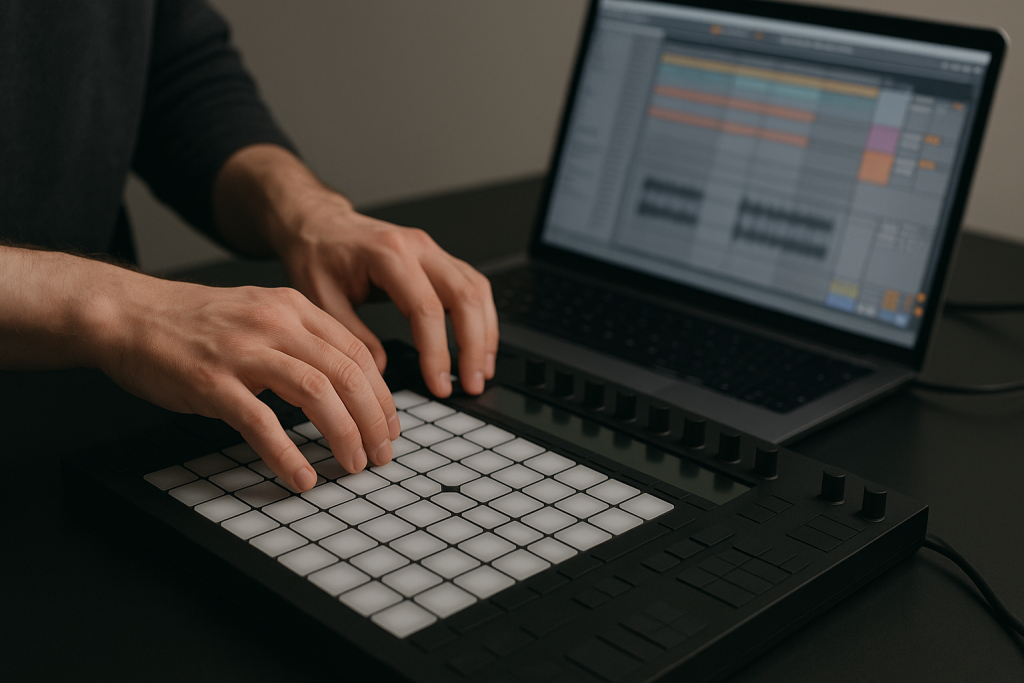
Grouped stems are usually enough. You do not always need every single clap layer, but you do need drums, bass, music, FX, and vocals separated cleanly. If you later want a VIP edit in Ableton Push 3 or a live intro for a set, stems keep the track alive.
Metadata also matters. Agree on final title spelling, artist name, BPM, key, explicit flag, ISRC plan, and producer credit before distribution. Fixing that after release is slow and sometimes impossible across every platform.
The working delivery checklist
For a serious exclusive music purchase, I want a final master, premaster, extended mix, radio edit, instrumental, grouped stems, license agreement, invoice, sample confirmation, and basic production notes. If vocals exist, add acapella and clean version where possible.
That is not diva behavior. It is normal session hygiene. Bedroom producers learn this the hard way when a track starts getting traction and every small missing asset becomes urgent.
- Final master and premaster
- Extended mix and radio edit
- Instrumental, acapella, and clean version where relevant
- Grouped stems for drums, bass, music, FX, and vocals
- License agreement, invoice, and sample-use confirmation
- BPM, key, title, artist spelling, and credit notes
| Route | Best Use | Main Risk | Files To Demand |
|---|---|---|---|
| Exclusive finished track | Fast release, DJ set weapon, label pitch | Weak rights wording or missing stems | Master, premaster, stems, agreement |
| Custom production | Specific artist sound, vocal-led brief | Slow revisions and unclear direction | Session brief, demos, stems, full delivery pack |
| Non-exclusive license | Practice releases, low-budget content | Other artists can release the same core track | License, master, usage limits |
| Self-produced track | Full control and long-term identity | Mix quality and arrangement blind spots | Project archive, stems, references |
Further reading
- U.S. Copyright Office basics — Official government source explaining copyright ownership, rights, and written transfer concepts.
- Pioneer DJ specifications — Official manufacturer specification page for CDJ-3000 supported audio formats and player behavior.
Frequently asked questions
What is an exclusive music purchase?
An exclusive music purchase is a one-time buy where the seller agrees not to resell the same track to another artist. It should include written terms for master use, distribution, royalties, stems, and any sample limitations. Do not assume it transfers every copyright unless the agreement says so clearly.
Can I release a ghost produced track under my own name?
Yes, if the contract allows it. Many ghost production deals are built for artist-name release, but the license must cover distribution, monetization, credits, and royalty handling. If the seller keeps publishing or wants credit, that should be written before you upload to a distributor.
Is exclusive music better than custom production?
Not automatically. Exclusive finished music is better when the track already fits your sound and you need speed. Custom production is better when your brief is specific, such as a unique vocal, unusual tempo, or live instrument hook. The weaker choice is the one with unclear rights and poor delivery files.
What files should I get when buying exclusive music?
Ask for a 24-bit WAV master, premaster, extended mix, radio edit, instrumental, grouped stems, license agreement, invoice, and sample-use confirmation. If vocals are included, request an acapella and clean version. These files protect future edits, label requests, DJ use, and sync opportunities.
How do I know if a purchased track uses illegal samples?
You cannot know by listening alone. Ask for a written sample list and confirmation of commercial-use rights. Search distinctive vocal phrases, run the track through Shazam, and question obvious loops. If the main hook comes from a construction kit, the track may be legal but still risky for artist identity.
Should I master a purchased track again?
Only if you receive a clean premaster or the current master fails translation checks. A second master over a clipped file usually makes things worse. Compare loudness, true peak, low-end balance, and DJ software analysis first. If the mix has mud or harshness, fix the mix before mastering.
Conclusion
The smart take is not that every exclusive music purchase is risky. The smart take is that exclusivity alone is a thin promise. Judge the deal by rights language, sample proof, file delivery, arrangement, and how the master behaves when level-matched against real references.
If you are an aspiring DJ or producer, stop asking only whether a track is exclusive. Ask what you can actually do with it six months from now. Can you release it worldwide? Edit it? Pitch it? Play it comfortably on CDJs? Register it without drama?
Try this in your next session: build a simple checklist from the sections above, load your candidate track beside two references, and refuse to pay premium money for missing basics.
Exclusive music purchase — Quick Recap
The fastest way to lock in exclusive music purchase is to internalise the workflow above and repeat it on every project. Start small: pick one technique from this exclusive music purchase guide, apply it to your next session, and audit the result against a reference track.
- An exclusive sale does not automatically transfer every copyright.
- The cheapest track is the one with complete rights, stems, and useful versions.
- Finished exclusive tracks can beat custom work when you need certainty fast.
- A loud master is not proof of clean mix translation.
Treat exclusive music purchase as a habit, not a one-off — the producers who consistently nail exclusive music purchase are the ones who run the same checks on every track. That’s the difference between a clean, club-ready master and a track that sounds great at home but falls apart on a real system.
In a real studio session, exclusive music purchase comes down to the order in which you make decisions: reference first, gain stage second, then the creative work. Producers who treat exclusive music purchase as a checklist instead of a vibe end up shipping more tracks.
Most producers and DJs undervalue exclusive music purchase because the wins are invisible until the track plays back on a real system. Bake exclusive music purchase into your template and the next ten projects benefit automatically.
My Career makes videos from your own track and posts them for you, pitches your release to 34,000+ labels, playlists, radio stations, YouTube channels and blogs, puts it in every store and briefs you every morning. Free plan, no card, two minutes to set up.