 By Emma Carter · October 1, 2026
Chord progressions in 2026 are less about exotic theory and more about choosing a loop that leaves space for the vocal, bass, and drop. The best chord progressions still lean on familiar tension: tonic comfort, pre-chorus lift, then a payoff you can hear on laptop speakers and a club PA.
What changed over the last 12 to 24 months is the workflow. Producers sketch faster with MIDI packs, DAW scale locks, and synths like Xfer Serum 2, but the records that stick still use four to eight chords with clean voice leading. If you are writing for your own artist project, DJ edits, or custom production briefs, start with progressions that carry emotion before sound design saves anything. Fancy voicings help. A strong formula helps more.
Why Chord Progressions in 2026 Feel Simpler, Not Dumber
Most strong records still use simple chord loops, but the production around them has become tighter.
Bedroom producers have better tools now, so the weak spot is not access. It is decision fatigue. Scale highlighting, chord generators, and MIDI drag-ins can throw 200 options at you before the kick is even right. The useful move is picking one emotional lane and staying there for 16 or 32 bars.
Chord Progressions Need a Job
A progression can support a topline, create lift into a drop, or make a breakdown feel expensive. It should not try to do all three at once. If the bass is busy, keep the chords wide and slow. If the vocal melody is static, let the chords move every two beats.
The 2026 shift is practical: fewer chords, better spacing, cleaner arrangement. A four-chord loop with smart inversions beats an eight-chord maze with no hook.
- Use two-bar loops for drops that need weight.
- Use four-bar loops when the vocal needs room.
- Use eight-bar movement for breakdowns and bridges.
- Change inversions before changing the whole progression.
The Chord Progression Formula: Tonic, Tension, Release
The safest chord progression formula is home, away, pressure, home or payoff.
Roman numerals make this fast. In C major, I is C, V is G, vi is Am, and IV is F. In A minor, i is Am, VI is F, III is C, and VII is G. Same shapes, different emotional pull.
Read the Numbers, Not the Key
Think in functions. The I or i chord says home. The IV or VI chord opens the room. The V or VII chord creates forward motion. The vi or III chord adds sadness without killing momentum.
This is why the same chord progressions can work in piano house, melodic techno, pop punk, and acoustic demos. The sound source changes. The emotional math stays usable.
- Major lift: I–V–vi–IV
- Minor drive: i–VI–III–VII
- Bittersweet loop: vi–IV–I–V
- Classic tension: I–vi–IV–V
- Dark anthem: i–VII–VI–VII
The Magic Four Chords Still Earn Their Place
I–V–vi–IV survives because listeners understand it before they know why.
In C major, that gives you C–G–Am–F. It feels finished, emotional, and broad enough for a topline. Flip it to vi–IV–I–V, and the same family of chords starts sadder without becoming slow.
Do Not Play Them Like a Campfire Loop
The problem is not the formula. The problem is lazy rhythm. Hold each chord for one bar and you get demo energy. Push the second chord early by an eighth note, mute the low third in the drop, or let the pad change every two bars while the pluck repeats every bar.
For dance music, sidechain the chord bus 3 to 6 dB from the kick, high-pass wide pads around 120 Hz, and leave the sub to one clean root note.
- Use inversions so the top note moves by step.
- Drop the third in the bass when the mix feels cloudy.
- Automate filter cutoff during the final four bars.
- Double the rhythm with a quiet pluck for movement.
Beautiful Chord Progressions Piano Producers Can Play Fast
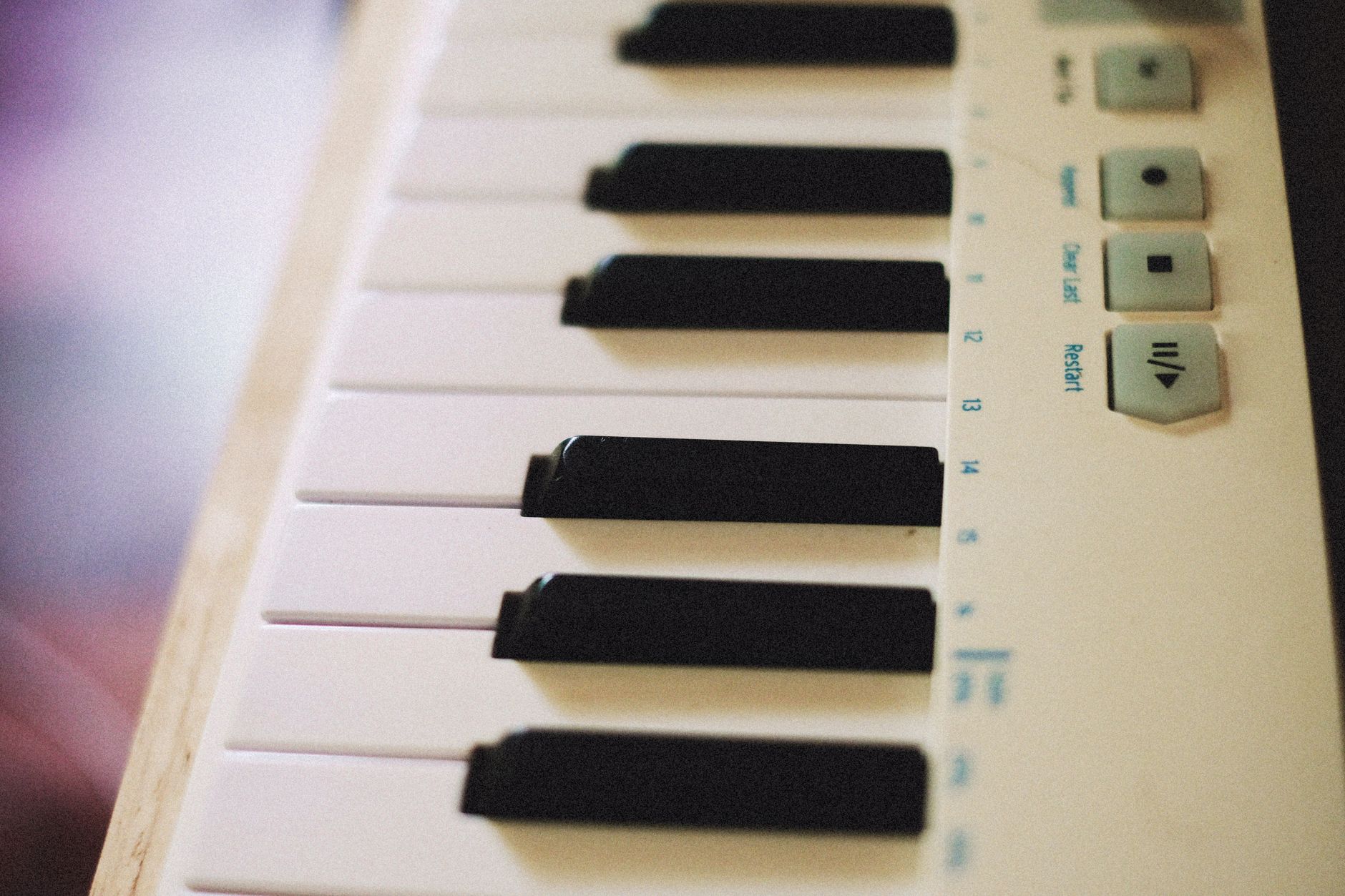
Piano makes weak voice leading obvious, so use it before you dress the part in synths.
Beautiful chord progressions piano players reach for usually share one trick: the top notes move smoothly. If your right hand jumps more than a fifth every bar, the progression may sound stitched together instead of sung.
Use Suspensions Before Extra Chords
Try Cadd9–G/B–Am7–Fmaj7 in C major. The slash chord keeps the bass walking down, while the add9 and maj7 give the loop polish without making it jazzy. In A minor, try Am9–Fmaj7–C/G–G. It is simple, but it sounds written.
Record the piano part first with no reverb. If it holds up dry, Valhalla VintageVerb can add size later without hiding bad note choices.
- Keep common notes between chords when possible.
- Put the melody note on top of the voicing.
- Use seventh chords in breakdowns, triads in drops.
- Move bass notes slower than the right hand.
Guitar Chord Progressions That Always Work Without Tabs
Guitar-friendly progressions work best when open strings or repeated top notes glue the changes together.
For guitar chord progressions that always work, do not start by hunting tabs. Start with shapes. In G major, G–D–Em–C is the same I–V–vi–IV engine. Use a capo and you can move the emotional range without relearning the song.
Beautiful Chord Progressions Guitar Writers Reuse
Try Em–C–G–D for a darker verse, then G–D–Em–C for a wider chorus. Same four chords, different first impression. If you are writing dance-pop with guitar, record two takes: one palm-muted eighth-note part and one sparse open strum.
Pan them apart, high-pass around 90 to 120 Hz, and cut a little at 250 Hz if the vocal gets boxed in. The progression stays familiar, but the record feels built.
- Use a capo to find a brighter vocal key.
- Keep one open string ringing across changes.
- Avoid full six-string strums under dense synths.
- Double simple parts instead of writing busier chords.

Unique Chord Progressions Guitar and Piano Writers Can Steal
Unique does not mean random; it usually means one borrowed chord in a normal loop.
If every chord comes from the key, the listener feels safe. If one chord steps outside the key for half a bar, the loop gets personality. Keep the bass clear, or the borrowed move will sound like a mistake.
Borrow One Chord, Then Get Out
In C major, try C–G–Bb–F. The Bb is borrowed from C mixolydian and gives the loop a festival-rock edge. For a sadder piano idea, try C–Em–F–Fm. That final minor iv chord pulls hard before returning home.
For unique chord progressions guitar players can use, keep the weird chord short. For unique chord progressions piano producers can use, voice the borrowed chord close to the previous one so it sounds intentional.
- Major with colour: I–V–bVII–IV
- Emotional lift: I–iii–IV–iv
- Dark pop: i–VI–iv–V
- Club tension: i–bVII–iv–VI
Minor-Key Loops for EDM, Pop, and Melodic House
Minor keys work in dance music because they leave room for power without forcing happiness.
The workhorse is i–VI–III–VII. In A minor, that is Am–F–C–G. It gives you weight, lift, light, then push. This is why so many melodic house drops and festival breakdowns sit around the same skeleton.
Make the Bassline Agree
Do not let the bass chase every chord tone. Root notes are fine, but a constant eighth-note bass playing A–A–F–F–C–C–G–G can feel stiff. Add passing notes only at the end of two-bar phrases.
Layer a supersaw or wavetable pad in Xfer Serum 2 above 180 Hz, then keep the sub mono and boring. Boring sub, emotional chords. That split works.
- Use i–VI–III–VII for big emotional drops.
- Use i–VII–VI–VII for darker rolling sections.
- Use i–iv–VI–V for pop tension.
- Keep the lowest chord note out of the pad if the sub plays it.
Make Any Progression Fit a Drop, Not Fight It
A progression that sounds huge in a breakdown can wreck the drop if the low mids are crowded.
The drop needs hierarchy. Kick first, sub second, main chord rhythm third, everything else behind. If your chords use thick left-hand voicings, the bassline will either disappear or turn the master into soup.
Arrange the Same Chords Three Ways
Use full voicings in the intro, thinner voicings in the verse, and power voicings in the drop. A power voicing means root and fifth, sometimes octave, with the third moved higher or muted. It keeps the emotion without crowding 200 to 400 Hz.
Sidechain ducking still matters. Set the release by groove, not by numbers. If the chord breathes back before the snare, the track pumps. If it returns late, the drop loses size.
- Cut 200 to 350 Hz when stacked pads mask the vocal.
- High-pass non-bass chord layers around 100 to 180 Hz.
- Move sevenths and ninths above middle C in dense drops.
- Print a MIDI version before committing audio.

Build a Chord Progression List for Writing Sessions
Your personal chord progression list should be short enough to remember and broad enough to cover moods.
Do not collect 300 loops. Collect 12. Tag them by job: sad verse, wide chorus, dark drop, hopeful bridge, guitar topline, piano breakdown. That helps when a custom brief says euphoric but not cheesy, or darker but still radio-friendly.
Save Progressions as MIDI and Audio
Save the MIDI in three keys: C major, A minor, and the singer’s best key once you know it. Also bounce a rough piano or pad audio file. Audio forces you to hear feel instead of staring at blocks.
If a loop keeps making songs easier, keep it. If it only looks clever on paper, bin it. The best chord progressions earn their spot by surviving different tempos and sound palettes.
- Keep one folder for major progressions.
- Keep one folder for minor progressions.
- Name files by mood and Roman numerals.
- Add BPM only when rhythm is part of the idea.
- Delete progressions you never finish songs with.
| Formula | Mood | Use Case | Production Move |
|---|---|---|---|
| I–V–vi–IV | Open, familiar, anthemic | Pop choruses, EDM breakdowns | Use inversions so the top note steps smoothly |
| vi–IV–I–V | Bittersweet but still bright | Vocal hooks, guitar-led toplines | Start sparse, then add octave layers in the chorus |
| i–VI–III–VII | Dark, wide, festival-ready | Melodic house, trance-pop, future bass | Keep the sub on roots and thin the pad below 180 Hz |
| I–iii–IV–iv | Tender, cinematic, slightly unexpected | Piano intros, bridges, emotional outros | Let the minor iv sit dry before adding reverb |
| I–V–bVII–IV | Bold, guitar-friendly, lifted | Indie dance, pop rock, live edits | Double with muted guitar and a wide synth pad |
Worth a deeper read: Chord progression.
Questions producers actually ask
What chord progressions are best for producers in 2026?
The most useful chord progressions are still I–V–vi–IV, vi–IV–I–V, i–VI–III–VII, and I–iii–IV–iv. They cover bright, sad, dark, and emotional lanes without slowing down a session. The modern part is arrangement: cleaner voicings, tighter bass space, and fewer unnecessary chord changes.
What is the best chord progression of all time?
I–V–vi–IV is the safest answer because it works across pop, EDM, rock, country, and acoustic writing. In C major, that is C–G–Am–F. It gives comfort, lift, sadness, and release in four bars, which is why so many hooks sit on it.
What is the forbidden chord in music?
People usually mean the tritone, an interval spanning three whole tones, such as F to B. It was nicknamed diabolus in musica in old theory stories, but it was not literally banned everywhere. Modern producers use tritones constantly for tension in dominant chords, bass fills, and darker melodic hooks.
What are the magic 4 chords?
The magic four chords usually mean I–V–vi–IV. In C major, that is C, G, A minor, and F. In G major, it becomes G, D, E minor, and C. The formula works because it balances resolution, lift, emotional dip, and a clean return path.
What are the 10 most popular chord progressions of all time?
Ten reliable choices are I–V–vi–IV, vi–IV–I–V, I–vi–IV–V, ii–V–I, I–IV–V, i–VI–III–VII, i–VII–VI–VII, I–bVII–IV–I, I–iii–IV–iv, and 12-bar blues I–I–I–I–IV–IV–I–I–V–IV–I–V.
Do guitar chord progressions that always work need tabs?
No. Tabs help with finger placement, but the progression is the real map. Learn the Roman numerals and move the shapes with a capo or barre chords. G–D–Em–C, Em–C–G–D, and C–G–Am–F are enough to write many strong guitar hooks.
What to remember
- Simple formulas still carry modern records when the voicing and arrangement are clean.
- I–V–vi–IV and i–VI–III–VII remain the fastest routes to usable hooks.
- Borrowed chords create freshness, but one outside chord is usually enough.
- Piano exposes weak voice leading before synth layers hide it.
- Guitar progressions work faster when repeated top notes or open strings glue the changes.
- A progression is finished when it supports the vocal, bass, and drop without fighting them.
Wrapping up
Chord progressions are not a theory flex. They are a writing decision that either makes the track easier to finish or harder to mix. Keep the formulas close, but judge them by feel: does the topline sit, does the bass have a clear lane, and does the drop still hit when the fancy extensions disappear?
Use I–V–vi–IV when you need speed, i–VI–III–VII when you need weight, and one borrowed chord when the loop feels too polite. Try this in your next session: write the same four chords as a piano breakdown, a guitar verse, and a stripped drop. The best version will show itself fast.
My Career makes videos from your own track and posts them for you, pitches your release to 34,000+ labels, playlists, radio stations, YouTube channels and blogs, puts it in every store and briefs you every morning. Free plan, no card, two minutes to set up.