Key takeaways
- Ableton Live is the strongest default choice for most EDM producers.
- FL Studio is the best fit for pattern writers and piano-roll-heavy work.
- Logic Pro is excellent value for Mac users making vocal-led dance records.
- Bitwig Studio rewards producers who love modulation and sound design.
- Clean stem export matters for DJs, collaborators, and ghost production.
- Run a 20-minute build, drop, automation, and export test before committing.
The best daw for edm is the one that gets you from an 8-bar loop to a finished, playable record without fighting the software. The best daw for edm is not decided by producer forums, celebrity screenshots, or which splash screen looks expensive. It is decided by workflow: how fast you sketch drums, automate a filter, freeze a Serum 2 stack, export stems, and check a rough master at -6 dB headroom.
Here is the short version. Ableton Live is still my first pick for most EDM producers. FL Studio wins if your brain works in patterns. Logic Pro is the sensible Mac buy. Bitwig is the sound-design nerd pick. Cubase and Studio One make sense when you are tracking vocals, editing full arrangements, or handing organized sessions to another producer.
Best DAW for EDM: The 20-Minute Shortlist
Pick by workflow first, feature list second.
The best daw for edm choice should be boring by the end of a 20-minute test. Open a blank session. Build a kick, clap, bass, lead, noise riser, and one automation move. If the DAW slows you down before bar 33, cut it from your shortlist.
Do not judge from a polished demo project. Judge from your own mess: a sidechain compressor on the bass, a FabFilter Pro-Q 4 cut at 220 Hz, a reverb send, and a rough limiter. That tells you more than 40 comparison videos.
Best daw for edm decision rule
The best daw for edm is the one where you can finish a 90-second arrangement fastest without hating the edit window. I would rather see a producer finish ten rough ideas in Ableton Live Intro than own a massive software bundle and finish nothing.
- Can you duplicate a 4-bar phrase without thinking?
- Can you automate a low-pass filter in under ten seconds?
- Can you export clean WAV stems without hunting menus?
- Test one DAW with your own kick, bass, and lead sounds.
- Keep -6 dB headroom on the master while judging workflow.
- Export stems before you buy, not after.
- Ignore stock demo songs unless you make that exact style.
Ableton Live Is Still the Fastest EDM Finisher
Ableton Live wins when speed matters more than menu depth.
If someone asks me for the best daw for edm and they have no strong preference yet, I point them to Ableton Live. Session View is still brutal for idea capture. Drop eight clips, test a vocal chop, mute the weak bits, then record the jam into Arrangement View.
The stock devices are not toys. Drum Rack, Simpler, Glue Compressor, Saturator, Auto Filter, and Hybrid Reverb cover a real club track before you buy extras. Add Serum 2, Kick 3, Soothe2, and Pro-Q 4 later. You do not need them on day one.
Where Ableton beats the pack
Ableton handles build-to-drop editing beautifully. Automation lanes are clear, audio warping is fast, and freezing a heavy synth stack is painless. With Ableton Push 3, you can sketch drums and chords away from the mouse without pretending you are in a hardware-only studio.
The weak spot is notation and traditional scoring. For EDM, I do not care. I care that a riser, fill, crash, and bass mute can be moved cleanly across 4-bar phrases.
- Best for fast arrangement and clip-based writing.
- Excellent audio warping for vocals, loops, and bootleg edits.
- Strong stock effects for sidechain ducking and saturation.
- Works well with Push 3 and compact MIDI controllers.

FL Studio Owns Pattern-Based Beat Building
FL Studio is the right call if you think in loops, drums, and piano-roll moves.
For trap-leaning EDM, slap house, hyperpop-adjacent club records, and melodic drops with busy toplines, FL Studio is hard to beat. The piano roll is still the reason many producers stay there for years. Ghost notes, slides, quick velocity edits, and dense arps feel natural.
The best daw for edm is sometimes the one that matches your attention span. FL lets you stack patterns quickly, then worry about arrangement after the hook works. That can be messy, but it also gets ideas moving.
Use FL without making loop soup
The danger is obvious. You make 64 patterns, none of them become a record, and the Playlist turns into a junk drawer. Fix that by naming patterns early: Kick, Bass A, Bass B, Lead Hook, Pre-Drop Fill, FX Sweep. Color them. Boring discipline saves tracks.
For mix work, route every serious sound to a named mixer channel. If your bass layers are not grouped, sidechain ducking becomes a guessing game.
- Best piano roll for fast melody and bass programming.
- Great for pattern-first writers and drum-heavy EDM.
- Needs stricter naming than Ableton to stay organized.
- Strong lifetime update model for long-term users.
Logic Pro Is the Sensible Mac Producer Pick
Logic Pro gives Mac users a serious EDM setup for a low one-time price.
If you are on a MacBook Air or MacBook Pro and want the best daw for edm without subscription anxiety, Logic Pro is a very clean answer. The stock library is huge, Alchemy is still useful, and Drummer can sketch percussion ideas faster than most beginners can program them.
Logic is not as immediate as Ableton for clip sketching, but it is strong once the track becomes a full arrangement. Vocal comping, flex editing, take folders, and mix organization are all solid.
Where Logic fits EDM work
Logic shines when your EDM track has proper song structure: verse, pre-chorus, build, drop, second break, final drop. It also handles singer sessions well. If you are making records with toplines, not just DJ tools, that matters.
I would not pick Logic first for live clip launching. I would pick it for Mac-based production, vocal editing, and finishing polished arrangements without buying a pile of third-party instruments immediately.
- Best value for Mac-only producers.
- Strong stock synths, effects, and sound library.
- Good for vocal-led EDM and pop-dance records.
- Less immediate than Ableton for clip-based writing.
Bitwig Studio Is for Sound-Design Addicts
Bitwig Studio is the pick when modulation is the main instrument.
Bitwig is not the default answer for every beginner, but it deserves respect. If your idea of fun is making a bass patch move with random LFOs, envelope followers, audio-rate modulation, and weird container chains, Bitwig feels alive.
For the best daw for edm conversation, Bitwig sits closest to Ableton but with a more modular brain. The Grid is powerful, and modulation is everywhere. That is brilliant for bass music, left-field techno, hardwave, and experimental festival intros.
The trade-off is focus
Bitwig can tempt you into building tools instead of tracks. I like it, but I would not give it to every new producer. If you already finish music and want deeper sound movement, go for it. If you struggle to finish 90 seconds, choose Ableton or FL first.
A good Bitwig session still needs plain decisions: kick at the front, bass controlled below 120 Hz, lead wide above 2 kHz, and automation that serves the drop.
- Best for modulation-heavy sound design.
- Great for bass music, techno, and experimental EDM.
- The Grid rewards patient producers.
- Can distract beginners who need arrangement discipline.
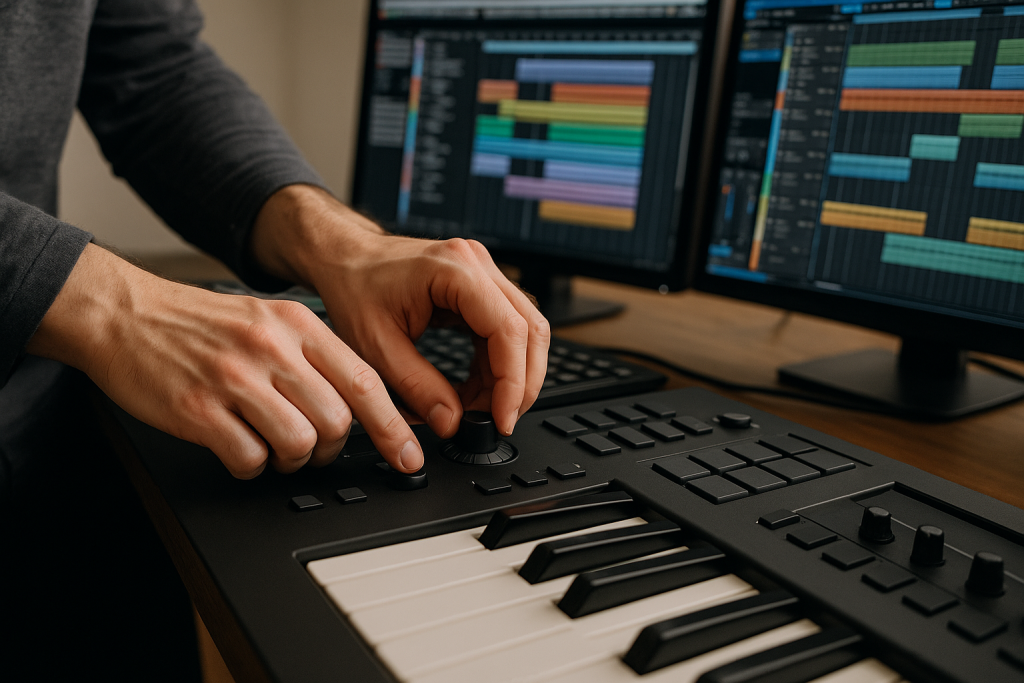
Cubase and Studio One Suit Full-Song Production
Cubase and Studio One make sense when EDM meets proper recording work.
Cubase has deep MIDI editing, serious audio tools, and a long history in electronic production. Studio One is cleaner and faster than many people expect, especially for arranging, comping, and mastering-style project handling.
Neither is my first answer for the best daw for edm if you only make loop-based club tools. Still, if you record vocals, edit guitars, arrange strings, or deliver full multitracks to artists, these DAWs can be the smarter professional choice.
Choose them for structure, not trend
Cubase is excellent when MIDI detail matters. Think layered chords, expression lanes, tempo changes, and complex arrangements. Studio One is strong when you want a clean single-window workflow and fast drag-and-drop routing.
The downside is culture. Most EDM tutorials use Ableton or FL. If you need constant tutorial matching, that matters. If you already understand signal flow, Cubase and Studio One are not second-class options.
- Cubase is strong for advanced MIDI and arrangement detail.
- Studio One has a clean workflow for recording and mixing.
- Both suit vocal sessions better than loop-only workflows.
- Tutorial support is thinner for EDM than Ableton or FL.

Think Like a DJ Before You Choose
A DAW that cannot export clean DJ-ready audio will waste your time later.
The best daw for edm has to serve the booth, not just the bedroom. Your track should survive Rekordbox analysis, a CDJ-3000, a Pioneer DDJ-FLX10 practice mix, and a loud system where the kick eats weak low end.
Before committing, export a rough master and test it against two references. Use 24-bit WAV, leave headroom before mastering, and check the first drop against a released track in the same key and tempo. If the DAW makes exporting stems annoying, that annoyance will hit every release.
Export test that exposes bad workflow
Make eight stems: kick, drums, bass, music, lead, vocal, FX, and returns. Import them into a blank project. If they line up at bar 1 and rebuild the rough mix, your workflow is healthy.
This matters for ghost production too. Clients, mixers, and vocalists do not want mystery files called Audio 47 Final New New. They want clean stems with tempo, key, and version notes.
- Check stem export before buying a DAW.
- Name files with BPM, key, and track version.
- Test rough masters in Rekordbox or Serato.
- Keep sub bass mono below roughly 100 Hz.
Ghost Production Needs Transferable Sessions
If other people may touch the track, choose software that exports cleanly.
Artists looking at ghost production or custom music production services should care less about the producer’s favorite DAW and more about deliverables. WAV stems, MIDI, dry vocals, wet vocals, reference MP3, and a short session note are more useful than a proprietary project file nobody can open.
That is why the best daw for edm in a paid workflow is often the DAW the producer finishes fastest, as long as the handoff is tidy. Ableton, FL Studio, Logic, Cubase, and Studio One can all deliver professional stems. Sloppy labeling is the real enemy.
Files that make collaboration painless
For custom EDM work, I like a simple folder: 01 Rough Master, 02 Full Stems, 03 MIDI, 04 Vocals, 05 References, 06 Notes. Print sidechain effects if they define the groove. Also include a dry bass stem if the mixer may rebuild the low end.
If the client DJs, include an extended mix with a clean 16-bar intro and outro. Radio edits are useful later, but club utility comes first.
- Deliver WAV stems from bar 1.
- Include MIDI for bass, chords, and main hooks where possible.
- Print wet and dry vocal versions.
- Add BPM, key, sample rate, and version notes.
- Create an extended DJ mix when the track is club-focused.

My Pick: Ableton First, FL Studio Close Behind
If you forced me to pick one today, I would choose Ableton Live for most EDM producers.
My answer to best daw for edm is Ableton Live because it removes friction between loop, arrangement, automation, and export. It is not perfect. The piano roll is not FL Studio’s piano roll, and some producers hate the grey layout. I still pick it because finishing matters.
FL Studio is the close second. If you already love its piano roll and pattern logic, stay there. Switching DAWs will not fix weak drums, bad gain staging, or a drop with no contrast. Spend that energy finishing tracks.
Run this 20-minute test
Set a timer. Build a 16-bar drop and an 8-bar build. Add one sidechain ducking route, one filter automation, one riser, and one reference-track check. Export a rough master and eight stems.
The best daw for edm should pass that test without turning the session into admin work. If two DAWs pass, choose the one your closest collaborators also use.
- Ableton Live is my default recommendation.
- FL Studio is strongest for piano-roll and pattern writers.
- Logic Pro is the best Mac value pick.
- Bitwig is best for modulation-heavy sound design.
- Cubase and Studio One suit full production workflows.
| DAW | Best Fit | Watch Out For | My Take |
|---|---|---|---|
| Ableton Live | Fast EDM arrangement, clips, automation, audio warping | Piano roll is not as slick as FL Studio | Best default pick for most producers |
| FL Studio | Pattern writing, drums, melodies, fast piano-roll work | Messy projects if you skip routing and naming | Best for loop-first writers |
| Logic Pro | Mac producers, vocal-led EDM, complete arrangements | Less natural for live clip sketching | Best value if you are Mac-only |
| Bitwig Studio | Modular sound design, modulation, experimental bass | Can distract producers who do not finish tracks | Best creative sound-design pick |
| Cubase | Advanced MIDI, scoring detail, full productions | Fewer EDM tutorials than Ableton or FL | Best for deep arrangement control |
| Studio One | Recording, mixing, clean full-song workflow | Smaller EDM user culture | Best for tidy production sessions |
Further reading
- Ableton Live features — Official Ableton product information is authoritative for Live workflow, devices, and feature details.
- Sound On Sound reviews — Sound On Sound is a long-running professional audio publication with detailed DAW, plugin, and studio gear reviews.
Frequently asked questions
What is the best daw for edm beginners?
Ableton Live is the safest beginner pick for most EDM producers because clip launching, audio warping, automation, and arrangement all connect quickly. FL Studio is just as valid if you enjoy pattern writing and piano-roll programming. Pick one, finish three short tracks, then judge from results.
Do professional EDM producers use FL Studio?
Yes. FL Studio is used on serious releases, especially where melody writing, drums, and fast pattern work matter. The software is not the limiting factor. Poor routing, weak sound choice, and unfinished arrangements are bigger problems than the DAW badge on the project.
Is Ableton better than Logic for EDM?
For club-focused EDM, Ableton is usually faster because Session View, warping, and automation suit drops and builds. Logic is better if you are on Mac, record vocals often, and want strong stock content for a one-time price. I would pick Ableton for speed.
Can I make release-ready EDM with stock plugins?
Yes, if the arrangement and sound selection are strong. Ableton, Logic, FL Studio, Bitwig, Cubase, and Studio One all include usable EQ, compression, saturation, delay, and reverb. Third-party tools help later, but they will not rescue a weak hook or muddy bass stack.
Which DAW is best for ghost production stems?
The DAW matters less than the export discipline. Ableton, FL Studio, Logic, Cubase, and Studio One can all deliver clean ghost production stems. Export from bar 1, label every stem clearly, include BPM and key, and provide wet plus dry versions where needed.
Should DJs learn a DAW or just use Rekordbox?
DJs should learn a DAW if they want edits, mashups, bootlegs, or original tracks. Rekordbox is for library prep and performance. A DAW lets you build intros, clean transitions, create extended mixes, and understand why certain tracks hit harder on a PA.
Ghost Sessions and Multiplayer DAWs: What EDM Producers Actually Need
A ghost session is the project package you can hand to a client, vocalist, label, or another producer without needing a phone call to explain the routing. For EDM, that usually means the full DAW session plus printed audio stems: kick, drums, bass, music, vocals, FX, returns, and a reference master.
This is where the best ghost session DAW is less about hype and more about transfer. Ableton, FL Studio, Logic, Cubase, Studio One, and Bitwig can all work if the session opens cleanly, third-party plugins are documented, and every important sound is printed to audio. If the buyer does not own Serum 2, Kick 3, or Soothe2, your MIDI-only masterpiece becomes a support ticket.
- Label tracks by role, not vibe: Kick, Sub Bass, Lead Hook, Vocal Wet.
- Export stems from bar 1 so everything lines up.
- Include tempo, key, sample rate, and plugin notes.
If you mean Ghost as a multiplayer DAW, treat it like a writing room unless the export is strong enough for paid work. Real-time browser collaboration is useful for toplines and feedback, but a release-ready ghost production handoff still needs consolidated WAVs, dry vocals, wet vocals, and a clearly labeled final session.
What is a ghost session?
A ghost session is a DAW project or stem package prepared so another artist, client, or producer can open, edit, mix, or release the track. In EDM work, a good ghost session includes labeled channels, printed audio stems, tempo, key, plugin notes, and a rough master for reference.
What is a ghost track in music?
A ghost track can mean an uncredited production made for another artist, a hidden song on a release, or a guide idea that shapes the final record. In EDM business talk, it usually points to music created behind the scenes and released under someone else’s artist name.
What are ghost vocals?
Ghost vocals are vocal parts used as guides, placeholders, or uncredited performance layers. A producer might use them to test a topline, sell a demo, or support the final vocal quietly in the mix. For handoffs, export both dry and processed ghost vocals so the next mixer has options.
Conclusion
The best daw for edm is not the DAW with the longest feature page. It is the one that gets you from loop to arrangement to export with the fewest excuses. My pick for most producers is Ableton Live. FL Studio is right behind it if your writing starts with patterns and piano-roll movement. Logic Pro makes sense on Mac, Bitwig is the fun modulation machine, and Cubase or Studio One suit fuller production jobs.
Try the 20-minute test in your next session: build a short drop, automate one filter, route one sidechain, export stems, and play the rough next to a reference. The answer gets obvious fast.
Best daw for edm — Quick Recap
The fastest way to lock in best daw for edm is to internalise the workflow above and repeat it on every project. Start small: pick one technique from this best daw for edm guide, apply it to your next session, and audit the result against a reference track.
- Ableton Live is the strongest default choice for most EDM producers.
- FL Studio is the best fit for pattern writers and piano-roll-heavy work.
- Logic Pro is excellent value for Mac users making vocal-led dance records.
- Bitwig Studio rewards producers who love modulation and sound design.
Treat best daw for edm as a habit, not a one-off — the producers who consistently nail best daw for edm are the ones who run the same checks on every track. That’s the difference between a clean, club-ready master and a track that sounds great at home but falls apart on a real system.
In a real studio session, best daw for edm comes down to the order in which you make decisions: reference first, gain stage second, then the creative work. Producers who treat best daw for edm as a checklist instead of a vibe end up shipping more tracks.
Most producers and DJs undervalue best daw for edm because the wins are invisible until the track plays back on a real system. Bake best daw for edm into your template and the next ten projects benefit automatically.
When you struggle with best daw for edm, the fix is rarely a new plugin. Loop a problem section, A/B against a reference, and isolate which element is breaking your best daw for edm.
Treat best daw for edm as a craft, not a chore. The producers releasing on the biggest labels lock best daw for edm in early so they can spend their energy on melody and arrangement instead of fighting the mix.
Document your best daw for edm process — even a short note in the project file. Future-you will rebuild the same best daw for edm win in half the time.
My Career makes videos from your own track and posts them for you, pitches your release to 34,000+ labels, playlists, radio stations, YouTube channels and blogs, puts it in every store and briefs you every morning. Free plan, no card, two minutes to set up.