 By TGP Production Desk · September 18, 2026
What is shoegaze is a practical question, not a museum question: it is guitar music where the main instrument often behaves less like a guitar and more like a blurred synth pad with drums underneath.
The useful answer to what is shoegaze is this: distorted or overdriven guitars, long modulation and reverb tails, buried vocals, simple harmony, and a mix that pushes texture ahead of lyric clarity. Most classic tracks sit around 80 to 150 BPM, but tempo matters less than sustain. Producers usually get there with layered takes, fuzz before reverb, chorus or reverse reverb, and ruthless EQ. Leave every low-mid intact and the track becomes beige sludge by bar eight.
What is shoegaze music, minus the folklore
Shoegaze is a rock subgenre built around dense guitar texture, submerged melody and repetition. It came out of late-1980s and early-1990s UK alternative music, but the method is still useful for electronic producers, pop writers and custom music production because it turns simple parts into mass.
The usual textbook answer says shoegaze is dreamy guitar music. That is only half correct. The better answer is engineering-based: the arrangement hides the source. Pick attacks smear. Vocals sit inside the effects return. The rhythm section acts as a reference grid so the distortion does not lose time.
What is shoegaze in plain terms
Shoegaze is layered, effects-heavy guitar music where tone and atmosphere carry as much weight as chords, lyrics or riffs. The guitars are often double-tracked or quad-tracked, then treated with fuzz, chorus, delay, reverse reverb and long decay reverb.
Vocals are usually mixed lower than in pop or punk. They are not absent. They are just not parked 6 dB above the band. A common target is vocal peaks around 1 to 3 dB above the guitar bus, not 8 to 10 dB.
The core audio fingerprint
The signature is not just distortion. Plenty of rock has distortion. Shoegaze distortion is usually widened, smeared and layered until the part becomes a continuous surface.
- Guitars: sustained chords, tremolo picking, open strings, wide voicings.
- Effects: fuzz, chorus, flanger, delay, reverse reverb, plate or hall reverb.
- Vocals: soft delivery, doubled phrases, high-pass filtering near 100 to 150 Hz.
- Drums: steady backbeat or looped groove, rarely over-arranged.
Where the textbook answer is wrong
The weak definition says shoegaze is supposed to be vague. Bad call. The listener can tolerate blurred guitars if the timing, low end and vocal consonants stay controlled. If everything is blurred, the mix has no front edge.
A practical shoegaze mix still needs anchors: kick fundamental, snare transient, bass note changes and one recognisable melodic line every 4 or 8 bars. The wall only works when something holds it up.
- Tempo is usually 80 to 150 BPM, with many usable tracks around 105 to 130 BPM.
- Guitar layers often sit wider than the vocal, but the bass should stay mono below 120 Hz.
- Reverb decay commonly runs 3 to 8 seconds, but low-end reverb should be filtered hard.
- The vocal is usually integrated into the texture, not treated as a pop lead.
- Simple chord progressions work better than busy harmony because the effects already add movement.

Why is it called shoegaze, and what the name misses
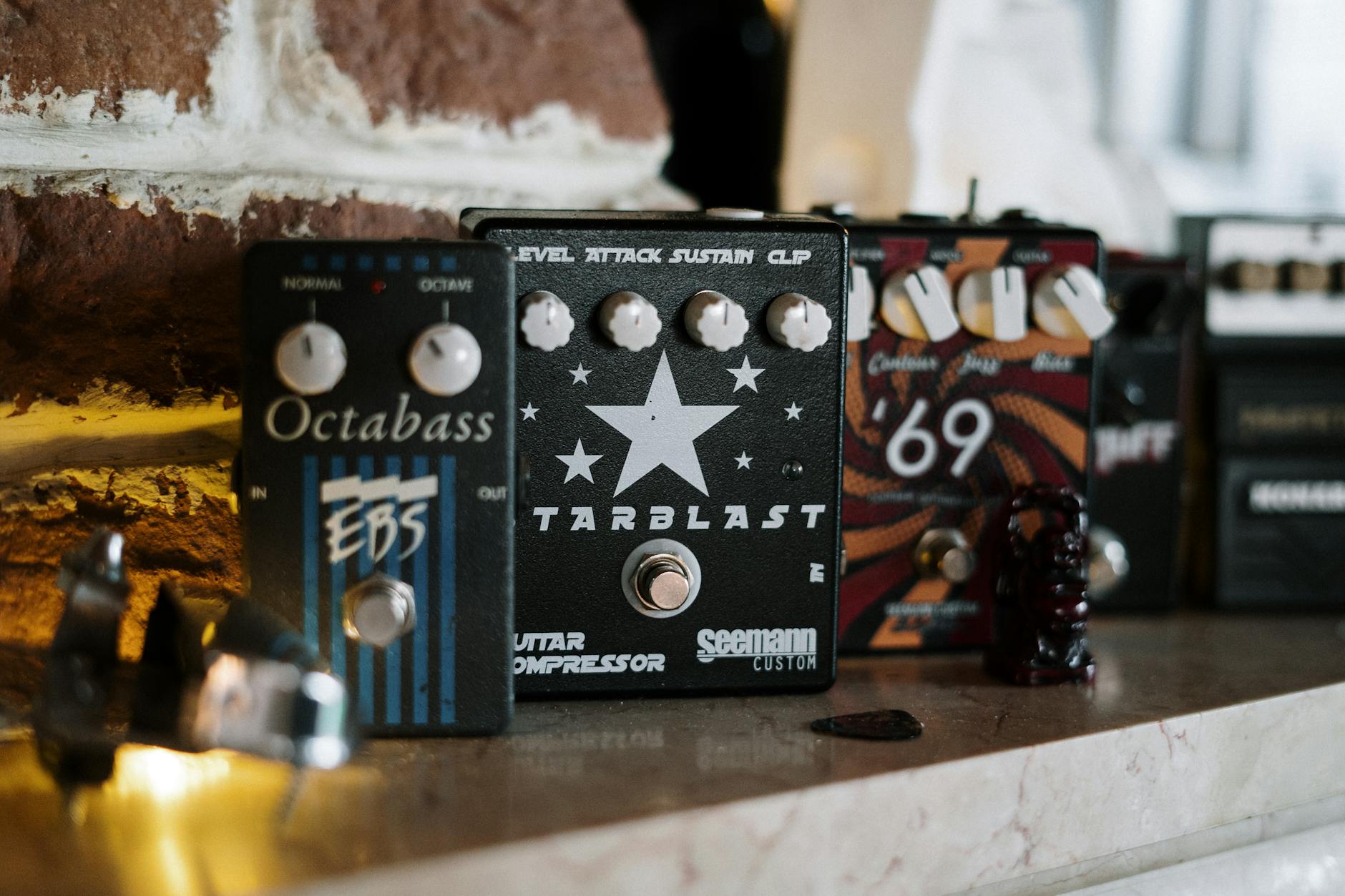
The name came from live performance. Early shoegaze bands used large pedalboards and spent a lot of stage time looking down at their switches instead of working the crowd. British music press turned that into a label. It stuck.
That origin is useful, but incomplete. Pedals were the visible part. The real point was control: stacking effects live without losing the song. Tap dancing on a pedalboard is only impressive if the guitar return does not wipe out the vocal and cymbals.
The pedalboard reason
The classic setup needed attention because effect order mattered. Fuzz into reverb gives a different result from reverb into fuzz. Chorus before distortion smears pitch movement. Delay after fuzz keeps repeats clearer. Reverse reverb before a drive stage makes the guitar swell into the chord instead of sitting behind it.
On stage, one wrong switch could add 6 dB of wash or feed back at 2.5 kHz. Looking at the floor was not a pose. It was damage control.
What the label misses
The term also hides the amount of arrangement discipline required. Most convincing shoegaze parts are simple: two or three chord shapes, open strings, sustained notes, repeated 4-bar patterns. The density comes from tone and layering, not from complex playing.
For a producer, that is good news. You do not need jazz harmony. You need clean gain staging, stable tuning, careful panning and the patience to mute one layer when four layers already do the job.
- The name refers to performers looking down at effects pedals.
- It does not mean the music lacks structure.
- Pedal order changes the entire guitar envelope.
- The best parts are often mechanically simple.
- The mix decides whether the texture feels wide or just clogged.

Shoegaze bands and artists that define the reference points
If somebody asks for shoegaze and gives no references, ask for references. The genre has several lanes now: classic UK wall-of-guitar, dream pop overlap, heavier American variants, blackgaze hybrids and newer electronic-adjacent versions.
The big reference points matter because they imply different production choices. My Bloody Valentine points to unstable pitch, extreme guitar processing and vocal blur. Slowdive points to cleaner space, longer melodic lines and more obvious ambience. Ride points to more forward drums and band energy.
The usual big three
The usual big three shoegaze bands are My Bloody Valentine, Slowdive and Ride. That is not a legal ruling. It is just the most common practical shorthand.
For production references, use My Bloody Valentine for warped density, Slowdive for spacious width, and Ride for a more direct band mix. If a client says shoegaze but wants the vocal intelligible, they probably mean closer to Slowdive than My Bloody Valentine.
Other useful shoegaze artists
Lush, Chapterhouse, Swervedriver, Pale Saints, Curve and Medicine all give different answers to the same problem: how much song structure can survive under modulation and distortion.
Modern references include DIIV, Nothing, Ringo Deathstarr, Whirr and Deafheaven-adjacent blackgaze records. These are not interchangeable. Some are cleaner and pop-facing. Some push guitars into metal density. Tagging them all as the same sound causes bad production briefs.
Reference listening by production trait
Use references by trait, not just by band name. Ask whether the goal is unstable guitar pitch, buried vocals, clean dream-pop space, heavier low mids or programmed drums. That question saves time.
- Warped guitar mass: My Bloody Valentine.
- Air and long tails: Slowdive.
- Driving drums: Ride.
- Pop shape with haze: Lush.
- Heavier modern weight: Nothing or Whirr.
- My Bloody Valentine is the distortion and pitch-instability reference.
- Slowdive is the spacious ambience and cleaner vocal reference.
- Ride is useful when the drums need to stay assertive.
- Lush gives a clearer pop-song version of the sound.
- Modern heavier bands often need more low-mid control than classic records.
How shoegaze is built in the studio
There is no sacred signal chain. There are repeatable engineering choices. Start with one good part, then decide what each layer is supposed to do. If every layer covers 100 Hz to 10 kHz, the mix will fold in mono and the vocal will disappear.
A reliable session starts at 24-bit, 48 kHz, with peaks around -12 to -6 dBFS on recorded guitars. Leave headroom. Shoegaze can build 10 dB of accidental bus level faster than most guitar music because the sustain never stops.
Guitar chain settings that usually work
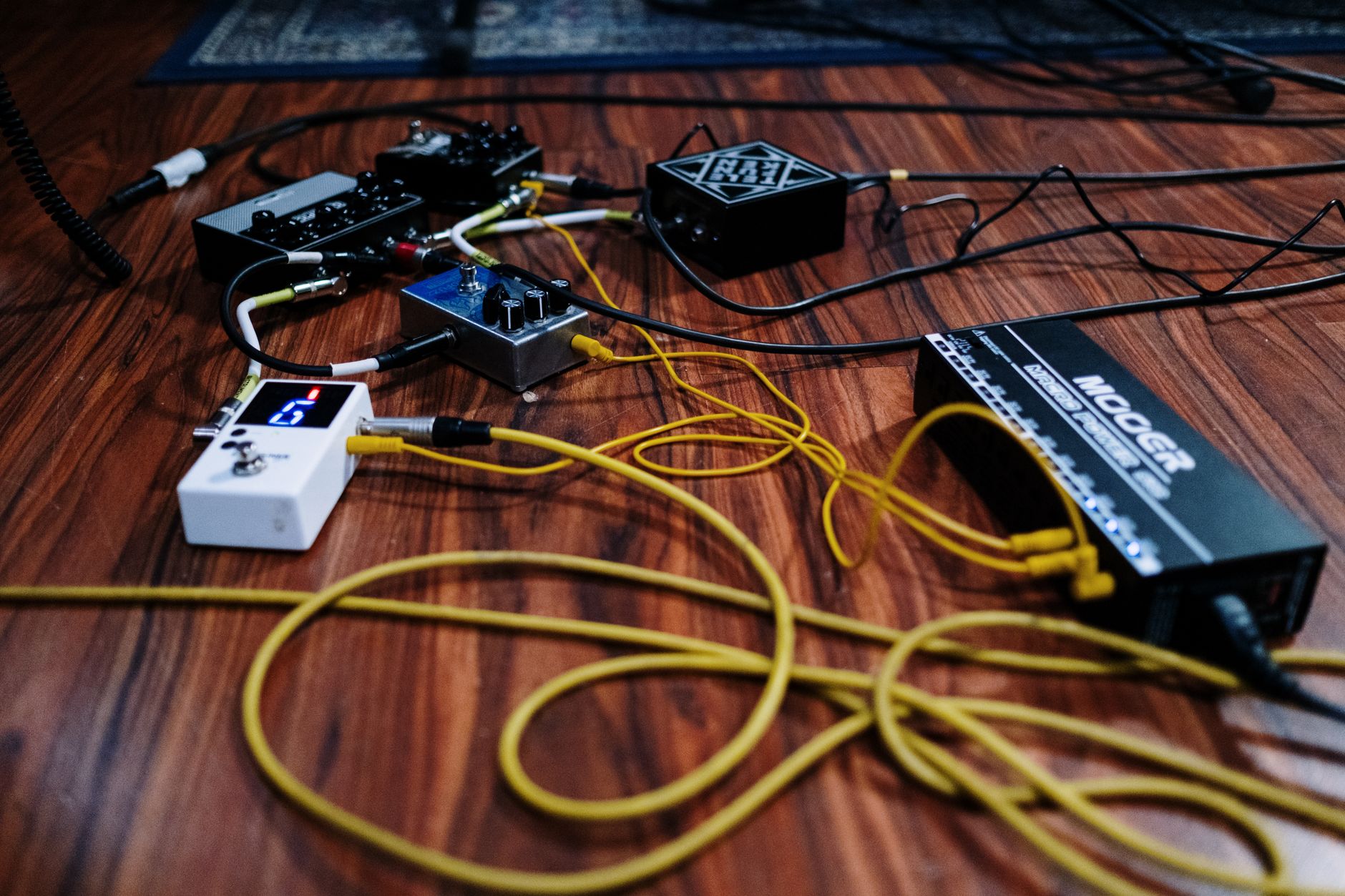
A practical starting chain is tuner, compressor if needed, fuzz or overdrive, chorus, delay, reverb, amp or cab stage depending on the rig. In a DAW, print a clean DI if possible. You will thank yourself after the third reverb decision.
Try these starting numbers: chorus rate 0.15 to 0.35 Hz, depth 20 to 40 percent, delay time dotted eighth or quarter note, feedback 15 to 30 percent, reverb decay 4 to 7 seconds, pre-delay 0 to 20 ms. High-pass the reverb return at 180 to 300 Hz. Low-pass it around 6 to 8 kHz.
Synths and samples without faking the genre
Synth layers can help if they do not announce themselves. In Vital, start with two saw oscillators detuned 8 to 14 cents, low-pass near 4.5 kHz, 80 ms attack, 300 to 600 ms release, and slow LFO movement on filter cutoff. Keep it 6 to 12 dB under the guitar bus.
Kontakt 8 can handle soft reverse piano, bowed texture or low drones under the guitars. Splice samples can work for noise beds, but trim them to the song key and filter them. Random vinyl hiss at full bandwidth is not atmosphere. It is clutter.
Drums for producers coming from electronic music
Programmed drums can work. The mistake is making them too polite or too polished. A Roland TR-8S style 909 kick under a shoegaze guitar bed can be useful, but shorten the decay to 120 to 180 ms and keep the sub clean. Long 808 tails fight sustained guitars.
For a DJ-friendly arrangement, keep 8-bar phrasing and make the downbeats clear. You can sidechain the guitar bus from the kick by 1 to 2 dB with 10 ms attack and 80 to 140 ms release. More than that starts reading as electronic pumping unless that is the assignment.
Vocals belong inside the texture
Record the vocal close, but do not over-brighten it. High-pass at 100 to 140 Hz. Cut boxiness around 250 to 450 Hz if needed. De-ess around 6 to 8 kHz before the reverb send, not after, or the reverb tail will spit sibilance for four seconds.
Valhalla VintageVerb is a sensible tool for the wash. Start with a plate or hall, 3.5 to 5.5 seconds, pre-delay 15 ms, mix on an aux, and filter the return. The vocal should feel glued to the band, not laminated on top.
- Track at 24-bit and leave at least -6 dBFS peak headroom on buses.
- Use fewer full-range layers and more filtered support layers.
- Print clean DI guitars when possible for later re-amping or editing.
- Filter reverb returns instead of EQing only the dry source.
- Sidechain guitars lightly if the kick must survive a club system.
- Use 4-bar and 8-bar phrases if the track needs DJ-friendly structure.

Mixing shoegaze without turning it into grey noise
The mix problem is predictable. The guitars occupy the same range as vocal body, snare crack, cymbal wash and synth pads. If you keep boosting presence to hear everything, the track gets sharp at 3 kHz and still feels unclear.
The fix is not one magic EQ move. It is allocation. Decide which source owns which octave. Then enforce it. Shoegaze rewards subtraction more than most dense styles because reverb and distortion generate extra harmonics even after you stop playing.
Gain staging before texture
Set the drum and bass foundation first. Put the kick peaking around -10 to -8 dBFS, bass around -12 to -9 dBFS, and guitar bus around -12 dBFS before bus compression. If the guitars already hit -4 dBFS raw, you have no room for choruses or automation.
On the master bus, leave -6 dB peak headroom before mastering. A limiter while mixing will hide the exact low-mid buildup you need to fix.
EQ numbers that solve common problems
Start with high-pass filters. Not aggressive by default, just practical. Rhythm guitars often tolerate a high-pass between 70 and 110 Hz. Reverb returns usually need 180 to 300 Hz. Pads can move even higher if bass guitar carries the root.
Common cuts: 180 to 260 Hz for mud, 350 to 500 Hz for cardboard, 2.5 to 4 kHz for scratch, 6 to 8 kHz for fizz. Use 1 to 3 dB cuts first. If you need 9 dB, the layer probably does not belong.
Width, mono and mid side choices
Wide guitars are normal. Wide low end is not. Keep bass and kick mono below 120 Hz. If the guitar bus is huge, use mid side EQ to trim 200 to 350 Hz from the sides while leaving some midrange in the centre for translation.
Check mono every few minutes. Chorus and pitch modulation can disappear when summed. If the hook vanishes in mono, reduce modulation depth or add a dry centre layer 10 to 15 dB below the wide guitars.
Automation beats static density
A static wall gets tiring. Automate the guitar bus up 0.5 to 1.5 dB into choruses, then pull reverb returns down slightly when vocals enter. Small moves count because the arrangement is already dense.
Use parallel compression on drums if they need to survive. Crush a drum parallel at 8:1, medium attack, fast release, then blend it 10 to 20 percent under the dry kit. Do not smash the full mix to compensate for timid drums.
- High-pass guitar layers between 70 and 110 Hz when bass needs space.
- High-pass reverb returns higher, often 180 to 300 Hz.
- Cut low mids before boosting top end.
- Keep sub information mono below 120 Hz.
- Use automation for density changes instead of leaving every layer full scale.
- Check mono because modulation can cancel hooks.
Shoegaze examples, slang and fashion cues
Search data around the genre is messy because people ask about music, slang, fashion and bands in the same breath. That is fair. Shoegaze became an aesthetic as well as a sound. For producers, separate the visual cue from the audio brief.
If a client or collaborator says shoegaze as slang, they may mean hazy, introverted, noisy, nostalgic, blurry, guitar-heavy or just sad with chorus. Ask for three track references and one negative reference. The negative reference is often the most useful part.
Shoegaze examples for practical referencing
Useful examples include My Bloody Valentine for unstable pitch and extreme guitar processing, Slowdive for spacious layered ambience, Ride for a more direct rhythm-section approach, Lush for melodic clarity, and DIIV for a cleaner modern guitar-band version.
For heavier briefs, compare Nothing, Whirr or Deafheaven-adjacent blackgaze references. The guitar density is closer to metal, so the low-mid cleanup becomes less optional. A 220 Hz buildup that sounds acceptable on small monitors can ruin the chorus on a PA.
What is shoegaze fashion
Shoegaze fashion usually means understated indie clothing rather than a strict uniform: oversized shirts, striped tops, worn denim, dark coats, simple trainers, messy hair, band tees and low-contrast colours. It is more anti-frontman than costume.
For cover art and artist presentation, the same restraint usually works: blurred photography, soft contrast, muted palettes, empty urban or suburban space, and typography that does not shout. We see this constantly with catalogue previews: professional presentation often raises buyer confidence before the audio even runs.
Using the tag correctly as a producer or DJ
Do not tag every reverb-heavy track as shoegaze. A synthwave track with a long hall is not shoegaze. A dream pop track may overlap, but if the guitars are clean and the vocal is pristine, the better tag may be dream pop.
For DJ libraries and production briefs, use paired tags: shoegaze, dream pop, noise pop, alt rock, blackgaze or indie rock. Paired tags reduce confusion and help you decide whether the track needs club-friendly drums, live-band looseness or washed-out vocal texture.
- Shoegaze slang usually means blurry, noisy, hazy or introverted.
- Fashion cues are understated rather than theatrical.
- Dream pop overlaps, but it is often cleaner and more vocal-forward.
- Blackgaze brings heavier guitars and more extreme dynamics.
- Use reference tracks before choosing effects or tags.
| Part | Starting spec | Reason | Trade-off |
|---|---|---|---|
| Guitar bus | Peak near -12 dBFS before bus processing | Leaves headroom for layered sustain | Feels quieter while tracking, but mixes cleaner |
| Reverb return | High-pass 180 to 300 Hz, low-pass 6 to 8 kHz | Stops wash from masking bass and vocal consonants | Less huge when soloed, better in the track |
| Chorus | 0.15 to 0.35 Hz rate, 20 to 40 percent depth | Adds slow pitch movement without seasickness | Too little can feel static, too much cancels in mono |
| Kick sidechain | 1 to 2 dB ducking, 10 ms attack, 80 to 140 ms release | Lets drums survive dense guitars | More ducking shifts the track toward electronic pumping |
| Vocal level | Peaks 1 to 3 dB above guitar bus | Keeps words present but embedded | Pop listeners may expect a louder lead |
| Low end | Mono below 120 Hz | Improves club, car and phone translation | Wide bass effects need to live above the crossover |
Worth a deeper read on this: Shoegaze and What is Shoegaze? History, Bands, and Key Characteristics.
Common questions
What is shoegaze in one sentence?
Shoegaze is effects-heavy guitar music built from layered distortion, modulation, reverb, soft vocals and simple parts that blur into a dense wall of sound. The song still needs structure, but the texture is often as important as the melody or lyric.
Who are the big 3 of shoegaze?
The usual big three are My Bloody Valentine, Slowdive and Ride. My Bloody Valentine defines the warped, extreme guitar side. Slowdive defines spacious ambience and cleaner melancholy. Ride brings more direct drums and band energy. Other important names include Lush, Chapterhouse, Pale Saints and Swervedriver.
Is Deftones shoegaze?
Deftones are not mainly a shoegaze band. They are usually classed as alternative metal or nu metal, with strong shoegaze and dream pop influence in some guitar textures, vocal treatments and atmospheres. Tracks like Be Quiet and Drive Far Away show the overlap, but the band sits heavier than classic shoegaze.
Is Radiohead a shoegaze band?
Radiohead are not a shoegaze band. Some early guitar tones and ambient sections touch nearby territory, but their core identity is alternative rock, art rock and electronic experimentation. Shoegaze usually keeps guitar texture as the main engine. Radiohead move between arrangements, electronics, harmony and production concepts more broadly.
Why did they call it shoegaze?
The name came from musicians looking down at large pedalboards during live shows. They were switching fuzz, delay, chorus and reverb settings rather than performing like conventional front people. The term started as press shorthand, but it became the standard label for the sound.
What is shoegaze fashion?
Shoegaze fashion usually means understated indie styling: oversized shirts, worn denim, dark coats, striped tops, simple trainers, band tees and muted colours. It is not a strict costume. The visual language tends to match the music: low-key, blurred, introverted and resistant to polished pop presentation.
Final thoughts
The clean answer to what is shoegaze is not dreamy guitars and vibes. It is controlled overload: simple parts, long sustain, heavy modulation, buried vocals and enough mix discipline to stop the whole thing collapsing at 250 Hz. The genre sounds loose when done well, but the engineering is not loose.
For your next session, build one 8-bar progression with two guitar layers, one filtered reverb return and a vocal tucked inside the texture. Keep the low end mono, leave -6 dB of headroom, and check the mix quietly before adding another pedal or plugin. That test will tell you more than another layer.
My Career makes videos from your own track and posts them for you, pitches your release to 34,000+ labels, playlists, radio stations, YouTube channels and blogs, puts it in every store and briefs you every morning. Free plan, no card, two minutes to set up.