 By TGP DJ Desk · August 15, 2026
TL;DR
- Linear EQ is not automatically cleaner; it trades phase shift for latency and possible pre-ringing.
- Normal minimum phase EQ is usually the better first choice for drums and single sources.
- Linear phase EQ earns its place on masters, parallel buses, layered sounds, and phase-sensitive crossovers.
- The useful linear phase equation is φ(ω) = -ωD, meaning constant group delay across frequency.
- Ableton EQ Eight is not a dedicated linear phase EQ, so use a third-party plugin when that behavior is needed.
- Small, broad linear phase moves are safer than steep filters on transient-heavy sounds.
What is linear eq is the wrong question if you expect a magic clean-up button for your mix. The usual claim is simple: linear phase EQ sounds more transparent because it avoids phase shift. That claim is half true, and the missing half is where a lot of bedroom producers wreck kicks, basslines, vocals, and masters.
Linear EQ keeps all frequencies time-aligned after filtering, unlike a normal minimum phase EQ, which shifts phase around the cutoff or boost. That sounds ideal until you hear pre-ringing on a tight kick or notice extra latency making recording impossible. The working answer is not “use linear phase for mastering.” It is: use it when phase relationship matters more than transient shape. That difference decides whether your low end locks, your drums slap, or your master turns into polite fog.
Myth 1: What is linear EQ Means Cleaner EQ
The common belief is that linear EQ is the clean version of EQ. It is not. It is a different compromise. A standard EQ bends phase near the filter. A linear phase EQ avoids that phase shift by using lookahead processing, which creates latency and can cause pre-ringing.
Clean is not a mode. Clean is the result of choosing the flaw your track can survive. A sustained pad can survive pre-ringing. A punchy 909 kick usually cannot.
What Linear Phase Actually Fixes
A normal EQ changes both frequency and phase. Cut 6 dB at 250 Hz with a tight bell and the surrounding frequencies arrive slightly earlier or later than they did before. On one sound, that can be fine. On stacked versions of the same sound, it can cause cancellation.
A linear phase EQ keeps the phase response flat. If you EQ a duplicate bass layer, a parallel drum bus, or a stereo stem, the timing relationship between frequencies stays intact after the filter.
What Linear Phase Can Damage
The price is time-domain smearing. A steep linear phase high-pass at 30 Hz on a kick can create audible energy before the transient. That pre-ringing is not musical groove. It is the filter preparing itself.
Use a spectrum analyzer and bounce the kick. Zoom in. If you see low-level waveform movement before the hit, you are hearing the downside. The tighter and steeper the filter, the worse it gets.
- Use linear phase for phase-critical layered sources.
- Avoid steep linear filters on short drums unless you test the bounce.
- Listen for pre-ringing before judging the EQ as transparent.
- Use minimum phase EQ when the transient matters more than phase accuracy.
Myth 2: Linear Phase Is Just a Better Normal EQ
The lazy comparison is linear phase EQ vs normal EQ, as if one wins. That is not how filters behave. Minimum phase EQ changes phase but usually preserves punch. Linear phase EQ preserves phase but can smear the front edge of the sound.
For dance music, this matters fast. A club record lives or dies on the first 20 ms of the kick and bass relationship. If a tool softens that area, the low end may measure flatter while feeling weaker.
Minimum Phase EQ Has a Useful Flaw
Minimum phase EQ is what you get from most channel EQs and analogue-style EQs. It shifts phase around the filter, but the shift is tied to the amplitude curve in a way our ears often accept. On drums, that phase movement can even feel like extra snap.
If you boost 8 kHz on a clap with a minimum phase shelf, you may get edge and forwardness. The same boost in linear phase can sound less grabby because the transient shape is treated differently.
The Practical Choice
Use normal EQ first on single sources. Reach for linear phase when a normal EQ creates a clear phase problem, not because the plugin menu offers a fancier mode.
- Kick sample: minimum phase, gentle high-pass only if needed.
- Layered sub and bass: test linear phase for crossover cuts.
- Parallel drum bus: linear phase can keep the dry and processed bus aligned.
- Full master: linear phase can work for broad, small moves.
- Normal EQ is usually better for individual drums.
- Linear phase EQ is useful when multiple related signals must stay aligned.
- A flat analyzer curve does not prove the groove still hits.
- Small, wide linear phase moves are safer than steep surgical cuts.

Myth 3: What Is Linear Phase Means No Phase Problems
People search What is Linear Phase and often leave with one sentence: all frequencies are delayed equally. Correct, but incomplete. Linear phase avoids phase distortion inside the processed signal, yet it can still create timing problems against unprocessed tracks because of latency.
Your DAW usually compensates for that latency during playback. Recording, live monitoring, resampling, and external hardware routing are where the trouble starts.
Latency Is Not a Footnote
Linear phase EQ needs lookahead. FabFilter Pro-Q in Linear Phase mode offers quality settings that increase latency as quality rises. Waves Linear Phase EQ also introduces significant delay because the plugin must analyze audio before outputting the filtered result.
On a mix bus, that is usually fine. On a vocal input while tracking, it is a bad idea. If the singer hears an extra 50 to 100 ms, performance timing suffers before you even touch pitch correction.
Ableton Users Need a Different Answer
There is no native linear phase EQ Ableton device in the same sense as a dedicated mastering plugin. EQ Eight is minimum phase. It is fast, stable, and good for most mix jobs, but it will not give you linear phase filtering.
If you need linear phase inside Ableton Live, use a third-party linear phase EQ plugin on buses, parallel chains, or the master. Freeze or resample if CPU and latency start dragging the session.
- Do not track vocals or instruments through linear phase EQ.
- Check plugin delay compensation before printing stems.
- Freeze latency-heavy linear phase processing in large Ableton sessions.
- Use EQ Eight for fast source shaping, not linear phase mastering tasks.
Myth 4: The what is linear EQ Formula Explains the Sound
The math helps, but it will not tell you whether your kick still punches. The what is linear eq formula idea usually points to a filter whose phase response is a straight line against frequency. In plain terms, the group delay is constant.
That means every frequency is delayed by the same amount. The waveform’s phase relationships are preserved after EQ, but the filter can still ring before and after sharp events.
A Useful Linear EQ Equation, Without the Fog
The core linear phase condition is often written as phase response φ(ω) = -ωD, where ω is angular frequency and D is delay in samples. Because the slope is constant, group delay is also constant: τg(ω) = -dφ(ω)/dω = D.
That is the useful bit. The filter delays everything equally. It does not mean zero delay, zero coloration, or zero artifacts. It means phase is linear across frequency.
Numbers That Matter in a Session
At 48 kHz, 1024 samples of latency is about 21.3 ms. 4096 samples is about 85.3 ms. A mastering chain may tolerate that. A DJ-style live jam with Ableton Push 3 will feel sluggish if monitoring passes through it.
For mix decisions, watch three numbers: filter slope, gain amount, and Q. A 1.5 dB shelf at 12 kHz is low risk. A 24 dB/oct linear phase high-pass on a kick is asking for pre-ringing.
- Linear phase means constant group delay, not zero latency.
- The steeper the filter, the more likely ringing becomes audible.
- Small shelves are safer than narrow, high-Q cuts.
- Mathematical transparency does not guarantee musical transparency.
Myth 5: Linear Phase EQ FabFilter Settings Are Always Safe
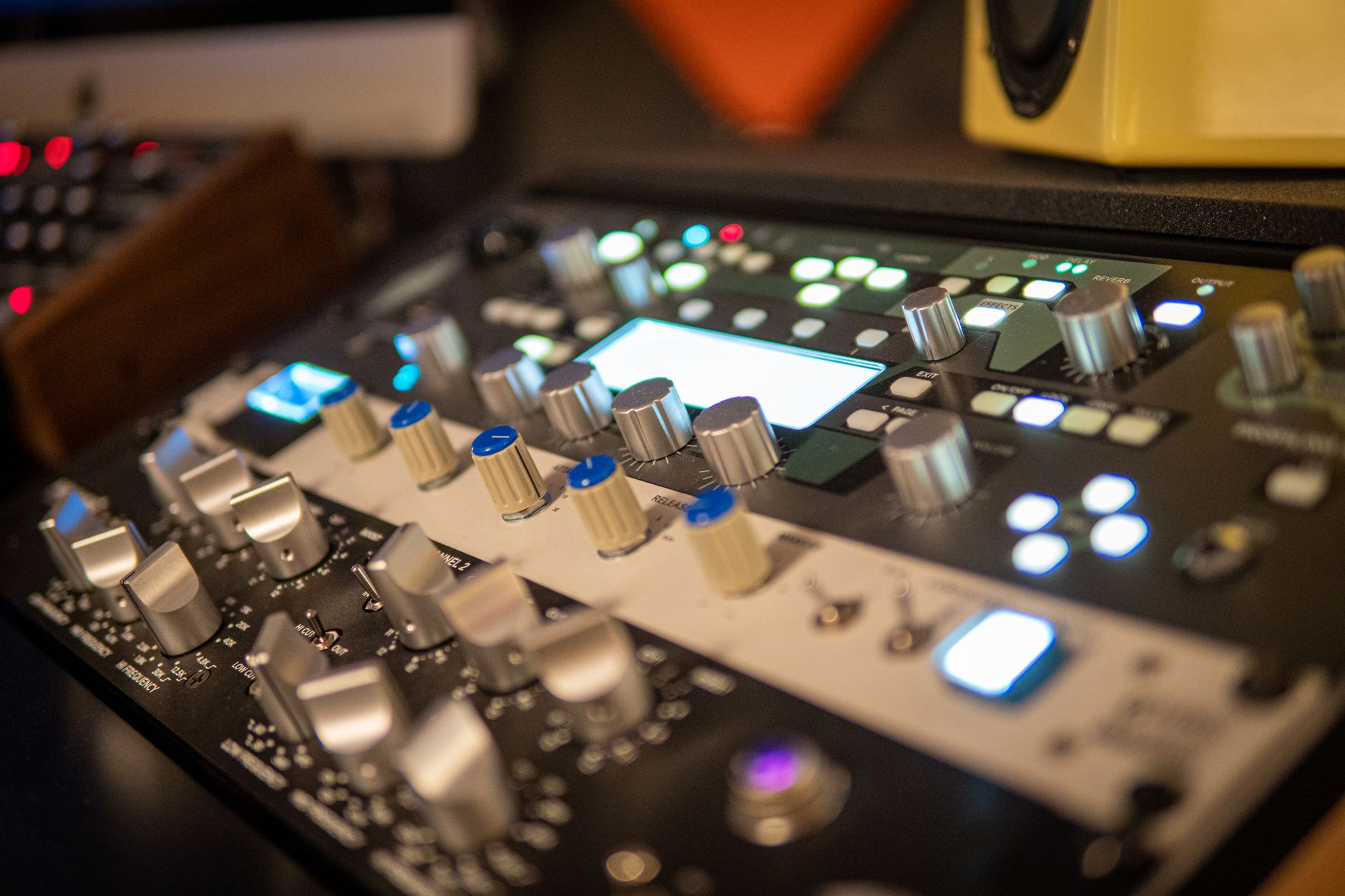
FabFilter Pro-Q is one of the cleanest ways to test linear phase EQ fabfilter workflows, but the plugin will not save you from bad decisions. Linear Phase mode has quality settings because the trade-off changes with latency, CPU use, and ringing behavior.
The mistake is switching the whole instance to maximum quality and assuming the mix improved. Sometimes all you did was add delay and soften the drums.
What is linear EQ Inside Pro-Q?
Inside Pro-Q, linear phase processing is a mode designed to keep phase relationships intact while applying your EQ curve. That is useful on parallel buses, stereo masters, and phase-sensitive layered material.
A sane starting point: use Natural Phase or Zero Latency for source tracks. Switch to Linear Phase only when you hear cancellation, when you are matching EQ between related stems, or when broad master EQ moves are changing the image in a way you dislike.
Settings I Would Actually Try
For a master, start with broad moves: ±0.5 to 1.5 dB, Q below 1.0, shelves at 80 Hz or 10 kHz. For a layered bass crossover, try a 12 dB/oct cut rather than 48 dB/oct. Steep sounds tidy on a graph and ugly on a transient.
Use the plugin’s analyzer before and after, then level-match. If the linear phase version is 0.7 dB louder, you are judging loudness, not phase behavior.
- Use Linear Phase mode for buses and masters first, not every channel.
- Keep master EQ moves broad and small.
- Avoid extreme slopes unless the source is sustained.
- Level-match before deciding the linear phase version is better.
Myth 6: Linear Phase EQ Plugins All Behave the Same
A linear phase EQ plugin is not a single sound. Different plugins use different filter designs, quality settings, latency amounts, oversampling choices, and user controls. Two linear phase EQs can null poorly if their curves, slopes, and gain compensation do not match exactly.
That does not mean one is fake. It means “linear phase” describes the phase behavior, not every detail of the implementation.
FabFilter, Waves, and Ozone Are Different Workflows
FabFilter Pro-Q is fast for surgical work because the analyzer, dynamic bands, mid/side controls, and phase modes live in one window. Waves Linear Phase EQ feels more like an older dedicated mastering tool: simple, direct, and less fluid for modern sound-design moves.
iZotope Ozone’s Equalizer is strongest on the master chain, where matching, mid/side shaping, and module order matter. I would not use Ozone as my default channel EQ on a snare. Wrong job.
Pick by Task, Not Brand Loyalty
For ghost production and custom tracks, recall speed matters. If a client asks for a brighter drop vocal, you need to reopen the session and know exactly what the processing is doing. A pretty linear phase mode that adds heavy latency across 40 channels is a bad workflow.
- Master polish: Ozone or Pro-Q in linear phase can make sense.
- Parallel drums: Pro-Q is faster for checking phase modes.
- Old mastering chain: Linear Phase EQ Waves can still do precise broad shaping.
- Source cleanup: use a normal EQ unless phase is the problem.
- Choose the plugin based on the routing problem.
- Do not place high-latency EQs across every source track.
- Check mid/side modes carefully on stereo masters.
- Bounce and compare when plugin delay compensation gets complex.
Myth 7: Linear EQ Belongs Only in Mastering
The mastering-only rule is too neat. Linear phase EQ is common in mastering, but it can be useful earlier if the routing justifies it. The real rule is simpler: use it when phase shift would cause a worse problem than ringing or latency.
That includes a few mix situations. Not many. Enough to matter.
Where It Earns a Place in a Mix
Try linear phase EQ on a parallel bass chain where the dry sub and processed mid-bass share the same source. If a minimum phase low-cut hollows the crossover around 90 Hz, linear phase may keep the combined tone steadier.
It can also help when EQing duplicated vocals, layered supersaws, or stereo drum room mics. If the layers collapse when summed to mono after EQ, linear phase is worth a test.
Where It Usually Does Not
Do not use it as a reflexive cleanup tool. A 3 dB cut at 300 Hz on a muddy synth from Vital does not need linear phase just because the word sounds technical. Use the simplest EQ that solves the audible problem.
On kicks, snares, claps, percussion loops, and recorded plucks, minimum phase usually wins. The leading edge matters more than textbook phase response.
- Use it on duplicated or parallel material when phase cancellation appears.
- Test it on bass crossovers around 70 to 120 Hz.
- Avoid it on transient-heavy one-shots unless there is a clear reason.
- Print a short A/B bounce and inspect the transient before committing.
| Task | Better First Choice | Why | Starter Setting |
|---|---|---|---|
| Single kick drum | Normal minimum phase EQ | Keeps the transient punchier and avoids pre-ringing | Gentle 12 dB/oct high-pass below 25 Hz only if needed |
| Parallel drum bus | Linear phase EQ | Helps dry and processed buses stay phase-aligned | Broad 1 dB shelf or low-mid cut, Q under 1.2 |
| Layered sub and mid-bass | Test both | Linear phase can protect the crossover, minimum phase may hit harder | 12 dB/oct crossover around 80 to 120 Hz |
| Stereo master brightening | Linear phase EQ | Small broad moves can avoid image shifts | +0.5 to +1 dB high shelf around 10 to 14 kHz |
| Vocal recording monitor chain | Normal EQ | Linear phase latency distracts the performer | Zero-latency corrective EQ while tracking |
Go deeper
- What is linear phase EQ? How to use it in your mix — izotope.com
- Linear Phase EQ: An In-Depth Look — waves.com
FAQ
What is linear EQ in music production?
Linear EQ is equalization that keeps phase relationships aligned across frequencies while changing tone. It usually uses linear phase filtering, which adds latency and can cause pre-ringing. It is useful for masters, parallel processing, and layered sounds, but it is not automatically cleaner than normal EQ.
Is linear phase EQ better than normal EQ?
No. Linear phase EQ is better when phase shift creates audible cancellation or stereo image problems. Normal minimum phase EQ is often better on drums, vocals while tracking, and single instruments because it has lower latency and usually preserves transient punch better.
What is linear phase in simple terms?
Linear phase means every frequency is delayed by the same amount. The phase response forms a straight line, so the filtered signal keeps its internal timing relationship. The trade-off is latency, and with steep filters the sound can ring before the transient.
Does Ableton have a linear phase EQ?
Ableton Live’s EQ Eight is not a dedicated linear phase EQ. It is a minimum phase EQ designed for low-latency mixing and sound shaping. For linear phase EQ inside Ableton, use a third-party plugin such as FabFilter Pro-Q, Waves Linear Phase EQ, or iZotope Ozone EQ.
When should I use linear phase EQ on a master?
Use it for small, broad tonal moves where you want to avoid phase shift across the full mix. Good starting points are a 0.5 to 1 dB high shelf above 10 kHz or a gentle low-mid cut around 250 Hz. Avoid steep filters unless there is a serious technical problem.
Can linear phase EQ cause pre-ringing?
Yes. Pre-ringing is one of the main downsides of linear phase EQ. It can make short sounds like kicks, snares, and plucks feel softer because the filter produces a small ripple before the transient. Steep slopes and narrow high-Q moves make it more noticeable.
The bottom line
what is linear eq should not be treated like a purity test. It is a filter choice with a specific technical promise: preserve phase relationships while changing frequency balance. That promise is valuable on masters, parallel chains, bass crossovers, and layered stems. It is much less valuable when it blurs the attack of a kick or adds monitoring latency to a live take.
The best habit is simple. Start with normal EQ. If you hear cancellation, stereo shift, or a crossover problem, test linear phase with modest settings. Bounce eight bars, level-match, and listen to the transient before trusting the graph. Try that in your next session before putting linear phase across the whole mix.
My Career makes videos from your own track and posts them for you, pitches your release to 34,000+ labels, playlists, radio stations, YouTube channels and blogs, puts it in every store and briefs you every morning. Free plan, no card, two minutes to set up.