 By Alex Mercer · August 4, 2026
Key takeaways
- The analog label matters less than gain staging, filter behavior, and arrangement fit.
- Plugins often beat hardware when recall, revisions, and stems are part of the job.
- Free virtual analog synths can sound release-ready with strict EQ and level control.
- Forum recommendations are only useful after you test them with your own MIDI.
- Online synths are best treated as sketch tools, then rebuilt properly inside the DAW.
A virtual analog synthesizer will not automatically make your track sound warmer, fatter, or more “analog.” The better question is which virtual analog synthesizer gets you to a usable part fastest without clogging the mix, eating the CPU, or fooling you with a huge preset that collapses under drums.
The usual advice is backwards. Producers argue about whether software can “replace” analog, then load a 16-voice supersaw with too much stereo width and wonder why the drop has no punch. Real records are less romantic. They need controlled low end, filters that move musically, envelopes that sit with the groove, and gain staging that leaves the limiter alone. We see this constantly in our own catalogue of over 10,000 exclusive tracks: the synth that wins is rarely the most expensive one. It is the one the producer can shape fast.
Myth: A Virtual Analog Synthesizer Sounds Analog by Default
The “analog” label is not a finish line. It usually means the instrument models subtractive synth behavior: oscillators, mixer saturation, resonant filters, envelopes, LFOs, and voice behavior. Some plugins model component drift and filter non-linearity. Some mostly give you a familiar front panel.
The working alternative is simple: judge the synth after it is gain-staged, filtered, and placed with drums. A preset that sounds massive solo can be unusable once the kick and bass arrive.
Virtual analog synthesizer settings that matter first
Start with one oscillator, not four. Set the synth output so the channel peaks around -12 dBFS before effects. If the patch already hits -3 dBFS, every filter drive and chorus after it lies to you because louder feels better.
- For bass: use 1 or 2 oscillators, detune under 7 cents, mono mode on, glide between 40 and 90 ms.
- For plucks: filter decay around 250 to 600 ms, sustain below 25%, release under 180 ms.
- For pads: spread voices, but high-pass the return around 120 to 180 Hz if a real bass is playing.
Use filter drive carefully. On u-he Diva, 2 to 5 dB of drive can add weight. Push it harder and the low mids around 180 to 350 Hz start bullying the kick.
- Solo sound is not the test; drums are the test.
- Keep synth channels peaking near -12 dBFS before inserts.
- Use small detune values for bass, wider detune for leads.
- Automate cutoff in 4-bar phrases instead of leaving it static.
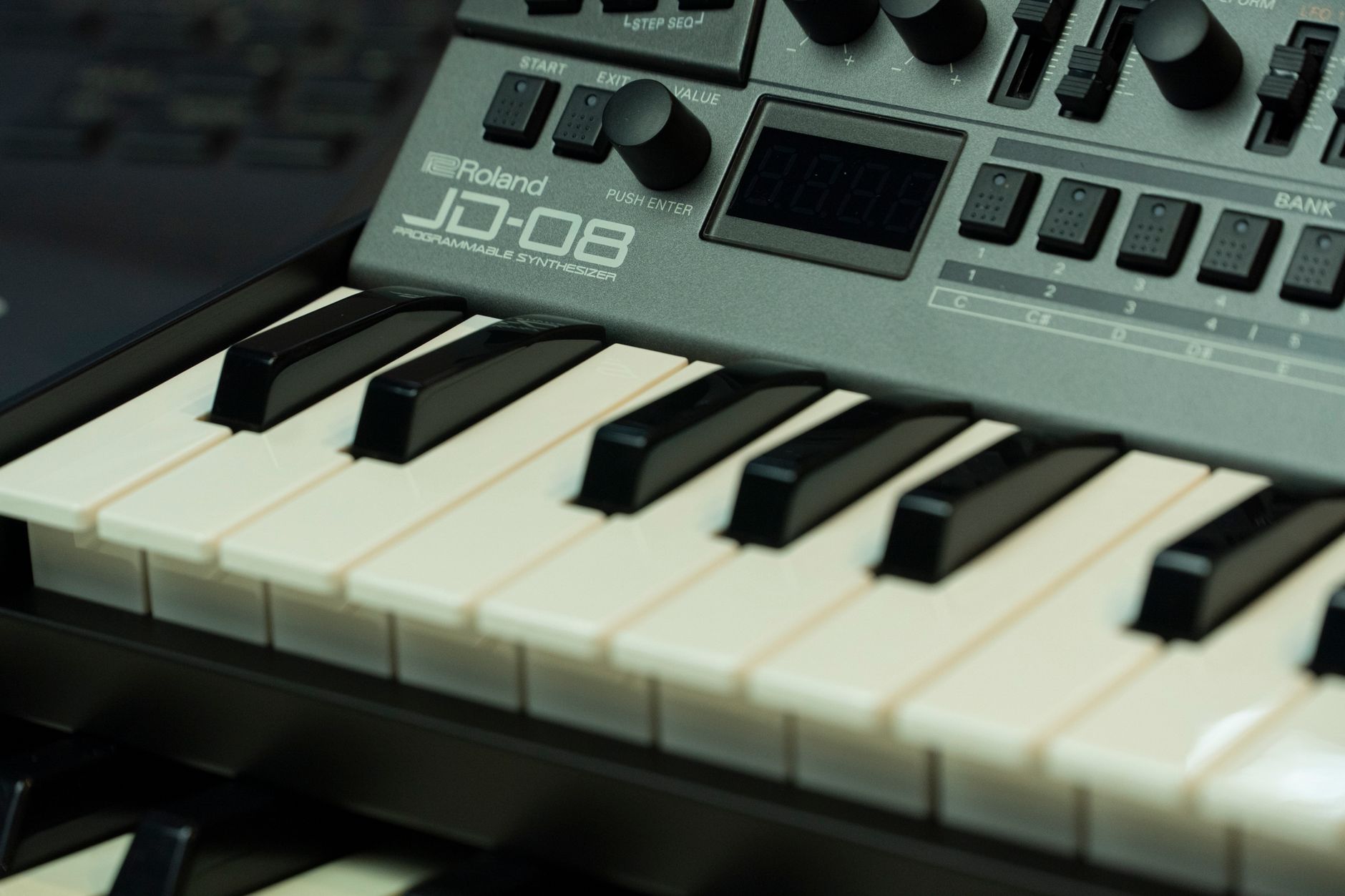
Myth: Hardware Beats a Virtual Analog Synthesizer Every Time
Hardware can be inspiring, but “hardware” does not always mean analog. The Nord Lead series, Access Virus TI, Roland System-8, Yamaha AN1x, and Waldorf Kyra are digital instruments built to behave like analog-style synths. They are loved because they are immediate, not because electrons magically improve your hook.
If you are producing in a bedroom, a strong virtual analog synth VST often beats hardware on recall. Open the session six weeks later and the patch, automation, MIDI, and effects are still there.
Where software wins in real sessions
For custom music production, revision speed matters. If a client asks for the bass to be darker after the first drop, a plugin patch takes ten seconds to edit. A hardware patch may need audio re-recording, gain matching, and phase checking.
Softube Model 84 is excellent for Juno-style chords that need chorus without turning fizzy. TAL-J-8 gives you a bright Jupiter-style top end for house stabs. Synapse Audio The Legend HZ is the pick when a mono lead needs Minimoog-style authority without wrestling a vintage unit.
- Choose hardware when performance feel matters more than recall.
- Choose plugins when you expect revisions, stems, and alternate drops.
- Print audio once the part is final, then disable the synth to save CPU.
- Keep MIDI until the arrangement is locked.

Myth: Free Virtual Analog Synths Are Only for Beginners
Free synths get dismissed because producers confuse price with mix value. A free virtual analog synthesizer can carry a record if the part is written well and the processing is restrained. The weak link is usually preset surfing, not the plugin.
The catch is workflow. Free tools may have fewer modulation options, smaller preset libraries, or older interfaces. That does not stop them from making solid basses, plucks, and pads.
Use free instruments with stricter limits
TAL-Noisemaker still works for simple electro bass and noisy risers. Full Bucket Music’s PG-8X is useful for JX-8P-style pads that sit behind a vocal. TyrellN6 by u-he has enough character for classic plucks, but its low mids need discipline.
- High-pass non-bass parts at 100 to 180 Hz.
- Low-pass bright pads around 8 to 12 kHz before reverb.
- Use mono below 120 Hz if the part supports the groove.
- Add sidechain ducking at 2 to 4 dB, not 10 dB, unless you want an obvious pump.
The best free patches are boring in solo. That is a compliment. They leave space for drums, vocal chops, and the hook.
- TAL-Noisemaker suits simple basses, plucks, and effects.
- PG-8X is strong for restrained retro pads.
- TyrellN6 can sound expensive when the low mids are controlled.
- Free does not mean mix-ready; trim the bottom end early.
Myth: Reddit Can Pick the Best Virtual Analog Synth VST for You
Reddit threads are useful for spotting patterns, but they are terrible at deciding for your music. One producer needs CPU efficiency for a laptop. Another wants thick filter drive for melodic techno. Another needs presets that sound finished in a two-hour writing session.
Use “best synth” threads as a shortlist, then test each instrument against one kick, one bass reference, and one arrangement problem.
A better test than forum votes
Load the same MIDI clip into three instruments. Use a 4-bar bass phrase, a 2-bar pluck, and a held pad chord. No external effects for the first pass. Match loudness within 1 dB, then decide.
U-he Diva usually wins on filter movement and weight, but it can punish weaker laptops. LennarDigital Sylenth1 is older, yet it is still fast for trance and EDM stacks. Cherry Audio Mercury-6 has a wide, polished character that works for synthwave pads and big hooks. UAD PolyMAX is leaner, which can be exactly right when the mix is already dense.
- Test with your own MIDI, not only factory presets.
- Loudness-match within 1 dB before judging tone.
- Check CPU with 8-note chords and release tails.
- Pick the synth that solves your current arrangement problem.

Myth: Online Synths Are Toys, Not Writing Tools
A virtual analog synthesizer online will not replace a serious plugin chain, but it can beat a blank session. Browser tools and sketch apps are useful when you need a motif before you start engineering.
The mistake is expecting an online synth to deliver the final master sound. Treat it as a writing surface. Capture the MIDI idea, bounce a rough audio texture, then rebuild the patch inside your DAW with better gain control and automation.
Turn a sketch into a release-ready patch
Keep the sound design move small. If the browser patch has a saw wave, a 24 dB low-pass filter, and short decay, rebuild that first. Do not copy every effect. Get the note length and filter rhythm right, then choose the final instrument.
- Export or replay the MIDI before changing the patch.
- Rebuild the oscillator and filter before adding delay or reverb.
- Automate cutoff over 8 or 16 bars so the loop earns its repeat.
- Bounce audio once the part supports the arrangement.
Ableton Note is strong for sketching ideas away from the studio, though it is not a browser synth. The point is the same: separate writing from polishing.
- Use online synths for motifs, not final mix decisions.
- Save MIDI as soon as the hook works.
- Rebuild the patch in your DAW before mixing.
- Automate movement before adding more layers.
| Tool | Format | Best Use | Watch Out |
|---|---|---|---|
| u-he Diva | Plugin | Thick basses, moving filters, vintage-style pads | High CPU at quality settings |
| Softube Model 84 | Plugin | Juno-style chords, chorus pads, simple bass | Can get wide fast; check mono compatibility |
| TAL-J-8 | Plugin | Bright stabs, classic poly leads, house hooks | Top end may need low-pass control |
| Synapse Audio The Legend HZ | Plugin | Mono leads, bass lines, Moog-style weight | Easy to overload low mids |
| Nord Lead 4 | Hardware virtual analog | Fast hands-on programming and performance | Audio recall takes more work than plugins |
| TAL-Noisemaker | Free plugin | Basic basses, plucks, risers, learning subtractive synths | Needs external EQ and level discipline |
Further reading
- Synthesizers — roland.com
- Category:Virtual analog synthesizers — en.wikipedia.org
Frequently asked questions
What is a virtual analog synthesizer?
A virtual analog synthesizer is a digital synth that recreates analog-style subtractive synthesis: oscillators, filters, envelopes, LFOs, modulation, and sometimes circuit behavior such as drift or saturation. It can be a plugin or hardware instrument. The sound depends more on the model, settings, and mix placement than the label.
What are the best virtual synths for producers?
For analog-style work, u-he Diva, Softube Model 84, TAL-J-8, Synapse Audio The Legend HZ, Cherry Audio Mercury-6, and UAD PolyMAX are strong picks. If budget matters, TAL-Noisemaker, PG-8X, and TyrellN6 are useful free options. The best choice depends on bass, pads, leads, CPU, and recall needs.
What synthesizer does Billie Eilish use?
Billie Eilish’s records are built around Finneas’s production, which has included software instruments, sampled textures, and hardware synths in different sessions. A Sequential Prophet-6 has appeared in studio-related coverage, but the bigger lesson is arrangement: sparse synth parts, close vocals, and careful sound selection matter more than one keyboard.
Are analog synthesizers still made?
Yes. Companies still make true analog synths, including instruments such as the Moog Subsequent series, Sequential Prophet models, and Korg Minilogue family. At the same time, many current hardware synths are digital or hybrid. Check the oscillator and filter architecture instead of assuming every knob-covered synth is analog.
Conclusion
The virtual analog synthesizer myth is that tone comes from buying the “right” analog-flavored box. The useful truth is less romantic: choose the instrument that lets you write the part, control the low end, automate movement, and recall the session without drama.
If you are building house, techno, trance, pop, or melodic EDM, start with one job per synth. One bass. One hook. One pad. Match levels, test it against drums, then commit. Try this in your next session: take the same 4-bar MIDI phrase through Diva, TAL-Noisemaker, and one hardware-style preset, loudness-match them, and keep only the version that makes the arrangement feel better.
My Career makes videos from your own track and posts them for you, pitches your release to 34,000+ labels, playlists, radio stations, YouTube channels and blogs, puts it in every store and briefs you every morning. Free plan, no card, two minutes to set up.