Key takeaways
- Start with one reference track and a clear 126 to 130 BPM tempo target.
- Build drums before sound-designing the whole track.
- Keep basslines short, simple and sidechained to the kick.
- Use DJ-friendly 16 or 32-bar sections with clean mix points.
- Fix low-end clashes with arrangement and EQ before mastering.
- Bounce rough demos early so real problems become obvious.
Tech house production is easier when you stop treating the track like a mystery and start treating it like a small machine with a few moving parts. Tech house production usually means punchy house drums, a short rolling bassline, sparse hooks, and DJ-friendly arrangement. Nothing magic.
I use the same order almost every time: pick a reference, build drums, write bass, add a hook, arrange for a DJ, clean the mix, then export a rough master. A reference track is a released song you compare against while working. A DAW, or digital audio workstation, is the software where you build the track, such as Ableton Live, FL Studio, Logic Pro, or Bitwig. I’ll use Ableton examples because Session View is fast for loops, but the workflow works anywhere.
Tech House Production Starts With a Reference and a Tempo
Think of a reference track as the photo on a flat-pack furniture box: you can still build without it, but you’ll waste more time guessing what the finished thing should look like. For tech house production, I want one reference that matches the groove, not six tracks that pull me in different directions.
Set the tempo first. Tempo means speed, measured in BPM, or beats per minute. Most modern tech house sits around 126 to 130 BPM. I start at 128 BPM unless the reference clearly leans slower or harder.
A Basic Tech House Production Session Map
Treat tech house production like a labelled tool drawer. Create groups, also called buses, for drums, bass, music, effects, and vocals before you write anything. A bus is a channel that collects several sounds so you can process them together.
Keep the first session boring on purpose. Load a clean kick, a clap, closed hats, an open hat, a bass synth such as Serum 2 or Ableton Wavetable, and one hook sound. If you use Ableton Push 3, map the drum rack to pads and tap the groove instead of clicking every note.
Pick One Reference, Then Mute It Often
Drop the reference on an audio track and lower it until it matches your session volume. Do not produce while it plays constantly. Check it for 20 seconds, mute it, make a decision, then check again. That stops imitation from taking over.
- Mark the intro, first drop, breakdown, and second drop.
- Notice where the bass first enters.
- Check how loud the clap feels compared with the kick.
- Listen for silence as much as sound.
- Start around 128 BPM for a safe club tempo.
- Use one reference track, not a playlist.
- Make buses for drums, bass, music, vocals and effects.
- Leave at least -6 dB headroom on the master while writing.
- Save the first loop before heavy processing.
Build the Drum Groove Like a Kitchen Line
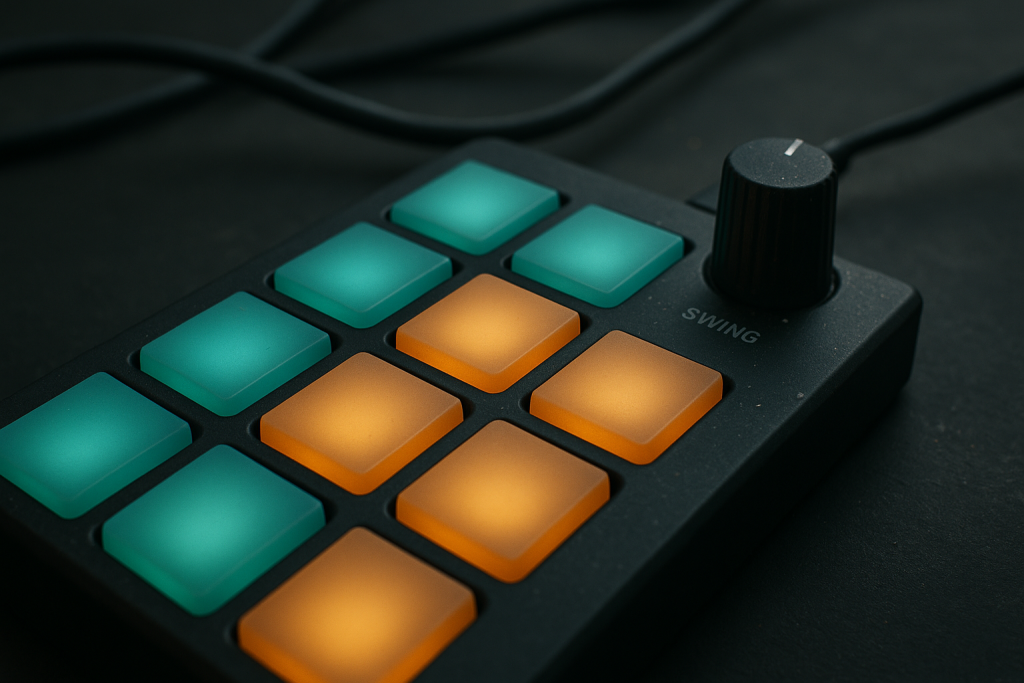
A tech house drum groove works like a busy kitchen line: the kick is the head chef, the clap calls the orders, and the hats keep the plates moving. In tech house production, weak drums are usually a timing problem before they are a sample problem.
A groove is the feel created by timing and velocity. Velocity means how hard a MIDI note plays. If every hat hits at the same strength, the beat feels typed instead of played.
Start With the Kick and Clap
Put the kick on every beat, also called four-on-the-floor. Use a short, solid kick with a clear thump around 50 to 70 Hz. Hz means hertz, the unit for frequency. If the kick tail is too long, it will fight the bass later.
Place the clap or snare on beats 2 and 4. Most tech house production falls apart when producers stack five claps before one good clap works. Pick one strong sample first. Layer later only if something is missing.
Hats, Percussion and Swing
Add closed hats on offbeats, then lower every second hat by 5 to 15 velocity points. Swing is a timing push that delays some notes slightly, making the groove lean. In Ableton, try Groove Pool settings around 54 to 58 percent on hats and percussion.
Use percussion as seasoning. One shaker loop, one rim, and one short tom can be enough. High-pass percussion, meaning cut low frequencies, around 180 to 250 Hz so it does not crowd the kick and bass.
- Use a short kick before reaching for EQ.
- Put clap or snare on beats 2 and 4.
- Lower alternate hat velocities for movement.
- Try 54 to 58 percent swing on hats.
- Cut percussion lows around 180 to 250 Hz.
Write the Bassline Like a Tight Conversation
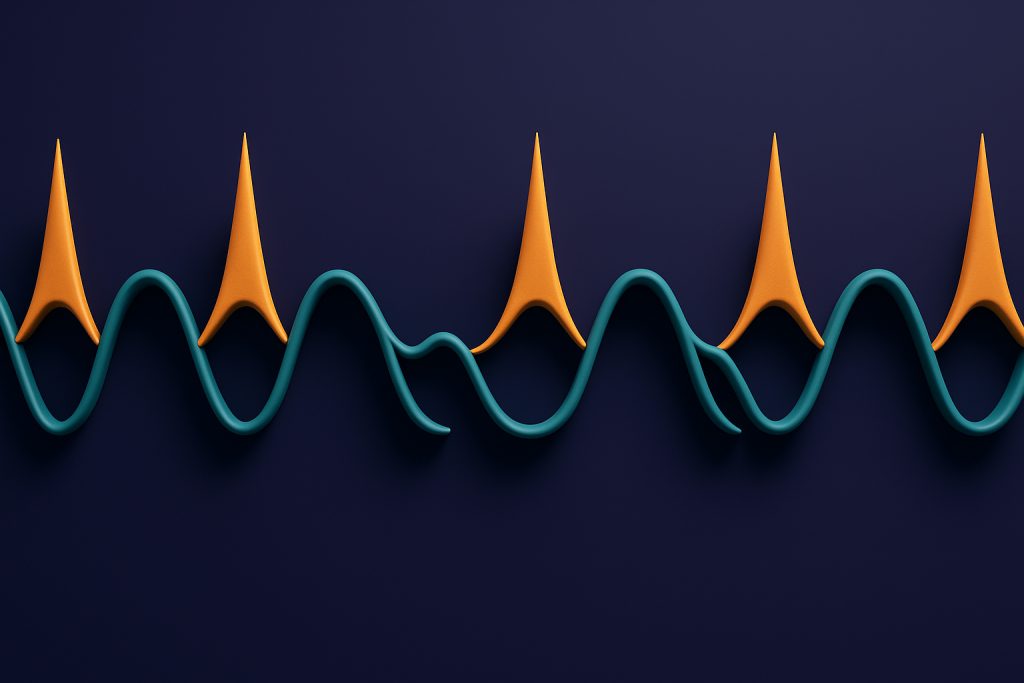
The kick and bass should behave like two people sharing one microphone: when one talks, the other makes room. Good tech house production gets its bounce from that push and pull, not from a complicated bass melody.
A bassline is the low musical pattern that locks to the drums. Start with one or two notes. The root note is the main note of the key. If your track is in F minor, F is home.
Program a Rolling Pattern
For tech house production, I usually start with a one-bar MIDI clip and place bass notes between the kicks. A MIDI clip is note data that triggers an instrument. Keep the notes short, often 1/16 or 1/8 length. Long notes can blur the groove.
Try a pattern where the bass hits just after beat 1, again before beat 2, and repeats with a small variation in bar 4. Four-bar phrases matter because DJs and dancers feel changes in chunks, not random events.
Use Sidechain Ducking Early
Sidechain ducking means the kick temporarily lowers the bass volume each time it hits. Think conversation again. The kick speaks, the bass steps back for a split second, then returns. Use a compressor, which is a volume rider that turns sound down when it crosses a threshold.
In Ableton Compressor, set the kick as the sidechain input, start with 3 to 6 dB of gain reduction, fast attack, and release around 80 to 140 ms. Keep tech house production bass short, clean, and stubborn.
- Use one or two bass notes before adding movement.
- Place bass hits around the kick, not on top of every kick.
- Keep most notes short for bounce.
- Use 3 to 6 dB of sidechain ducking.
- Change the bass pattern slightly every 4 or 8 bars.
Shape the Hook and Arrangement Like a DJ Set
An arrangement is like a DJ set in miniature: you introduce energy, remove it, bring it back, and give people clean mix points. Tech house production does not need a huge chord progression if the hook is memorable and the sections land correctly.
A hook is the part listeners remember. It could be a vocal chop, a synth stab, a weird percussion hit, or a two-note riff. Sparse usually wins here.
Make One Hook Do the Main Job
Record or program one idea that answers the drums. If it is a vocal, chop it into short hits and keep only the best syllables. If it is a synth, use a pluck or stab with a short decay. Decay means how quickly the sound fades after the first hit.
A simple tech house production arrangement might run 16 bars of intro drums, 16 bars with bass, 16 bars first drop, 16 bars breakdown, then a stronger second drop. Do not fill every bar. DJs need clean sections to blend on CDJ-3000s.
Use Arrangement Markers
Markers are labels on the DAW timeline. Put them down before you polish sounds. Label intro, groove, drop, break, build, second drop, and outro. This keeps you from looping eight bars for three hours.
- Intro: drums and small percussion only.
- First drop: kick, bass, clap, hats, hook.
- Breakdown: remove kick and reduce low end.
- Build: add snare roll or filtered noise.
- Outro: strip back for DJ mixing.
- Write one main hook before adding extras.
- Use 16 or 32-bar sections for DJ-friendly structure.
- Leave space before the drop.
- Mute parts to create energy changes.
- Check the arrangement against your reference track.

Clean the Mix Like Traffic Control
EQ is traffic control for sound: every instrument needs a lane, and crashes happen when too many parts sit in the same place. Mixing tech house production is mostly about keeping kick, bass, clap, and hook out of each other’s way.
EQ means equalisation, a tool for boosting or cutting frequencies. Use it after the idea works. If the groove is bad, FabFilter Pro-Q 4 will not rescue it.
EQ Moves for Tech House Production
For tech house production, leave the deepest low end for kick and bass. High-pass most non-bass sounds between 120 and 250 Hz. Cut muddy percussion around 220 Hz if it clouds the groove. If the clap is dull, try a small boost around 2 to 5 kHz, but stop when it starts biting.
Mid/side EQ means processing the centre and sides separately. Keep sub bass mono, meaning centred, below about 120 Hz. Wide low end sounds impressive alone and messy in clubs.
Compression Without Flattening the Groove
Compression is a volume rider. On the drum bus, use parallel compression if the groove needs weight. Parallel compression means blending a heavily compressed copy with the dry sound. Try 10 to 25 percent wet, slow attack, fast release.
Keep the master channel quiet while mixing. Aim for peaks around -6 dB before mastering. Headroom is spare level that prevents clipping and leaves room for final loudness processing.
- High-pass non-bass sounds around 120 to 250 Hz.
- Keep sub bass mono below 120 Hz.
- Cut boxy percussion near 220 Hz when needed.
- Use parallel compression lightly on drums.
- Leave roughly -6 dB headroom before export.
Add Movement With Automation and Effects
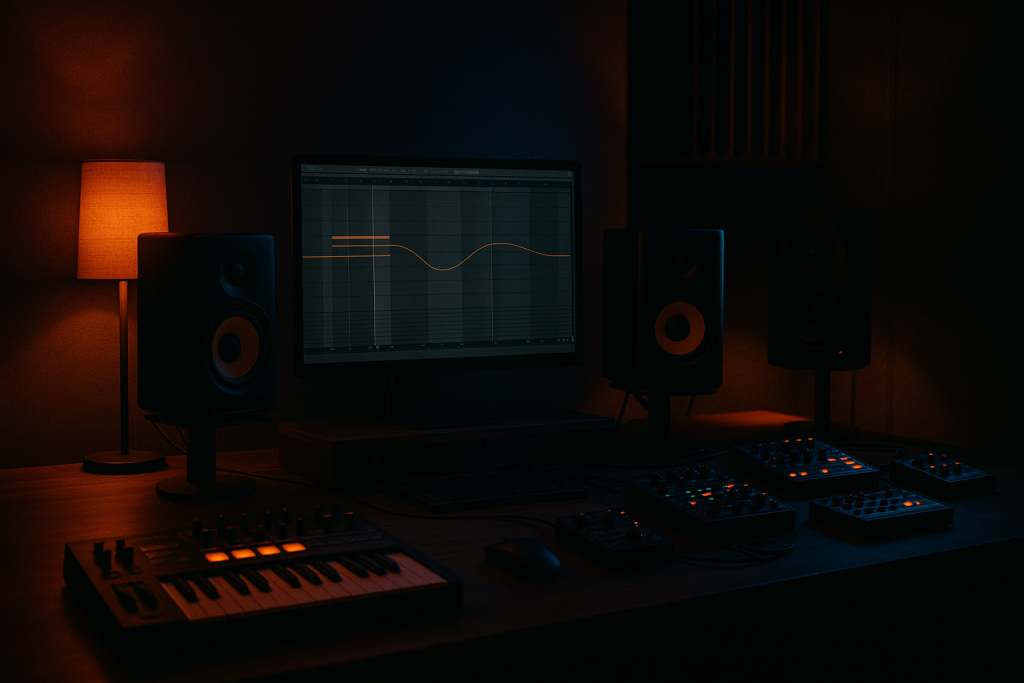
Automation is like stage lighting: the band might play the same riff, but changes in light make the moment feel different. Tech house production needs small movement because the musical parts are often deliberately simple.
Automation means recording changes to a parameter over time, such as filter cutoff, volume, reverb amount, or delay feedback. Effects are processors that alter sound, like reverb, delay, distortion, or filtering.
Filter Sweeps and Short Delays
The easiest tech house production movement comes from filtering. A filter removes parts of the frequency range. Automate a low-pass filter, which removes highs, on the hook during a breakdown, then open it before the drop.
Use delay throws on the last word of a vocal or the final hit of a synth stab. A delay throw is a short burst of echo used on one moment. Keep it tucked back. If everyone notices the effect, it is probably too loud.
Risers, Impacts and Noise
A riser is a sound that builds tension before a drop. Use one filtered noise riser, one small snare build, or one reverse cymbal. Do not use all three at full volume unless the track needs a festival-sized build, which most tech house does not.
Saturation, a gentle form of distortion, can make drums and bass feel denser. Try Ableton Saturator, Soundtoys Decapitator, or FabFilter Saturn. Add it until you miss it when bypassed, not until it sounds obviously distorted.
- Automate filter cutoff during breakdowns.
- Use delay throws on single words or stabs.
- Keep risers shorter than you think.
- Add saturation until it is felt, not obvious.
- Mute effects before the drop for stronger impact.

Export a Demo, Then Decide What Needs Outside Help
A demo export is like taking a photo of a painting from across the room: flaws you missed up close become obvious. When tech house production stalls, bouncing a rough version is usually better than adding another plug-in.
Export, or bounce, means rendering your DAW session into an audio file. Make a WAV file at 24-bit if possible. Listen on studio monitors, headphones, a small Bluetooth speaker, and a car system if you have one.
Use a Simple Revision Pass
Write notes while listening away from the screen. Do not fix while listening. Mark only the real problems: kick too long, bass too loud, hook late, breakdown boring, clap harsh. Then return to the DAW and fix those items in one pass.
If tech house production keeps hitting the same wall, outside help can be practical. Ghost production means commissioning a producer to create a track under agreed rights. Custom music production means hiring help for a track tailored to your artist sound, label target, or DJ set needs.
Know What to Hand Over
If you work with another producer, send clear material. Stems are audio files grouped by part, such as drums, bass, music, and vocals. Multitracks are separate files for every individual channel. Multitracks are better for detailed fixes.
Include your reference track, BPM, key, rough bounce, and notes. Be specific. Saying the bass should feel closer to the reference at 1:05 is useful. Saying make it more professional is not.
- Bounce a rough WAV before endless tweaking.
- Listen away from the DAW before revising.
- Write problems as concrete notes.
- Send BPM, key, reference and rough bounce if collaborating.
- Use multitracks when detailed mix or production fixes are needed.
| Choice | Best Use | My Take |
|---|---|---|
| Ableton Live | Fast loop writing, automation, warping vocal chops | Best starting DAW for tech house if you have no existing loyalty. |
| FL Studio | Pattern-based drums and fast MIDI sketching | Great for writing, but arrangement discipline matters more. |
| Serum 2 or Wavetable | Short bass plucks, stabs and simple synth hooks | Use fewer oscillators and cleaner envelopes before adding effects. |
| FabFilter Pro-Q 4 | Surgical EQ, mid/side cleanup, low-end control | Excellent, but only after the kick and bass pattern already works. |
| Sidechain Compression | Making kick and bass share space | Use early. It changes the groove, not just the mix. |
Further reading
- Ableton Live manual — Ableton’s official manual is the primary source for Live workflow, routing, automation and audio export details.
- Sound On Sound compression — Sound On Sound is a long-running, reputable production publication with clear technical explanations of compression.
Frequently asked questions
What is tech house production for beginners?
Tech house production is the process of making club tracks built around house drums, a rolling bassline, sparse hooks, and DJ-friendly sections. Beginners should start with one reference track, a 128 BPM session, simple drums, short bass notes, and clean arrangement markers before worrying about advanced mixing.
What BPM should tech house be?
Most tech house sits between 126 and 130 BPM. Start at 128 BPM because it works well in club sets and keeps the groove energetic without feeling rushed. If your reference track is slower or more driving, match that instead of forcing a fixed number.
Do I need expensive plug-ins to make tech house?
No. A stock DAW, good samples, EQ, compression, sidechain ducking, delay, and saturation are enough to finish a solid track. Paid tools like FabFilter Pro-Q 4, Soothe2, or Soundtoys Decapitator help later, but weak writing and muddy arrangement are bigger problems than missing plug-ins.
How do I make my tech house bassline bounce?
Keep the bass notes short, place them around the kick, and use sidechain ducking so the kick creates space. Start with one or two notes, then add a small variation every 4 bars. If the bass is too long, the groove will feel flat and crowded.
How long should a tech house arrangement be?
A club-focused tech house track often runs between 4 and 6 minutes. Use 16 or 32-bar sections so DJs can mix cleanly. A practical layout is intro, groove, first drop, breakdown, build, second drop, and outro. Short edits can work for streaming, but DJs still need structure.
When should I consider ghost production?
Consider ghost production when you have a clear artist direction but keep getting stuck on sound design, arrangement, mix quality, or release deadlines. The best results come when you provide references, BPM, key, rough ideas, and specific notes instead of asking for something vague.
Conclusion
Tech house production becomes less intimidating when you repeat the same order: reference, tempo, drums, bass, hook, arrangement, mix cleanup, export. The point is not to make every track identical. The point is to stop losing hours to random decisions before the groove even works.
Start your next session with a 128 BPM template, one reference, a short kick, a clap on 2 and 4, and a bassline that leaves space for the kick. Bounce a rough version before you polish it. Then listen away from the screen and make one focused revision pass.
Tech house production — Quick Recap
The fastest way to lock in tech house production is to internalise the workflow above and repeat it on every project. Start small: pick one technique from this tech house production guide, apply it to your next session, and audit the result against a reference track.
- Start with one reference track and a clear 126 to 130 BPM tempo target.
- Build drums before sound-designing the whole track.
- Keep basslines short, simple and sidechained to the kick.
- Use DJ-friendly 16 or 32-bar sections with clean mix points.
Treat tech house production as a habit, not a one-off — the producers who consistently nail tech house production are the ones who run the same checks on every track. That’s the difference between a clean, club-ready master and a track that sounds great at home but falls apart on a real system.
In a real studio session, tech house production comes down to the order in which you make decisions: reference first, gain stage second, then the creative work. Producers who treat tech house production as a checklist instead of a vibe end up shipping more tracks.
Most producers and DJs undervalue tech house production because the wins are invisible until the track plays back on a real system. Bake tech house production into your template and the next ten projects benefit automatically.
My Career makes videos from your own track and posts them for you, pitches your release to 34,000+ labels, playlists, radio stations, YouTube channels and blogs, puts it in every store and briefs you every morning. Free plan, no card, two minutes to set up.