Key takeaways
- Ableton Live 12 is the strongest all-round pick for fast, club-ready tech house workflow.
- FL Studio 2024 wins the bassline and MIDI programming round, but needs strict organization.
- Logic Pro 11 is the best choice for vocals, audio editing, and clean stock-plugin finishing.
- Kick and bass timing matter more than expensive synth presets.
- A DDJ-FLX10 or CDJ test can expose weak phrasing before the track reaches a DJ set.
- Use sidechain ducking, mid/side EQ, and parallel compression with restraint.
Tech house production lives or dies on the boring stuff: kick length, bass timing, drum swing, and whether your arrangement can survive a club system at 1 a.m. For this shootout, I am putting Ableton Live 12, FL Studio 2024, and Logic Pro 11 against each other as full production rigs, not as fanboy talking points.
The test track is simple: 126 BPM, one short vocal hook, a rolling offbeat bass, chunky drums, and a 6-minute DJ-friendly arrangement. I used the same third-party tools where it mattered: FabFilter Pro-Q 4 for surgical EQ, Pro-C 2 for compression, ShaperBox 3 for ducking, Soothe2 for harshness control, and Kick 2 for a clean low-end starting point. If you are an aspiring DJ, bedroom producer, or artist comparing DIY against custom music production, this is the setup choice that actually affects your finished record.
Tech house production Shootout: The Tools I Tested
A DAW is not just a recorder. It pushes you toward certain decisions. Ableton Live 12 pushes loop building and clip variation. FL Studio 2024 pushes fast pattern writing. Logic Pro 11 pushes cleaner audio editing and stock processing. For tech house production, speed matters, but only if the groove stays tight.
I dock points for friction. If a workflow makes me click through menus while the bassline idea is still fresh, it loses. If it gives me fast routing, clear gain staging, and easy automation, it scores.
Ableton Live 12 for tech house production
Ableton wins the first round for sketching. Drum Rack, Simpler, Audio Effect Rack, and Session View make it stupidly fast to test 16-bar grooves. I can throw a shaker loop into Simpler, slice it by transient, nudge a few hits late, and have movement in under two minutes.
The downside is stock polish. Ableton’s devices are solid, but I still reach for Pro-Q 4, Decapitator, and ShaperBox 3 when the track needs label-ready bite. Live is the fastest blank canvas here.
FL Studio 2024 for fast pattern pressure
FL Studio is dangerous for tech house production because the Channel Rack makes drum ideas feel instant. Kick, clap, closed hat, open hat, two percussion hits, done. The Piano Roll is still the best of the three for short bass riffs, ghost notes, slides, and velocity edits.
Where FL loses points is arrangement discipline. The Playlist can become a sticker wall if you do not name patterns and color-code from bar one. Great for ideas. Messy if you are lazy.
Logic Pro 11 for clean finishing
Logic feels less hyped, but it is brutally competent. For tech house production that includes recorded vocals, guitar stabs, or edited top loops, Flex Time and region handling are smoother than FL. Stock Channel EQ, Compressor, Phat FX, and Step FX cover more ground than people admit.
Logic is slower for wild loop testing. It rewards producers who already know the record they want to make.
- Ableton Live 12 is the fastest sketchpad for loops and automation.
- FL Studio 2024 wins for Piano Roll bassline programming.
- Logic Pro 11 is strongest when audio editing and clean finishing matter.
- For tech house production beginners, Ableton is the least punishing.

Drums and Groove: Ableton vs FL Studio vs Logic
Tech house drums need weight without laziness. The kick should hit short and firm, usually tuned around 45 to 55 Hz. The clap wants snap around 2 kHz to 5 kHz, not a fizzy mess. The groove comes from tiny timing decisions, often 8 to 15 ms late on selected hats and percussion.
This is where tech house production stops being a sample-pack drag race. Same samples, three different workflows.
Ableton handles drum racks like a club tool
In Ableton, I build a Drum Rack with Kick 2, a short clap, closed hat, open hat, rim, tom, and two found-sound percs. Groove Pool is the killer feature. Pull 16-55% swing from an old house loop, apply it to hats only, and the track breathes without ruining the kick grid.
For tech house production, I keep the kick fully straight. Then I push shakers late by 10 ms and lower every second 16th note by 6 to 10 velocity points. Small moves. Big difference.
FL Studio handles drums like a beat machine
FL’s Channel Rack is still the fastest place to audition drum layers. Right-click fill every 2 steps, randomize velocity lightly, then send hats and percussion to a drum bus. The swing knob is useful, but I prefer per-channel manual nudging for tech house production because global swing can make the low end feel drunk.
Docked point: routing can get ugly if you do not assign mixer channels immediately. Assign everything before the groove gets crowded.
Logic handles drums with less flash and more control
Logic’s Drum Machine Designer is not as immediate as Ableton’s Drum Rack, but it is cleaner once the kit is built. Step Sequencer is strong for per-step velocity, probability, and repeats. I like it for 2-bar hat variations and restrained percussion fills.
For tech house production, Logic’s stock Compressor on the drum bus works better than expected. Studio VCA mode, 2:1 ratio, 10 ms attack, auto release, 1 to 2 dB of gain reduction. Stop there.
- Cut drum bus mud around 220 Hz if the groove feels boxy.
- Keep kick peaks around -8 dBFS before the bass arrives.
- Use 4-bar drum variations, not constant fill spam.
- High-pass most percussion between 120 Hz and 300 Hz.

Bassline Design: Operator, 3xOSC and Retro Synth
The tech house bassline is usually not complex. It is a short note, a controlled envelope, and a rhythm that leaves space for the kick. Bad basslines sound busy on laptop speakers and useless on a club rig. Good ones feel almost too simple until the drums hit.
For this tech house production test, I made one offbeat bass pattern and one rolling syncopated pattern in each DAW.
Ableton Operator wins for fast low-end shaping
Operator is plain, but it is perfect for tech house production. Start with a sine or triangle, add a little square on oscillator B, low-pass around 180 Hz, then set amp decay around 180 to 260 ms. That gives a bass note that speaks and gets out.
I sidechain with ShaperBox 3 instead of a compressor. Set a tight duck curve of about 90 ms, then adjust by ear against the kick tail. Ableton makes this painless because routing and automation are visible.
FL Studio 3xOSC is ugly in the best way
3xOSC looks basic, but the Piano Roll makes it hit. Use one sine, one square at low volume, and a short envelope in the sampler settings. Add Fruity Parametric EQ 2 or Pro-Q 4 after it, cut 250 Hz if it clouds the kick, and add light saturation before sidechain ducking.
FL wins for slide notes. Those little pitched scoops can make tech house production sound more human, but do not overcook them. One slide per 4 bars is enough.
Logic Retro Synth sounds polished too early
Retro Synth can make a clean bass fast, especially in Analog mode. The problem is that it often sounds finished before the groove is right. That tempts you to keep a weak pattern because the tone feels expensive.
For tech house production, I prefer Logic’s ES M for simple sub parts and Retro Synth for a mid-bass layer. Split the layers, mono the sub below 120 Hz, and high-pass the mid layer around 140 Hz.
- Use MIDI note lengths shorter than you think: 1/16 to 1/8 often works.
- Check kick and bass in mono before adding top loops.
- Do not boost 50 Hz blindly. Move the kick or bass octave first.
- Sidechain for groove, not just loudness.
Arrangement Speed: Session View, Playlist and Live Loops
A tech house record should be easy for DJs to mix. That means a usable intro, a clear first drop, a break that does not kill the floor, and an outro that gives the next track room. I still like 16-bar and 32-bar blocks because CDJ-3000 phrase displays do not fix sloppy writing.
The DAW that helps you finish arrangements wins real points in tech house production.
Ableton turns loops into a record fastest
Session View is the reason Ableton keeps winning dance music rooms. I build scenes for intro, groove, pre-drop, drop, break, second drop, and outro. Then I record a live pass into Arrangement View and edit the boring bits.
For tech house production, that live pass matters. You perform mutes, filter moves, and delays in a way that feels less copy-pasted. Follow Actions also help test 8-bar percussion changes without stopping playback.
FL Studio needs stricter arrangement hygiene
FL can arrange tech house quickly, but only if you label patterns like a grown-up: kick, bass A, bass B, hats 16, perc fill, vocal chop, ride build. If you leave everything named Pattern 12, you deserve the chaos.
The Playlist is flexible, which is exactly why it punishes weak discipline. For tech house production, I set markers at bars 1, 33, 65, 97, 129, 161, and 193 before I start duplicating anything.
Logic Live Loops is useful but not the main event
Live Loops in Logic works, but I do not like it as much as Ableton Session View. It feels added onto a linear DAW, not born from performance. Still, once you move to the Tracks area, Logic is excellent for trimming, automation curves, and cleaning transitions.
For tech house production with vocals, Logic’s arrangement tools feel grown-up. For loop-first club tools, Ableton is still ahead.
- Start with a 32-bar DJ intro unless the hook is unusually strong.
- Remove one element every time you add two.
- Use filtered noise risers sparingly, not every 8 bars.
- Check the first drop after a 16-bar build with no visual grid.

Mixing Chain: Pro-Q 4, Pro-C 2 and ShaperBox 3
Mixing tech house is mostly damage control. The arrangement should already work. Your mix chain should clear mud, control pokey resonances, and make the groove feel glued without smashing the transient life out of the drums.
I used the same third-party chain across all three DAWs so the tech house production comparison stayed fair: Pro-Q 4, Pro-C 2, ShaperBox 3, Soothe2, and StandardCLIP on selected buses.
Ableton routing makes parallel processing fastest
Ableton’s return tracks are quick for drum room, short delays, and parallel compression. I send hats and percussion to a parallel bus with Pro-C 2, 4:1 ratio, 20 ms attack, fast release, then blend under the dry drums. The kick stays out of that bus.
For tech house production, Ableton’s Audio Effect Racks are perfect for A/B testing. Map dry/wet, saturation drive, and filter cutoff to macros, then stop touching the mouse.
FL Studio mixer sounds fine but asks for order
FL’s mixer is not the weak link. The weak link is producers leaving random effects on random inserts. Route all drums to one bus, bass to one bus, music to one bus, vocals to one bus, then a premaster. Keep -6 dB headroom before mastering.
For tech house production, I like Fruity Soft Clipper on drum one-shots, but I do not put it everywhere. If every channel is clipped, nothing punches.
Logic stock mixing tools are the best value
Logic wins the stock plugin round. Channel EQ, Compressor, Multipressor, Phat FX, and ChromaVerb can finish a release without much help. Pro-Q 4 is still faster for mid/side EQ and resonance hunting, but Logic’s built-ins are not toys.
For tech house production, I use mid/side EQ on the music bus: cut low sides below 140 Hz, shave 300 Hz in the mid if the vocal fights the bass, and keep stereo tricks above the low mids.
- Leave the premaster peaking around -6 dBFS before final limiting.
- Use Soothe2 lightly on harsh vocal chops, not as a rescue blanket.
- Clip drum peaks before limiting the whole mix.
- Reference at low volume against two released tracks, not ten.

Hardware Control: Push 3, FLkey 49 and DDJ-FLX10
Hardware will not save a weak groove. It can, however, make decisions faster. For this round I am comparing Ableton Push 3, Novation FLkey 49, and Pioneer DJ DDJ-FLX10 as practical controllers around a tech house production session.
I care less about specs and more about whether the controller keeps hands moving while the loop is still exciting.
Push 3 makes Ableton feel like an instrument
Push 3 is the best hardware match here. Step sequencing drums, recording bass stabs, adjusting macro knobs, and launching scenes all feel connected. For tech house production, that means fewer dead minutes between idea and playback.
The price is the obvious hit. If you are still learning gain staging and arrangement, buy monitors before Push 3. If you already finish tracks, Push 3 speeds up decisions.
FLkey 49 gives FL Studio proper hands-on control
FLkey 49 fixes a lot of the old FL hardware awkwardness. Channel Rack control, mixer focus, scale mode, and transport all make sense. It is not as deep as Push 3, but it costs less and fits FL’s pattern-first mindset.
For tech house production, the pads are useful for drums, but the keyboard is the real value. Bassline variations land faster when you are not drawing every note with a mouse.
DDJ-FLX10 is for testing, not producing
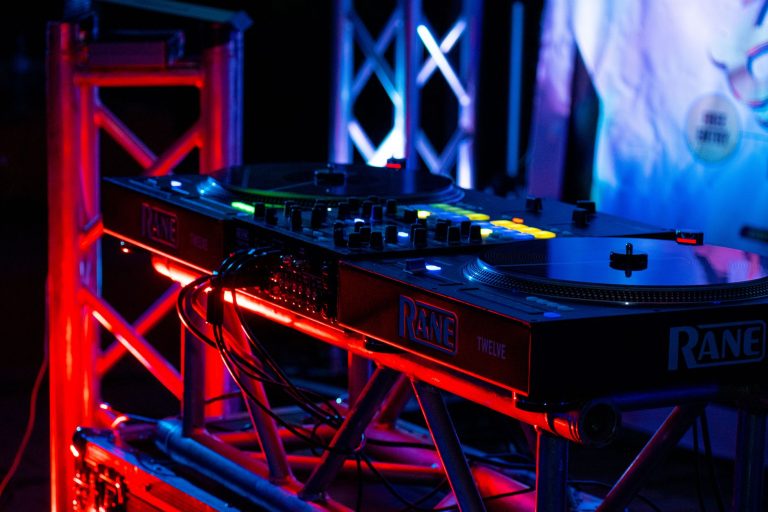
The DDJ-FLX10 is not a production controller, and I would not pretend otherwise. Its value is testing arrangements like a DJ. Bounce a premaster, load it next to a reference in Rekordbox, and check whether your intro, break, and outro behave under performance pressure.
For tech house production aimed at DJs, that test is brutal. If your track cannot mix cleanly after 32 bars, fix the arrangement before adding another plugin.
- Pick Push 3 if Ableton is already your main room.
- Pick FLkey 49 if you write basslines and drums in FL daily.
- Use DDJ-FLX10 to test phrasing, not to build the track.
- Do not buy hardware to avoid learning arrangement.

Who Should Pick Which Tech House Production Setup
No fence-sitting: Ableton Live 12 is my pick for most producers making club-focused tech house. It is faster from loop to arrangement, better for performance-style automation, and cleaner for routing modern sidechain and parallel chains.
That does not make FL Studio or Logic bad choices. It means they need the right kind of producer behind them. Tech house production rewards repeatable workflow more than feature hoarding.
Pick Ableton Live 12 if you want finished club tools
Choose Ableton if your goal is to finish DJ-friendly records quickly. It wins drums, arrangement speed, controller depth, and routing. For aspiring DJs who want to turn set ideas into original tracks, this is the cleanest path.
The only real complaint is price once you add Suite and Push 3. Still, for tech house production, I would rather pay once for speed than fight my tools every night.
Pick FL Studio 2024 if basslines are your main weapon
Choose FL if you love programming MIDI and building hooky bass riffs. The Piano Roll is still king. Pattern work is fast, and FL’s stock tools can hit hard if you stay organized.
I dock it for messy arrangement habits. If you are disciplined, FL Studio is a serious tech house production rig. If you are not, it becomes a loop graveyard.
Pick Logic Pro 11 if you record and polish
Choose Logic if your tracks use vocals, edited audio, guitar stabs, or live percussion. It is the best finisher of the three and the stock plugin value is ridiculous. I would not pick it first for loop-heavy club tools, but I would trust it for clean releases.
For artists commissioning custom music production, Logic sessions are also tidy to hand over when stems, multitracks, and vocal edits matter.
- Best overall pick: Ableton Live 12.
- Best MIDI and bassline pick: FL Studio 2024.
- Best audio editing and stock mixing pick: Logic Pro 11.
- Best testing hardware: Pioneer DJ DDJ-FLX10.
- Best production controller: Ableton Push 3.
| Test Area | Ableton Live 12 | FL Studio 2024 | Logic Pro 11 |
|---|---|---|---|
| Drum workflow | Best overall: Drum Rack, Groove Pool and fast return routing | Fastest pattern entry, but routing needs discipline | Clean Step Sequencer and solid Drum Machine Designer |
| Bassline writing | Operator is quick and controlled for club subs | Best Piano Roll for slides, ghost notes and velocity edits | Polished tones, but slower for riff experimentation |
| Arrangement | Session View turns loops into full tracks fastest | Playlist is powerful but can become messy fast | Strong linear editing, weaker loop performance feel |
| Mixing | Excellent racks, returns and automation mapping | Good mixer if routed properly from the start | Best stock EQ, compression and audio cleanup |
| Hardware pairing | Push 3 is the strongest production controller match | FLkey 49 gives useful hands-on pattern control | Works with many controllers, but none feel as native |
| Best user | DJs and producers finishing club tools weekly | MIDI-heavy writers who build bass hooks first | Artists polishing vocals, audio edits and release stems |
Further reading
- Ableton Live features — Official Ableton product documentation for Live workflow, devices and Session View features.
- Sound On Sound techniques — Long-running engineering publication with reputable production, mixing and recording technique articles.
Frequently asked questions
What is the best DAW for tech house production?
Ableton Live 12 is the best overall pick for tech house production because Session View, Drum Rack, routing, automation, and Push 3 integration all support fast club-focused writing. FL Studio is better for MIDI basslines. Logic Pro is better for audio editing and polished finishing.
How do you make a tech house bassline hit harder?
Use short MIDI notes, leave space for the kick, and shape the envelope before reaching for EQ. Try a 180 to 260 ms decay, mono sub below 120 Hz, and sidechain ducking around 90 ms. If it still feels weak, change the rhythm before boosting lows.
What BPM should tech house be?
Most tech house sits between 124 and 128 BPM, with 126 BPM being a reliable starting point. Slower tracks can feel groovier if the percussion swings well. Faster tracks need tighter kick and bass control or the low end starts to blur on bigger systems.
Are stock plugins enough to make tech house?
Yes, especially in Logic Pro and Ableton Suite. Stock EQ, compression, saturation, delay, and drum tools can finish a strong track. Third-party plugins like Pro-Q 4, ShaperBox 3, and Soothe2 mostly speed up specific jobs. They do not replace arrangement or groove.
How long should a tech house arrangement be?
A DJ-friendly tech house arrangement usually lands between 5 and 6 minutes. Use 16-bar or 32-bar sections, with a clear intro, first drop, break, second drop, and outro. If the track is for streaming only, you can trim it, but club versions need mixing room.
Should I use a ghost producer for tech house?
If you know your artist direction but cannot get the record finished, a ghost producer or custom music production team can help translate references into a release-ready track. You should still understand the basics of groove, arrangement, and mix feedback so the final result matches your taste.
Conclusion
If I had to build one room for tech house production, I would choose Ableton Live 12, Push 3 if the budget allows, Pro-Q 4, ShaperBox 3, and a small set of drum samples I actually know. FL Studio is the pick for bassline obsessives. Logic Pro is the pick for artists who record and polish audio. That is the split.
The bigger lesson is less glamorous: commit to one workflow and finish records inside it. Set your kick, write a bassline with space, arrange in 32-bar blocks, then test the bounce like a DJ. Try this in your next session before downloading another folder of presets.
My Career makes videos from your own track and posts them for you, pitches your release to 34,000+ labels, playlists, radio stations, YouTube channels and blogs, puts it in every store and briefs you every morning. Free plan, no card, two minutes to set up.