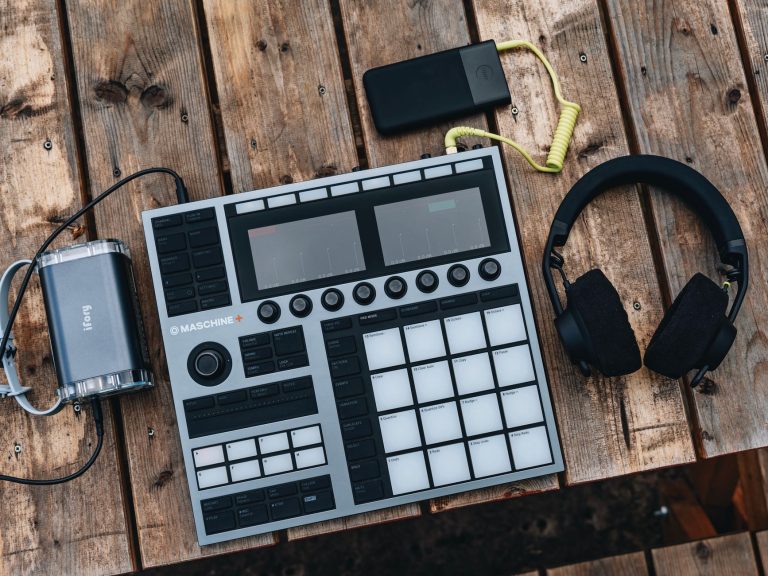
Key takeaways
- Use references as measuring tools, not as decoration inside the session.
- Always level-match before judging tone, punch, or width.
- Map arrangement decisions in 4-bar and 8-bar phrases.
- Check kick and bass together, not as isolated solo channels.
- For custom production briefs, give each reference a clear role.
- Keep a small, trusted folder instead of a random playlist.
Reference tracks saved a tech-house record for me at 2:13 a.m., in a rented writing room above a rehearsal studio, with the kick sitting wrong at 128 BPM and FabFilter Pro-Q 4 open on the second monitor. The artist was sure the bass needed another layer. I was sure the bass needed less ego. We pulled in two reference tracks, level-matched them, and the problem got ugly fast: our low-end was louder, but smaller.
I still remember the tiny panic in the room. The record was due the next morning. I bounced a rough, walked it to a pair of CDJ-3000s in the lounge, and the drop folded like wet cardboard. That night taught me the only way references help: they have to become a measuring tool, not a mood board.
Reference Tracks Are Not Decoration
The first mistake I see is harmless on the surface. A producer drags a hit record into Ableton Live, mutes it, and says, I know the vibe. That is not referencing. That is keeping a souvenir in the session.
reference tracks should answer specific questions. How long is the intro before the vocal hook? How much sub is left when the kick lands? Does the clap live wide, dry, or tucked behind a room reverb? When I use them properly, I stop arguing with taste and start checking evidence.
What Good Reference Tracks Tell You
A good reference is not always your favourite song. It is the song that solved the same problem you are trying to solve. If I am finishing a rolling tech-house cut, I might pull a Chris Lake record for groove density, a Cloonee record for vocal placement, and a Defected release for master balance.
I usually keep three lanes in the session: one for arrangement, one for low-end, and one for loudness feel. That keeps reference tracks from becoming one impossible standard that the song can never meet.
The Copying Trap
Copying the snare, bass patch, riser shape, and vocal chops from one record is lazy and obvious. Taking its structural lesson is different. If the reference delays the full bassline until bar 33, I ask why. Maybe the first drop breathes better. Maybe the vocal needs space.
That is the useful theft: steal the decision, not the sound.
- Pick references that match genre, tempo, and release format.
- Use one track for low-end, another for arrangement, another for vocal balance.
- Avoid choosing only massive festival masters if you are making a warm-up club track.
- Mark the first drop, breakdown, second drop, and outro with locator flags.
- Mute the reference when writing melodies so it does not steer the hook too hard.

Match Loudness Before You Judge Anything
The worst argument I ever had over a mix started because the reference was 4 dB louder. The artist wanted the kick brighter, the bass wider, and the vocal more forward. None of that was true. The reference was just louder, and louder lies like a promoter with a half-empty room.
Before I trust reference tracks, I pull them down. In Ableton, I use Utility on the reference channel. In Logic Pro, Gain does the job. On a DJ controller such as the Pioneer DDJ-FLX10, I will even trim by ear against a rough bounce if I am checking club feel.
My Loudness-Match Routine
I leave around -6 dB headroom on my mix bus while writing. Then I bring the reference down until the chorus or drop feels roughly equal in volume, not equal on paper. LUFS meters help, but ears still win when the master has different crest factor.
If the reference slams at -7 LUFS integrated and my rough is sitting near -13 LUFS, I do not push a limiter until it cries. I reduce the reference. Then the real differences show up: transient shape, sub length, stereo width, and vocal density.
The Meter Is a Flashlight, Not a Judge
SPAN, Youlean Loudness Meter, and Ableton Spectrum all help. I like Youlean for checking integrated loudness and short-term movement, then Pro-Q 4 for quick visual EQ comparisons. I do not mix with my eyes glued to the analyser. That turns every session into accountancy.
The check is simple: if reference tracks only sound better when they are louder, you have not learned anything yet.
- Turn the reference down before boosting your mix.
- Compare the loudest eight bars, not a random quiet intro.
- Bypass master-chain limiters when judging tone.
- Check short-term loudness during drops and choruses.
- Revisit the level match after every major mix move.

Steal the Map, Not the Furniture
I once worked on a melodic house demo where the topline was strong, but the track felt like it kept walking into rooms without turning the lights on. Nice chords. Nice vocal. No journey. The reference fixed the arrangement in ten minutes.
We dropped markers every 4 bars and wrote what changed: clap in, hat lift, bass variation, vocal answer, snare fill, crash tail. Suddenly the record stopped feeling mysterious. reference tracks made the arrangement visible.
Four-Bar Phrases Tell the Truth
Dance records are not random blocks. A DJ feels phrases even when nobody says the word phrase. On a CDJ-3000, that 32-beat grid is not decoration. It is how transitions breathe.
I like to put a locator at every 8 bars, then smaller notes inside the clip names. If the reference adds a ride at bar 49, I ask what job it does. Energy lift? Frequency fill? Signal to mix out? That answer matters more than the ride itself.
Arrangement Before Mix Surgery
Many mix problems are arrangement problems wearing a false moustache. If the vocal, pad, open hat, and saw lead all arrive at once, no EQ move at 3.2 kHz will make it feel expensive.
Use reference tracks before the session turns into tiny EQ cuts. If the reference strips the drums for two bars before the drop, try silence first. Silence is cheaper than another plugin.
- Mark every 8 bars in the reference.
- Write down what changes at each marker.
- Notice when energy drops, not only when it rises.
- Check where the vocal hook first appears.
- Copy the pacing logic, not the exact drum fill.
Check Low End Like a DJ, Not a Solo Button
Low-end referencing is where bedroom mixes either grow up or fall apart. I learned this playing a basement bar with a tired sound system, one sub under the booth, and a limiter that hated optimism. My track sounded huge at home. In the room, the bass swallowed the kick whole.
Now I treat reference tracks like a club translation test. The solo button lies. The room does not.
Kick and Bass Need a Contract
For club music, I decide who owns the deepest space. If the kick fundamental sits around 50 Hz, I may let the bass speak more at 80 to 110 Hz, then cut a little at 220 Hz if the note body starts crowding the low mids. If the bass owns the sub, the kick needs a shorter tail and cleaner click.
Sidechain ducking is not only a pumping effect. Used lightly, maybe 2 to 4 dB of gain reduction, it creates a handshake between the kick and bass. I compare that movement against reference tracks at the same volume.
Small Speakers Still Matter
I check the low-end on Yamaha HS8s, then on small laptop speakers, then on headphones. If the bassline disappears on small speakers, I add harmonics with Saturn 2 or a quiet parallel distortion bus. I do not just raise the sub.
A good reference tells me how much mid-bass information the listener needs when the sub system is weak. That is why the best club mixes survive taxis, phones, bars, and proper rigs.
- Compare kick tail length against the reference.
- Watch 40 to 120 Hz, but do not mix only from the analyser.
- Use sidechain ducking for space before adding volume.
- Check mono below 120 Hz.
- Test on headphones, monitors, and one ugly small speaker.
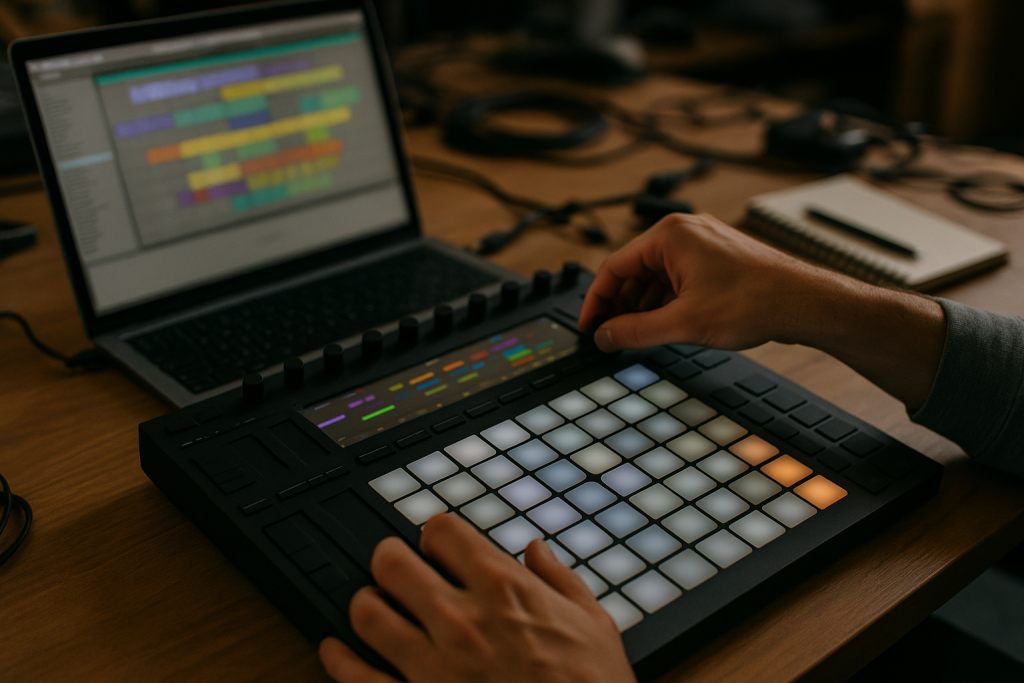
Use References While Arranging, Not After the Damage
The painful version is familiar. The track is 90 percent done, the deadline is close, and only then someone says it does not sound like the brief. At that point, reference tracks become a weapon. Everyone points at them. Nobody enjoys it.
I prefer bringing them in while the song is still soft. At 16 bars, I will already check groove density. At the first rough drop, I check impact. Before vocals are final, I check space.
The Early Session Check
On a custom production job, I ask for two or three references before touching sound design. One for drums. One for emotion. One for final polish. If the client sends six unrelated songs, I ask them to choose what each song means.
That question prevents chaos later. A Martin Garrix-style supersaw reference and a deep Afro house groove can both be good records, but they cannot both drive the same drop without a clear hierarchy.
Do Not Wait for Mastering
Mastering will not fix a weak chorus, a crowded pre-drop, or a bassline that fights the vocal. I have seen producers blame the limiter when the real issue was a pad playing through the entire drop.
Bring reference tracks in early enough that they can change decisions, not just embarrass them.
- Check groove after the first drum loop feels usable.
- Check arrangement before adding decorative ear candy.
- Check vocal space before stacking pads.
- Check drop impact before sound-designing ten risers.
- Check mix balance before sending stems for mastering.
When a Custom Production Brief Needs References
For artists looking at ghost production or custom music, references are not a test of taste. They are translation tools. I have had clients say they wanted dark, only to send a bright piano house record with a soft vocal and no real darkness beyond the cover art.
That is normal. Most people describe music emotionally. reference tracks turn those emotions into production choices: tempo, drum swing, vocal size, synth brightness, drop length, and master loudness.
Briefs Need Roles
The cleanest brief I ever received had three songs and one sentence beside each. Track one for drum groove. Track two for vocal intimacy. Track three for drop energy. No essay. No contradictory playlist. That was enough.
If you are hiring a producer, do not send a 40-track playlist and hope the average becomes your sound. Pick fewer records and explain why they matter. reference tracks work best when each one has a job.
Where the Line Sits
A responsible producer will not clone a melody, bassline, or full arrangement. The reference should guide choices, not create a copyright headache. If a client asks for the same hook with different words, I push back. Hard.
Style is a lane. Theft is a crash.
- Send two or three references, not a giant playlist.
- Explain the role of each track in one sentence.
- Separate groove, mood, vocal treatment, and master tone.
- Avoid asking for a clone of a known release.
- Mention where the finished track will be played: club, streaming, radio, or DJ set.

Build a Small Reference Folder You Actually Trust
My old reference folder was a landfill. Peak-time techno next to radio pop, old masters next to fresh Beatport weapons, demos ripped from emails, and a few MP3s I should have deleted. Too many reference tracks slow the session down.
Now I keep a tight folder by purpose. It is boring, and it works. If I am mixing Afro house, I do not need a drum and bass master staring at me from the sidebar.
Keep It Genre-Specific
I keep folders by tempo range and function. Tech house 126 to 130 BPM. Melodic house 120 to 124 BPM. Pop dance vocal balance. Club low-end. Streaming loudness. Each folder has maybe five to eight songs.
When reference tracks are curated, they speed up decisions. When they are random, they make every choice feel wrong.
Refresh the Folder Without Chasing Trends
I update mine every few months, but I do not throw away proven records just because a new snare is fashionable. A 2019 mix that still hits on a good system may teach more than a hyped track with a brittle master.
The test is simple. If a reference repeatedly helps me make better decisions, it stays.
- Keep five to eight songs per folder.
- Use WAV or high-quality files when possible.
- Sort by genre, tempo, and production problem.
- Remove references that only make you chase volume.
- Keep one rougher club record if it translates beautifully.
| Reference Method | Best For | Tool I Trust | Mistake To Avoid |
|---|---|---|---|
| Loudness-matched A B | Tone, punch, vocal level | Utility, Youlean Loudness Meter | Comparing against a louder master |
| Arrangement mapping | Drops, breakdowns, DJ-friendly phrasing | Ableton locators or Logic markers | Copying every fill and riser |
| Spectrum check | Low-end balance and harsh top | Voxengo SPAN or Pro-Q 4 | Mixing with your eyes only |
| Club translation test | Kick and bass relationship | CDJ-3000, DDJ-FLX10, car speakers | Trusting soloed sub channels |
Further reading
- Ableton mixing manual — Ableton's official manual is an authoritative source for routing, levels, monitoring and mixer workflow.
- Sound On Sound referencing — Sound On Sound is a long-running professional audio publication with trusted technical mix advice.
Frequently asked questions
How many reference tracks should I use in one session?
I like two or three. One can guide low-end, one can guide arrangement, and one can guide overall polish. More than that usually turns into second-guessing. If every reference pulls the track in a different direction, the brief is not clear enough yet.
Should I use mastered songs as references while mixing?
Yes, but turn them down before judging. A mastered record will often be much louder than your mix in progress. Level-match it, bypass heavy master-chain processing on your own track, then compare tone, punch, width, and balance rather than raw loudness.
Can reference tracks make my music sound copied?
They can if you copy melodies, drum fills, basslines, and arrangement details too closely. Used properly, they guide decisions rather than replace them. I focus on roles: where the energy rises, how the low-end behaves, and how much space the vocal gets.
What is the best plugin for comparing my mix to a reference?
Metric AB is useful if you want a dedicated referencing plugin. You can also do the job with Ableton Utility, Pro-Q 4, SPAN, and a loudness meter. The plugin matters less than the habit: level-match, compare short sections, and write down what is actually different.
Should DJs use references when preparing original tracks?
Yes. DJs understand phrasing, mix-in points, and low-end movement from real sets, so they often reference differently from studio-only producers. Check whether your intro gives enough time to blend, whether the first drop arrives cleanly, and whether the outro is usable.
What should I send as references for a custom production brief?
Send two or three tracks and explain each one. For example: drums from one, vocal mood from another, drop energy from a third. That gives the producer direction without forcing a clone. It also reduces revisions because everyone knows what each reference means.
Conclusion
The lesson from that late-night tech-house save still sticks with me: reference tracks are not there to make a producer feel small. They are there to stop a session lying to itself. Used early, level-matched, and assigned to clear jobs, they reveal whether the track needs a better arrangement, cleaner low-end, less master bus pressure, or just a braver mute button.
Try this in your next session: pick three references before the mix gets serious, write one job beside each, and check them at the same loudness every 20 minutes. The record will tell you what to fix.
Reference tracks — Quick Recap
The fastest way to lock in reference tracks is to internalise the workflow above and repeat it on every project. Start small: pick one technique from this reference tracks guide, apply it to your next session, and audit the result against a reference track.
- Use references as measuring tools, not as decoration inside the session.
- Always level-match before judging tone, punch, or width.
- Map arrangement decisions in 4-bar and 8-bar phrases.
- Check kick and bass together, not as isolated solo channels.
Treat reference tracks as a habit, not a one-off — the producers who consistently nail reference tracks are the ones who run the same checks on every track. That’s the difference between a clean, club-ready master and a track that sounds great at home but falls apart on a real system.
In a real studio session, reference tracks comes down to the order in which you make decisions: reference first, gain stage second, then the creative work. Producers who treat reference tracks as a checklist instead of a vibe end up shipping more tracks.
Most producers and DJs undervalue reference tracks because the wins are invisible until the track plays back on a real system. Bake reference tracks into your template and the next ten projects benefit automatically.
When you struggle with reference tracks, the fix is rarely a new plugin. Loop a problem section, A/B against a reference, and isolate which element is breaking your reference tracks.
My Career makes videos from your own track and posts them for you, pitches your release to 34,000+ labels, playlists, radio stations, YouTube channels and blogs, puts it in every store and briefs you every morning. Free plan, no card, two minutes to set up.