
 By Alex Mercer · September 6, 2026
TL;DR
- Useful rap definitions connect dictionary meaning, slang use and session action.
- Rap is not originally short for rhythm and poetry.
- Flow, cadence, pocket and delivery describe different parts of a performance.
- Studio tools can clarify whether a problem is timing, diction, tone or editing.
- Genre labels work best when paired with reference tracks and anti-references.
- Battle and diss language often uses metaphor, competition and persona.
Rap definitions only become useful when they survive contact with a real session: a rapper asking for a colder delivery, a producer marking 16 bars, or an engineer cleaning doubles that are meant to feel loose, not sloppy.
Most glossaries flatten those words. They define “flow” as rhythm, then leave you guessing when the artist says the second half of the verse is rushing the pocket. Better rap definitions need three layers: dictionary meaning, slang use, and the production decision that follows. That is the difference between knowing a term and reacting correctly at the desk. This toolkit treats rap language like studio language. If a word changes how you write, record, edit, mix or brief a custom track, it earns space here.
Rap definitions Toolkit: Read the Term Before You React
A rap term is rarely just a label. It is usually a performance instruction, a cultural reference, or a structural note hiding inside slang. If an artist says a line should be “more conversational,” that can mean lower pitch movement, less end-rhyme emphasis, fewer stacked doubles, or a timing shift behind the beat.
That is why rap definitions should be treated like mix notes. Before touching the DAW, decide whether the word points to writing, delivery, arrangement, engineering, or marketing. The wrong category creates bad fixes. You do not EQ a weak punchline into being sharper.
Rap definitions in a writing room
In a writing room, “bar” means more than one line on a page. In 4/4 rap production, one bar is usually four beats, and a standard verse often lands at 16 bars. That is a structural count, not a lyric count. A dense rapper may fit three written lines into one bar. A minimal drill vocal may stretch one thought across two bars.
Mark the instrumental every 4 bars before judging the lyric. If the hook enters on bar 17 and the artist is still setting up the rhyme, the issue is arrangement math, not vocabulary.
The term is not always the problem
Many arguments about rap language are really arguments about intent. “Aggressive” can mean clipped consonants, louder ad-libs, less melodic pitch, shorter reverb tails, or a more hostile lyric angle. Ask which one. If you skip that question, you can easily make the vocal louder and still miss the requested edge.
A useful session habit: translate every vague term into one audible move. “More pocket” becomes “nudge the last two words of each 2-bar phrase 10 to 25 ms later.” Now you can test it.
- Ask whether the term describes writing, timing, tone, mix, or genre.
- Count bars on the DAW grid before judging verse length.
- Turn vague feedback into one audible move.
- Do not fix a lyric problem with compression.
- Do not fix a timing problem with louder ad-libs.

Rap Etymology and the Rhythm-and-Poetry Myth
The clean internet answer says rap means “rhythm and poetry.” It sounds neat. It is also backwards history. The acronym is a later backronym, not the origin of the word. Real rap etymology is messier and more useful because it explains why the same word can mean talking, striking, blaming, performing, or taking a legal charge.
Does rap mean rhythm and poetry?
No. “Rhythm and poetry” is a memory trick, not the source. The older verb “rap” meant to strike sharply, knock, or speak sharply. Over time it picked up meanings tied to talk, accusation and social exchange. That history matters because modern slang still carries those branches.
When someone says “he took the rap,” they are not talking about music. When someone says “rap with me,” older slang means talk with me. When an MC raps, the word connects speech, rhythm and impact, but not through an original acronym.
Why the old meanings still matter
Hip-hop did not invent every meaning of rap. It organized one branch into a musical practice: rhythmic speech over a beat, usually with rhyme, cadence, persona and cultural coding. The old “sharp talk” meaning never disappeared. That is why “battle rap,” “diss track,” “spit,” and “body a verse” all feel natural. The language still treats words as contact.
- Rap is not originally an acronym.
- Older meanings include knock, strike, talk, accuse and blame.
- Music use grew from speech-based meanings, not from a slogan.
- The acronym can be poetic, but it is not etymology.
Rap Music Meaning: Bars, Flow, Cadence and Pocket
Rap music meaning gets lazy when everything becomes “flow.” Flow is not a bucket for every rhythmic detail. In production terms, bars define the grid, cadence defines the pattern of speech, pocket defines the relationship to the beat, and delivery defines the attitude carried by the voice.
If you separate those, your feedback gets cleaner. “The flow is off” tells nobody what to change. “The cadence repeats for eight bars, and the last syllables land too early against the snare” gives the rapper something to perform.
Bars are measurement, not quality
A 16-bar verse is not better than an 8-bar verse. It just occupies twice the musical space. In a 140 BPM drill track counted half-time, writers may feel the groove at 70 BPM while the DAW grid shows faster subdivisions. That mismatch causes bad notes. The artist may say “8 bars,” meaning eight felt bars, while the producer sees sixteen grid bars.
For clean communication, say the tempo and count method: “16 DAW bars at 140, felt as 8 half-time bars.” It sounds dry. It saves sessions.
Flow is the distribution of syllables over time
Flow is where syllables land, how long they last, where rests appear, and how rhyme stresses interact with drums. A rapper sitting on straight eighths will feel different from one using sixteenth-note pickups, triplet bursts, or late phrase endings. Quantizing rap too hard kills this.
When editing, avoid snapping every transient to the grid. Start with phrase-level nudges. Move a late entrance by 20 ms if it distracts. Leave a back-half drag alone if it creates confidence.
Cadence is the contour, not just speed
Cadence includes stress, pitch shape and repetition. Two rappers can use the same flow grid and sound different because one punches consonants on beats 2 and 4 while the other floats vowel-heavy phrases across the snare. Cadence is why a monotone verse can still feel hypnotic if the stress pattern is deliberate.
- Bar: a time unit, usually four beats in 4/4.
- Flow: syllable placement, rests and rhythmic density.
- Cadence: stress pattern, pitch contour and phrase shape.
- Pocket: how the vocal sits against drums.
- Delivery: tone, pressure, persona and emotional angle.

Rap Definitions Slang You Will Hear in Sessions
Rap definitions slang changes by city, era and crew, but studio slang has a practical center. These words usually tell you what to record, mute, double, rewrite or leave alone. The danger is treating every phrase as decoration.
If a rapper says a take has “no bounce,” they might not want a new beat. They may want fewer syllables before the snare, a longer rest before the punchline, or a stronger pickup into bar 5.
Spit, body, snap and punch
“Spit” means to rap, usually with emphasis on verbal skill. “Body” means dominate, as in bodying a beat, verse or opponent. “Snap” often points to a sudden high-energy performance. “Punch” can mean a punchline, a punch-in recording method, or a harder vocal attack. Context decides.
In a vocal comp, label punch-ins clearly: V2 punch bar 9, V2 alt punch bar 13. Do not call every edited line a punchline. That confusion wastes time when writers and engineers share a screen.
Cold, hard, grimy and clean
“Cold” usually means emotionally controlled and convincing, not necessarily bright in EQ. “Hard” points to impact. “Grimy” may mean dirtier texture, darker beat selection, or rawer vocal styling. “Clean” can mean radio-safe lyrics, tight edits, or a polished mix. Ask which clean.
For a clean radio edit, mute explicit words and check breaths so the holes do not click. For a clean performance edit, tighten stacks within 15 to 35 ms of the lead unless the doubles are meant to smear.
- Spit: rap with verbal emphasis.
- Body: dominate a verse, beat or opponent.
- Punch: punchline, punch-in, or vocal attack depending on context.
- Bounce: rhythmic lift created by placement and rests.
- Clean: radio-safe, tightly edited, or polished in tone.
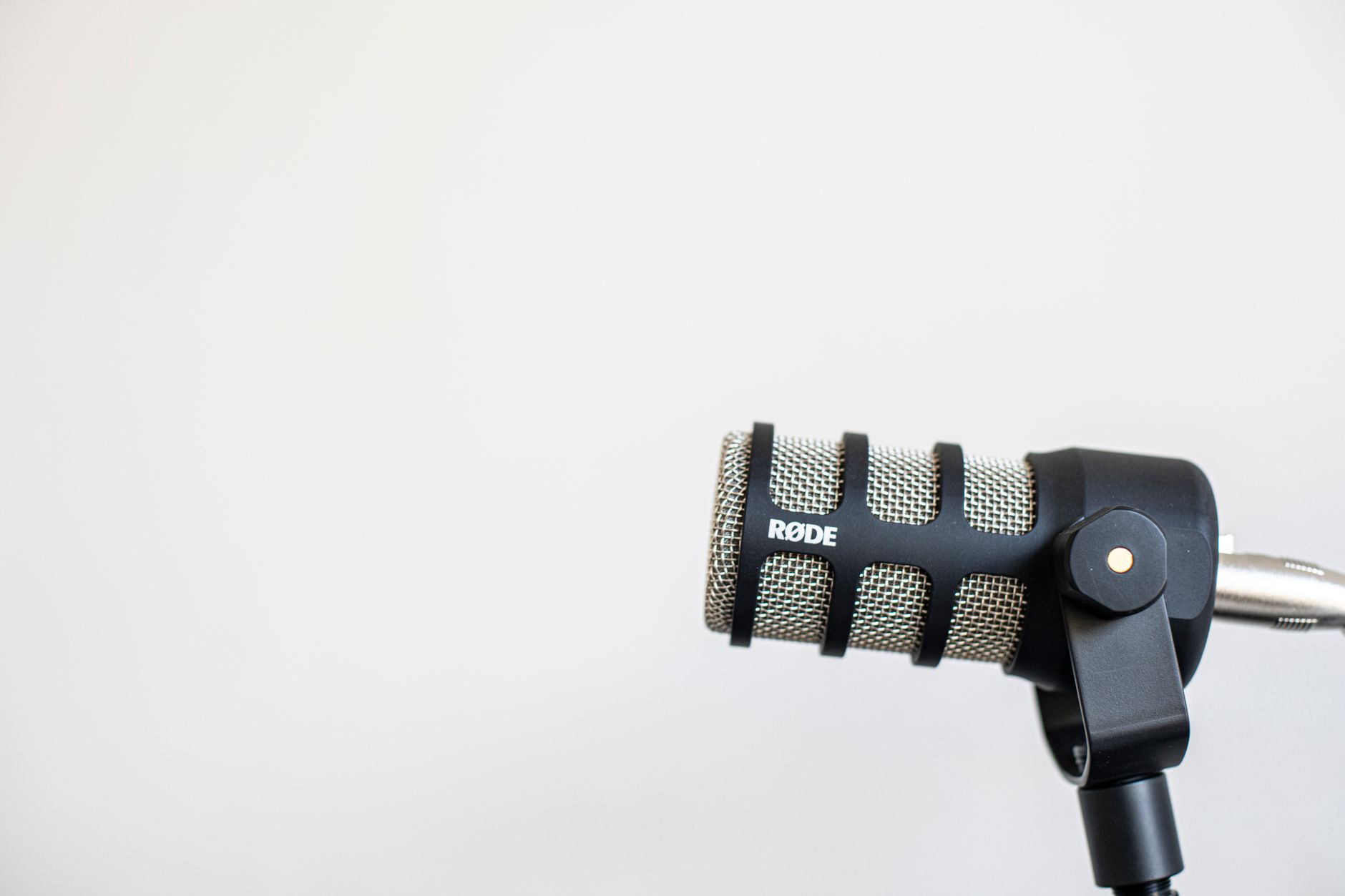
The Recording Toolkit Behind Clear Rap Language
A definitions article can pretend tools do not matter. Sessions prove otherwise. The same word changes meaning when you hear the take properly. A “muddy delivery” might be bad diction, a proximity-heavy mic position, 180 Hz buildup, or doubles masking consonants.
The point is not to buy gear to understand language. The point is to use a small toolkit to verify what a term is pointing at before you rewrite, retrack or process.
Mic position changes the word you think you heard
A Shure SM7B six inches from the mouth with a pop filter will exaggerate proximity if the rapper leans in on low words. Move to eight or ten inches before cutting half the low-mid body. If the room is ugly, use absorption behind the performer and keep the null aimed at the noisiest reflection.
For aggressive rap, do not chase brightness first. Start with articulation. If consonants are dull, a 3 dB shelf at 8 kHz will not fix lazy tongue work.
Editing tools that clarify, not sterilize
iZotope RX 11 Mouth De-click can clean wet lip noise before compression makes it jump forward. Use it gently. A sensitivity around 2.5 to 4.0 is often enough for close rap takes. Breath Control can help on fast verses, but overdoing it removes human push from the line endings.
For vocal leveling, Waves CLA-2A can work after clip gain, not instead of it. Aim for 2 to 5 dB of gain reduction on the main rap vocal if the performance is already controlled. If it is clamping 9 dB every bar, fix clip gain first.
DAW markers make definitions concrete
Markers beat memory. In Ableton Live, Logic Pro, FL Studio or Pro Tools, mark hook, verse, pre-hook, ad-lib passes and 4-bar phrase turns. Then when somebody says the verse loses energy “after the first section,” you can ask, “bar 9 or bar 13?” That one question tightens the whole conversation.
- Use mic distance before EQ when proximity clouds diction.
- Clip-gain phrases before compressing the lead vocal.
- Clean mouth clicks before serial compression.
- Mark 4-bar phrases in the DAW.
- Separate lead, doubles, ad-libs and throw tracks.

Rap Someone Meaning: Diss, Battle and Accountability
“Rap someone” is not the normal modern phrase for performing rap at a person. People usually say “diss,” “battle,” “call out,” “send for,” or “go at.” The phrase can still appear in older or broader English, where rap can mean blame, criticize or charge someone with something.
This matters when interpreting lyrics. A rapper “taking the rap” means accepting blame or punishment. A rapper “rapping about” someone means making them the subject. A diss track is more direct: the target is part of the record’s function.
Diss records are arrangement choices too
A diss record often leaves more space around the vocal because the words carry the event. Dense counter-melodies can weaken the attack. If the lyric is the weapon, the beat should not keep interrupting the blade.
Practical move: carve a 2 to 4 dB pocket around 1.5 to 4 kHz in melodic elements when the lead vocal needs intelligibility. Use automation, not a permanent scoop, so hooks can regain width.
Battle language is not always literal violence
Terms like kill, body, smoke and murder often mean outperform in rap contexts. Do not flatten every line into literal threat. Battle language is competitive exaggeration, persona and verbal sport, although context still matters. A competent lyric read keeps metaphor, setting and intent in the frame.
- Diss: insult or attack a target in lyrics.
- Battle: competitive rap exchange, written or freestyle.
- Take the rap: accept blame or punishment.
- Call out: publicly name or challenge someone.
- Send for: provoke a specific target, common in UK usage.
To Rap Something: The Verb, the Take and the Note
“To rap something” can mean to perform a lyric, discuss a subject, or, in older use, strike or knock something. In music work, it usually means the first one: deliver words rhythmically over a beat. Still, the verb needs an object. Rap a verse. Rap the hook idea. Rap over the loop. Rap about the situation.
Performance notes should use verbs carefully
Bad note: “Rap it better.” Better note: “Rap the first two bars with less pitch lift and leave a full eighth rest before the punchline.” That turns taste into a repeatable action.
If you are directing a vocalist, keep notes tied to time. “Start the pickup on the and of 4.” “Hold the last word into beat 1.” “Leave bar 8 empty after the ad-lib.” Those notes respect the rapper’s skill while giving the take a target.
Punch-ins are not cheating
Some listeners romanticize one-take rap. Fine, but records are made from results. Punch-ins can preserve breath, sharpen word endings and build impossible density. The trick is hiding the seam. Crossfade at zero crossings, keep room tone consistent, and match distance from the mic. A punch recorded two inches closer will expose itself before the edit does.
- Rap a verse: perform the written section.
- Rap about: make a subject the lyrical focus.
- Rap over: perform on top of a beat or loop.
- Punch in: record a replacement phrase inside a take.
- Comp: build one lead from multiple takes.
Rap Synonyms and Genre Types Without Lazy Labels
Rap synonyms are only useful when they preserve meaning. MCing, rhyming, spitting and rapping overlap, but they do not always carry the same tone. “MCing” points to hip-hop tradition and crowd command. “Spitting” emphasizes delivery and verbal pressure. “Rhyming” narrows the focus to lyric craft.
Genre labels need the same care. If you tag every slow minor-key track as trap, your references get vague fast. Tempo, drum programming, regional vocabulary, 808 behavior and vocal pocket all matter.
Different types of rap are not just playlist moods
Boom bap usually centers chopped samples or sample-like loops, swung drums and a strong snare pocket. Trap leans on programmed hi-hats, sliding 808s and spacious vocal rhythms. Drill often uses sliding bass, darker harmony and distinctive kick placement, with regional differences between Chicago, UK and New York scenes.
Melodic rap relies on sung or semi-sung phrasing. Conscious rap is a lyrical frame, not a drum pattern. Grime sits near rap but comes from a different UK lineage, often around 140 BPM with sharper square-wave bass energy.
Reference tracks beat genre arguments
When a client says “make it more rap,” ask for two reference records and one anti-reference. The anti-reference is underrated. It tells you what to avoid: too pop, too drill, too clean, too slow, too melodic. We see this constantly with electronic music producers and DJs moving between club instrumentals and rap-led toplines, where one word can mean completely different drum behavior.
- MCing: rapping with emphasis on command and tradition.
- Rhyming: lyric and rhyme craft.
- Spitting: forceful rap delivery.
- Boom bap: sample-led drums and snare-centered pocket.
- Trap: programmed hats, 808s and spacious phrasing.
- Drill: darker groove language with regional variations.
| Tool or Check | What It Clarifies | Useful Setting or Move | When to Avoid It |
|---|---|---|---|
| DAW bar markers | Verse length, hook entry, 4-bar phrase turns | Mark every 4 bars before vocal tracking | When free-time spoken sections are intentional |
| Shure SM7B mic position | Diction versus proximity buildup | Start 6 to 8 inches from the grille with a pop filter | When the room tone is worse than the proximity effect |
| iZotope RX 11 Mouth De-click | Lip noise mistaken for harsh delivery | Try sensitivity 2.5 to 4.0 before compression | When it dulls consonants or removes performance texture |
| Clip gain before compression | Uneven delivery versus compressor overreaction | Level phrases to within roughly 3 to 5 dB | When raw dynamics are the point of the verse |
| Waves CLA-2A | Lead vocal density and front-to-back position | Use 2 to 5 dB gain reduction after cleanup | When it clamps fast syllables and blurs transients |
Go deeper
- Rapping — en.wikipedia.org
FAQ
What are rap definitions producers should know first?
Start with bar, flow, cadence, pocket, delivery, hook, verse, ad-lib, double, punch-in and diss. Those terms affect real session choices. They tell you where the vocal lands, how it feels against the beat, what needs recording, and whether a problem is lyrical, rhythmic or technical.
What is the other meaning of rap?
Outside music, rap can mean a sharp knock, a criticism, a criminal charge, or blame. “Take the rap” means accept blame or punishment. Older slang also used rap to mean talk. Those meanings existed before rap became the common name for rhythmic vocal performance in hip-hop.
What does rap mean in slang?
In slang, rap can mean to talk, perform rhymes, or speak with style and rhythm. In hip-hop settings, “rap” usually means delivering lyrics over a beat. Related slang includes spit, flow, body, diss, cypher, bars and punchline, each with its own session context.
What are all the different types of rap?
No list is final, but common types include boom bap, trap, drill, gangsta rap, conscious rap, melodic rap, cloud rap, crunk, horrorcore, political rap and battle rap. Some labels describe sound, some describe lyrical content, and some describe regional scenes, so use references rather than labels alone.
Is the word rap an acronym?
No. Rap is not originally an acronym for “rhythm and poetry.” That phrase is a later backronym. The word has older English meanings tied to knocking, striking, speaking sharply and blame. The music meaning grew from speech and performance use, not from an acronym.
What does rap someone mean?
“Rap someone” is uncommon in modern music speech. Depending on context, it can mean criticize, blame or charge someone. In rap culture, people more often say diss, battle, call out or go at someone. “Rap about someone” means make that person the subject of lyrics.
The bottom line
rap definitions are not trivia if you write, record, produce or brief rap vocals. They are working terms. A bar count changes arrangement decisions. A pocket note changes editing. A slang phrase can tell you whether to rewrite, retrack, mute a double or automate space around the lead.
The main move is simple: never stop at the glossary meaning. Ask what the word demands in the session. Does it change the lyric, the take, the timing, the mix or the reference target? Pick one term from this toolkit, open your next verse, and translate that word into a concrete edit you can actually hear.
My Career makes videos from your own track and posts them for you, pitches your release to 34,000+ labels, playlists, radio stations, YouTube channels and blogs, puts it in every store and briefs you every morning. Free plan, no card, two minutes to set up.