Physical modelling synths gave me the least stale sounds in last week’s sessions, mostly because they refused to behave like another wavetable pad machine. I had a vocal-house demo, a darker garage loop, and one custom music cue that needed a hook without screaming preset pack. The same physical modelling synths kept solving the problem: a pluck with uneven attack, a tube hit that breathed after the transient, a bowed tone that did not sit politely on the grid.
I wrote these notes after bouncing between Ableton Live 12, AAS Chromaphone 3, Madrona Labs Kaivo, Logic Sculpture, Reason Studios Objekt and a couple of free oddities. I have not tested every host update yet, and I am not pretending this is a lab report. This is what survived real sessions, rough deadlines and the usual bedroom-producer problem: making something fresh without overcooking the arrangement.
Physical Modelling Synths Start With a Gesture
The useful shift was small. I stopped asking, what waveform is this? I started asking, what hit it, what is vibrating, and what is stopping it from ringing forever? That sounds academic until the patch is open. Then it becomes very practical.
On a normal subtractive patch I might choose saw, low-pass, envelope, done. With physical modelling, I got better results when I treated the exciter like a drummer’s hand and the resonator like a badly behaved room.
Physical modelling synths need ugly movement early
The patches that felt alive had instability before any chorus or reverb touched them. In Chromaphone 3, I kept the mallet or noise exciter a little inconsistent and shortened decay until the note almost choked. In Kaivo, I pushed the granulator into the model rather than using it as decoration.
The mistake I kept hearing from newer producers was too much sustain. A modeled string, tube or membrane becomes boring when it rings like a sample loop. Shorten the decay, modulate damping, and let velocity do real work.
My first-session settings were not polite
For plucks, I liked velocity mapped to brightness by about 30 to 50 percent, not full range. Full range sounded like keyboard demo mode. For metallic hits, I set decay under 700 ms, then used a send reverb for tail length instead of letting the instrument smear itself.
- Velocity to exciter strength, moderate amount
- Damping moved by a slow random LFO
- Pitch drift below 8 cents for human wobble
- Short decay before any space effects
- Start with the exciter before reaching for effects.
- Keep sustain shorter than feels comfortable at first.
- Use velocity for tone, not only volume.
- Let one parameter wobble slightly over 4 or 8 bars.
I Treated a Plucked String Like a Drum Bus
One garage sketch had a two-note hook that sounded clever in solo and useless against drums. I nearly binned it. The fix was to stop mixing it like a synth lead and start treating it like percussion.
The patch came from Logic Sculpture, which still has that strange, rubbery response when pushed. It did not need a huge stereo spread. It needed a transient, a pocket and less junk around the low mids.
The pocket came from sidechain ducking, not volume automation
I put a compressor after the instrument and keyed it from the kick, only taking 2 to 3 dB off with a fast attack and medium release. That was enough. More than that made the pluck pump like an EDM bass, which was not the brief.
After that I used FabFilter Pro-Q 4 for two cuts: a narrow dip around 220 Hz where the model got woody, and a softer cut near 3.2 kHz where the attack clicked too hard on small speakers.
The boring print sounded better than the clever patch
I printed the part to audio, chopped the last transient off every fourth bar, and reversed one pickup into the downbeat. Nothing fancy. The physical modeling did the expensive-sounding part, the audio edits made it feel arranged.
That became a note to myself: do not leave modeled instruments running live forever if the part is meant to be a hook. Commit, cut, move on.
- Try 2 to 3 dB of kick-triggered ducking.
- Check 180 to 260 Hz for boxy resonator buildup.
- Print to audio once the gesture feels right.
- Use edits to create phrases, not another modulation lane.

Free Physical Modelling Synths Can Still Bite
I kept seeing threads about free physical modelling synths for fresh sound design reddit users were recommending, so I did the unglamorous thing and loaded a few instead of arguing about them. Some felt abandoned. A couple still had bite.
The best free options were not always the prettiest. They were the ones with enough control over excitation, damping and body tone to make mistakes worth sampling.
Free does not mean mix-ready
Freeware physical modeling instruments often came out peaky, especially in the upper mids. I heard nasty spikes around 2.5 to 5 kHz on struck metal and glass-like models. That is not a deal-breaker. It just means the first sound is raw material.
I had better luck rendering single notes and building a rack from the best hits. One free pluck became a shuffled percussion layer once I tuned it down 5 semitones, filtered below 9 kHz, and shortened every sample by hand.
Physical modeling synth VST hunting notes
When I look for a physical modeling synth VST now, I ignore giant preset counts. I want a clear exciter section, a resonator that can be abused, and modulation that reaches damping or material parameters. If those three are missing, it usually becomes a novelty.
- Good sign: damping can be modulated per note
- Good sign: noise, impulse or mallet exciters are separate
- Bad sign: only macro controls with glossy names
- Bad sign: no easy way to tame output peaks
- Record free instruments as audio early.
- Watch upper-mid spikes on metallic models.
- Build a small sampler rack from the best notes.
- Judge the engine by control, not preset count.

Hardware Felt Better When I Stopped Playing Keys
Physical modeling synth hardware makes more sense when the controller lets the model react. Playing stiff block chords from a cheap keyboard made the whole idea feel wasted. The moment I used pressure, slides or breath-style modulation, the patches started answering back.
I spent an hour with an Anyma Phi patch that sounded average from keys and much stranger from an expressive controller. Same notes. Different hands.
The controller changed the sound more than the preset
A modeled flute-ish patch needs breath, pressure or at least mod wheel movement. A bowed-string patch needs a reason to scrape harder on certain notes. Without that, physical modeling becomes a posh sample substitute, and not a very convenient one.
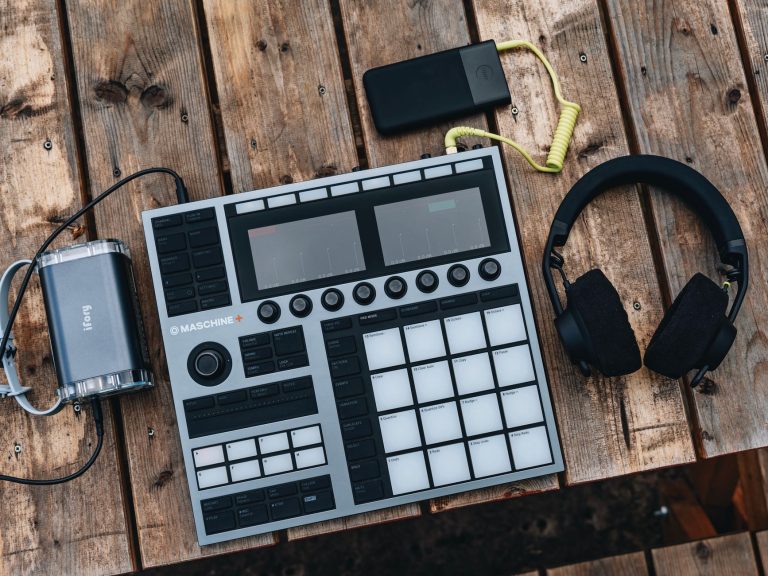
If I were setting up a bedroom rig for this, I would prioritise aftertouch or MPE before buying another synth box. Expressive E Osmose is the obvious high-end example, but even a modest controller with usable aftertouch can wake up these sounds.
Where hardware won in the room
Hardware won when I needed to perform the sound into the arrangement. It lost when I needed fast recall for a client revision. For custom music production work, recall matters. I still printed the hardware pass, then saved a dry MIDI backup and a photo of the settings because future me is forgetful.
- Use aftertouch for bow pressure or breath amount.
- Map mod wheel to damping before filter cutoff.
- Print expressive takes as audio right away.
- Keep a plain MIDI backup for revision work.
The Patch Only Worked After Boring Mix Decisions
The sound-design part was fun. The finished records got better after dull housekeeping. Physical modeling instruments can throw sharp transients, uneven resonances and subby thumps from places that do not look dangerous on the piano roll.
I checked everything on Neumann KH 120 monitors and cheap earbuds, because modeled attacks can lie. A pluck that feels detailed on monitors can turn into a knitting needle on earbuds.
Gain staging saved the resonator
I left about -6 dB of headroom before the mix bus and stopped clipping the instrument output for excitement. Some engines react badly when driven too hard internally, especially on metallic patches. Saturation after the synth was easier to control.
Parallel compression helped on muted plucks. I sent the printed audio to a crushed aux, rolled the aux below 180 Hz and above 8 kHz, then tucked it under the dry sound until the groove gained weight without getting louder.
Mid-side EQ was useful, but only after the part earned width
I tried widening early and regretted it. The better order was mono tone first, stereo detail second. On one bell patch, I kept the attack mostly mid and lifted only the side tail around 6 kHz. That made it shimmer without pulling the hook away from the vocal.
- Leave roughly -6 dB before the mix bus.
- Cut resonator mud around 180 to 260 Hz.
- Control harsh attack between 2.5 and 5 kHz.
- Add side brightness to tails, not every transient.
What I’d Pick for a Client Brief Tomorrow
If a client asked for a fresh hook tomorrow, I would not open twenty instruments. I would pick one based on the job. That sounds obvious, but preset panic is real when the deadline is close and the reference track is too polished.
The best physical modelling synths for fresh sound design are not the ones with the most realistic violin patch. They are the ones that give you a playable object with enough rough edges to become yours.
Physical modelling synths I would reach for first
For clean club plucks and tuned percussion, Chromaphone 3 is still quick. For stranger organic movement, Kaivo gets me away from normal synth habits. For piano realism, Pianoteq is its own lane. For fast ideas inside Reason, Objekt feels direct and modern.
I would not choose one winner for every producer. I would choose the one that makes you perform differently in the first ten minutes. If nothing changes in your hands, the engine is probably not doing enough for your music.
The 30-minute experiment I kept
Set a timer for 30 minutes. Build one pluck, one bowed tone and one struck-metal hit. No browsing after the first five minutes. Print all three to audio, pitch one down an octave, reverse one tail, and write a 4-bar answer phrase. That delivered more usable material than another hour of presets.
- Chromaphone 3 for fast tuned percussion and plucks.
- Kaivo for unstable organic textures.
- Pianoteq when realism matters more than weirdness.
- Objekt for direct Reason-based physical modeling work.
- Logic Sculpture for rubbery legacy sounds that still cut.
| Instrument | Best Use | Watch Out For | My Move |
|---|---|---|---|
| AAS Chromaphone 3 | Club plucks, mallets, tuned percussion | Can get too polite if decay is long | Shorten decay, modulate damping slowly |
| Madrona Labs Kaivo | Organic textures, granular-fed resonators | Needs patience and gain control | Record long passes, then cut phrases |
| Logic Sculpture | Rubbery strings, odd bass plucks | Interface feels dated | Print to audio and edit like percussion |
| Reason Studios Objekt | Fast physical modeling inside Reason | Easy to over-brighten attacks | Tame 3 kHz before adding space |
| Pianoteq | Modeled piano and prepared-piano style parts | Less useful for alien synth hooks | Use velocity curves and close mic balance |
Worth a deeper read on this: Excite and Resonate: A History of Physical Modelling … and Physical modelling synthesis.
Common questions
What is a physical modelling synth?
A physical modelling synth generates sound by simulating how an object vibrates, gets struck, bowed, blown or damped. Instead of starting with a standard oscillator sample, it models behaviour. That is why the same note can feel different when velocity, pressure or damping changes.
What is the best synth for physical modelling?
For most producers, AAS Chromaphone 3 is the safest first pick because it sounds good quickly and handles plucks, mallets and resonant hits well. If you want stranger material, Madrona Labs Kaivo is more interesting. For realistic piano modelling, Pianoteq is the stronger choice.
What synthesizer is good for sound design?
A good sound-design synth gives you control over movement, modulation and tone shaping without forcing you into presets. Physical modeling instruments are strong here because the sound reacts like a played object. Kaivo, Chromaphone 3, Objekt and Sculpture all reward small performance changes.
What is the best soft synth for sound design?
If you want broad electronic sound design, the best soft synth depends on the task. For modeled plucks and resonators, Chromaphone 3 is fast. For unstable acoustic-machine textures, Kaivo goes deeper. For clean piano-based design, Pianoteq wins. I would choose by brief, not popularity.
Are free physical modelling synths worth using?
Yes, if you treat them as sound sources rather than finished instruments. Free physical modelling synths can be peaky, awkward or old-looking, but one strange struck note can become a great hook once printed, tuned, filtered and chopped into a groove.
Do physical modeling instruments work for dance music?
They work well in dance music because they create plucks, bells, knocks and organic percussion that cut through a loop without sounding like another sample-pack layer. The trick is short decay, tight gain staging and sidechain ducking that places the sound around the kick.
Final thoughts
Physical modelling synths earned a permanent place in my session template because they push me away from square-grid synth thinking. They are not magic. They can be spiky, awkward and too realistic in the wrong places. Still, one modeled pluck with a slightly uneven attack can carry a hook better than ten polished presets stacked together.
My working rule now is simple: build the gesture, shorten the ring, print the audio, then arrange it like a real part. Try the 30-minute exercise in your next session and keep only the sounds that make you play differently. Those are the ones worth finishing.
My Career makes videos from your own track and posts them for you, pitches your release to 34,000+ labels, playlists, radio stations, YouTube channels and blogs, puts it in every store and briefs you every morning. Free plan, no card, two minutes to set up.