Key takeaways
- Useful trends change writing, mixing, mastering, exporting, or performance decisions.
- Assistive tools are strongest for alternatives and cleanup, weakest for taste.
- Immersive audio only helps if stereo and mono translation stay solid.
- Stem-first production rewards clean arrangement roles and disciplined bus routing.
- Modern loudness is about section contrast, limiter feel, and context.
- Custom production wins when the brief is technical, specific, and artist-led.
The music production trends that matter are the ones that change decisions inside a session, not the ones that look clever in a product launch video. The music production trends worth watching now are practical: assistive composition tools that still need taste, stem-first arrangement, immersive mixes that must collapse cleanly to stereo, smarter loudness targets, and custom production built around artist identity instead of recycled construction kits.
If you already know how to sidechain a kick, set gain staging around -6 dB of headroom, and keep a 4-bar phrase moving, the question is sharper: which shifts deserve your time before they become client expectations? Bedroom producers, DJs, and artists commissioning custom records all face the same pressure. Finished music needs to translate on CDJ-3000s, AirPods, club rigs, TikTok edits, and streaming playlists without sounding like it came from the same sample folder as everything else.
Music Production Trends Worth Taking Seriously
Most music production trends fail because they add friction before they add musical value. A new synth, controller, or cloud workflow only matters if it shortens a boring task, opens a real arrangement option, or improves translation across playback systems. If it only creates more decisions, it is a liability.
The mature move is to separate surface novelty from structural change. A plugin with a fresh interface is not the same as a workflow shift. Stem separation inside DJ software, spatial monitoring, LUFS-aware mastering, and custom production pipelines change what clients ask for and what DJs can perform live.
Which music production trends survive a club test?
The club test is brutal and useful. Print a rough master, run it through Rekordbox, play it beside three reference tracks on a Pioneer CDJ-3000 setup, and watch what survives. Low-mid control around 180 to 320 Hz, mono punch below 120 Hz, vocal intelligibility, and transition-friendly intros matter more than a flashy spectral display.
I trust music production trends only after they improve those boring checks. If a process gives me a cleaner 32-bar intro, a vocal that stays forward at LUFS-S -9, or a drop that does not fold when the limiter bites, it earns a place.
The mistake most trend lists make
Most trend lists treat tools as outcomes. That is backwards. Ableton Push 3, Logic’s Step Sequencer, Serato Stems, FabFilter Pro-Q 4, Soothe2, and Ozone are not directions by themselves. They are pressure points. The direction is faster iteration with fewer technical excuses.
The useful question is not whether a tool is modern. Ask what it makes you commit to earlier. If it lets you audition five bass counter-rhythms but never choose one, it slows the record down. Commitment still wins.
- Keep tools that remove repeatable admin from writing, editing, or delivery.
- Reject tools that add options without improving arrangement, tone, or translation.
- Judge new workflows against references on real DJ playback systems.
- Treat visual feedback as a check, not as permission to stop listening.
- Make every trend answer a client, listener, or performance problem.
Assistive Tools Are Becoming Session Staff, Not Producers
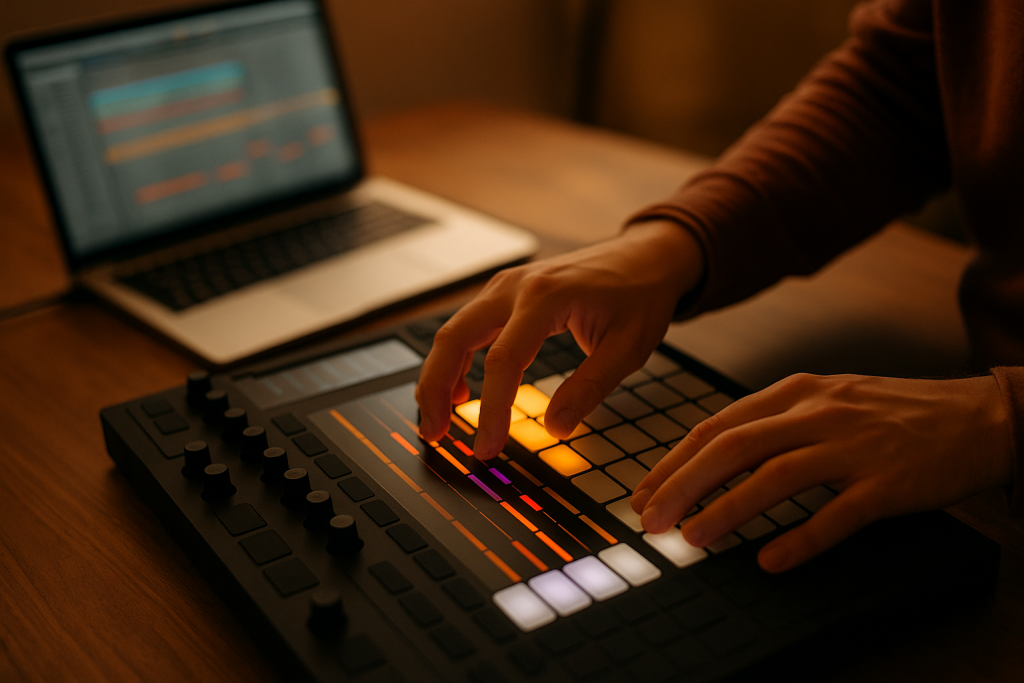
One of the loudest music production trends is the shift from blank-page writing to assisted decision-making. Chord suggestion, drum variation, separation, masking detection, auto-tagging, and adaptive mastering are moving from novelty into normal studio housekeeping. The danger is not that the tools become too strong. The danger is that producers stop editing them hard.
I like these systems for grunt work. I do not trust them for taste. A generated MIDI progression can start a session, but it rarely understands why a suspended chord before the second drop feels cheap in one track and perfect in another.
Use assistive composition for alternatives, not authority
Captain Plugins, Scaler 2, Ableton’s MIDI tools, and Logic’s session players are best when treated like impatient assistants. Ask for ten variations, then delete nine. Keep the inversion, rhythm, or counter-melody that solves a problem. Do not keep the whole output just because it sounds complete.
The second-order issue is sameness. If a tool nudges thousands of producers toward the same chord shapes and voicings, your record needs human asymmetry somewhere else: a late clap, a vocal chop pitched a little ugly, or a bass fill that breaks the grid for half a beat.
Repair tools can hide arrangement problems
Soothe2, Gullfoss, RX, Trackspacer, and dynamic EQ are excellent when a mix is fundamentally arranged. They are poor substitutes for choosing better parts. If Soothe2 is pulling 6 dB out of a lead every chorus, the lead and vocal probably occupy the same emotional lane and the same frequency lane.
Use masking tools after arrangement surgery. Mute the pad. Thin the reese at 220 Hz. Move the pluck up an octave. Sidechain duck the noise layer by 2 dB from the vocal bus. Then let the repair plugin polish the remaining conflict.
- Let suggestion tools generate options, then edit with a clear reference track in mind.
- Never outsource hook judgment to a tool that cannot feel a crowd response.
- Use spectral repair after muting, revoicing, and range-splitting parts.
- Print assisted ideas to audio early so you can treat them like raw material.
- Keep one deliberately human imperfection in the main hook or groove.

Immersive Audio Only Wins When Stereo Still Works
Immersive formats sit near the top of current music production trends, but dance music has a translation problem that film mixers do not. The main mix still has to hit in mono-ish club playback, phone speakers, headphones, and stereo streaming. A huge spatial bed means nothing if the kick, bass, and vocal lose authority when collapsed.
For electronic music, immersive audio is most useful as a versioning mindset. Build a stereo master that works first. Then decide which objects deserve motion, height, or distance. Percussion tails, risers, crowd noise, atmosphere, and call-and-response ear candy are better candidates than the bass fundamental.
Schroeder reverb, convolution, and the space problem
Producers often talk about reverb like one bucket. It is not. A Schroeder-style algorithmic reverb gives controllable density and movement. A convolution reverb gives the fingerprint of a real space, but it can smear transients if the impulse response is too complex. In a club-facing record, I usually want algorithmic control on drums and shorter convolution textures on cinematic moments.
The mistake is spreading everything. A mono snare into a short room can feel larger than a wide wash if the pre-delay sits around 18 to 28 ms and the early reflections are not fighting the vocal.
All-pass filters are not harmless width tricks
All-pass filters rotate phase without changing amplitude, which makes them tempting for width, movement, and psychoacoustic widening. Used carelessly, they can soften transient edges or make a bass layer vanish when summed. That is not a vibe, that is a failed translation check.
Among music production trends, spatial processing is the one I would adopt slowly. Keep low-frequency content mono below roughly 100 to 130 Hz. Check correlation meters, but also hit the mono button and listen to whether the groove still leans forward.
- Build the stereo mix first, then create immersive or spatial versions.
- Keep kick, sub, and main vocal anchored unless the arrangement gives you a reason.
- Use short early reflections for size before reaching for wide tail-heavy reverbs.
- Check mono after all-pass widening, chorus, stereo delays, and M/S EQ.
- Treat immersive audio as versioning, not as a replacement for mix fundamentals.

Stem-First Production Changes Arrangement Decisions
Stem workflows are one of the music production trends DJs should care about because they alter the record before it reaches the booth. If a track may be performed as drums, bass, music, and vocal layers, the arrangement needs cleaner separation and fewer glued-together shortcuts.
This matters for artists ordering custom music too. A track designed for stem performance gives the DJ more control on a Pioneer DDJ-FLX10, Traktor Pro, Serato DJ Pro, or future club systems that expose more performance layers. The production has to be modular without sounding like a loop pack.
Why music production trends now start at the export menu
The export menu used to be boring. Now it shapes the brief. Clients ask for extended mixes, radio edits, instrumental versions, clean versions, DJ intro edits, acapellas, and stems. A sloppy session becomes expensive at delivery. A disciplined session lets you print drums, bass, music, FX, and vocals without rebuilding the record.
Group design matters. Do not bury vocal throws inside the music bus if the vocal stem needs to stand alone. Do not print sidechain pumping into every stem unless the live use case demands it. Sometimes the cleanest export is less processed than the final mix bus.
Stem separation rewards simple contrast
Separation tools perform better when the record has defined roles. If the bass, low tom, pitched kick tail, and synth stab all share the same 90 to 180 Hz band, stem extraction will make a mess. Even manual stems suffer because every bus depends on every other bus.
Write with contrast. Put the bass movement in rhythm, the chord interest in voicing, the vocal hook in contour, and the percussion lift in density. That way, when a DJ pulls the music stem out for eight bars, the drums and bass still sound intentional.
- Name and color-code buses before the session becomes crowded.
- Print dry safety stems for vocals, lead synths, and signature FX.
- Keep low-end ownership clear between kick, bass, toms, and impacts.
- Check stem mutes across 8-bar and 16-bar sections, not just solo playback.
- Export instrumental and acapella versions before mastering decisions get too baked in.
Loudness Is Moving From Peak-Chasing To Context Control
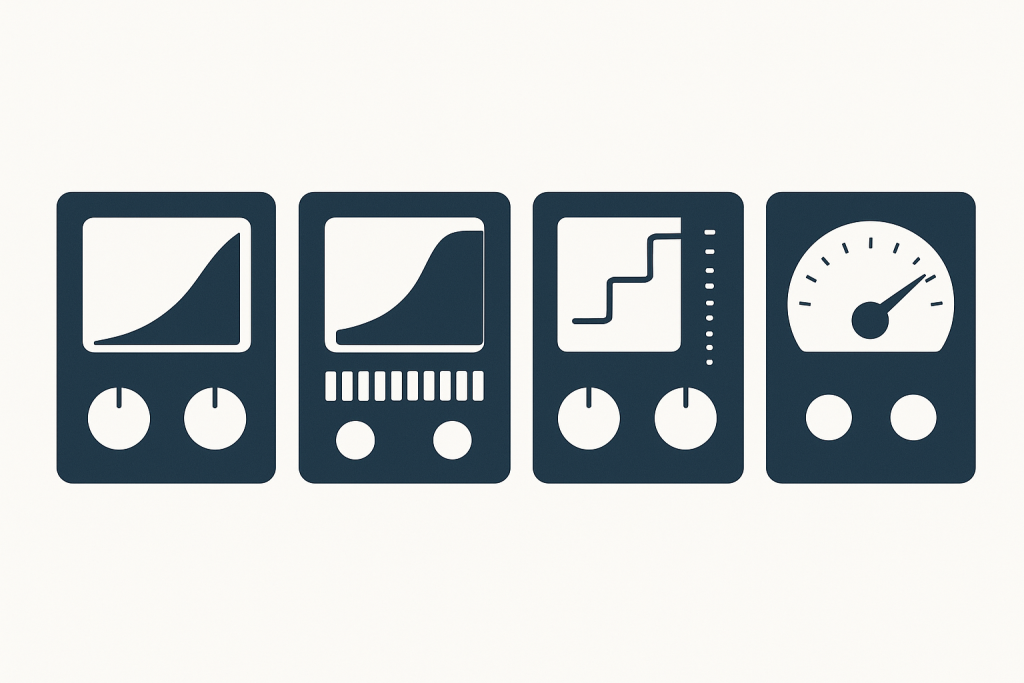
Loudness remains one of the most misunderstood music production trends because producers still confuse level with impact. The loudest master in a DAW A/B often becomes the weakest track in a DJ set if it has no transient contrast left. Club records need controlled aggression, not square-wave pride.
The better discussion is LUFS-I versus LUFS-S, crest factor, limiter recovery, and how the master behaves around transitions. A streaming master at LUFS-I -9 can feel bigger than a crushed -6 if the kick transient survives and the chorus does not trigger ugly limiter modulation.
Lookahead limiters have a feel, not just a ceiling
FabFilter Pro-L 2, Ozone Maximizer, DMG Limitless, and StandardCLIP all react differently to fast drum material. Lookahead buys cleaner peak control, but too much can dull the front of a kick. Clipping before limiting can preserve perceived punch if the clipping is controlled and genre-appropriate.
I usually test three chains: clipper into limiter, limiter only, and parallel saturation before the mix bus compressor. The winning chain is the one that keeps the first drop exciting after 30 seconds, not the one that wins a 3-second loudness A/B.
Short-term loudness tells you where the record breathes
LUFS-I describes the whole file. LUFS-S exposes the moments. If your breakdown sits at LUFS-S -13 and the drop jumps to -7, that can work. If the intro is already at -8, the drop has nowhere to go. This is why music production trends around loudness are really arrangement trends.
Leave headroom inside sections, not only on the master fader. Pull the pre-drop noise down 1.5 dB. Automate the clap bus into the second drop. Let the bass widen slightly above 250 Hz while the sub stays locked. Movement beats constant pressure.
- Compare loudness-matched references before judging punch or brightness.
- Watch LUFS-S across sections, not only LUFS-I at the end of the master.
- Use clipping for controlled transient shape, not as a panic volume tool.
- Leave the intro slightly underpowered if the drop needs real contrast.
- Check limiter recovery on fills, vocal shouts, and crash-heavy transitions.

Custom Production Will Beat Template Culture
The least glamorous of the major music production trends may be the most commercially useful: artists are moving away from generic templates and toward custom records built around a voice, DJ identity, or release plan. That is not romantic. It is practical. Audiences hear the same Splice vocals and Serum growls everywhere.
For aspiring DJs and artists using ghost production or custom music production services, the brief is becoming more important than the drop preset. A strong brief defines tempo range, label targets, reference tracks, vocal attitude, DJ intro length, and what the artist should never sound like.
References should describe function, not copying
Bad references say, ‘make it like this.’ Useful references say, ‘use this low-end weight, this vocal dryness, and this 16-bar energy curve, but avoid the supersaw tone.’ That gives a producer creative limits without forcing imitation.
Among music production trends, custom production rewards specificity more than taste words. ‘Dark but radio-friendly’ is weak. ‘124 BPM, tech-house groove, dry male vocal, bass fundamental around 55 Hz, no festival snare build, 32-bar DJ intro’ is workable.
Artist identity is an arrangement constraint
Identity is not only cover art and promo language. It affects arrangement. A DJ who plays long blends needs cleaner intros and outros. A vocalist-led artist needs space around consonants between 2 and 5 kHz. A festival act may need call-and-response hooks that read from the back of a field.
This is where custom work beats template culture. The production choices serve the artist’s actual use case. You can still use Serum, Diva, Kontakt, Kick 2, Decapitator, Pro-Q 4, and Valhalla VintageVerb. The difference is that every part answers a brief instead of filling a grid.
- Write briefs with technical targets, not only mood adjectives.
- Separate inspiration references from sonic references and arrangement references.
- Define the DJ use case before finalizing intros, outros, and breakdown length.
- Avoid signature samples that already appear across dozens of released tracks.
- Request stems and alternate edits while the session is still organized.
| Trend | Where it helps | Main trade-off | Tools or techniques |
|---|---|---|---|
| Assistive composition | Generating harmonic and rhythmic alternatives fast | Can flatten taste if you keep too much | Scaler 2, Ableton MIDI tools, hard editing |
| Immersive audio | Atmosphere, FX movement, premium versions | Stereo and mono translation can suffer | Binaural checks, M/S EQ, short early reflections |
| Stem-first production | DJ performance, edits, custom deliveries | Requires cleaner bus discipline from day one | Serato Stems, DDJ-FLX10, grouped exports |
| Contextual loudness | Masters that hit without losing movement | Needs more automation and reference checking | LUFS-S checks, clipping, lookahead limiters |
| Custom production | Artist identity and release differentiation | Briefing takes more thought than buying templates | Reference mapping, alternate edits, full stems |
Further reading
- Ableton Live manual — Ableton's official documentation is a primary source for Live workflows, routing, MIDI tools, and production features.
- Sound On Sound — Sound On Sound publishes long-running technical production articles with strong editorial standards and engineering detail.
Frequently asked questions
What are the biggest music production trends right now?
The biggest music production trends are assistive composition tools, stem-based DJ workflows, immersive audio versions, smarter loudness decisions, and custom production built around artist identity. The useful ones change how you arrange, export, master, or perform a track, not just which plugin sits on the screen.
Will assistive tools replace producers?
No. They replace boring first drafts, not taste. A tool can suggest chords, variations, stems, or masking fixes, but it cannot judge whether a hook suits a label, vocalist, DJ set, or crowd moment. The producer still edits, commits, and carries the musical point of view.
Is immersive audio worth learning for dance music?
Yes, but learn it after your stereo mixes translate. Immersive audio is useful for atmosphere, FX, and premium versions, but dance records still live on headphones, club systems, and DJ decks. Keep kick, sub, and main vocal stable before experimenting with height or object movement.
Why are stems becoming more important for DJs?
Stems let DJs isolate drums, bass, music, and vocals for live edits, mashups, and cleaner transitions. That changes production because arrangements need clearer roles and cleaner exports. If the session is messy, the stems will feel like leftovers instead of performance-ready parts.
How loud should a modern EDM or house master be?
There is no single target, but many club-facing masters sit around LUFS-I -8 to -6 while cleaner streaming versions may sit lower. Watch LUFS-S and limiter behavior across sections. A slightly quieter master with punch often beats a louder file with flattened drops.
How should I brief a custom music producer?
Give tempo, genre lane, three references with notes, vocal direction, DJ use case, target labels, and deal-breakers. Technical details help: intro length, bass weight, vocal dryness, mix loudness, and required deliverables such as stems, instrumental, acapella, and radio edit.
Conclusion
The future is not one magic tool. The music production trends that will stick are the ones that make records more adaptable: cleaner stems, smarter loudness, better spatial judgment, faster iteration, and custom tracks with a defined artistic job. The producer’s role becomes less about owning every sound from scratch and more about choosing what deserves to stay.
Try this in your next session: pick one trend only. Build a stem-safe arrangement, run a LUFS-S pass, or create a spatial FX version after the stereo mix is finished. Then test it beside references on headphones, monitors, and a DJ playback chain. Keep the change only if the record moves better.
Music production trends — Quick Recap
The fastest way to lock in music production trends is to internalise the workflow above and repeat it on every project. Start small: pick one technique from this music production trends guide, apply it to your next session, and audit the result against a reference track.
- Useful trends change writing, mixing, mastering, exporting, or performance decisions.
- Assistive tools are strongest for alternatives and cleanup, weakest for taste.
- Immersive audio only helps if stereo and mono translation stay solid.
- Stem-first production rewards clean arrangement roles and disciplined bus routing.
Treat music production trends as a habit, not a one-off — the producers who consistently nail music production trends are the ones who run the same checks on every track. That’s the difference between a clean, club-ready master and a track that sounds great at home but falls apart on a real system.
In a real studio session, music production trends comes down to the order in which you make decisions: reference first, gain stage second, then the creative work. Producers who treat music production trends as a checklist instead of a vibe end up shipping more tracks.
Most producers and DJs undervalue music production trends because the wins are invisible until the track plays back on a real system. Bake music production trends into your template and the next ten projects benefit automatically.
When you struggle with music production trends, the fix is rarely a new plugin. Loop a problem section, A/B against a reference, and isolate which element is breaking your music production trends.
Treat music production trends as a craft, not a chore. The producers releasing on the biggest labels lock music production trends in early so they can spend their energy on melody and arrangement instead of fighting the mix.
Document your music production trends process — even a short note in the project file. Future-you will rebuild the same music production trends win in half the time.
If music production trends sounds great in headphones but bad in the car, you have a translation problem, not a creative one. The music production trends tweaks above are designed to survive every system.
My Career makes videos from your own track and posts them for you, pitches your release to 34,000+ labels, playlists, radio stations, YouTube channels and blogs, puts it in every store and briefs you every morning. Free plan, no card, two minutes to set up.