 By Emma Carter · August 2, 2026
Looping meaning is simple: something repeats, either a sound, a message thread, a route, a wire path, or a set of instructions. That is the basic looping meaning before any producer jargon gets involved.
Now put it in a studio. A drum groove loops for 8 bars. A DJ catches a 4-beat loop before the drop. A vocal chop repeats until it becomes the hook. Same word, different job. You need to know which job it is doing, because a useful loop can make a track feel locked, while a lazy loop makes it feel unfinished.
We will treat this like a workshop. Define it. Hear it. Build it. Then use the word correctly when someone says they are looping you in, looping around, or stuck in a loop.
Looping meaning in Plain English
At its core, looping means repeating a section, action, path, or communication chain. The repeated thing can be physical, digital, musical, social, or written.
Say it out loud: loop equals repeat with a defined return point. That return point matters. Without it, you just have random repetition. With it, you have a loop.
The Core Idea: Repeat, Return, Repeat
Picture a 4-bar drum pattern. Bar 1 starts, bar 4 ends, then the playback jumps cleanly back to bar 1. That jump is the loop point. In email, the return point is the reply chain. In code, it is the instruction that sends the program back through the same block.
That is why the looping meaning changes by context but keeps the same skeleton. Something comes back around.
Looping meaning in music, email, and code
In music, looping usually means repeating audio or MIDI. In email, looping someone in means adding them to a conversation. In computing, a loop repeats instructions until a condition changes.
Do not flatten these into one definition. Context decides the real meaning. When a producer says, “loop the percussion,” they do not mean forward an email. When a manager says, “loop Maya in,” nobody is asking for an 8-bar groove.
- A loop has a start point and an end point.
- The end point returns to the start point.
- The repeated material can be sound, text, movement, wiring, or logic.
- The context tells you whether the loop is useful, annoying, or broken.

Looping meaning in Music: Beats, Clips and Phrases
For producers, looping means repeating a musical section so you can write, edit, perform, or arrange around it. Most electronic music starts here. A kick pattern. A bass riff. A 2-bar hat groove. A chopped vocal.
Good loops feel intentional. Bad loops feel copied and pasted. The difference is movement.
Audio Loops vs MIDI Loops
An audio loop is recorded sound repeating: a drum break, a guitar phrase, a vocal stab, a percussion top loop. A MIDI loop is note data repeating through an instrument like Kontakt 8, Xfer Serum 2, Ableton Drift, or FL Studio FLEX.
Audio gives you tone fast. MIDI gives you control. If the bass note clashes with your chord progression, MIDI wins because you can move one note instead of forcing pitch-shifted audio to behave.
Phrase Lengths That Actually Work
Dance music is brutally phrase-based. Start with these sizes: 1 bar for micro rhythm, 2 bars for groove, 4 bars for a complete idea, 8 bars for a section, 16 bars for arrangement movement.
Set your DAW loop brace to 8 bars. Listen for boredom. If you are bored by pass three, automate something: filter cutoff, open hat velocity, ghost snare level, delay send, or bass note variation on bar 8.
- Use 1-bar loops for tight drum mechanics.
- Use 2-bar loops for bounce and call-and-response.
- Use 4-bar loops for hooks, riffs, and chord movement.
- Use 8-bar loops to test arrangement energy.
- Add one small change every 4 or 8 bars.
How to Build a Clean 8-Bar Music Loop
Now make the looping meaning physical. Open a session. Do not sketch forever. Build one loop that could become a track.
I will use Ableton Live language here, but the same moves work in FL Studio, Logic Pro, Cubase, Studio One, or Bitwig. The buttons move. The listening job does not.
Step-by-Step: Drums, Bass, Space
1. Set the tempo to 124 BPM. Make an 8-bar loop brace. Put a kick on every beat. Leave your master peaking around -6 dB. Not -0.2 dB. Give yourself room.
2. Add clap or snare on beats 2 and 4. If it sounds boxy, open the EQ. Cut 4 to 8 dB around 220 to 280 Hz with a medium Q. Listen. The clap should speak without punching a hole in the kick.
3. Add closed hats on the offbeats. Lower velocity on every second offbeat by 8 to 15 points. Tiny movement. Big difference.
Step-by-Step: Bass Loop and Sidechain
4. Write a 2-bar bass pattern. Keep it mostly between 45 and 120 Hz if this is house or techno. Avoid notes that sustain across every kick unless you want the low end to smear.
5. Sidechain the bass to the kick. Use compressor sidechain or volume shaping. Start with 4 to 6 dB of ducking, 5 ms attack, 120 ms release. If the groove pumps too hard, shorten the release to 80 ms.
6. Change bar 8. Remove the last kick, add a reverse cymbal, mute the bass for two beats, or automate a low-pass filter from 8 kHz down to 1.2 kHz. That tells the ear the loop is alive.
Step-by-Step: Check the Loop Point
Solo nothing. Play the full 8 bars. Watch the return from bar 8 back to bar 1. If the reverb tail clicks, extend the audio fade by 5 to 20 ms. If the crash gets chopped, move it earlier or bounce the tail into the next pass.
This is where most beginner loops fail. The notes are fine. The loop point is ugly.
- Keep the master around -6 dB while writing.
- Cut clap mud around 220 to 280 Hz.
- Start bass ducking at 4 to 6 dB.
- Test the bar 8 to bar 1 transition at full volume.
- Print a rough bounce and listen away from the screen.
DJ Looping: Keeping Energy Without Sounding Stuck
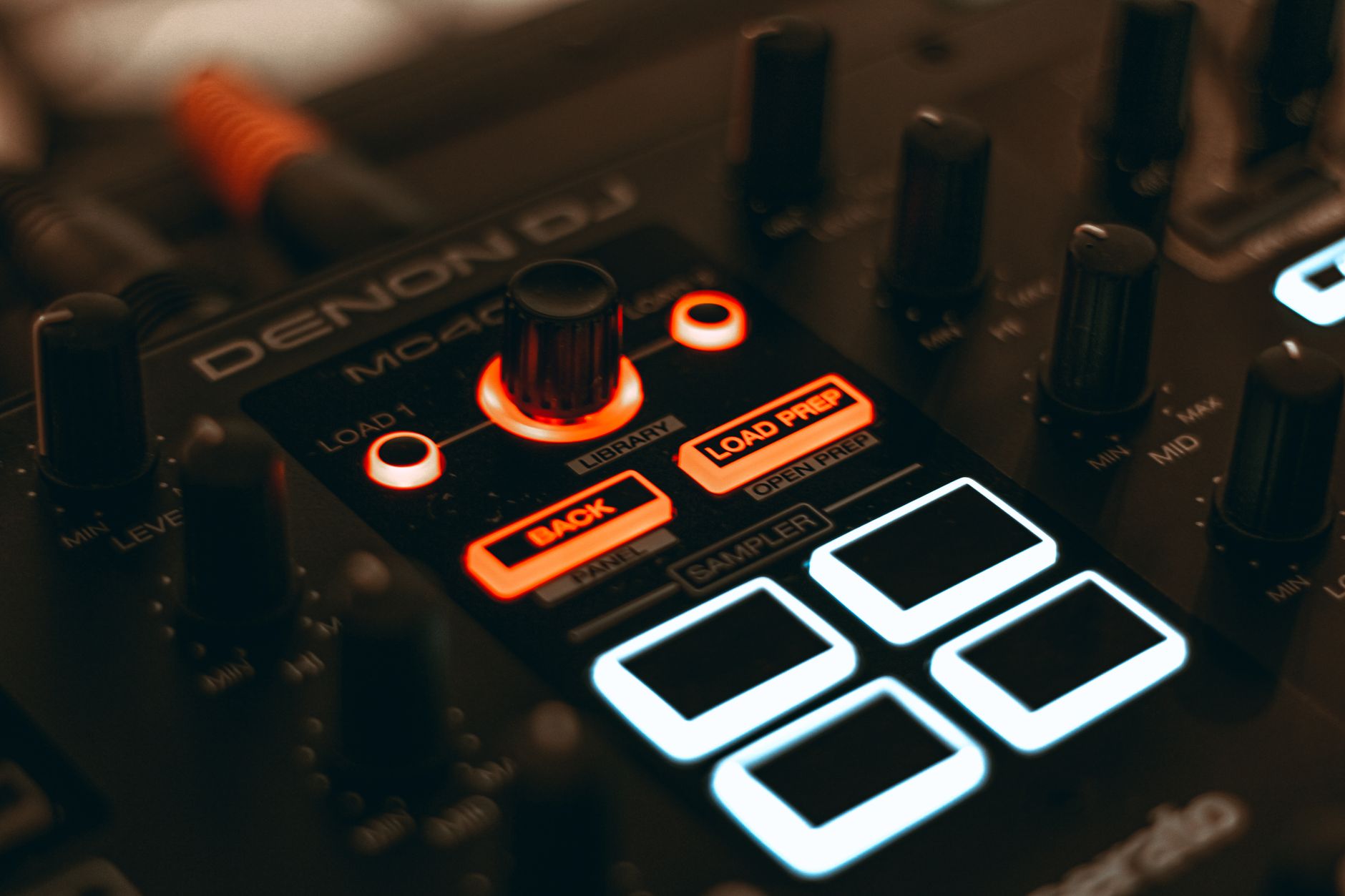
For DJs, looping means repeating a short section live. The goal is control. You buy time, extend a groove, tease a drop, or rescue a transition that is running out of runway.
Use it with discipline. A loop that runs too long starts shouting, “I made a mistake.”
4-Beat, 8-Beat and 16-Beat Loops
A 4-beat loop is one bar in 4/4. It is perfect for catching a vocal tag, clap groove, or final beat before a drop. An 8-beat loop gives you two bars. A 16-beat loop gives you four bars and feels more musical.
In Traktor Pro 4, Rekordbox, Serato DJ Pro, or on CDJ-style players, start with quantize on. Set loop length to 4 beats. Trigger on beat 1. If it flams, your beatgrid is wrong or you hit late.
Loop Out Before the Crowd Notices
Here is the rule I trust: if the loop is not part of the performance, exit within 8 or 16 bars. Filter it, echo it, swap tracks, or release into the next phrase.
Try this drill. Load two house tracks at 126 BPM. Loop the outgoing track for 8 beats. Bring in the incoming kick under it. Cut lows on the loop. Exit on the next 16-bar phrase. Clean. No panic.
- Use 4-beat loops for emergency holds.
- Use 8-beat loops for short transitions.
- Use 16-beat loops for phrase-safe blends.
- Keep quantize on unless you are intentionally playing loose.
- Exit the loop on a phrase boundary, not randomly.
Looping Someone In: Email, School and Work
Outside music, looping often means adding someone to a communication loop. This is the phrase behind “looping you in,” “keep me in the loop,” and “I looped Alex into the email.”
Same structure again: a chain of messages repeats between people, and you are adding another person to that chain.
Looping in Meaning in Email
In email, looping someone in means including them in the thread so they can see the context and reply if needed. Usually you add them in CC, then write one clear sentence: “Looping in Sam from accounts for the invoice details.”
Do not add five people with no explanation. That creates noise. Tell everyone why the new person is there and what you need from them.
Looping Meaning in School
In school, looping can mean keeping a teacher, parent, classmate, or administrator informed. It can also refer to educational looping, where a teacher stays with the same group of students for more than one year.
Read the sentence. “Loop your tutor in” means inform them. “Our class is looping with the same teacher next year” means the group continues with that teacher.
- Use CC when the person only needs visibility.
- Use To when you need action from that person.
- Explain why you added them in one sentence.
- Do not loop people into private threads without a reason.
- Remove people when the topic no longer involves them.
Looping Meaning in Computer Logic, Wiring and Systems
The looping meaning in computer logic is more technical: a program repeats instructions while a condition is true, or until a condition tells it to stop.
Electrical wiring uses the word differently again. Do not mix these up. One is logic flow. One is physical connection. Both involve a path that continues or returns.
Looping Meaning in Computer Programming
A computer loop repeats a block of instructions. A for loop might run exactly 16 times. A while loop might run until a file finishes loading. A bad loop can run forever if the stopping condition never happens.
Think like a producer. Your DAW loop brace repeats bars 1 to 8 until you stop playback. A program loop repeats its code until its stop rule is met. Same mental model, stricter rules.
Looping Meaning in Electrical Wiring
In electrical wiring, looping can describe a method where power is carried from one point to another through connected terminals or fixtures. You may hear “loop-in wiring” around lighting circuits.
Treat this as vocabulary, not a DIY instruction. Wiring standards vary by country, and mistakes can be dangerous. If the context is a building, the loop is a physical electrical path, not a music clip or email thread.
- Computer loops repeat instructions.
- A loop needs a stopping rule in code.
- Electrical loops describe connected circuit paths.
- A wiring loop is not a metaphor when voltage is involved.
- Context decides whether looping is logical or physical.
Looping Around, Slang and Writing Uses
Language bends the word too. Looping around can mean physically going around something, returning to a topic, or coming back to a place after a route.
Slang uses are usually about confusion, repetition, or being kept informed. Again, check the sentence before you guess.
Looping Meaning Slang
As slang, looping can mean acting confused, being stuck in repetitive thinking, or repeating a behavior. “I was looping last night” might mean someone felt mentally scrambled. “That hook is looping in my head” means it will not stop repeating mentally.
Use tone as your clue. In music talk, looping is usually neutral or useful. In casual speech, it can be playful, critical, or about feeling stuck.
Looping Meaning in Writing
In writing, looping can mean returning to an earlier idea, repeating a motif, or using a freewriting technique where one phrase leads into the next round of writing.
Songwriters do this constantly. A chorus line returns. A title phrase repeats. A pre-chorus sets up the same emotional turn every time. Repetition is not weak writing when the return point has weight.
- Looping around can mean returning to a topic or place.
- Slang use often points to mental repetition or confusion.
- Writing loops can create structure, emphasis, or obsession.
- A repeated lyric needs development around it.
- If nothing changes around the repeat, the audience checks out.
Common Looping Mistakes Producers Hear Fast
We have reviewed thousands of electronic music submissions across multiple genres, and loop problems show up fast. The first 16 bars tell you plenty.
The issue is rarely “loops are bad.” Loops built whole genres. The issue is static repetition with no pressure change, no contrast, and no clean exit.
Mistake 1: The Loop Has No Arrangement Job
A loop needs a job. Is it a hook? A groove bed? A transition tool? A breakdown texture? If you cannot answer, mute it.
Open your session and label the loop’s job. “Perc top loop for lift.” “Vocal chop hook.” “Bass tension before drop.” This sounds basic because it is basic. It also works.
Mistake 2: The Loop Fights the Mix
Loops often arrive with baked-in low end, reverb, and stereo width. High-pass a percussion loop at 120 to 180 Hz if it is crowding the kick. Pull 2 to 4 dB at 300 Hz if it clouds the snare. Use mid/side EQ to tame wide hiss above 10 kHz.
If the loop still dominates, do not keep lowering it. Edit it. Slice it. Remove hits. Make it answer your track instead of swallowing it.
Mistake 3: The Ear Learns It Too Quickly
The listener’s brain memorizes short loops fast. By the fourth repeat, surprise is gone. Add controlled variation: one muted snare, one reversed hat, one bass fill, one delay throw, one filter move.
Do less than you think. A 1 dB shaker lift over 8 bars can create movement without turning the groove into a circus.
- Name the loop’s job before arranging.
- High-pass non-bass loops when they crowd the kick.
- Use small 4-bar and 8-bar variations.
- Fix ugly loop points with fades or edits.
- Remove the loop for one phrase if the track feels flat.
| Context | What Looping Means | Practical Example | Mistake to Avoid |
|---|---|---|---|
| Music production | Repeating audio, MIDI, or a phrase | An 8-bar drum and bass groove repeats while you write the hook | Leaving the loop static for a full arrangement |
| DJing | Repeating a short section live | A 4-beat loop holds the outro while the next track enters | Forgetting to exit on a phrase boundary |
| Adding someone to a message thread | “Looping in Dana for the contract details” | CCing people without explaining why | |
| Computer programming | Repeating instructions until a condition changes | A loop processes every file in a folder | Creating an infinite loop with no stop rule |
| Electrical wiring | A connected path through circuit points | Loop-in wiring at a lighting point | Treating electrical vocabulary like DIY advice |
| Writing | Returning to an idea, phrase, or motif | A chorus title repeats with new emotional weight | Repeating lines without development |
Worth a deeper read: Ableton clip view.
Common questions
What does looping meaning actually mean?
Looping means repeating something with a return point. In music, that may be an 8-bar groove. In email, it can mean adding someone to a thread. In code, it means running instructions again until a condition changes. The exact meaning depends on the context.
What does looping in email mean?
Looping in email means adding someone to an existing conversation so they can see the context and respond if needed. Usually you add them in CC or To, then explain their role clearly, such as, “Looping in Mia for the booking details.”
What are loops in an email?
Email loops are conversation chains where messages keep moving between people. The phrase can be neutral, as in keeping someone informed, or negative if replies keep bouncing around without progress. A good email loop has the right people, a clear reason, and a clear next action.
What does looping around mean?
Looping around means going around something and returning, either physically or conversationally. A road can loop around a park. A meeting can loop around to an earlier topic. In casual speech, it often means coming back to the same place, idea, or problem.
What is looping meaning in music?
In music, looping means repeating a section of audio, MIDI, or performance. Producers loop drums, basslines, vocals, and melodies to build grooves. DJs loop short sections live to extend transitions or hold energy. The best music loops include variation, clean loop points, and a clear arrangement purpose.
What is looping meaning in computer programming?
In computer programming, looping means repeating a block of code. A loop can run a set number of times or continue until a condition changes. If the stop condition never happens, the program may get stuck in an infinite loop.
Final thoughts
looping meaning stays consistent at the core: repeat, return, repeat again. The useful part is knowing which kind of repeat you are dealing with. A producer loop needs groove and variation. A DJ loop needs timing and an exit. An email loop needs context. A computer loop needs a stop rule.
Take the music version into your next session. Build one 8-bar loop, leave -6 dB of headroom, add one bar-8 variation, then test the return from bar 8 to bar 1 without looking at the screen. If it still pulls you back in, the loop is doing its job.
My Career makes videos from your own track and posts them for you, pitches your release to 34,000+ labels, playlists, radio stations, YouTube channels and blogs, puts it in every store and briefs you every morning. Free plan, no card, two minutes to set up.