 By Alex Mercer · September 27, 2026
Mix breakdowns and drops badly and the room feels it straight away: the breakdown gets huge, the drop arrives, then the kick feels smaller than it did eight bars ago. That is the pain. To mix breakdowns and drops well, stop treating the drop like a magic reveal and start treating the whole section as gain, energy, and contrast management.
The same thinking works whether you are cueing two tracks on a Pioneer DDJ-FLX10, arranging a house record in Ableton Live, or checking a custom production before release. The move is not “add more risers.” It is usually cleaner subtraction, tighter phrase timing, controlled low-end, and a drop that has somewhere to land. If the breakdown already eats all the space, the drop has no job left.
How Do I Mix Breakdowns And Drops Without Killing The Drop?
Start by making the breakdown less impressive on its own. That sounds wrong until you hear it on a club system. A breakdown can be emotional, wide, and loud enough to hold attention, but it should not use the same kick weight, bass density, and stereo width as the drop.
When producers ask how to mix breakdowns and drops edmproduction style, the missing move is usually contrast. The drop needs a clean difference in rhythm, sub pressure, and front-to-back depth. If everything is already wide, saturated, and limited in the breakdown, the drop can only get harsher.
Where Does Mix Breakdowns And Drops Start In The Arrangement?
It starts eight or sixteen bars before the drop, not on the downbeat. I mute or thin one important element before I add any noise sweep. Pads get high-passed. Reverb tails get automated down before the drop. The kick may disappear, but the groove still needs a pulse from hats, a tom, a filtered percussion loop, or a short vocal chop.
Here is the basic check: solo the last four bars before the drop, then un-solo. If the full mix feels smaller when it returns, the breakdown is too dense.
- Pull 2-4 dB from wide pads during the last four bars.
- High-pass non-bass breakdown elements around 120-180 Hz.
- Shorten big reverbs before the drop instead of letting them wash over it.
- Save the full sub and main kick transient for bar one of the drop.
- Leave one rhythmic hook active so dancers do not lose the grid.
What Should I Fix First: Volume, EQ, Or Arrangement?
Fix the arrangement first. Volume rides and EQ will not save a section where the breakdown and drop are fighting for the same role. If the lead, vocal, snare build, white noise, crash, and uplifter all peak together, the drop has to compete with its own setup.
My order is simple: arrangement, gain, low-end, width, effects. That order stops you from polishing a bad transition for two hours.
What Is The Session Order I Actually Use?
I run the same pass every time. First, I label the last 32 bars into phrases: 16-bar breakdown, 8-bar build, 8-bar tension, then drop. Then I take the kick and bass out of the breakdown bus and check what still feels heavy. If the breakdown is already thumping at 60 Hz, I know the drop will underperform.
Next comes gain staging. I leave roughly -6 dB peak headroom on the premaster before mastering. During the build, I might let the perceived loudness climb, but I avoid pushing the limiter harder before the drop. A limiter that is already clamping 4 dB in the build will flatten the first kick.
- Cut arrangement clutter before reaching for EQ.
- Set breakdown and drop levels without a limiter doing the work.
- Use sidechain ducking on pads and noise against the drop kick.
- Check the transition in mono for kick, bass, and vocal focus.
- Automate effects returns, not just channel faders.

How Do DJs Time The Breakdown-To-Drop Mix?
For DJs, the mistake is usually entering too late or ignoring phrase length. If you search how to mix breakdowns and drops for dj, most useful answers come back to phrasing. The drop is not just a loud part. It is a structural marker.
The cleanest club mix is often boring on paper: start the incoming track on a phrase boundary, use the outgoing track’s breakdown as space, and make sure both drops do not crash into each other unless that is the point.
How Do I Use 32-Bar Phrasing Without Sounding Stiff?
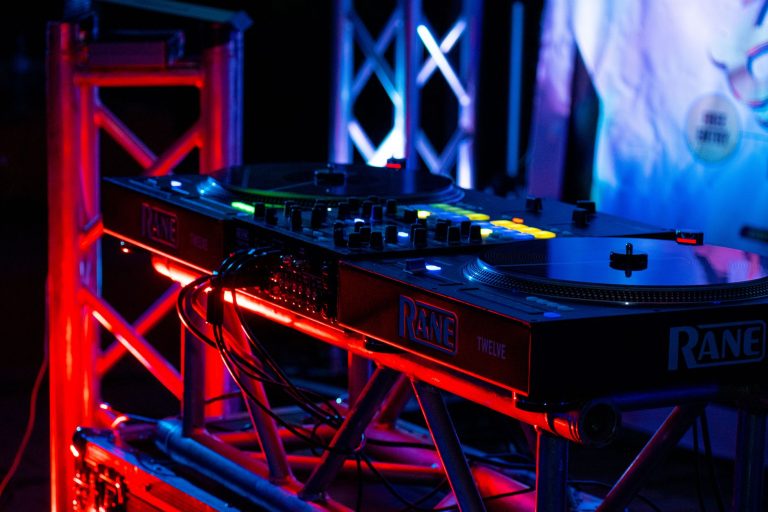
Count in 8-bar chunks. Four of those chunks make 32 bars, which is where a lot of house, techno, trance, and EDM arrangements introduce or remove major elements. On a DDJ-FLX10 or club player setup, use hot cues at breakdown start, build start, and drop start. Do not rely only on waveform colors.
A common move: bring Track B in 32 bars before Track A’s drop, filter Track B low or high depending on the arrangement, then swap the bass on the first beat of the new drop. Keep the outgoing low-end out of the way. Two subs fighting at the drop is not energy, it is blur.
- Set hot cues at intro, breakdown, build, and drop points.
- Start blends on 16- or 32-bar boundaries.
- Kill one bassline before the incoming drop lands.
- Avoid stacking two crash cymbals and two white-noise sweeps at once.
- Use loops for correction, not as a cover for bad phrasing.

Why Does The Drop Feel Smaller After A Big Breakdown?
The drop feels smaller because your ear has already adjusted to the biggest moment. This happens a lot with long supersaw breakdowns, vocal reverbs, and endless risers. The build tricks you into thinking you have more impact, but it steals contrast.
If Reddit threads on how to mix breakdowns and drops reddit have one useful pattern, it is this: people keep adding layers to solve an energy problem caused by too many layers.
Which Frequencies Usually Cause The Damage?
The ugly zone is often 180-350 Hz. Pads, toms, reverbs, distorted bass harmonics, and low vocals pile up there. I will often dip a pad bus around 220 Hz by 2-3 dB during the final build, then automate that dip away when the drop hits if the pad stays in.
Sub is stricter. If a breakdown uses a sub drone, keep it controlled and mono. High-pass noise, cymbal washes, and reverbs higher than feels comfortable while mixing solo. In the track, they will still sound large.
- Dip 180-350 Hz on pad and reverb buses during the build.
- Keep sub drones quieter than the drop bass by several dB.
- Use a short silence or reverb cut before the drop for contrast.
- Let the first kick transient stay clean, not buried under a crash.
- Reference at low volume to catch fake impact.

Should I Mix The Drop Quiet Or Loud?
Mix it quiet first. Loud playback is useful later, but quiet monitoring tells you whether the groove, vocal, and main hook survive without volume hype. If the drop only works loud, it probably does not work yet.
I like one quiet pass, one normal pass, then a short loud check. The loud check is not for making decisions for twenty minutes. It is for feeling the kick, checking harshness, and making sure the transition does not collapse when the room gets physical.
How Quiet Is Quiet Enough?
Quiet means conversation level, not whisper level. You should hear the kick shape, vocal position, and snare snap without leaning into the speakers. On headphones, pull the level down until the excitement drops off, then balance the core elements there.
For production, compare the breakdown and drop with the master chain bypassed and engaged. If iZotope Ozone 11 or any limiter makes the drop feel bigger only because it is louder, level-match before judging. Your ears are easy to fool.
- Build the balance at low to moderate monitoring level.
- Use loud playback in short bursts only.
- Level-match master chain checks.
- Take breaks before final drop decisions.
- Test on small speakers for vocal and hook translation.
| Problem | Best First Move | Why It Works | Avoid |
|---|---|---|---|
| Drop feels smaller | Thin the last 8 bars of the breakdown | Restores contrast before the kick returns | Adding another riser |
| Low-end turns blurry | Mute or high-pass one bass source | Stops sub overlap on the downbeat | Stacking two basslines |
| DJ blend feels late | Start on a 32-bar phrase | Major sections line up musically | Chasing the waveform at random |
| Build feels harsh | Automate reverb and noise down before drop | Clears space for transient impact | Pushing the limiter harder |
Worth a deeper read: Ableton warping manual.
Questions producers actually ask
What is the rule of 32 in DJing?
The rule of 32 means many dance tracks change major sections every 32 bars. DJs use that structure to start blends, swap basslines, or land drops cleanly. It is not law, but it is reliable enough for house, techno, trance, EDM, and plenty of club edits.
What are the hardest genres to mix for DJs?
Open-format sets, drum and bass, dubstep, hard techno, and older disco can be tough for different reasons. Fast tempos, half-time drops, live drummers, dense intros, and dramatic breakdowns all demand cleaner phrasing. The hard part is not beatmatching alone, it is choosing where the energy handover should happen.
In what order should I mix a song?
Start with arrangement balance, then gain staging, low-end, drums, vocals or lead hook, width, effects, and final automation. For dance music, check the breakdown-to-drop move early. If that transition fails, tiny EQ decisions on individual layers will not fix the record.
Is it better to mix quiet or loud when I mix breakdowns and drops?
Mix quiet first, then check loud briefly. Quiet monitoring shows whether the groove and hook are balanced without volume excitement. Loud checks help confirm kick weight and harshness, but long loud sessions make you overcut highs, overpush lows, and miss the real breakdown-to-drop contrast.
What to remember
- The drop gets bigger when the breakdown leaves space for it.
- Fix arrangement density before EQ, compression, or limiting.
- Use 16- and 32-bar phrasing for cleaner DJ transitions.
- Clear the 180-350 Hz zone before the drop if the mix feels cloudy.
- Mix quietly first, then use short loud checks for physical impact.
Wrapping up
The repeatable way to mix breakdowns and drops is not complicated: reduce density before the drop, protect the first kick transient, keep the sub handover clean, and make phrasing do more work than effects. A huge breakdown is only useful if the drop still feels like the release.
Next time you open a session or prepare a DJ blend, mark the last 32 bars before the drop and make one subtraction before you make one addition. Then check it quietly. If the drop still hits at low level, you are much closer than the track that only works when the monitors are shouting.
My Career makes videos from your own track and posts them for you, pitches your release to 34,000+ labels, playlists, radio stations, YouTube channels and blogs, puts it in every store and briefs you every morning. Free plan, no card, two minutes to set up.