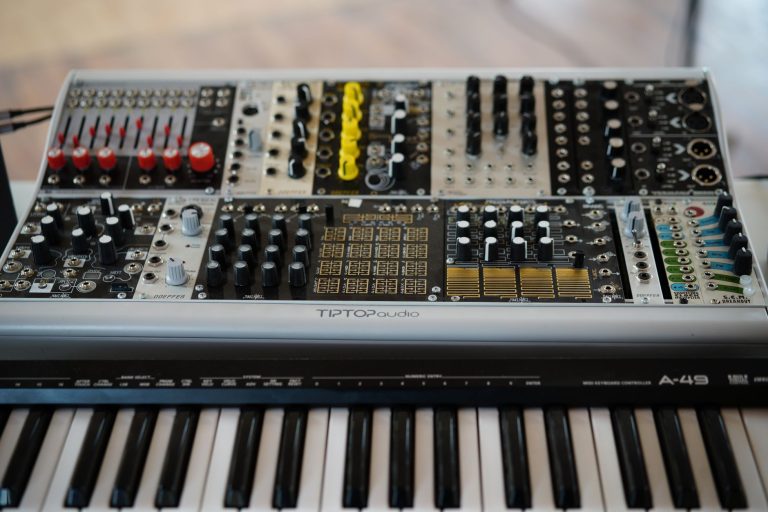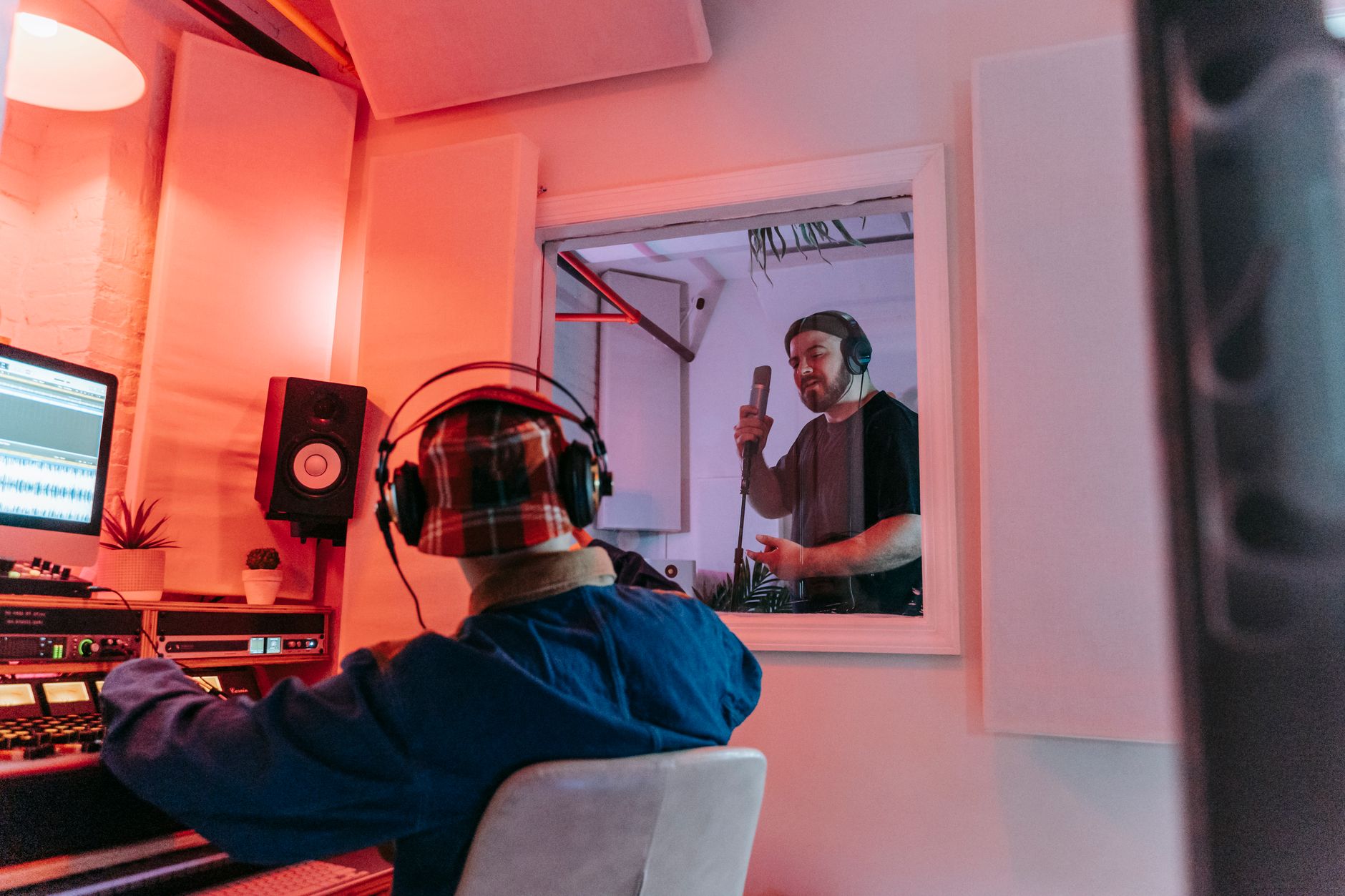
A mic for beatboxing has to survive plosives, hand noise, wet capsules, and sudden 120 dB peaks before it earns a place in a set. A mic for beatboxing also has to reject wedges, club PAs, room slap, and the low-mid garbage that makes kick sounds turn into cardboard. The textbook vocal mic answer is not enough.
The market shifted in the last 12 to 24 months. Cheap 2.4 GHz wireless systems got common, 32-bit float pocket recorders became normal, and dynamic EQ workflows in tools like FabFilter Pro-Q 4 made cleanup faster after recording. None of that changes the first rule: beatboxers usually need a tough dynamic handheld with controlled proximity effect, high feedback rejection, and predictable off-axis tone. Studio condensers can work. On stage, they usually make work.
What Changed for Beatbox Mics in 2026
The big change is not that microphones became magic. They did not. The change is that beatboxers now record more short-form clips, loop live, and send stems to producers faster than they did five years ago. The same performer may need one mic for Instagram, one for a club set, and one for clean sample packs.
That creates a boring but useful split: stage reliability first, studio detail second. If the mic cannot handle a cupped grip and a close mouth position at 2 to 5 cm, it is the wrong tool.
Cheap wireless got better, but physics did not
Many compact wireless systems are built for speech, vlogging, or guitar packs. Beatboxing is harsher. A human kick can hit the capsule harder than a loud singer, and a snare burst can expose limiter pumping in half a bar.
Look for maximum SPL above 140 dB if the spec is published. If it is not published, assume the manufacturer is hiding a number you would rather know.
32-bit float helps recording, not mic choice
Devices such as the Zoom H1essential and H4essential made 32-bit float capture cheap. Useful. Still, 32-bit float does not fix capsule overload. If the mic capsule distorts, the recorder only saves a clean recording of distortion.
Set the chain so the interface sees peaks around -12 dBFS to -6 dBFS. Leave louder safety for cupped bass hits and inward snares.
- Prioritise dynamic handhelds for stage beatboxing.
- Treat 2.4 GHz wireless as a convenience, not a reliability standard.
- Use 32-bit float recorders for safety, not as a cure for bad gain staging.
- Keep mouth-to-grille distance consistent before changing EQ.

Best mic for beatboxing in 2026: The boring answer
The best mic for beatboxing is usually a dynamic handheld vocal mic with tight cardioid or supercardioid rejection. Boring answer. Correct answer. The Shure SM58 remains a safe baseline because it takes abuse, handles cupping better than many cleaner mics, and replacement grilles are easy to find.
The Behringer XM8500 is the cheap option that is not embarrassing. It has more handling noise and less consistent off-axis tone than better mics, but it can get a beginner through rehearsals, looping practice, and rough demos.
Best mic for beatboxing depends on stage volume
For loud wedges and small rooms, pattern control matters more than glossy top end. A supercardioid like the Audix OM7 can reject more spill, but it needs more preamp gain and punishes sloppy mic angle. A cardioid like the SM58 is more forgiving.
If you beatbox into a PA at 100 dB SPL or higher, take the mic with lower feedback risk. Audience members do not care that a condenser has more 12 kHz air when the monitor squeals.
Studio mics have a narrower job
The Shure SM7B is good for recorded beatbox layers when the room is controlled and the preamp has gain. It smooths harsh lips, takes EQ well, and reduces room tone compared with condensers. It is not a casual live handheld. It is heavy and needs a proper stand.
A condenser can capture mouth detail, clicks, and breath texture for sample design. Use a pop filter, stay 10 to 20 cm back, and expect more editing below 120 Hz.
- Shure SM58: safe live baseline, easy parts, predictable handling.
- Behringer XM8500: valid starter mic, especially for practice and rough demos.
- Audix OM7: strong rejection, needs more gain and better technique.
- Shure SM7B: strong studio choice, not ideal as a handheld stage mic.

Dynamic, Condenser, or Headset: Pick by SPL and Handling
A beatbox mic is not chosen the same way as a spoken-word podcast mic. Beatboxing puts more air pressure on the diaphragm, more moisture on the grille, and more mechanical noise into the body. That favours dynamics.
The condenser answer is often wrong in practice. A clean condenser in an untreated bedroom hears the laptop fan, wall bounce, chair creak, and every bad reflection at 700 Hz. More detail is not always more usable signal.
Dynamic mics win most live jobs
Dynamic handhelds tolerate close placement and cup-style grip better than condensers. They usually roll off the highest air band, which can be helpful when hi-hat sounds are already sharp around 7 to 10 kHz.
Start with the grille 2 to 4 cm from the mouth. Angle the capsule 10 to 20 degrees off-axis for explosive B and P sounds. If the kick loses weight, move closer before boosting lows.
Condensers are for detail, not chaos
A large-diaphragm condenser can work for studio beatboxing if the room is dead and the performer controls air blasts. Use a high-pass filter at 60 to 80 Hz while tracking if the mic or interface offers it. If not, leave it flat and filter later.
Do not put a condenser inside a cupped hand and expect it to behave. That usually creates a hollow resonance between 300 and 600 Hz plus ugly capsule overload.
Headsets solve movement and create tone problems
Headset mics keep distance stable for dance-heavy sets. They also remove most hand technique. For beatboxing, that can be a real limitation because cupping, angle, and distance are part of the sound.
Use a headset only when movement matters more than tone. Theatre-style capsules are built for speech intelligibility, not throat bass and lip rolls.
- Dynamic: best first choice for live beatboxers.
- Condenser: useful for controlled studio layers and sample packs.
- Headset: stable distance, weaker hand-tone control.
- Ribbon: usually too fragile and too dark for this job.
Wireless Mic for Beatboxing: Where It Helps and Fails
A wireless mic for beatboxing makes sense when the performer moves across stage, works with dancers, or needs to leave the DJ booth. It does not automatically sound worse. Bad wireless sounds worse.
The practical issue is headroom and latency. A system that works for sung vocals may clamp down on kick hits or smear fast rolls. Read the specifications before buying. If the manual gives no latency figure and no max SPL, assume it was not built for this job.
Latency under 4 ms is usually fine
Most performers notice latency when monitoring feels disconnected. Under 4 ms through the wireless link is usually fine. Add interface buffer, plug-ins, and PA processing, and the total can creep past 10 ms. That starts to feel slow for tight percussion.
For looping, measure the whole path. A Boss RC-505mkII or Ableton Live set can be tight, but only if the audio interface buffer stays at 64 or 128 samples at 48 kHz.
UHF beats cheap 2.4 GHz on serious stages
For real shows, UHF systems such as Shure SLX-D or Sennheiser EW-D are a safer bet than small 2.4 GHz content kits. They cost more because coordination, RF stability, and companding quality cost more.
For bedroom practice, short clips, and rehearsals, 2.4 GHz can be fine. Do not judge it in an empty room and expect the same result in a venue full of phones.
- Use wired mics when reliability matters more than movement.
- Keep total monitoring latency below 10 ms for tight routines.
- Avoid unknown wireless systems with no published latency spec.
- Carry an XLR cable even when the wireless rig is working.

Beatboxing Equipment: Signal Chain, Gain, and Monitoring
Beatboxing equipment does not need to be complicated. Mic, cable, interface or mixer, headphones or monitor, then recorder, looper, DAW, or PA. Most bad recordings come from gain staging and monitoring errors, not from using a cheap microphone.
A clean chain at 48 kHz and 24-bit is enough. Use 32-bit float if available, but do not build lazy habits around it. Loud mouth percussion still needs sensible input level.
Set input gain with the loudest kick, not speech
Do not say check-one-two and set the preamp. Perform the loudest kick, inward snare, and bass note for 10 seconds. Set the highest peak around -10 dBFS. If the performer cups the mic harder during a set, that headroom disappears quickly.
For interfaces with colour meters, ignore green comfort. Watch actual dBFS in the DAW. A pretty meter is not a calibration tool.
Monitoring should be dull before it is loud
For headphone monitoring, reduce 3 to 5 kHz by 2 to 4 dB if the performer flinches on snares. That stops over-adjusting technique because the cans are too sharp. Closed-back headphones reduce bleed into sensitive studio mics.
On stage, place wedges behind the mic null. Cardioid mics reject mostly from the rear. Supercardioid mics reject off the rear sides and have a small rear lobe, so wedge placement changes.
The 3:1 rule still matters with multiple mics
If you record a beatboxer and a room mic, distance matters. Put the room mic at least three times farther from the source than the close mic. If the close mic is 10 cm away, the second mic should be at least 30 cm away. More is often cleaner.
This reduces phase smear. It does not remove it. Flip polarity and slide the room track by samples if the low end thins out.
- Track at 48 kHz and 24-bit unless the project demands otherwise.
- Peak around -10 dBFS during the loudest beatbox sounds.
- Keep stage wedges in the mic rejection zone.
- Check polarity when combining close and room microphones.
- Use closed-back headphones for studio overdubs.

EQ, Compression, and Effects Settings That Survive a PA
The raw mic matters, but the processing decides whether a routine reads through a system. A mic for beatboxing often needs less low-end boost than expected. The proximity effect already adds weight, especially when the grille is close and cupped.
Process for translation. A sound that feels huge on headphones can turn into mud on a PA once subs, room modes, and crowd absorption enter the equation.
Start with subtractive EQ
In FabFilter Pro-Q 4 or any competent EQ, high-pass at 45 to 70 Hz for live work unless the routine relies on sub-bass throat tones. Cut 200 to 350 Hz by 2 to 5 dB if kicks feel boxy. Tame 4.5 to 8 kHz with a dynamic band if snares stab.
Do not scoop the whole midrange. Beatbox percussion needs 800 Hz to 2 kHz for articulation. Remove too much and the routine becomes low thumps plus hiss.
Compression should catch peaks, not flatten groove
Start around 3:1 ratio, 10 ms attack, 80 ms release, and aim for 3 to 6 dB of gain reduction on the loudest hits. Faster attack can kill kick transients. Slower release can pump after lip rolls.
For recorded layers, parallel compression works better than crushing the main track. Blend a compressed duplicate under the clean mic until quiet ghost notes stay audible.
Effects need tempo discipline
Short slap delay at 80 to 120 ms can thicken snares without washing timing. For club tracks at 124 to 130 BPM, try dotted eighth delay only on fills, not the whole routine. Reverb should be filtered hard below 250 Hz.
If the beatbox is feeding a house or techno production, sidechain duck pads and bass layers by 2 to 4 dB when the human kick hits. The live mouth percussion keeps its front edge.
- High-pass most live beatbox channels between 45 and 70 Hz.
- Cut 200 to 350 Hz before boosting lows.
- Use dynamic EQ around 4.5 to 8 kHz for harsh snares.
- Start compression at 3:1 with 10 ms attack and 80 ms release.
- Filter reverb returns below 250 Hz.

Buying From Amazon, Reddit Advice, and Used-Gear Traps
Searching mic for beatboxing amazon usually returns useful mics mixed with plastic karaoke hardware. Ignore star ratings from speech users. They are not testing plosive load, cupped handling, stage rejection, or grille durability.
Searching mic for beatboxing reddit can be more useful, but only if the comment includes context. A recommendation from a busker using a battery speaker is not the same as a recommendation from someone running a loud club monitor.
Used mics need a smell test and a grille check
Beatbox mics collect moisture. Used handhelds can be fine, but inspect the grille, foam, XLR pins, and body threads. A dented grille can push foam into the capsule area. That changes tone and can create rattles on bass hits.
Budget for a replacement grille and foam. On an SM58, that is cheap. On obscure copies, parts may be the problem.
Avoid bundles that solve the wrong problem
A beatbox microphone and speaker bundle can be useful for street practice, but most small speakers roll off hard below 80 Hz and distort when pushed. That makes kick technique harder to judge.
If you need a portable speaker, choose one with a mic input, basic EQ, and enough headroom. Bluetooth-only speakers are the wrong tool because latency makes timing feel late.
Buy the return policy, not the marketing line
Two beatboxers can sound different through the same mic because mouth shape, hand cup, and distance change the filter before the signal reaches the capsule. Test at home at realistic level. If the mic feeds back early or turns kicks into wool, send it back.
Keep the packaging until you have tested loud bass hits, inward snares, throat bass, and looping with monitoring.
- Ignore reviews that only mention speech or podcast use.
- Check replacement grille availability before buying obscure mics.
- Avoid Bluetooth speakers for live beatbox monitoring.
- Test returns with the loudest sounds you actually perform.
| Use case | Sensible choice | Why it works | Trade-off |
|---|---|---|---|
| First live mic | Shure SM58 | Rugged dynamic capsule, predictable cardioid pattern, easy replacement grille | Not the most detailed top end |
| Tight budget | Behringer XM8500 | Low cost, usable output, fine for practice and rough demos | More handling noise and less consistent rejection |
| Loud stage | Audix OM7 | Very strong rejection and good feedback resistance | Needs more preamp gain and accurate mic technique |
| Studio recording | Shure SM7B | Smooth top end, reduced room pickup, handles loud sources well | Needs a strong preamp and a stand |
| Mobile performance | Shure SLX-D handheld | Stable UHF wireless platform with better stage reliability than cheap 2.4 GHz kits | Costs more and needs RF planning |
| Looping setup | Dynamic mic into Boss RC-505mkII | Fast hands-on loop control with predictable live routing | Bad gain staging stacks noise every overdub |
Frequently asked questions
What is the best mic for beatboxing?
For most performers, the best mic for beatboxing is a dynamic handheld such as the Shure SM58. It handles close placement, plosives, cupping, and stage spill better than most condensers. If the room is loud, consider a tighter mic such as the Audix OM7, but expect to work harder on angle and gain.
What is the 3:1 rule for mics?
The 3:1 rule says a second mic should be at least three times farther from the sound source than the first mic. If your close mic is 10 cm from the mouth, place the room mic at least 30 cm away. It reduces phase problems, especially in low-end beatbox hits.
What do beatboxers use to make music?
Beatboxers use a microphone, an audio interface or mixer, headphones, and often a looper such as the Boss RC-505mkII. Studio users may record into a DAW, edit timing, then process with EQ, compression, delay, and sidechain routing. Live users care more about feedback rejection and monitoring.
Who is the greatest beatboxer ever?
If the question is cultural impact, Rahzel is the cleanest answer. He made beatboxing legible to a wider audience and his vocal percussion still holds up. Battle fans may argue for Alem, D-Low, or Reeps One on technical range, but Rahzel remains the reference point.
Do beatboxers use throat singing?
Yes, some beatboxers use throat singing techniques for bass drones, overtones, and sustained textures. It is not required, and it needs careful mic control because low resonances can overload a channel fast. High-pass filtering too aggressively can also remove the point of the technique.
Is a wireless mic for beatboxing a bad idea?
No, but cheap wireless can be a bad idea. Beatboxing exposes limiter pumping, latency, and weak headroom. For serious shows, a UHF system from Shure or Sennheiser is safer than a small 2.4 GHz content mic. Always carry a wired backup.
The short version
- A dynamic handheld is still the safest first beatbox mic.
- Set gain with loud kicks and snares, not spoken soundcheck phrases.
- Wireless works when latency, RF stability, and headroom are specified.
- Cut 200 to 350 Hz before adding low-end weight.
- The Shure SM58 and Behringer XM8500 remain practical choices at different budgets.
- Studio detail only helps when the room and monitoring are controlled.
Where to go from here
A mic for beatboxing should be chosen by abuse tolerance, rejection, handling noise, and gain structure before tone adjectives enter the room. The Shure SM58 is still the dull, correct baseline. The Behringer XM8500 is acceptable when money is tight. The Shure SM7B earns its keep in the studio, not as a casual handheld. Wireless is useful, but only when the system has enough headroom and low enough latency.
Do the unglamorous test: record 30 seconds of your loudest kick, snare, throat bass, and roll pattern at performance distance. Check peaks, listen for rattles, then EQ less than you want to. Try that in your next session before buying another mic.
My Career makes videos from your own track and posts them for you, pitches your release to 34,000+ labels, playlists, radio stations, YouTube channels and blogs, puts it in every store and briefs you every morning. Free plan, no card, two minutes to set up.