Maschine mk3 nearly saved a 124 BPM garage-house session for me after the hi-hats started sounding like a typewriter in a rented writing room above a rehearsal studio. The kick was fine, the Juno-style stab sat nicely, and the bass had enough swing, but every drum pattern felt boxed in. I had the pads under my fingers, Ableton Live open as the recorder, and Maschine software running the groove. The problem was not the hardware. It was the way I was using it.
That is the trap with maschine mk3. People buy it expecting instant feel, then quantise every pad hit to death, ignore gain staging, and blame the controller. Used well, it is still a serious sketchpad and drum instrument. Used lazily, it turns good ideas into plastic loops.
Where maschine mk3 Goes Wrong in Bedroom Setups
The first mistake I hear is treating the unit like a tiny DAW with pads attached. That sounds harmless until the track needs arrangement, space and pressure. Maschine is strongest when it captures fast physical decisions: the kick you chose in 20 seconds, the snare flam you played slightly late, the choke on an open hat. When you sit there clicking blocks and polishing loops for two hours, the box stops helping.
In our own catalogue work with independent artists and professional producers, the best Maschine sketches usually arrive rough but committed. Four-bar drums. Eight-bar bass. A clear hook. The weak ones arrive as 32 patterns with no centre.
The Loop That Never Becomes a Record
I cap early Maschine sessions at 45 minutes. Not because creativity needs a stopwatch, but because this controller rewards decisions. If the first loop survives that window, I bounce audio stems and arrange somewhere better suited to long-form editing.
My usual split is simple:
- Maschine software for pad performance, chopping, drum selection and fast pattern changes.
- Ableton Live or Logic Pro for arrangement, automation, vocal editing and final mix routing.
- Audio stems once the groove feels alive, before I start second-guessing every transient.
The 16-Level Velocity Fix
If the groove feels stiff, I do not reach for another sample pack first. I switch on 16-level velocity and replay ghost notes. A snare that hits at 112 every time will nag the ear. Try main hits around 105 to 120, ghost notes around 38 to 62, and hat accents around 75 to 95.
Quantise less than you think. For house and UK garage, 50 to 60 percent quantise often keeps the push without sounding drunk. Full quantise is useful for kicks, not for every shaker and rim tap.
- Start with one group for drums and one group for music, not eight half-used groups.
- Record pad hits in real time before touching piano-roll editing.
- Use 50 to 60 percent quantise on hats and percussion.
- Bounce stems once the groove works for eight bars.
- Arrange outside Maschine if the track needs vocals or detailed automation.
Maschine mk3 Software Is the Real Buying Decision
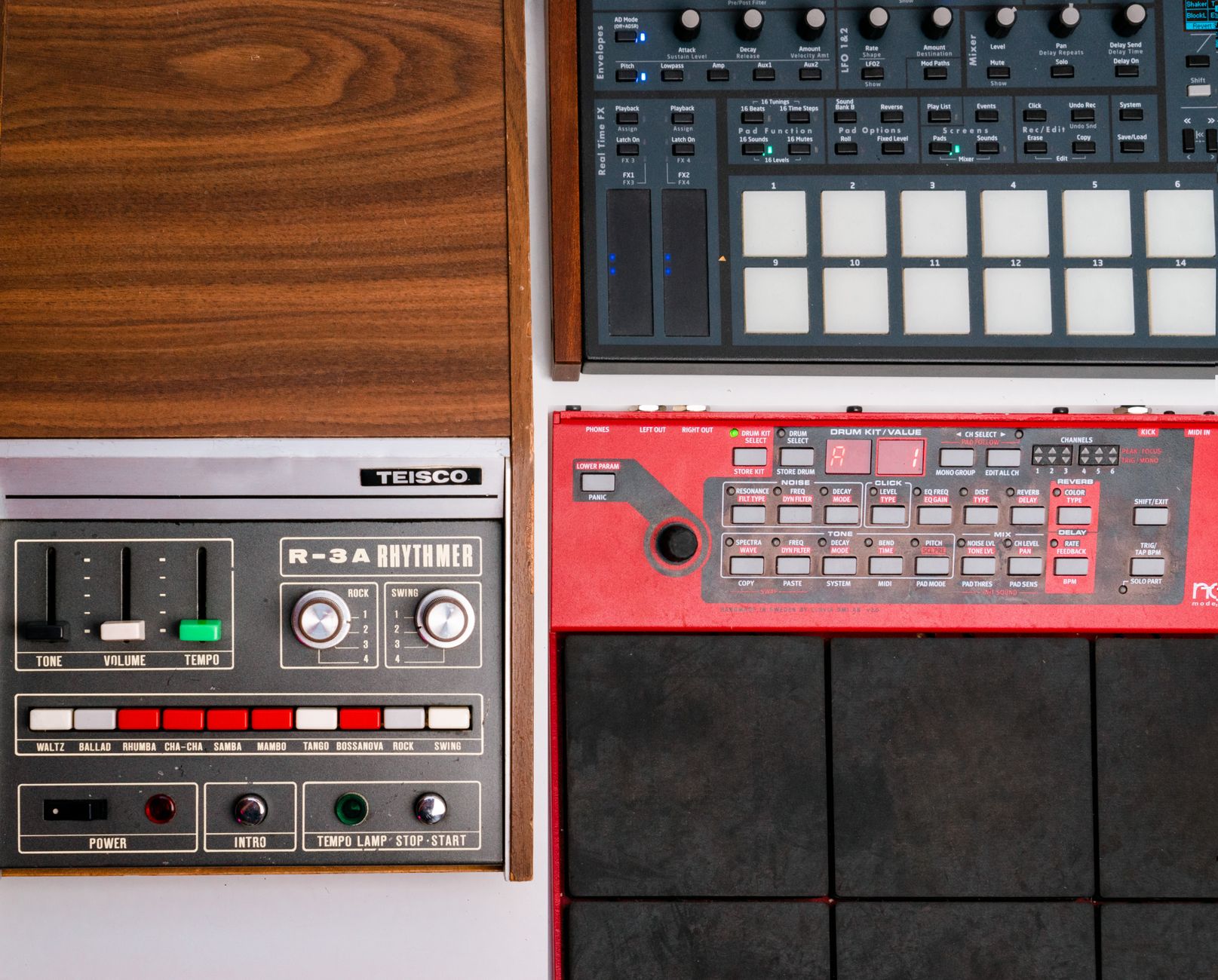
The hardware feels good, but the software decides whether you will keep using it after the first week. Maschine pads, screens and encoders make sense when the software is treated as a groove instrument. They feel cramped when you expect full DAW behaviour.
I like Maschine for starting beats because it keeps me away from the mouse for the first stretch. I dislike it for final arrangement because automation lanes, comping and detailed mix edits are simply faster elsewhere.
Maschine mk3 Software Settings I Change First
Before writing anything, I set the audio buffer to 128 samples if the laptop can handle it. If crackles appear, I move to 256. Anything higher starts making finger drumming feel disconnected. The pad response should feel immediate, especially for kick and snare work.
I also set project headroom early. Keep the master peaking around -6 dB while sketching. Maschine groups can get loud fast, especially with layered kicks, saturation and sampled breaks. Red lights in the first hour usually mean a smaller mix later.
The Maschine MK3 Manual Is Boring, So Use It Selectively
I do not read manuals for pleasure. Still, the Maschine mk3 manual is worth opening for three things: pad modes, audio routing and sampling workflow. Those sections save hours because the best features are hidden behind buttons that do two jobs.
The sampling page matters most. Learn how to sample into a pad, truncate hard, normalise only when needed, and assign choke groups. That one workflow turns the unit from a preset browser into an instrument.
- Use 128 samples for tight pad response when the computer allows it.
- Leave about -6 dB peak headroom on the master while sketching.
- Use choke groups for open and closed hats.
- Route drums as separate outputs if mixing in another DAW.
- Learn sampling and pad modes before buying more expansions.

The Pad Feel Fix: Swing, Chokes and Gain Staging
One Friday night I rebuilt a dull tech-house loop by changing almost nothing. Same kick. Same clap. Same hat samples. The fix was all performance and gain. Closed hats were choking the open hat properly, the clap got a quieter pre-hit 18 milliseconds early, and the kick lost 2 dB so the bass could move.
That is where the controller earns its space. You can make small timing choices with your hands instead of drawing fake humanity after the fact.
Stop Layering Kicks Before You Balance Them
Maschine makes layering too easy. That is dangerous. Two kicks hitting together can look bigger on the meter and feel smaller through speakers. I solo the kick group, pick one main kick, then add a top click only if the main sample lacks attack.
For club-minded tracks, I high-pass the click layer around 180 to 250 Hz and leave the body alone. If the kick and bass fight, I would rather adjust envelope length or sidechain ducking than stack another sample.
Swing Is Not a Magic Knob
Global swing can help, but it can also smear a groove. I prefer swing on hats and percussion first, often between 54 and 58 percent. Kicks usually stay straight. Claps depend on the genre: tight for techno, slightly late for house, looser for broken beat.
For sidechain, start with 3 to 5 dB of gain reduction on the bass, fast attack, and release timed to the groove. At 124 BPM, a release around 120 to 180 ms often breathes without pumping like a demo preset.
- Use choke groups before EQ when hats sound messy.
- Keep kick peaks consistent before adding compression.
- Try 54 to 58 percent swing on hats, not the whole project.
- Place quiet clap layers 10 to 25 ms early for weight.
- Sidechain bass by 3 to 5 dB before changing the bass sound.

Maschine MK3 Used, Price and For Sale Checks
A used Maschine can be a smart buy, but only if the software licence is clean. I have seen producers save money on the box and lose the weekend chasing transfer issues. The controller is not the whole product. The Maschine mk3 software, factory library and account transfer are part of what you are paying for.
The used market moves, so I judge value by condition and licence status before price. A cheaper unit without a transferable licence is not cheap enough.
What I Check Before Paying
Ask the seller to confirm the serial can be transferred through Native Instruments. Then test the pads. They should trigger softly and evenly, without needing a hard stab in one corner. Check both screens, all encoders, USB connection stability, headphone output and the main outs.
For a Maschine MK3 used purchase, missing cables are not a disaster. Missing licence transfer is. If the seller gets vague about the account, walk away.
Maschine MK3 Price Reality
The Maschine mk3 price only makes sense against your workflow. If you want standalone production on a couch or train, this is the wrong model because it needs a computer. If you already use a laptop and want pads, sampling and fast drum writing, it still earns its desk space.
When you see Maschine MK3 for sale, compare it with the cost of a new unit, the included software, and whether you would actually use the library. Pads without workflow are just furniture.
- Confirm the Native Instruments licence transfer before meeting.
- Test all 16 pads at low and medium velocity.
- Check both screens for dead lines or dim patches.
- Turn every encoder and push each button.
- Avoid units with unstable USB connection or vague account history.

Maschine MK3 Plus Confusion: Computer or Standalone
The name confusion is real. People say Maschine MK3 plus when they usually mean Maschine+. The difference matters because it changes the whole writing situation. The MK3 is a controller and audio interface for a computer. Maschine+ is the standalone box.
I take a side here: for most bedroom producers with a decent laptop, the MK3 is the better value. The computer gives you more CPU, easier file handling and smoother DAW handoff. Standalone is lovely when you need focus, but you pay for that freedom.
When Maschine+ Makes More Sense
Maschine+ makes sense if the laptop is the distraction. If email, browser tabs and cracked sample folders keep stealing the session, a standalone box can force commitment. It also suits live hardware setups where you want fewer screens and fewer points of failure.
Still, standalone limits are real. Large projects, heavy instruments and complex routing are easier on a computer. If your tracks end up in Ableton, Logic or Cubase anyway, the MK3 route is cleaner and cheaper.
The Setup I Would Choose Now
For a small room, I would run the MK3 into a laptop, monitor through its audio interface, and keep the template lean: drums on Group A, chops on Group B, bass on Group C, keys on Group D. No more than four groups until the hook works.
Then I would export stems at 24-bit WAV, pull them into the main DAW, and finish the record there. That keeps the fun part tactile and the finishing part precise.
- Choose MK3 if a laptop is already central to your production setup.
- Choose Maschine+ if standalone focus matters more than price.
- Use four groups or fewer while writing the first hook.
- Export 24-bit WAV stems before detailed arrangement.
- Do final automation and vocal edits in a full DAW.
| Option | Best For | Main Catch | My Take |
|---|---|---|---|
| Maschine MK3 new | Laptop producers who want pads, audio interface and full software bundle | Not standalone | Best balance for most bedroom studios |
| Maschine MK3 used | Budget buyers who can verify licence transfer and hardware condition | Risky without clean account transfer | Worth it only after testing pads and serial status |
| Maschine+ | Writers who want a standalone box away from the laptop | Costs more and has tighter CPU limits | Great for focus, weaker for complex finishing |
Worth a deeper read on this: What's the point of maschine mk3? and MASCHINE.
Questions producers actually ask
Is maschine mk3 still supported?
Yes, maschine mk3 is still supported through Native Instruments software updates, downloads and documentation. The important detail is computer compatibility. Before buying, check your operating system against the current Maschine software requirements, especially if you are on a very new macOS or an older Windows laptop.
Is the Maschine MK3 worth it?
It is worth it if you like building drums and samples with your hands, then finishing in a DAW. It is less convincing if you want one box to handle full arrangements, vocal editing and final mix automation. For laptop-based beat makers, I still think it is a strong buy.
Can Maschine MK3 be used without a computer?
No. Maschine MK3 needs a computer running Maschine software. It can act as an audio interface and controller, but it does not run projects by itself. If you want standalone production without a laptop, look at Maschine+ instead, and accept the higher price and different limits.
Which is better, the Maschine MK3 or the Maschine+?
For most bedroom producers, Maschine MK3 is the better value because the computer handles CPU, storage and DAW handoff. Maschine+ is better when standalone focus is the main goal. I would choose MK3 for studio production and Maschine+ for laptop-free writing or certain live setups.
What to remember
- Maschine MK3 works best as a fast groove and sampling instrument, not a full finishing DAW.
- Pad feel improves more from velocity, choke groups and partial quantise than from buying more sounds.
- Keep sketching headroom around -6 dB so layered drums do not crush the mix early.
- Used buyers should verify licence transfer before caring about the bargain price.
- Choose MK3 with a laptop for value, or Maschine+ only when standalone focus matters.
Wrapping up
maschine mk3 is not the magic pad box people sometimes imagine, and that is fine. Its real strength is narrower and more useful: fast drum decisions, tactile sampling, clean sketching and enough control to make a loop feel played instead of programmed. The trap is expecting it to finish the record for you.
Treat it like the front end of a session. Set your buffer low, leave headroom, play the pads before editing the grid, and export stems before the loop goes stale. If you already own one, try the 45-minute sketch rule in your next session. If you are shopping used, check the licence first and the price second.
My Career makes videos from your own track and posts them for you, pitches your release to 34,000+ labels, playlists, radio stations, YouTube channels and blogs, puts it in every store and briefs you every morning. Free plan, no card, two minutes to set up.