 By TGP DJ Desk · October 7, 2026
Generative sampling gets useful when the system produces material you would not have programmed, but still leaves you enough grip to finish the record. Generative sampling is not randomising a loop folder and hoping a hook falls out. The better workflow is closer to building a small instrument: source curation, controlled probability, resampling, editing, and mix cleanup.
The mistake I hear most is producers treating the generated output as sacred. It is not. Print it early. Cut the boring 70 percent. Tune the transient shape. Kill the unusable resonances. If the result cannot survive a 16-bar arrangement, sidechain ducking, and a limiter pass, it was only a texture sketch. Useful chaos has to become repeatable audio.
Generative Sampling Starts Before the Sampler
The sampler is the least magical part of the chain. Your source pool decides whether the system spits out character or soup. Ten related recordings usually beat 400 unrelated one-shots because the model has a musical lane to wander inside.
Think in families. Metallic hits from one kitchen recording session. Three vocal phrases from the same singer. A dusty Rhodes stab printed through the same chorus pedal at different pitches. The point is not variety for its own sake. It is controlled contrast.
Generative Sampling Is Not a Hook Generator
The weak version of generative sampling asks the machine for the idea. The stronger version gives it a biased palette and asks for mutations. In Ableton Simpler, Slice mode with transient detection can already feel alive if the input file has meaningful onsets. In Kontakt, a round-robin script with velocity ranges can do similar work without pretending to be mysterious.
I prefer source sets with these properties:
- Clear transient information for onset slicing.
- One tonal center, or deliberately mapped pitch zones.
- Short tails unless the reverb is part of the identity.
- Noise floor low enough to survive compression.
- At least one ugly element that stops the result sounding like stock content.
- Record source material at -12 to -6 dB peak so processing has room.
- Trim clicks at zero crossings before feeding slices into probability chains.
- Keep one folder per sonic family instead of one giant sample dump.
- Tag source files by role: transient, vowel, sustain, noise, tail.
- Avoid huge reverb prints unless you want every result to smear the groove.
Build a Corpus That Has Musical Bias
A corpus is only a sample folder with intent. Tools like FluCoMa can analyse loudness, pitch, spectral centroid, and onset position, then let you reorganise material by audio features rather than filenames. That matters because filename browsing is usually lying to you.
For generative sampling, the useful question is not “what sample is cool?” It is “what relationships can the system exploit?” If two slices share pitch but differ in brightness, they can alternate without breaking the part. If two hits share transient shape but differ in pitch, they can become a groove accent.
Bias Beats Infinite Choice
Splice and big personal libraries are great for source gathering, but they are terrible if you dump everything straight into a randomiser. I would rather build a 48-slice set from one vocal take, one foley pass, and one synth phrase than browse 2,000 disconnected files.
Use feature grouping before sequencing:
- Brightness: separate dark body slices from brittle top-end material.
- Envelope: keep plucks, swells, and sustained fragments in different lanes.
- Pitch: map tonal slices around the key instead of fixing everything later.
- Density: do not let noisy beds compete with rhythmic foreground parts.
- Use spectral centroid to group dull and bright candidates.
- Use RMS or LUFS-S to stop loud slices dominating random playback.
- Normalize by ear after grouping, not before, or you flatten the dynamics.
- Keep rejected slices in a parking folder because they may work as transitions.
- Name the corpus by musical job, not by plugin or pack name.

Constrain the Randomness, Then Resample It
Probability without boundaries creates audition fatigue. Set rules tight enough that every pass belongs to the track, then print multiple takes. This is where the workflow stops being theoretical and becomes production.
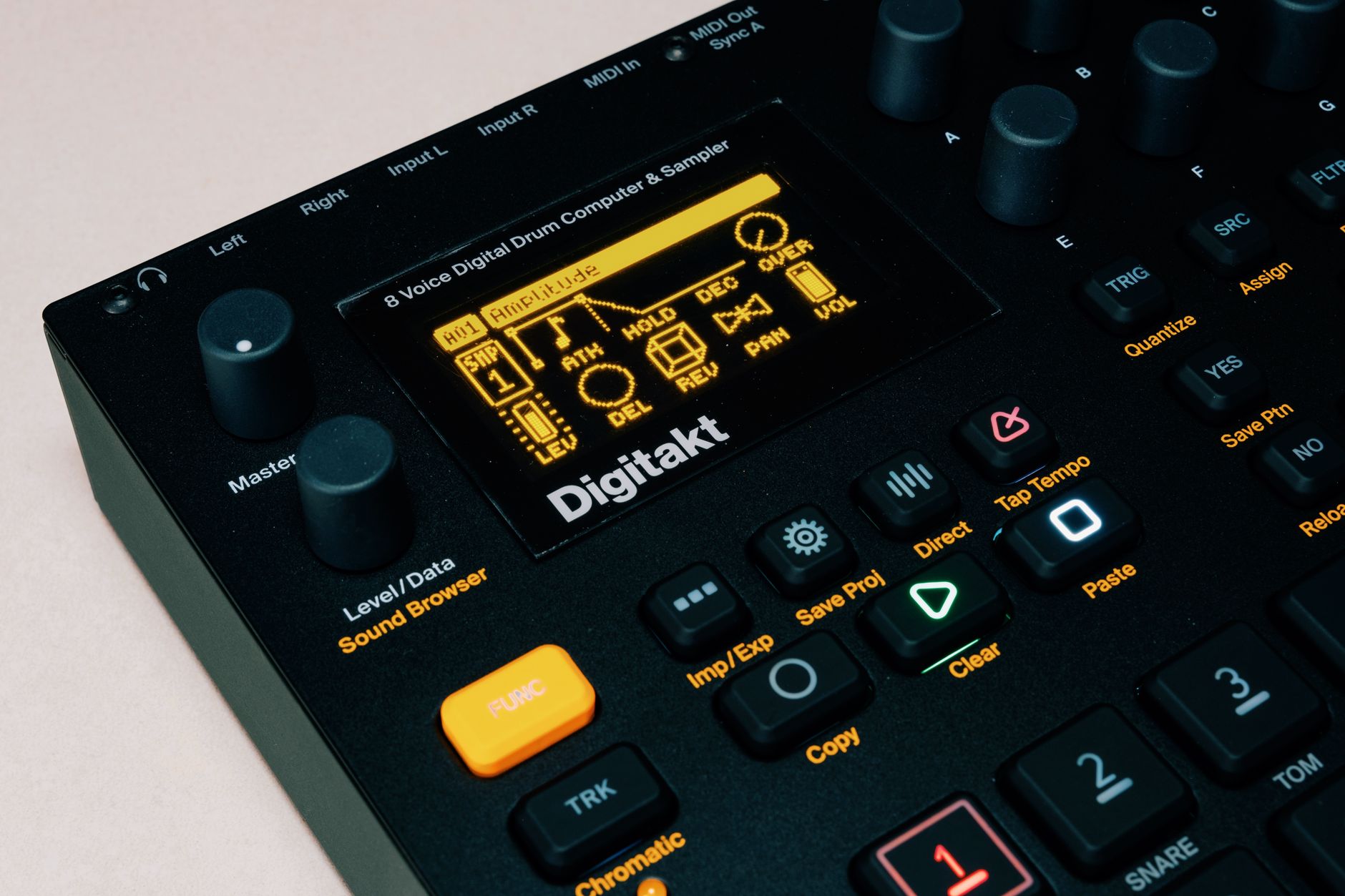
I like four-bar capture passes. Long enough for phrase logic. Short enough to judge fast. Print audio from Ableton Sampler, Serato Sample, or a Max for Live device, then cut like you would cut a recorded percussion take.
Print Earlier Than Feels Comfortable
Generative sampling loses focus when you keep every parameter live until the mix. Commit early. Freeze the probabilistic pass, duplicate it, and make decisions with scissors, fades, and gain clips. Audio editing exposes weak material faster than another modulation lane.
Good constraints are boring on paper:
- Pitch range locked to five or seven notes.
- Slice start randomised, but slice length capped at 250 ms.
- Velocity range kept within 18 dB unless the part is meant to stutter.
- One modulation target per pass, such as filter cutoff or grain position.
- Four-bar and eight-bar exports labelled by tempo and key.
Granular Does Not Mean Washed Out
Granular sampling gets lazy when grain size, spray, and reverb all blur the same transient. Use shorter grains, around 20 to 60 ms, for rhythmic material. Use 80 to 140 ms for pads and vowel fragments. Crossfade envelopes matter more than most preset browsers admit.
If the part loses punch, layer a dry onset underneath. A tiny transient duplicate at -18 dB can restore timing without killing the generated texture.
- Capture at least three passes before judging the system.
- Edit from printed audio, not endless parameter tweaking.
- Use clip gain before compression so random peaks do not steer the compressor.
- Keep one dry transient layer if granular processing softens the groove.
- Bounce stems with enough pre-roll to preserve modulation tails.
Clean the Output Like a Recording, Not a Preset
The generated pass is raw audio. Treat it that way. If you process it like a finished preset, you will carry resonances, phase smear, and bad low-mid buildup into the arrangement.
Start with gain. Then timing. Then tone. I usually cut problem lows before widening anything because stereo tricks make garbage harder to diagnose.
The Mix Problems Are Usually Predictable
Generated sample layers often stack energy around 180 to 350 Hz, especially with pitched vocal or synth material. Try a narrow cut at 240 Hz first, then widen only if the part still clouds the kick and bass. Do not high-pass blindly at 200 Hz unless you are happy to remove the body.
For sharp resonances, Soothe2 can work if you keep depth conservative. For width, mid/side EQ beats random stereo widening. If the sides carry harsh fizz above 7 kHz, trim them before adding Valhalla VintageVerb or any modulation tail.
Loudness Checks Should Happen Before Mastering
Do not wait for the final limiter to reveal that one random slice is 5 dB hotter than everything else. Check LUFS-S on the printed phrase and look at true peak after saturation. A lookahead limiter on a sound-design bus is fine for catching freak peaks, but if it is shaving 4 dB every bar, fix clip gain instead.
We see this constantly when reviewing audio quality, originality, included files, artwork, and metadata before approving releases: strange source material is not the issue. Unedited repetition and unmanaged peaks are.
- Clip-gain rogue slices before bus compression.
- Check mono compatibility after granular widening.
- Use dynamic EQ on resonant vowels instead of flattening the whole phrase.
- Keep reverb returns filtered below 250 Hz and above 10 kHz when needed.
- Export a dry version and a printed-FX version for arrangement options.
Turn the System Into a Repeatable Production Asset
The serious value is not one happy accident. It is building a patch, rack, or template that can generate related material across a full track without sounding copied bar after bar.
This matters for artists using custom music production too. A reusable sound system gives a track identity: fills, ear candy, drops, breakdown answers, and alternate edits can all come from the same DNA.
Save the Rules, Not Just the Bounce
Save the corpus, MIDI rules, modulation ranges, and resampling chain. If the hook works, you will need variations. If the breakdown needs a thinner answer, you do not want to rebuild the system from memory.
My bias is simple: archive the boring technical stuff. Sampler preset. MIDI effect rack. Scale lock. Random seed if the device supports it. Print settings. Wet and dry stems. This is the difference between a cool accident and a production language.
- Save the source corpus beside the project, not in a roaming downloads folder.
- Print four-bar, eight-bar, and one-shot versions of the best material.
- Render wet and dry stems before replacing plugins or moving machines.
- Document pitch range, probability settings, and tempo in the file name.
- Reuse the system for fills and transitions before reaching for new sounds.
| Method | Best Use | Failure Mode | Control Move |
|---|---|---|---|
| Onset slicing | Grooves, chops, vocal fragments | Machine-gun repetition | Limit slice pool and vary velocity |
| Granular playback | Pads, smeared hooks, texture beds | Blurred transients | Shorter grains plus dry attack layer |
| Probability sequencing | Percussive fills and ear candy | Randomness with no phrase shape | Capture four-bar passes and edit |
| Feature-based corpus selection | Large personal libraries | Over-similar outputs | Group by pitch, brightness, and envelope |
Worth a deeper read on this: Generative model and Ableton Simpler manual.
Frequently asked questions
What is generative sampling in music production?
Generative sampling is a workflow where rules, probability, modulation, or feature analysis create new variations from recorded audio. The producer still chooses the source material, constraints, edits, and mix treatment. The useful part is not randomness alone, but controlled variation that can become hooks, fills, textures, or transitions.
Is generative sampling better than using sample packs?
It is better when you need identity. Sample packs are faster for standard drums, impacts, and genre cues. A generated sampling system is stronger for signature textures because the results come from your own source pool and rules. For finished tracks, I would use packs for utility and generated material for character.
Which plugins are useful for this workflow?
Ableton Simpler and Sampler, Serato Sample, Kontakt, Max for Live devices, XO, Atlas, and FluCoMa-based tools all fit different parts of the job. You do not need all of them. Pick one sampler that slices cleanly, one way to randomise playback, and one reliable resampling path.
How do I stop generated samples sounding messy?
Constrain the pitch range, reduce the slice pool, print short passes, and edit audio aggressively. Most messy results come from too many sources and too many live parameters. After printing, use clip gain, narrow EQ cuts, transient layering, and mono checks before adding reverb or widening.
The short version
- Generative sampling works best when the source corpus has a clear musical bias.
- Print probabilistic passes early so editing replaces endless parameter tweaking.
- Granular sampling needs grain-size discipline if the part must keep punch.
- Generated audio should be cleaned like a recording, with gain, timing, and resonance checks.
- Save the rules and source folders so one accident becomes a repeatable sound system.
Where to go from here
Generative sampling is strongest when you treat it as a controlled sound-design instrument, not a slot machine. The workflow is simple but strict: curate related sources, constrain the rules, resample early, edit hard, and clean the result before it reaches the main mix bus. That discipline keeps the useful surprises and removes the lazy artifacts.
Try this in your next session: build a 48-slice corpus from one recording family, print three four-bar passes, and force yourself to finish a hook using only the best eight seconds. If it still feels alive after editing, you have something worth arranging.
My Career makes videos from your own track and posts them for you, pitches your release to 34,000+ labels, playlists, radio stations, YouTube channels and blogs, puts it in every store and briefs you every morning. Free plan, no card, two minutes to set up.