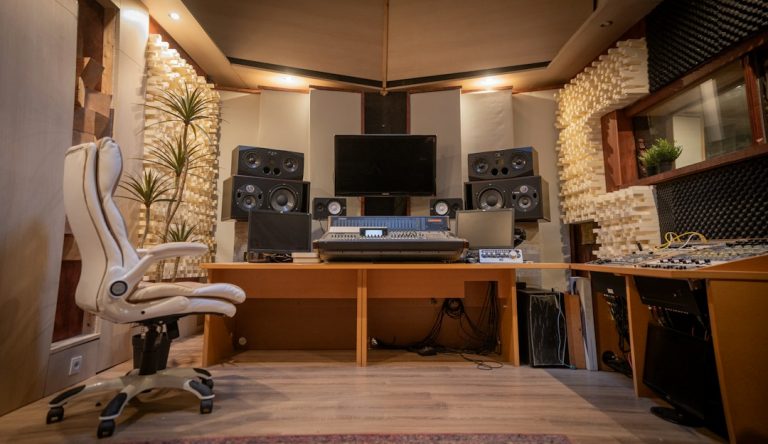
The korg minilogue was the little silver synth that stopped a 124 BPM house track from dying on my desk at 1:40 a.m. The korg minilogue had been sitting under a dust cover while Ableton Live did all the heavy lifting, then the client asked for a bassline that felt less rented. I plugged it in, hit record too hot, and immediately made the first mistake most producers make with this box: I treated it like a magic analogue sticker.
It sounded smaller, not bigger. The kick lost its pocket. The filter sweep barked in the wrong octave. The fix was not a fancier synth. It was gain, patch discipline, mono checking, and a few boring decisions that made the part survive outside my room. That session changed how I use the Minilogue on club records, demos, and custom production briefs.
Mistake 1: Treating the korg minilogue Like a Preset Box
The first time I saw one in a bedroom studio, it was being used like a plug-in preset browser with wooden cheeks. Patch, audition, shrug, repeat. That is a fast way to miss the point. The original Minilogue is simple enough that the small decisions are exposed. Oscillator level, envelope timing, filter drive, voice mode, all of it shows up in the bounce.
On that late house session, the preset that sounded impressive solo had a lazy attack and too much low-mid body. In the track, it leaned on the kick like a drunk uncle at a wedding. I rebuilt it from a plain saw wave and got more weight in three minutes.
The korg minilogue Gain Habit I Trust
I start most bass patches with Osc 1 as a saw at about 70 percent level, Osc 2 as a square one octave down at 35 to 45 percent, then I pull the master volume back before recording. The korg minilogue can get woolly when every internal level is pinned. Loud is not the same as finished.
For a tight club bass, set filter cutoff around 10 o’clock, resonance barely above zero, amp attack at 0 to 5 ms, decay near 280 ms, sustain around 60 percent, release under 80 ms. Then use the filter envelope with a short decay, about 180 to 240 ms, and keep the envelope amount moderate. That gives movement without a cartoon acid line.
Stop Saving Every First Patch
The Minilogue’s strength is how quickly it lets you correct a part while the track is moving. I keep one empty user slot as a scratch pad and overwrite it constantly. If a patch cannot beat the existing bassline while the drums are playing, it gets deleted.
A useful test: loop eight bars, mute the lead vocal or hook, and ride only cutoff and envelope amount. If the part still feels like a record section instead of a synth demo, save it. If it only works with reverb and delay drowning it, print nothing yet.
- Build from an initialized patch before reaching for saved sounds.
- Keep oscillator levels below maximum unless the grit is intentional.
- Program bass while the kick and clap are playing, never in solo.
- Use voice mode as part of the arrangement, not as decoration.
Mistake 2: Recording It Too Hot Because Analogue Feels Better Loud
I have made this mistake more times than I want to admit. Hardware comes in, meters jump, the part feels exciting, and nobody wants to kill the mood by trimming the input. Then the mix opens the next morning and the synth has a hard glassy edge that EQ cannot fully remove.
The Minilogue is not a vintage console. Smashing your interface input will not turn a weak line into a strong one. It usually steals transient shape and leaves you fighting 250 Hz mud and 3 kHz bite at the same time.
Leave the Converter Some Room
When I record the korg minilogue, I aim for average levels around -18 dBFS and peaks between -10 and -6 dBFS. If the performance has filter resonance jumps, I leave more room. A loud resonant sweep can jump 6 dB faster than you think.
On Yamaha HS8 monitors, a hot synth can trick you because the upper mids feel exciting at low playback volume. Check quietly. If the line still has note shape with the monitor controller low, the patch is doing the job. If it vanishes unless it is loud, fix the envelope or octave before reaching for compression.
The Basic Recording Chain
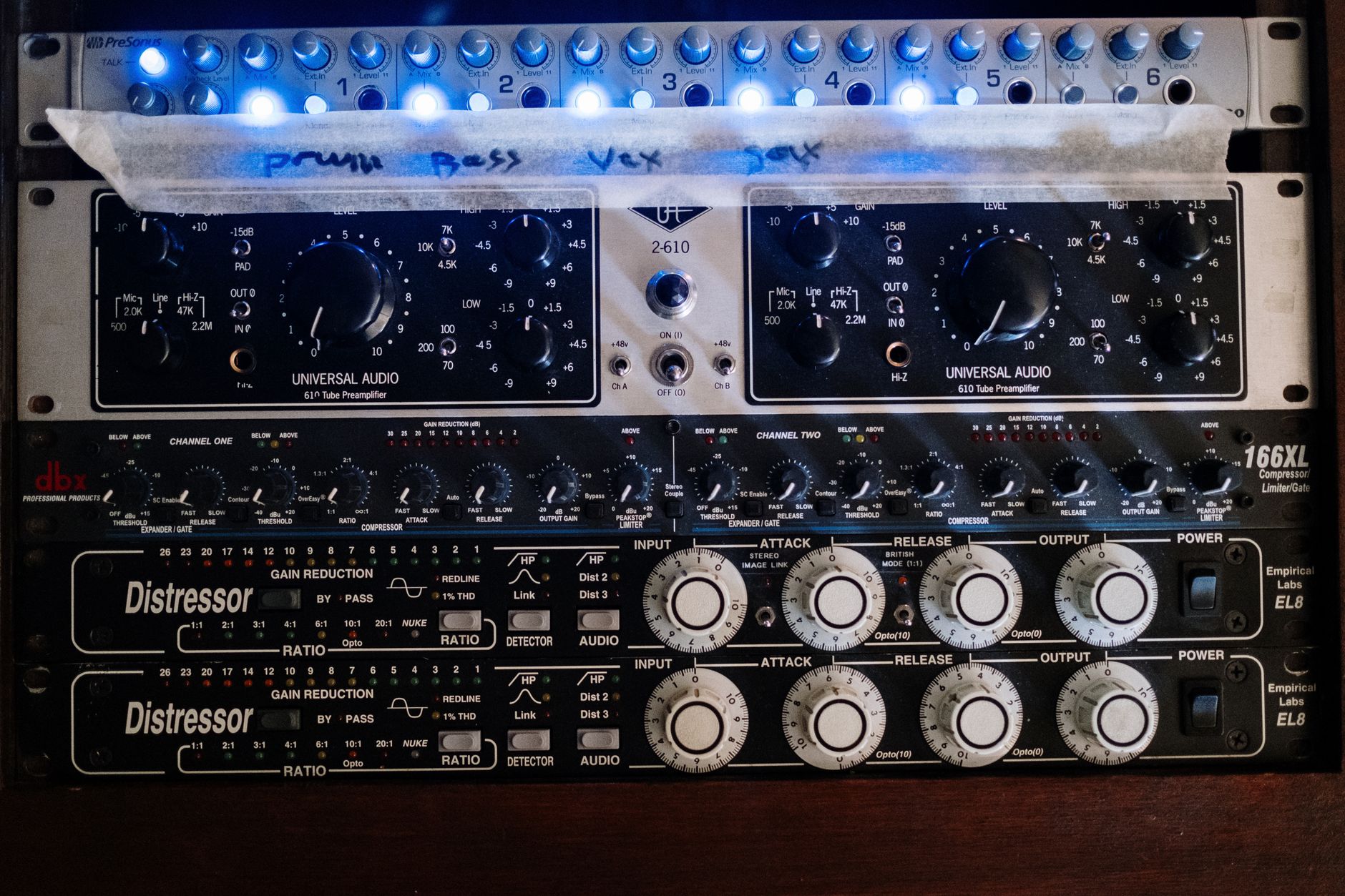
My boring chain is the one that works: Minilogue outputs into two clean interface inputs, no input clipping, then a utility gain plug-in first in the DAW. After that I decide whether it needs EQ, compression, saturation, or nothing. Most of the time, the first move is a high-pass at 25 to 35 Hz to remove floor rumble without thinning the actual notes.
- Record dry first, even if you monitor through delay.
- Print a second pass with live filter movement if the take has character.
- Name the audio file with tempo, key, and patch role.
- Target -18 dBFS average recording level.
- Keep peaks below -6 dBFS on unpredictable filter moves.
- High-pass sub-rumble before judging the low end.
- Do not compress a bad envelope into place.
Mistake 3: Making Bass Wider Than the Club Can Carry
The prettiest Minilogue bass I ever threw away had a wide chorus-style spread and a stereo delay that made the studio feel expensive. On a phone, it was fine. On a mono club check, half the authority vanished. The groove did not collapse, but it stopped pushing.
That is a nasty kind of failure because it hides until late. Bedroom producers often judge width on headphones, then wonder why the finished track lacks chest. A small analogue synth can do serious low-end work, but only if the foundation stays focused.
Mono First, Width Later
For bass, I record the core part mono unless there is a strong reason not to. If I use the stereo output, I still check the bottom in mono and keep everything below 120 to 150 Hz centered. Mid/side EQ makes this painless: high-pass the side channel around 140 Hz and leave the mid channel alone unless there is real mud.
Sidechain ducking matters too. A 4-on-the-floor kick usually needs 3 to 5 dB of gain reduction on the bass, fast attack, and release timed to the groove. At 124 BPM, try a release around 120 to 180 ms. Shorter can chatter. Longer can make the bass late.
Where Stereo Actually Helps
The upper layer is where width earns its rent. Duplicate the recorded bass, high-pass the duplicate at 180 Hz, then add a short stereo delay or chorus to the duplicate only. Keep the original dry and centered. This gives movement on headphones without making the sub wobble.
If the patch has a noisy filter sweep, Soothe2 can catch harsh resonances around 2.5 to 5 kHz, but use it gently. Depth at 1 to 2, selectivity around 3, and mix below 50 percent is plenty. If the plug-in is working harder than that, the patch probably needs fixing.
- Keep sub and low bass information mono.
- High-pass side content around 120 to 150 Hz.
- Use stereo effects on duplicated upper layers.
- Time sidechain release to the tempo, not to a preset.

Mistake 4: Ignoring Motion Until the Arrangement Feels Dead
The Minilogue can sound flat when it is asked to hold one idea for too long. That is not a flaw. It is a reminder. A four-voice analogue synth with a hands-on sequencer wants small changes, especially in dance music where eight bars can feel like an hour if nothing breathes.
On the 124 BPM track, the bassline was correct after the gain fixes, but the second drop still felt copied. I did not change the notes. I changed the way the filter opened in bar four and bar eight.
Use the Sequencer for Micro-Arrangement
The 16-step sequencer is not only for writing riffs. I use motion sequencing for cutoff, resonance, and sometimes envelope amount. Record one subtle knob move, then clear any steps that feel too dramatic. A tiny lift into the clap can be more useful than a full sweep every bar.
Try this on a two-bar bass loop: keep bars one and two restrained, open the filter 5 to 10 percent on bar three, then pull it back for bar four. Bounce that as audio and arrange it in 4-bar phrases. It reads like performance, not copy-paste.
Print Audio Before You Overthink It
I trust audio more than endless MIDI when hardware is involved. Once a pass has the right attitude, record it. Then record one safety pass with more movement and one with less. Comping hardware takes seconds if the parts are printed cleanly.
- Print a dry pass with no DAW effects.
- Print one aggressive filter performance.
- Print one restrained version for verses or breakdowns.
- Commit the best eight bars and build from there.
- Use motion sequencing for arrangement changes, not random wobble.
- Think in 4-bar and 8-bar phrases.
- Record multiple passes while the hands remember the movement.
- Edit audio later instead of polishing MIDI forever.

Mistake 5: Chasing the Wrong Korg Minilogue Used Deal
A used Minilogue can be a smart buy. It can also be the synth version of a cheap car with a mystery rattle. I have seen listings where the photos looked clean, the price looked friendly, and the pitch wheel barely returned to center. That is not a bargain when a bass take drifts sharp on the last note.
The Korg Minilogue price shifts by condition, region, and whether the power supply and original box are included. As a practical street range, I see original units often land around $300 to $400 used in the US, while cleaner Minilogue XD units often sit closer to $450 to $550. New prices move with sales, so check current shops before treating any number as law.
What to Check Before Paying
If you find a Korg Minilogue for sale locally, test it with headphones and your own cable. Turn every knob slowly. Scratchy pots are not always fatal, but encoder jumps and dead keys are deal breakers for production work. Check tuning after the unit warms up for 10 to 15 minutes.
Run all four voices if possible. A voice that behaves differently can hide inside chords until you record a take and wonder why one note feels weak. Also test MIDI over USB and 5-pin DIN if you plan to clock it from Ableton Live, Logic Pro, or a hardware sequencer.
The Used-Buy Red Flags
My hard pass list is short. Missing power supply with a vague promise. Sticky keys. Bent output jacks. A seller who will not let the synth warm up. A unit advertised as studio-only while the panel looks like it lived in a backpack.
- Ask for a short video of all keys triggering sound.
- Check that the display, selector, and voice modes respond cleanly.
- Confirm the exact model before comparing Korg Minilogue price listings.
- Budget for cables and a stand if the listing is bare.
- Warm the synth up before judging tuning.
- Test every key, knob, output, and MIDI connection.
- Compare against current new pricing, not old forum posts.
- Walk away from vague fault descriptions.

Mistake 6: Reading korg minilogue reddit Advice Too Literally
Search threads can be useful, but they can also make a simple instrument feel like a legal dispute. One person says the original is warmer. Another says the XD is the only sensible buy. Someone else insists the keys are too small, then admits they only make ambient pads at home. Context gets buried fast.
When I read korg minilogue reddit discussions, I look for patterns, not verdicts. If ten people mention the same build issue, I pay attention. If one person hates the filter because it does not sound like their favorite vintage synth, I move on.
Forum Opinions Need a Track Role
The right question is not whether the korg minilogue is good. The right question is whether it solves a role in the music being made. For tech house bass, it is direct and quick. For lush cinematic pads, four voices can feel cramped. For a topline artist who needs one signature hook sound, the limitation can be useful because it stops patch browsing.
I ask three things before trusting any opinion: what genre, what monitoring, and what final format. Advice from someone writing headphone ambient sketches may not help a DJ trying to make a bassline survive an Allen & Heath Xone:96 in a small club booth.
The Opinion I Actually Stand By
The original Minilogue is still a better writing synth than many deeper instruments because it keeps decisions visible. You can hear the filter, envelope, voice mode, and oscillator balance without a menu hunt. That makes it strong for producers who finish tracks under pressure.
If you need built-in digital effects and a broader oscillator palette, the XD is the smarter buy. If you need a fast analogue sketchpad that records well with external processing, the original still earns its space.
- Read forum threads for repeated faults, not single hot takes.
- Match advice to your genre and monitoring setup.
- Ignore opinions that never mention a finished track.
- Choose the synth for a role, not for online approval.
Mistake 7: Picking Korg Minilogue XD for the Wrong Reason
The Korg minilogue XD is tempting because it looks like the grown-up answer. Digital multi-engine, onboard effects, extra texture, cleaner modern workflow. Those are real advantages. They do not automatically make better records.
I have watched producers buy the XD when what they actually needed was a stricter writing tool. I have also watched people save money on the original, then spend months wishing they had onboard delay and reverb for live jams. The mistake is not picking one over the other. The mistake is picking based on spec-sheet anxiety.
Korg Minilogue vs XD in Real Sessions
For dry basses, plucks, and simple analogue hooks, the original Minilogue is fast and honest. It does not flatter weak programming much, which is good training. The XD feels broader. Its digital oscillator and effects can get you closer to a finished color before the signal hits the DAW.
My take: buy the original if you want to learn synthesis, write parts quickly, and process with plug-ins later. Buy the XD if you perform with hardware, need onboard effects, or want hybrid textures without opening another instrument in Ableton Live.
Do Not Let Effects Hide Bad Parts
The XD can make a thin patch feel finished because the effects are fun. That is also the trap. Mute the effects and check the raw oscillator balance. If the line cannot carry the groove dry for eight bars, the effect is doing too much emotional work.
With the original, I often add delay in the DAW after the part is arranged. A dotted eighth delay filtered above 250 Hz and below 6 kHz can give a pluck bounce without crowding the kick. Keep feedback under 25 percent for busy house grooves.
- Pick the original for speed, simplicity, and external processing.
- Pick the XD for hybrid oscillators, effects, and live hardware sets.
- Judge patches dry before praising onboard effects.
- Spend saved money on monitoring or an interface if the room is weak.

Mistake 8: Leaving It Outside the Production Brief
Hardware gets romantic fast. A synth line feels personal because fingers touched it. Clients, collaborators, and vocalists still need files that make sense when the session moves to another room. A great Minilogue part becomes a problem if nobody knows the tempo, key, MIDI source, or whether the printed audio includes effects.
This matters even more on ghost production and custom music production jobs. The sound has to be repeatable enough for revisions, but distinctive enough to justify using hardware at all.
Print the Part Like Someone Else Will Open It
When I deliver or archive a Minilogue part, I print three things: the main audio, a dry safety pass, and the MIDI clip if MIDI drove the synth. I also take a phone photo of the panel if the patch matters. It is low-tech and it saves sessions.
Label files clearly: 124BPM_Am_Minilogue_Bass_Dry, 124BPM_Am_Minilogue_Bass_FilterRide, and 124BPM_Am_Minilogue_MIDI. Nobody should have to audition fifteen files called Audio 07.
Make the Hardware Feel Intentional
The korg minilogue earns its place when the part has a reason to exist. Maybe it is the slightly unstable bass in the second drop. Maybe it is the short chord stab that gives a tech-house loop a human shoulder. Maybe it is the lead hook that keeps a custom track from sounding like a sample pack collage.
Do not record hardware for bragging rights. Record it because the take gives the arrangement a decision you would not have made with a mouse.
- Print main, dry, and alternate movement passes.
- Save MIDI when the synth is sequenced externally.
- Photograph the panel for revision-heavy projects.
- Name files with tempo, key, instrument, and role.
| Choice | Best For | Watch Out For | Typical Used Range |
|---|---|---|---|
| Original Korg Minilogue | Fast analogue basses, plucks, hooks, synthesis learning | No onboard effects, four voices can feel tight for pads | $300-$400 |
| Korg Minilogue XD | Hybrid textures, live jams, onboard delay and reverb | Effects can hide weak patch programming | $450-$550 |
| Cheapest used listing | Only worth it if every key, voice, knob and output works | Bad jacks, drifting pitch controls, missing power supply | Varies too much to trust blindly |
| New unit on sale | Warranty, clean condition, predictable studio setup | Costs more upfront, but fewer mystery faults | Check current retailers |
Worth a deeper read on this: minilogue and Korg Minilogue.
Questions producers actually ask
Is the korg minilogue still worth buying?
Yes, if you want a hands-on analogue synth for basses, plucks, simple chords, and fast writing. It is not the deepest synth in the studio, and that is part of its value. The controls are direct, the sound records well, and the limits push decisions instead of endless preset browsing.
What is the difference between Korg Minilogue and Korg Minilogue XD?
The original Minilogue is a straightforward four-voice analogue polysynth with a clear, direct workflow. The XD adds a digital multi-engine oscillator, onboard effects, and a broader sound palette. I prefer the original for focused writing and the XD for live hardware jams or hybrid textures.
What is a fair Korg Minilogue used price?
In many US used listings, the original often sits around $300 to $400 depending on condition, accessories, and local demand. A clean XD often costs more. Always compare against current new prices, then test tuning, keys, outputs, knobs, display, and MIDI before paying.
Can the Minilogue make strong house and techno bass?
Yes. Keep the low end centered, use short amp envelopes, avoid excessive stereo effects, and sidechain the bass around 3 to 5 dB against the kick. A saw plus a quieter square one octave down can work well when recorded with headroom and arranged in short phrase variations.
Is the Minilogue good for beginners?
It is one of the better beginner hardware synths because the controls show the signal path clearly. Oscillators, filter, envelopes, LFO, and voice modes are easy to connect by ear. Beginners still need to learn gain staging and arrangement, but the instrument itself teaches quickly.
How do I connect a Minilogue to Ableton Live?
Connect audio outputs to your interface inputs, then connect USB or 5-pin MIDI if you want Ableton Live to sequence it. Record audio at sensible levels, usually peaking below -6 dBFS. If MIDI clock feels loose, print the performance as audio and nudge the take into time.
What to remember
- The Minilogue sounds bigger when oscillator levels, envelopes, and recording gain are controlled.
- Record with headroom, usually around -18 dBFS average and below -6 dBFS peaks.
- Keep bass mono first, then add stereo width only to upper layers.
- Used deals are only good if the keys, knobs, voices, outputs, and MIDI all work cleanly.
- Choose the original or XD based on session needs, not forum pressure.
- Print dry, main, and alternate passes so hardware parts survive revisions.
Wrapping up
The korg minilogue is not a magic credibility box. It is better than that. It is a small, honest synth that rewards clear decisions and exposes lazy ones. Treat it like a writing partner: set levels properly, make the low end survive mono, use motion with intent, and print audio before the moment disappears.
If you are shopping, ignore the loudest opinion and think about the role it will play in actual tracks. If you already own one, open a half-finished session and rebuild one part from an initialized patch. Keep the drums running, record three passes, and choose the take that makes the arrangement move.
My Career makes videos from your own track and posts them for you, pitches your release to 34,000+ labels, playlists, radio stations, YouTube channels and blogs, puts it in every store and briefs you every morning. Free plan, no card, two minutes to set up.