 By TGP Production Desk · August 9, 2026
Jazz instrumentation saved a 124 BPM house edit for me at 2:10 a.m. in a half-empty rehearsal room above a small bar, after the loop had started to feel like wallpaper. The drums were fine. The bass moved. The Rhodes patch even had a little hair on it. Still, the track sat there, polite and forgettable, until I muted the fake string pad and wrote three brass stabs around the kick, then let a tenor sax answer every second phrase.
That night taught me more about jazz instrumentation than any tidy chart. It is not just a list of instruments. It is who speaks first, who supports, who leaves space, and who gets out before the groove gets crowded. For producers, DJs, and artists ordering custom music, that is the useful part: turning the band idea into a track that actually moves.
Jazz Instrumentation Starts With Roles, Not Gear
The first mistake I hear in jazz-flavoured electronic tracks is instrument collecting. Someone stacks piano, upright bass, brushed drums, sax, trumpet, flute, vibraphone, and a smoky vinyl crackle bed, then wonders why the chorus feels smaller than the loop.
A band is not a shopping cart. In good jazz instrumentation, every part has a job. If two parts do the same job, one of them usually needs to move, thin out, or leave.
The rhythm section carries the room
Piano or Rhodes, bass, drums, and guitar usually form the rhythm section. In a club production, that means they need to share the low-mid range without fighting the kick and sub.
I tend to high-pass comping keys around 120 Hz, sometimes higher if the bass is walking. If the Rhodes is thick at 250 Hz, I will cut 2 to 4 dB with a medium Q, then let the attack live around 2.5 kHz. That keeps the chords present without turning the drop into soup.
The front line says the memorable thing
The front line is usually sax, trumpet, trombone, clarinet, flute, or a combination of them. These are not decoration. They carry hooks, riffs, counter-melodies, and solos.
On that late-night house edit, one tenor sax phrase did more than six layers of soft synths. It answered the vocal chop in bars 3 and 4, then disappeared. That absence made the next entrance feel intentional.
- Bass defines motion and chord roots, but should not mask the kick.
- Drums set swing, density, and room energy.
- Keys and guitar fill harmony, usually in short voicings.
- Horns and reeds carry hooks, stabs, falls, and solos.
- Percussion adds lift, not constant noise.

Jazz Instrumentation List: The Core Band Palette
Here is the practical jazz instrumentation list I keep in my head when arranging for a track rather than a stage. It is less romantic than a textbook list, but it stops sessions from drifting.
Use it like a casting sheet. Pick the player before writing the line. A trumpet riff behaves differently from a baritone sax riff, even if the MIDI notes are identical.
Main instruments in jazz rhythm sections
The main instruments in jazz rhythm sections are piano, double bass or electric bass, drums, and sometimes guitar. In dance music, those jobs often get split between live-style parts and programmed elements.
A sampled upright bass can walk on top of a sub, but I rarely let both play full notes at once. I will keep the upright audible from about 90 Hz upward, then let a clean sine or short sub handle the club weight below it.
Common horn, reed, and colour instruments
Trumpet cuts. Tenor sax talks. Alto sax bites. Trombone gives width and weight. Flute floats above dense chords. Vibraphone and marimba add a glassy attack without needing a huge reverb tail.
If I am sketching away from the studio, Ableton Note is enough for the idea: rootless chords, a bass movement, and a rough horn rhythm. The sound can change later. The role should be clear from bar one.
- Piano or Rhodes: harmony, comping, intros, short fills.
- Double bass: walking lines, roots, passing tones, swing feel.
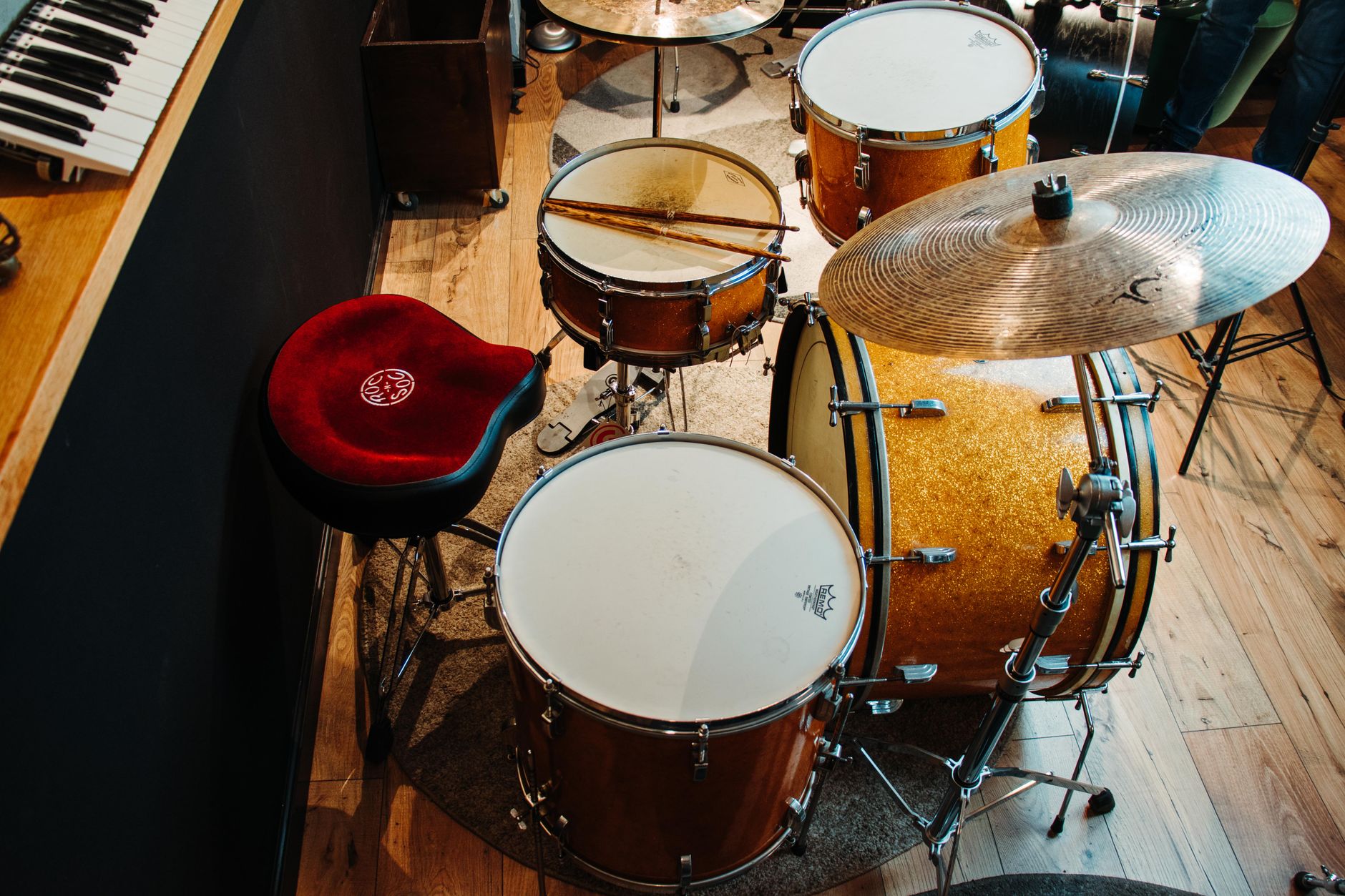
- Drum kit: ride pattern, snare comping, brush texture, accents.
- Trumpet: bright lead lines, stabs, falls, high-register tension.
- Saxophone: hooks, solos, riffs, warm midrange answers.
- Trombone: low horn support, slides, thick section voicings.
- Vibraphone: shimmering chords, sparse hooks, metallic sustain.
Jazz Instrumentation Names Mean Different Mix Jobs
Jazz instrumentation names are not just labels for a credits page. They tell you where the sound wants to sit, how hard it can be compressed, and how much space it needs around it.
We see this constantly when reviewing stems, MIDI files, project files, and release-ready audio packages. The strongest tracks usually have plain naming, clear groups, and obvious musical intent. The weak ones have fifteen tracks called Brass Layer 7.
Trumpet, sax, and trombone are not interchangeable
A trumpet can take 3 to 6 kHz before it starts feeling like a needle. A tenor sax often needs control around 500 Hz and 1.5 kHz. Trombone can eat the lower mids fast, especially if it is doubled with a warm synth brass patch.
When I stack horns, I EQ them as a section first, then fix individuals. A gentle high-pass at 100 Hz on the group, a 2 dB dip around 300 Hz, and short room reverb often works better than huge solo processing on each stem.
Piano voicings decide whether the mix breathes
The left hand is where bedroom jazz arrangements usually get into trouble. If the bass is active, do not double big piano roots below middle C unless you want mud.
Rootless voicings are cleaner. For a G7 chord, try B, F, A, and E instead of stacking G, B, D, F in the low register. That gives you the 3rd, 7th, 9th, and 13th while leaving the root to the bass.
- Name parts by role: tenor hook, trumpet stab, Rhodes comp, upright walk.
- Group horns before adding heavy compression.
- Keep piano roots out of the bass player’s range.
- Use short rooms before long halls on busy horn riffs.
- Pan section parts slightly, but keep the main hook stable.

What Are the Main Solo Instruments in Jazz?
Someone once sent me a deep house track with eight solo instruments fighting over the same 16 bars. The intention was classy. The result felt like everyone at the session had missed the last train.
What are the main solo instruments in jazz? Usually saxophone, trumpet, piano, guitar, trombone, bass, drums, clarinet, and flute. The better question for a producer is which one earns the solo in this track.
Pick one lead voice per moment
If the sax is improvising, the keys should comp in gaps. If the piano is soloing, horns can stab at phrase endings. If the drums are taking a break, the bass should simplify so the listener still feels the form.
I like 8-bar solos in club tracks. Long enough to feel human, short enough to keep the arrangement moving. For a 124 BPM track, that is about 15.5 seconds, which is plenty if the phrase has a shape.
A jazz instrument 3 letters long is usually sax
Searchers ask for a jazz instrument 3 letters long, and the crossword answer is usually sax. In production terms, the sax is also the easiest instrument to overuse because it reads as jazz the second it enters.
Use that power carefully. A dry, close tenor sax one-shot can make a drop feel expensive, but a full solo over every chorus can turn a dance record into background lounge music.
- Use sax for conversational hooks and bluesy answers.
- Use trumpet when the top line needs bite and lift.
- Use piano for harmonic solos with rhythmic control.
- Use guitar for percussive single-note lines and warmer phrasing.
- Use drums for short fills, trades, and tension before a drop.

Jazz Instrumentation Songs Producers Should Study
I keep a small reference folder for jazz instrumentation songs, not because I want to copy them, but because they remind me how little a great arrangement needs. Three seconds of a record can teach you where to leave space.
When you reference, listen past the melody. Count the entrances. Notice when the bass stops walking. Notice when the horn section plays one tight answer instead of a wall of harmony.
Listen for arrangement moves, not nostalgia
On Miles Davis recordings, the trumpet often sits forward because the rhythm section knows how to stay elastic underneath it. On Count Basie band records, the piano can be almost comically sparse, then the brass hits like a door opening.
That lesson transfers to house, garage, lo-fi, and hip-hop. If the hook is a horn stab, do not bury it under pads. Let the rhythm section make it feel inevitable.
Turn references into production notes
I write reference notes in plain language: ride cymbal opens at chorus, bass walks only after vocal, muted trumpet answers every 4 bars. That is more useful than saying a track feels warm.
If I pull one-shot material from Splice, I still treat it like a player. I trim breath noise if it distracts, tune only as much as needed, and line the transient slightly behind the grid when the groove wants drag.
- Mark where the first horn enters.
- Count how many instruments play during the hook.
- Notice whether the bass walks, pedals, or rests.
- Check if drums lead with ride, hats, brushes, or backbeat.
- Write down one arrangement move you can steal ethically.

Write Voicings That Leave Room for the Club Low End
The first time I tried to put a full jazz piano voicing over a four-on-the-floor kick, I blamed the compressor. The compressor was innocent. My left hand was the problem.
Good jazz instrumentation in dance music often means subtraction. The harmony can be rich, but the low end has to be ruthless.
Keep the bass arrangement honest
If the kick fundamental is around 50 Hz, I will often tune or shape the sub so it speaks slightly above or below that, not directly on top. The upright or electric bass can then carry note identity around 100 to 250 Hz.
Sidechain ducking does not need to pump like an EDM parody. Start with 2 to 4 dB of gain reduction, fast attack, and a release that returns before the next offbeat. If the bass line swings, do not quantize the life out of it.
Use chord colour without stacking mud
Jazz harmony gives you 7ths, 9ths, 11ths, and 13ths. You do not need every note in every chord. In fact, the fifth is often the first note I remove because it adds size without much character.
For a Dm9 to G13 to Cmaj9 movement, try three-note upper structures on Rhodes while the bass handles roots. That can sound larger than a seven-note block chord because each note has air around it.
- Cut unnecessary piano lows before compressing.
- Let the bass play roots, not the chord instrument.
- Remove fifths when voicings feel bulky.
- Keep extensions above middle C when the groove is dense.
- Use sidechain ducking as housekeeping, not a personality.
Program Swing Without Making the Band Sound Fake
A perfect grid can ruin jazz instrumentation faster than a bad sample. Jazz time is not sloppy, but it breathes. The push and pull is part of the arrangement.
When I program jazz-influenced drums, I start with the ride or hat pattern before the kick. That flips the usual dance workflow, but it gets the pocket right earlier.
Put microtiming before fills
Try setting swing between 54% and 58% on 16th-note material, then move individual hits by ear. Ghost snares can sit 10 to 25 ms late. Horn stabs often feel better 5 to 15 ms behind the grid, especially if the track has a laid-back bass line.
An Elektron Digitakt II is useful here because nudging sampled horns or drum hits per step feels physical. You hear the groove change before you start staring at numbers.
Blend live feel with programmed weight
A Roland TR-8S kick under a brushed kit can work if each element has a job. Keep the machine kick short and centered. Let the brush loop live wider and higher, often high-passed around 180 Hz.
Parallel compression can help a soft kit survive club playback. Crush a drum bus with 8 to 12 dB of gain reduction, roll off the lows on the parallel return, and blend it under the dry kit until the room speaks.
- Start groove work with ride, hat, or brush pattern.
- Nudge horn stabs slightly late for a relaxed pocket.
- Keep programmed kicks short when layering with acoustic drums.
- Use ghost notes for motion, not volume.
- Check swing at low volume before adding fills.

Mix the Ensemble So It Feels Like One Room
The mix stage is where fake bands get exposed. A trumpet in a cathedral, a bass in a closet, and drums in a dry sample pack will never feel like they played together.
Jazz instrumentation needs a shared acoustic story, even when every sound comes from MIDI, samples, and drum machines.
Build a believable front-to-back image
I usually start with one short room reverb for the ensemble, around 0.6 to 1.2 seconds, low-cut near 200 Hz, high-cut around 7 kHz. Horns get more send than bass. Drums get enough to glue, not enough to wash out the groove.
For depth, pre-delay matters. A lead sax might get 20 ms of pre-delay so it stays forward. Background brass can sit with less pre-delay and more early reflections.
Check translation before the bounce
Jazz textures can trick meters because transients are softer than hard electronic drums. I still check loudness with Youlean Loudness Meter, but I do not chase numbers blindly. A jazzy house master around -9 to -8 LUFS integrated can hit well if the low end is controlled.
Before final bounce, mute the lead instrument for one pass. If the track collapses completely, the arrangement underneath is too dependent on the solo.
- Use one shared room reverb to connect the ensemble.
- High-pass reverb returns so bass stays clean.
- Keep the lead instrument forward with pre-delay.
- Control 200 to 400 Hz before adding brightness.
- Reference at quiet volume and on small speakers.
| Instrument | Best job | Watch out for | Starting move |
|---|---|---|---|
| Upright bass | Walking motion and root identity | Masking the sub and kick | High-pass or shelf below 70 to 90 Hz |
| Rhodes or piano | Chord colour and rhythmic comping | Low-mid buildup from left-hand voicings | Remove roots, cut 220 to 300 Hz if muddy |
| Tenor sax | Hooks, answers, and short solos | Honky buildup around 500 Hz to 1.5 kHz | Use 8-bar phrases and short room reverb |
| Trumpet | Bright stabs and lead statements | Harsh peaks around 3 to 6 kHz | Automate level before heavy compression |
| Brush kit | Swing texture and acoustic movement | Weak impact on club systems | Layer a short kick, keep brushes wider |
| Trombone | Horn section weight and slides | Crowding bass and low piano | High-pass near 100 Hz and pan inside the section |
Worth a deeper read: Jazz.
Frequently asked questions
What does jazz instrumentation mean?
Jazz instrumentation means the instruments used in a jazz arrangement and the roles they play. It usually includes a rhythm section, such as piano, bass, drums, and guitar, plus lead or section instruments like saxophone, trumpet, trombone, clarinet, flute, or vibraphone.
What are the main instruments in jazz?
The main instruments in jazz are piano, double bass or electric bass, drums, guitar, saxophone, trumpet, trombone, clarinet, and sometimes flute or vibraphone. Small groups may use only three or four of these, while big bands use larger horn and rhythm sections.
What are the main solo instruments in jazz?
Saxophone, trumpet, piano, guitar, trombone, bass, drums, clarinet, and flute are common jazz solo instruments. In production, choose one main solo voice at a time. Too many solo lines over the same section will blur the hook and weaken the groove.
What is a jazz instrument 3 letters long?
The common three-letter answer is sax, short for saxophone. It is one of the most recognizable jazz instruments because it can handle lead melodies, riffs, fills, and improvised solos. Alto, tenor, baritone, and soprano saxophones each sit differently in a mix.
How do you use jazz instrumentation in house music?
Start with a tight rhythm section, then add one clear jazz feature, such as Rhodes chords, walking bass, trumpet stabs, or a short sax answer. Keep the low end clean, use swing carefully, and give horns space instead of stacking them over every bar.
Which jazz instrumentation songs should producers study?
Study small-group Miles Davis recordings for space, Count Basie arrangements for punchy brass answers, and classic organ trio records for groove economy. Listen for entrances, rests, voicings, and how the rhythm section supports the lead without filling every gap.
The short version
- Jazz parts work best when every instrument has a clear role.
- The rhythm section controls groove, harmony, and low-end discipline.
- Sax, trumpet, and trombone need different arrangement and mix treatment.
- Rootless voicings leave more space for bass and kick in club tracks.
- Swing comes from microtiming, not random looseness.
- A shared room reverb helps sampled and programmed parts feel connected.
Where to go from here
jazz instrumentation is useful to producers because it turns arrangement into decision-making. You are not just adding sax or Rhodes for taste. You are choosing who leads, who supports, where the bass lives, how the groove leans, and when silence does more than another layer.
Next time a loop feels expensive but lifeless, do the rehearsal-room test. Mute the decorative parts. Keep the drums, bass, and one chord instrument. Add one front-line voice for an 8-bar answer, then mix the ensemble into the same room. Try it in your next session before adding another plugin.
My Career makes videos from your own track and posts them for you, pitches your release to 34,000+ labels, playlists, radio stations, YouTube channels and blogs, puts it in every store and briefs you every morning. Free plan, no card, two minutes to set up.