Key takeaways
- Promoters respond better when your public trail already proves your sound and reliability.
- One relevant mix beats five random links every time.
- A short, specific message usually lands better than a long biography.
- Finished original music or custom production can support a pitch if it matches your DJ identity.
- Follow up on a calendar, not from panic.
- The boring details, USBs, assets, timing, and communication, often decide who gets rebooked.
How to approach promoters got clearer for me after three awkward weeks of messages, late booth chats, and one painful unanswered email thread. I had been helping a young tech house DJ tighten his pitch while finishing two custom edits in Ableton Live 12, and the pattern was obvious: how to approach promoters is less about sounding impressive and more about removing friction.
The promoter does not need your full origin story. They need to know if you fit the room, if you can bring the right people, if your music sounds finished, and if you will be easy to deal with at 1:40 a.m. when the previous DJ overruns. My notebook from that stretch was messy. Good. The clean version would have lied.
How to approach promoters starts before the message
I watched one bedroom producer send twelve DMs in a night. Same sentence, same SoundCloud link, same dead air after. That was the wrong experiment. how to approach promoters starts before the first message because the promoter checks the trail you left behind.
The trail does not need to look expensive. It needs to look real. A pinned 30-minute mix, two short clips from an actual room, a current photo that does not look like a passport scan, and a contact email that works. I have seen promoters ignore a beautiful press kit because the latest mix was from 2021.
My small test on how to approach promoters
I asked two local promoters what they checked first. Neither said biography. One opened Instagram, then went straight to the most recent mix. The other checked if the DJ had tagged past events properly. That told me how to approach promoters with less theatre: make the public proof easier to find.
For a clean trail, I would keep these visible: one current DJ mix, one 15-second booth clip, one link page, one short bio, and one clear genre lane. If you play melodic house, afro house, peak-time techno, and UK garage, fine. But your pitch should not read like a menu board.
- Pin one recent mix that matches the gigs you want.
- Keep your link page to three choices, not twelve.
- Show one room clip with crowd audio, even if it is small.
- Remove old flyers that make your current sound look confused.
I stopped sending mixes cold
A cold mix link is lazy unless it answers a specific night. I learned that after sending a polished 124 BPM house mix to a promoter who booked mostly 138 BPM trance. Good mix. Wrong room. how to approach promoters means doing enough homework that your link feels placed, not thrown.
I now build a small promoter note before sending anything. Nothing fancy. Club name, capacity, usual open time, resident DJs, recent guests, crowd age if I can tell, and the sound of the last three event reels. Ten minutes of checking saves two weeks of silence.
A mix should sound like the room
If the night opens deep and slow, I do not send a festival drop compilation. I send a warm-up mix with patience: 118 to 123 BPM, clean 16-bar blends, no attention-seeking double drops in the first eight minutes. If the room is a late-night sweatbox, I send the harder one.
Rekordbox playlists help here. I keep crates labelled by use, not only genre: warm-up 118-122, direct support 124-126, closing tools, and weird reset records. On CDJ-3000s, phrase memory and clear cue points save nerves, but the promoter mostly hears taste.
- Send one relevant mix, not a folder of every set you ever recorded.
- Name the mix clearly with style, BPM range, and date.
- Put your strongest transition before minute five.
- Avoid private links that expire the next morning.

The 30-second ask beat the long biography
The best message I saw that month was six lines. No mythology. No claim about changing the scene. It had a greeting, one real reference to the night, one sentence on fit, one link, one availability line, and a clean sign-off. That is how to approach promoters when their phone is already full.
I keep a rough template, but I do not paste it raw. Promoters can smell copy-paste faster than a limiter shaving 6 dB off a bad premaster.
What I actually put in the message
The pitch I prefer reads like a normal person wrote it: Hey Maya, I caught the clips from your last Friday at Room 2. The first hour sounded more percussive than I expected. I have a 45-minute house set that fits that lane, mostly 122-124 BPM with no big-room drops. Link below. If you need an opener in March, I would be keen.
That is how to approach promoters without begging. The message gives context, fit, and an easy next action. It does not demand feedback. It does not ask to be put on the main stage because your friends say you are ready.
- Subject line: DJ set for Friday warm-up slot
- First link: 30-45 minute mix
- Second link: short EPK or Instagram
- Close: one clear availability window
- Use the promoter’s name if you know it.
- Mention one specific detail from their night.
- Make the ask about a slot type, not your dream billing.
- Keep the whole message readable on a phone screen.

A finished record made the email easier
This part may sting. A strong original track changes the conversation. Not always, but often enough that I take it seriously. When a DJ had one finished melodic house record, mastered cleanly at around -8 LUFS for club preview and with -6 dB headroom in the premaster, the pitch stopped sounding theoretical.
how to approach promoters is still about relationships, but music gives the relationship a handle. A promoter can forward a track to a resident. They can imagine the flyer line. They can hear whether your taste is real or just written in a bio.
Where ghost production and custom music fit
I have worked on enough custom music sessions to be blunt: a half-finished loop does not help your pitch. A finished record does. If you use ghost produced music, the smart move is to pick something that matches your DJ identity, then learn the arrangement inside out. Know where the 4-bar fills land. Know which breakdown drags. Know how it blends after a kick-heavy tool.
In Ableton Live 12, I usually check the club edit with a Utility mono check, FabFilter Pro-Q 4 for low-mid buildup around 220 Hz, and sidechain ducking that moves with the kick rather than swallowing the bass. I have not tested the same chain on Logic 11 yet, but the decision is not DAW-specific. The record either supports the pitch or it does not.
- Use one finished track as proof of sound, not as a trophy.
- Send a private streaming link before attaching WAV files.
- Keep radio edits and club edits labelled clearly.
- Do not pitch a techno night with a pop-house vocal unless the room actually books that sound.
Following up felt less awkward on a calendar
I used to follow up based on anxiety. Bad system. Now I put dates in a calendar and leave the emotion out. First message on Monday or Tuesday, one follow-up seven to ten days later, then I stop unless there is a real reason to reconnect. how to approach promoters includes knowing when to shut up.
The best follow-up does not say, Did you listen? It adds one small piece of usefulness. A new mix from a room that matches theirs. A date you are already nearby. A short thank-you after attending their event without asking for anything that night.
My follow-up rule
If I have not earned a reply after two clean touches, I leave it. Promoters talk, and neediness travels. I would rather be the DJ who checks back next quarter with a better mix than the one who sends four question marks after midnight.
One line worked better than I expected: No stress if the timing is wrong. I will send a fresher mix when I have one that fits your room better. That keeps the door open without making the promoter manage your feelings.
- Wait at least seven days before following up.
- Add one useful update, not pressure.
- Stop after two unanswered messages.
- Track every pitch in a simple spreadsheet.

The promoter is buying risk reduction
After a few gigs, the pattern got less romantic. The promoter is not only booking taste. They are buying risk reduction. Will you arrive on time? Will your USBs load on CDJ-3000s? Will you complain about slot time? Will your friends buy drinks and stay past your set?
That lens changed how to approach promoters for me. I started mentioning boring things because boring things matter. I have Rekordbox-ready USBs. I can play the opening hour properly. I can share clean assets by Thursday. I will not post the flyer late with the wrong date.
The boring proof is the useful proof
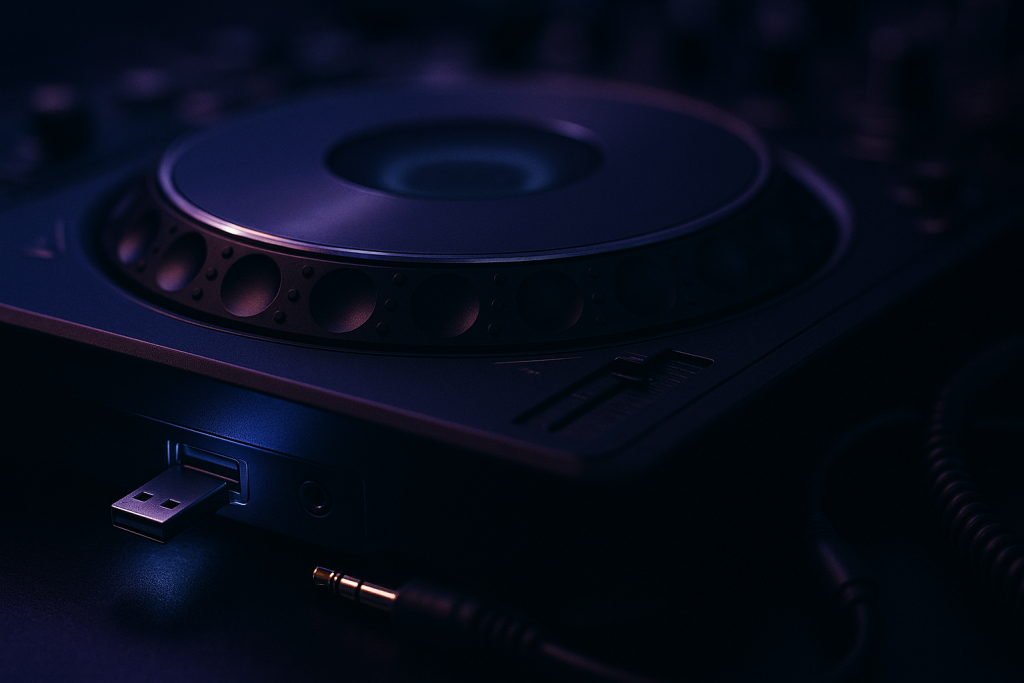
I keep two SanDisk Extreme Pro USBs formatted correctly, one backup on a Samsung T7 SSD, and a tiny note in my bag with my Rekordbox export settings. I also keep a 60-word bio, square press photo, landscape press photo, logo-free artist image, and one private mix link ready to send.
This is where bedroom producers can separate themselves. If you have not played many rooms yet, show that you understand the job. Clean music files, clear communication, no drama, and a set that supports the night. That is how to approach promoters when your gig history is still thin.
- Confirm set time, gear, and arrival time in writing.
- Bring two tested USBs and headphones you know well.
- Send assets before the promoter has to chase you.
- Post the flyer with the correct tags and date.
- Play the slot you were booked for, not the slot you wanted.
| Approach | Best Use | Main Risk | My Take |
|---|---|---|---|
| Cold email with mix | When the night already matches your sound | Easy to ignore if the subject line is vague | Works only when the research is obvious |
| Instagram DM | Small local parties and newer promoters | Gets buried under event replies | Keep it short and move serious details to email |
| Warm intro from a resident | Rooms where trust matters more than follower count | Can feel forced if your mix is not ready | Best route when the resident genuinely rates you |
| Post-gig conversation | After attending the event and understanding the room | Bad timing if the promoter is busy settling money | Say hello, then send the proper pitch later |
| Original track or custom edit | When your artist identity needs proof | Weak production hurts more than silence | Send only finished music that fits the night |
Further reading
- Pioneer DJ CDJ-3000 — Official product information for a standard club media player mentioned in DJ preparation.
- Sound On Sound techniques — Long-running, reputable music production publication with practical recording and mixing education.
Frequently asked questions
What is the best way to learn how to approach promoters?
Start by researching three nights that actually fit your sound, then send one short message with a relevant mix. I would not blast twenty promoters. Track who replies, what link they clicked if your platform shows it, and which message felt natural. The notes teach faster than guessing.
Should I message promoters on Instagram or email?
I use both, but not the same way. Instagram is fine for a light first touch, especially with smaller parties. Email is better for the actual pitch because links, EPKs, dates, and assets stay organised. If the promoter lists an email in their bio, respect that.
How long should my DJ mix be for a promoter?
Thirty to forty-five minutes is enough for most first pitches. I want the promoter to hear your opening discipline, your transitions, and your taste without asking for an hour of attention. Put your strongest section early, but do not make it feel like a highlights reel.
Do I need original music to get DJ bookings?
No, but original music helps when it is genuinely finished and aligned with your DJ lane. A clean custom track, a strong bootleg, or a well-produced club edit can make your pitch easier to remember. A rough demo with muddy low end usually does the opposite.
How often should I follow up with a promoter?
Once, maybe twice if there is a real update. I usually wait seven to ten days after the first message. If there is still no reply, I leave it and come back months later with a better mix or a more relevant reason.
What should be in a DJ EPK?
Keep it lean: short bio, current press photo, one relevant mix, two or three past event clips, social links, contact email, and any finished releases. I prefer a clean landing page over a huge PDF because promoters are usually checking from a phone.
Conclusion
The cleanest lesson from my notes was simple: how to approach promoters is a trust exercise disguised as a booking pitch. The music matters, but the shape around the music matters too. A focused mix, a clear message, a finished record if you have one, and proof that you understand the room will carry you further than a loud bio.
I would try this in your next session: pick one promoter, study one specific night, record one mix that fits that room, and write the message in under 90 seconds. Then leave it alone for ten minutes and cut the needy parts. Send the version that sounds like a person.
How to approach promoters — Quick Recap
The fastest way to lock in how to approach promoters is to internalise the workflow above and repeat it on every project. Start small: pick one technique from this how to approach promoters guide, apply it to your next session, and audit the result against a reference track.
- Promoters respond better when your public trail already proves your sound and reliability.
- One relevant mix beats five random links every time.
- A short, specific message usually lands better than a long biography.
- Finished original music or custom production can support a pitch if it matches your DJ identity.
Treat how to approach promoters as a habit, not a one-off — the producers who consistently nail how to approach promoters are the ones who run the same checks on every track. That’s the difference between a clean, club-ready master and a track that sounds great at home but falls apart on a real system.
In a real studio session, how to approach promoters comes down to the order in which you make decisions: reference first, gain stage second, then the creative work. Producers who treat how to approach promoters as a checklist instead of a vibe end up shipping more tracks.
Most producers and DJs undervalue how to approach promoters because the wins are invisible until the track plays back on a real system. Bake how to approach promoters into your template and the next ten projects benefit automatically.
When you struggle with how to approach promoters, the fix is rarely a new plugin. Loop a problem section, A/B against a reference, and isolate which element is breaking your how to approach promoters.
Treat how to approach promoters as a craft, not a chore. The producers releasing on the biggest labels lock how to approach promoters in early so they can spend their energy on melody and arrangement instead of fighting the mix.
My Career makes videos from your own track and posts them for you, pitches your release to 34,000+ labels, playlists, radio stations, YouTube channels and blogs, puts it in every store and briefs you every morning. Free plan, no card, two minutes to set up.