 By Alex Mercer · October 10, 2026
How much is ableton is the wrong question if you stop at the sticker price. The usual advice is simple: buy the cheapest version, upgrade later, and worry about the rest when you are better. That advice wastes money.
The real answer to how much is ableton depends on what blocks your music right now: track limits, missing instruments, sample editing, Max for Live devices, comping, warping, or finishing arrangements. Ableton Live 12 Intro, Standard, and Suite are not just three price tags. They are three different levels of friction. Lite is not a secret full version. A monthly Ableton bill is mostly a myth. Old Live 11 pricing is not the number to plan around. If you make DJ edits, club tracks, pop demos, ghost-produced references, or label-ready releases, the smart purchase is the one that removes your actual bottleneck without buying decoration.
Myth: The Cheapest Answer to how much is ableton Is the Smart One
The common belief is that the lowest Ableton price is automatically the responsible choice. It sounds sensible. Spend less, learn the DAW, then upgrade when your music improves.
That is incomplete. Intro can be a smart buy, but it can also become a tiny room very fast if your sessions use more than a handful of audio and MIDI tracks. The working alternative is to price Ableton against the session you actually build, not the session you imagine on day one.
The clean answer to how much is ableton
At Ableton’s US store, Live 12 Intro is typically $99, Live 12 Standard is $439, and Live 12 Suite is $749. Prices can shift by region, VAT, currency, sale period, and upgrade eligibility, so check your local store before paying.
That does not mean every producer should buy Suite. It means the real price gap is tied to limits. Intro caps your track count. Standard removes that core restriction and gives you the full arrangement and performance environment. Suite adds Ableton’s deeper instrument, effect, sound, and Max for Live package.
Price the bottleneck, not the badge
A four-track bootleg edit can survive in Intro. A modern house or techno production with drums, sub, bass mid layer, chord stab, vocal chop, riser, impacts, returns, references, and print tracks usually cannot. Once you start bouncing stems just to stay inside a limit, the cheap version is charging you in time.
For producers preparing tracks for labels and independent releases, we see the same pattern constantly: the DAW price matters less than whether the tool lets you finish clean arrangement revisions quickly.
- Buy Intro if you are sketching simple loops, DJ edits, or learning Session View.
- Buy Standard if you already arrange full songs and need fewer artificial limits.
- Buy Suite if you want Ableton’s built-in synths, devices, packs, and Max for Live.
- Do not buy Suite just because a course uses it.
- Do not buy Intro if your normal template already needs more tracks than it allows.

Myth: Ableton Costs Per Month Like a Streaming App
The common belief is that every major creative tool now wants a subscription. Searchers ask how much is Ableton per month because that is how many plugin bundles, sample libraries, and cloud tools are sold.
Ableton Live is different. Ableton sells Live as a paid licence, not as a normal monthly subscription on its own store. The working alternative is to treat it like a one-time DAW purchase with optional paid upgrades later, not a permanent rent payment.
How much is Ableton for a year?
If you buy Live outright and do not upgrade during that year, your annual Ableton Live cost is the purchase price. There is no standard Ableton Live 12 subscription that charges you every month just to open your sessions.
Some retailers may offer financing, payment plans, or regional checkout options. That is not the same as Ableton being subscription software. If a payment plan costs extra or locks you to a retailer, judge it like credit, not like a cheaper licence.
The one-time purchase is not the whole story
A one-time licence still has future costs. Major version upgrades are usually paid. If you buy Live 12 Standard now, you should not assume Live 13 will be free. Point updates inside the same major generation are normally included, but a major jump is a different purchase decision.
The clean budgeting move is simple: expect the DAW to cost money at purchase, then again when a future major version offers features you actually need.
- No normal monthly Ableton Live subscription is required to keep using Live.
- A yearly cost only exists if you divide the one-time price across 12 months.
- Payment plans from retailers are financing, not the same as a DAW subscription.
- Major version upgrades can cost money later.
- You can skip a major upgrade if your current version finishes tracks reliably.
Myth: Live Lite Is Basically Free Intro
The common belief is that Ableton Live Lite is the cheat code. It comes bundled with audio interfaces, MIDI controllers, apps, and sometimes hardware, so people assume it is a free version of Intro with a different name.
That is wrong. Lite is a bundled entry licence with heavier limits. The working alternative is to use Lite as a test bench, then upgrade when the limits start shaping your music instead of supporting it.
How much is Ableton Lite?
Live Lite is usually not sold as a normal standalone product. It is commonly included with eligible hardware or software bundles. That makes the cash price look like zero, but it is tied to whatever you bought to get the licence.
The trap is treating Lite like a long-term production system. It can record, warp, trigger clips, and teach the Ableton workflow. It is also intentionally restricted. If you hit the track limit during every idea, Lite has done its job. It proved you like the workflow.
Lite is best used brutally
Use Lite to answer practical questions. Do you prefer Session View for sketching? Do you like audio warping? Can you build a drum rack without fighting the browser? Can you arrange an eight-bar loop into a two-minute demo?
If yes, stop romanticising the free licence. Upgrade to the edition that fits your work. If no, do not throw $749 at Suite hoping the larger library fixes a workflow you dislike.
- Use Lite to test Session View, Warping, Drum Rack, and basic arrangement.
- Do not buy hardware only because it includes Lite.
- Count how often you bounce tracks just to stay under the limit.
- Upgrade when the limit changes your arrangement decisions.
- Skip the upgrade if you only need simple recording and editing.
Myth: Suite Is Only Paying for Extra Sounds
The common belief is that Suite is just Standard with more presets. That makes Suite look expensive if you already own sample packs, Serum, Arturia Pigments, Kontakt 8, or a folder full of drum one-shots.
That view misses the real Suite value. The working alternative is to judge Suite by integrated devices and speed, not only by gigabytes of content. Presets are the least interesting reason to pay more.
Suite buys fewer workarounds
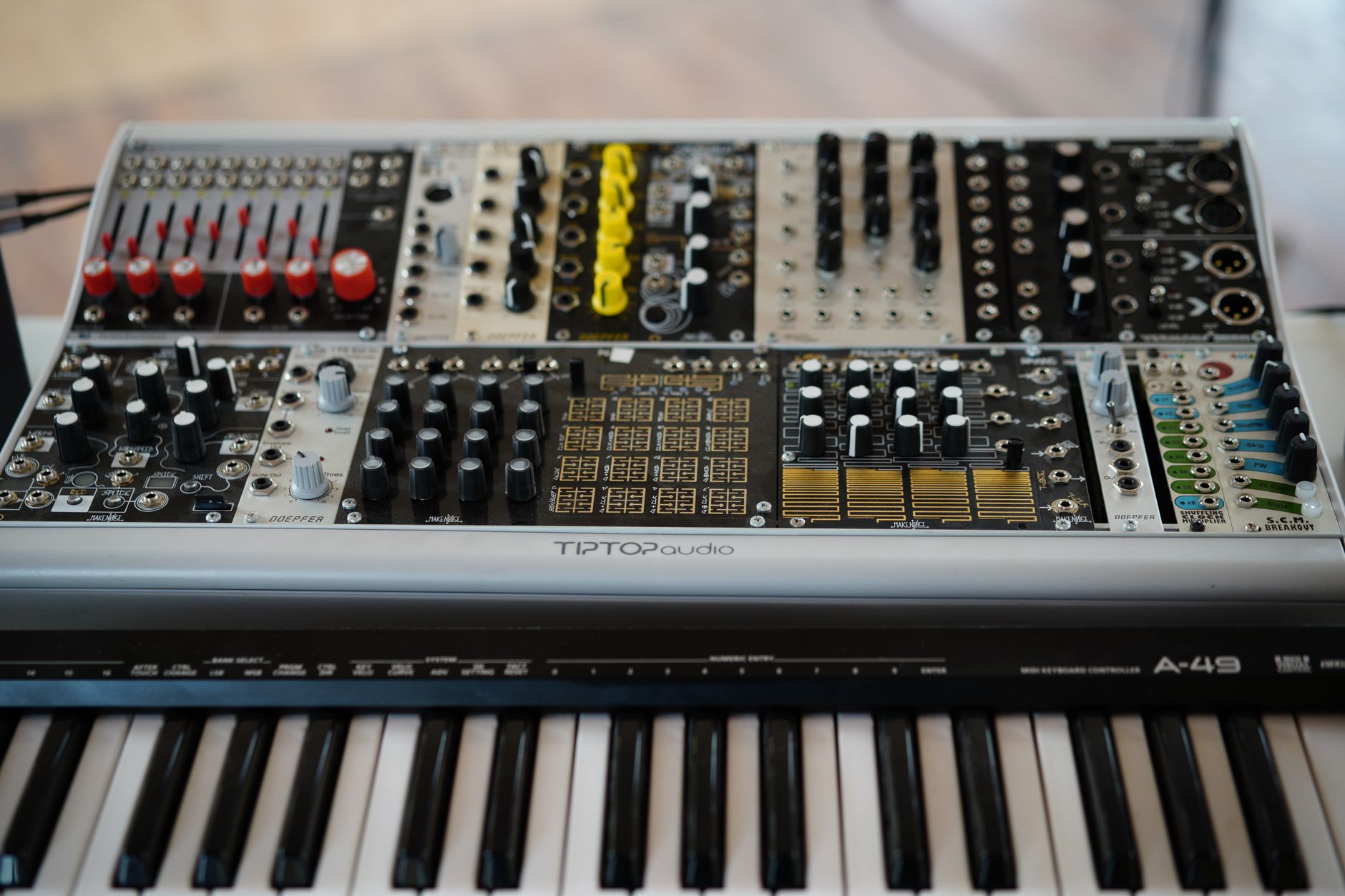
Suite adds Ableton instruments and effects that sit inside the DAW without plugin bridging, third-party authorisation, or separate update managers. Operator, Wavetable, Sampler, Hybrid Reverb, Spectral Resonator, and Max for Live devices can make sessions leaner.
That matters when you are moving fast. A sidechain ducking rack, a macro-controlled riser, or a MIDI tool that randomises hats inside scale can be saved into your default set. No window hunting. No licence pop-up during a client revision or late-night bounce.
When Suite is not worth it
If you already have a tight third-party setup and mostly record audio, Standard may be the sharper buy. A producer using external synths, a clean sample workflow, and a few trusted plugins may not touch half of Suite.
Do not pay for Suite because a preset browser feels comforting. Pay for it if the included devices replace paid plugins, reduce friction, or let you build repeatable racks for your own sound.
- Suite makes sense if Max for Live devices are part of your workflow.
- Suite is strong for producers who want fewer third-party plugin dependencies.
- Standard is enough if you already own the instruments and effects you trust.
- Suite’s value is speed and integration, not only library size.
- Presets alone are a weak reason to spend the extra money.

Myth: Ableton Live 11 Price Tells You the Live 12 Bill
The common belief is that old Live 11 prices are a reliable shortcut for budgeting Live 12. Search results, forum threads, and old screenshots can make that feel true.
It is not reliable enough. The working alternative is to treat Ableton Live 11 price references as historical context, then verify the current Live 12 store price, upgrade eligibility, and regional tax before deciding.
Old prices age badly
DAW prices change. Upgrade offers expire. Introductory launch discounts disappear. Regional taxes are added at checkout. A Reddit comment from the Live 11 era might be accurate for the person who posted it and useless for your cart.
Used licences can also complicate the math. Ableton allows licence transfers in many cases, but bundled, educational, or special licences may have conditions. A cheap second-hand offer is not a bargain if the licence cannot be transferred cleanly.
Use forums for friction, not final pricing
Searches like how much is Ableton Reddit are useful for one thing: hearing where real users felt limited. People complain when Intro blocks tracks, when Suite feels bloated, or when an upgrade seems poorly timed.
Do not use forum pricing as the number. Use it to spot the question you should ask before paying: did this producer need more tracks, more instruments, or simply more discipline?
- Check current Live 12 prices directly before buying.
- Treat Live 11 price screenshots as outdated budgeting clues.
- Verify tax, currency, and upgrade eligibility at checkout.
- Be careful with used licences that may have transfer limits.
- Use Reddit threads to learn common regrets, not exact prices.

Myth: FL Studio Being Cheaper Makes Ableton Bad Value
The common belief is that FL Studio wins because its headline pricing and lifetime free updates make Ableton look expensive. That argument is tempting, especially for bedroom producers counting every dollar.
It is still the wrong way to compare DAWs. The working alternative is to compare the cost of finishing your style of music in each tool. A cheaper DAW that fights your arrangement method is not cheaper in practice.
Cheaper is not the same as better for DJs
Ableton is unusually strong for DJs and producers who build tracks from audio: warping acapellas, stretching drum loops, chopping references, creating intro edits, and triggering scenes. If your work starts with audio clips, Session View and Warp markers can justify the price fast.
FL Studio is strong for pattern programming, piano roll work, and beat construction. If you think in patterns first, it can feel quicker. If you think in clips, stems, and live arrangement moves, Ableton often removes more friction.
The real comparison is workflow cost
Ask a harder question than sticker price: which DAW gets you from eight bars to a finished arrangement with fewer abandoned projects? That is where the money hides.
A producer who finishes one extra release because warping, routing, and arrangement are cleaner has gained more than the price difference between editions. A producer who buys Suite and still loops four bars for three months has not bought value. They bought a larger loop prison.
- Choose Ableton if audio warping and clip-based arrangement are central to your workflow.
- Choose FL Studio if pattern writing and piano roll programming feel faster to you.
- Do not compare DAWs only by headline price.
- Count abandoned projects as part of the cost.
- Buy the DAW that helps you finish, not the one that wins an argument.
Myth: Upgrade Prices Are Too Random to Plan Around
The common belief is that Ableton upgrade prices are unpredictable, so you might as well buy whatever is cheapest today. That belief creates messy upgrade paths and surprise costs.
The prices are variable, but the logic is not random. The working alternative is to plan around edition jumps, sale timing, and whether a major version adds something you will use in the next three months.
Ableton upgrade prices depend on your licence
Your upgrade offer depends on what you own. Moving from Lite to Intro, Intro to Standard, Standard to Suite, or Live 11 Suite to Live 12 Suite are different transactions. Ableton calculates the offer against your account and region.
This is why generic upgrade numbers online can mislead you. Two producers can see different checkout prices because one owns Lite from a controller bundle, another owns Intro, and another owns a previous Suite licence.
The upgrade test is simple
Upgrade when the new edition removes a repeated block in finished work. Not when the feature list looks long. Not when a discount countdown makes you nervous.
If you are exporting stems for mixing and constantly freezing tracks because your machine struggles, Suite will not magically fix CPU management. If you need Max for Live modulation, Sampler, and deeper sound design inside one project, the Suite jump can be rational.
- Log in to your Ableton account before trusting any upgrade number.
- Compare your current edition against the exact edition you want.
- Wait for a sale only if your current setup is not blocking paid work.
- Upgrade for repeated workflow limits, not curiosity.
- Keep old installers and project backups before changing major versions.
Myth: Buying Ableton Fixes the Track Faster Than Finishing One
The common belief is that the right Ableton edition will make a track feel professional. That is the most expensive myth here.
The working alternative is to buy the smallest edition that supports a repeatable finishing process. If that process is weak, Suite gives you more ways to avoid decisions. If the process is strong, Standard can finish serious records.
Set a buying test before the checkout page
Before buying or upgrading, build a realistic dummy session. Use 8 drum tracks, 2 bass tracks, 3 music tracks, 4 vocal or FX tracks, 2 returns, 1 reference track, and 1 print track. That is not extravagant for a club record.
If Intro cannot hold your basic structure, you already know the answer. If Standard holds it comfortably, Suite needs a stronger argument than wanting more presets.
Spend money where it removes friction
For a DJ edit, friction might be audio warping and clean export. For a vocal house track, it might be comping, tuning handoff, routing returns, and printing stems at -6 dB headroom. For a melodic techno track, it might be sound design racks and modulation.
Match the Ableton edition to that friction. Do not turn a DAW purchase into a personality test. The only result that matters is whether you finish more music with fewer avoidable stops.
- Build a realistic template before deciding on an edition.
- Use track count and routing needs as hard evidence.
- Do not mistake a larger library for better arrangement discipline.
- Keep at least -6 dB headroom in templates so bounces stay mix-ready.
- Upgrade only when the current edition blocks finished tracks.
| Edition | Typical US Price | Real Limitation | Best Fit |
|---|---|---|---|
| Live Lite | Usually bundled, not normally sold standalone | Tight feature and track limits | Testing Ableton workflow before spending |
| Live 12 Intro | $99 | Good entry price, but limited for full productions | Simple DJ edits, sketches, and learning |
| Live 12 Standard | $439 | No Suite instruments, packs, or Max for Live package | Full songs with your own plugins and samples |
| Live 12 Suite | $749 | Highest upfront cost | Integrated sound design, Max for Live, and deep in-the-box production |
| Upgrades | Varies by owned licence and region | Generic online prices can be wrong | Existing users moving between editions or major versions |
Worth a deeper read: Live 12 Suite.
Common questions
How much is ableton right now?
Ableton Live 12 typically costs $99 for Intro, $439 for Standard, and $749 for Suite in the US store. Live Lite is usually bundled with hardware or software rather than sold normally. Your final checkout price can change with region, tax, currency, sales, and upgrade eligibility.
Is Ableton Live a one-time payment?
Yes, Ableton Live is sold as a one-time licence through Ableton’s own store, not as a normal monthly subscription. You can keep using the version you bought. Future major upgrades may cost money, so budget for optional upgrades rather than a required monthly Ableton bill.
Is buying Ableton worth it?
Buying Ableton is worth it if its workflow matches how you make music. It is especially strong for audio warping, clip launching, DJ edits, electronic arrangements, and fast resampling. It is not worth paying for Suite if you only need basic recording or already own the instruments you use daily.
Is FL Studio or Ableton cheaper?
FL Studio can be cheaper over time because of its pricing structure and lifetime free updates. Ableton usually costs more upfront, especially Standard and Suite. The better buy depends on workflow: FL Studio favors pattern and piano roll writing, while Ableton excels at clips, audio warping, and performance-style arranging.
How much is Ableton per month?
Ableton does not require a standard monthly payment for Live. If you divide Live 12 Standard at $439 across a year, it works out to about $36.58 per month as a budgeting exercise, but that is not a subscription. Retailer financing may have different terms.
How much is Ableton Lite?
Ableton Live Lite is usually included with selected controllers, interfaces, apps, and other bundles. It is not commonly sold as a normal standalone edition. Treat Lite as a trial-sized production tool: useful for learning Live, but limited enough that serious arrangements often require Intro, Standard, or Suite.
Final thoughts
how much is ableton has a simple sticker-price answer and a more useful production answer. Intro is cheap, Lite is often bundled, Standard is the serious middle ground, and Suite is only worth the jump when its devices replace workarounds you hit every week.
The mistake is buying from fear: fear of missing features, fear of looking amateur, fear that a smaller edition means smaller music. Price the bottleneck instead. Build a realistic session template, count your tracks, check whether you need Max for Live or Suite instruments, then look at the current Ableton store price while logged in. Try that before your next session purchase decision, and you will know which edition supports finished tracks instead of just a fuller browser.
My Career makes videos from your own track and posts them for you, pitches your release to 34,000+ labels, playlists, radio stations, YouTube channels and blogs, puts it in every store and briefs you every morning. Free plan, no card, two minutes to set up.