Key takeaways
- ghost production covers catalog tracks, custom production and co-production, so define the job early.
- Rights, exclusivity, publishing and credit should be written down before payment.
- A useful brief includes BPM, references, arrangement needs and sounds to avoid.
- Stems, premasters and clean versions protect you after the first delivery.
- Red flags include no contract, no full preview, no stem plan and pressure to pay.
- The finished track should fit your DJ sets and artist direction, not just sound loud.
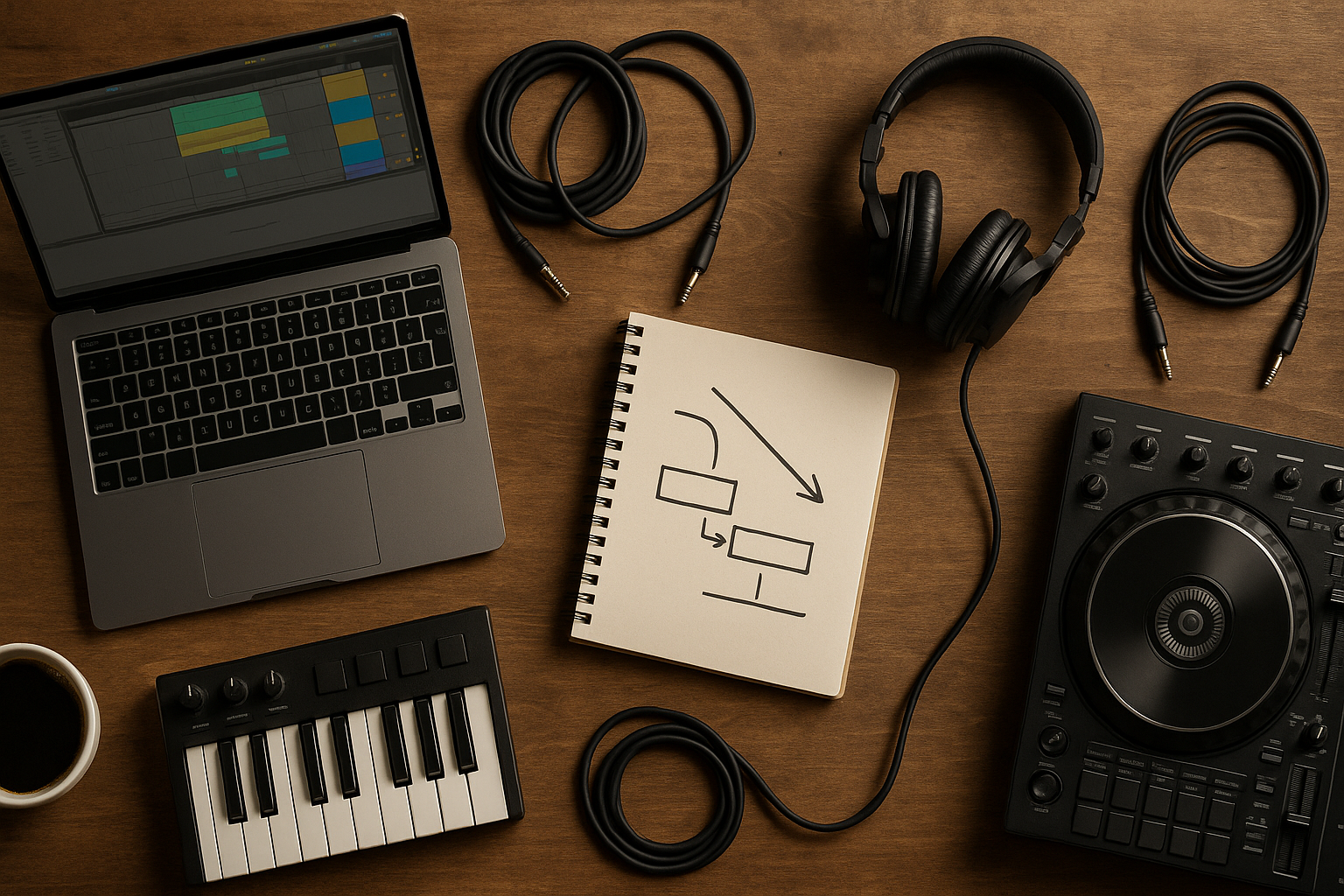
Ghost production is when a producer creates a track for another artist, usually without taking public credit. For DJs, bedroom producers and artists, ghost production can mean buying a finished club track, commissioning a custom record, or hiring someone to finish an idea that has been stuck in an Ableton Live project for months.
The trap is treating it like a random beat purchase. A serious ghost production deal covers rights, revisions, stems, references, mix quality, release plans and how much of your own taste ends up in the final file. A good producer will ask better questions than what genre do you want. They will want BPM, labels you like, vocal use, drop energy, arrangement length, and whether the track must survive on a CDJ-3000 at 2 a.m.
1. What Ghost Production Actually Means
Ghost production is not one fixed service, so define the job before you talk price. Some producers sell finished tracks from a catalog. Others build a custom record around your references, vocal hook, DJ identity or label target.
For an aspiring DJ, ghost production can fill a real gap. Maybe your mixing is solid but your drums never hit like a Toolroom or Drumcode release. Maybe you can write hooks but your low end folds on a club system. The useful version of ghost production solves that exact weak spot instead of pretending you suddenly made a polished record alone overnight.
Ghost Production Deliverables You Should Expect
A basic delivery should include a mastered WAV, an unmastered premaster with around -6 dB headroom, and MP3 reference files. For custom music production, ask for stems grouped cleanly: drums, bass, synths, vocals, FX and returns.
If the producer used Ableton Live, FL Studio or Logic Pro, project files may cost extra. That is normal. The full session can include paid plugins like Serum 2, FabFilter Pro-Q 4, Soothe2 or Kickstart 2, so the project may not open properly on your machine.
- Finished catalog track: fastest, least personal
- Custom track: slower, better fit for your artist name
- Co-production help: useful when your idea is strong but unfinished
- Mix and finish service: best when arrangement is already locked
2. Know the Rights Before Money Moves
The contract matters more than the bounce because rights decide what you can release, monetize and claim. A proper ghost production agreement should say who owns the master, who owns the composition, whether the producer keeps any publishing, and whether the track is exclusive.
Do not rely on vague chat screenshots. If a track gets label interest or a sync opportunity, weak paperwork turns into stress fast. A clean agreement lets you upload to Spotify, send to labels, register with your distributor and pitch with confidence.
Master Rights, Publishing and Public Credit
Exclusive ghost production usually means you control the master recording and release it under your artist name. Publishing is separate. If the producer wrote the melody, chords or vocal topline, the agreement should say whether those rights are transferred or split.
Public credit is another line item. Some ghost producers never want credit. Some accept private credit only. Some work as co-producers instead. Pick one before the track leaves the studio.
- Ask whether the track is exclusive or non-exclusive
- Confirm master ownership in writing
- Clarify publishing and composition rights
- Save invoices, contracts and final delivery emails
3. Pick Exclusive, Non-Exclusive or Custom
Exclusive is the serious option if you plan to release the track properly. Non-exclusive tracks are cheaper, but another artist may use the same instrumental, sometimes with small edits. That is fine for practice sets. It is weak for a launch single.
Custom music production costs more because the producer is building around your brief. Good custom ghost production should reflect your tempo range, DJ sets, reference labels and vocal taste. If you play melodic techno at 124 BPM, do not accept a generic festival EDM track at 128 BPM just because the drop sounds big on laptop speakers.
When Each Option Makes Sense
Use a non-exclusive track when you need a learning tool, a private edit, or something to test with dancers. Use exclusive ghost production when the record will carry your artist name in public. Use custom production when you need a track that matches your identity instead of a folder trend.
My take: if you are pitching labels, go exclusive or custom. The cheaper route can cost more later if the song feels anonymous.
- Non-exclusive: budget practice, limited identity
- Exclusive: release-ready ownership
- Custom: best match for artist direction
- Co-production: good when you want to learn while finishing
4. Bring a Brief a Producer Can Use
A tight brief gets you a better track than a long mood board full of random adjectives. The producer needs musical decisions, not vague words like dark, clean or punchy. Give BPM, key, reference tracks, drop timing and what you do not want.
For ghost production, three references are better than thirty. Pick one for drums, one for bass movement, and one for arrangement energy. If you want tech house, say whether you mean a dry 126 BPM club roller or a vocal-heavy Beatport Top 10 style record.
Reference Tracks Need a Job
Write notes like kick length similar to reference A, bass rhythm similar to reference B, breakdown tension similar to reference C. That beats sending a playlist and hoping the producer guesses right.
Also include practical details. Tell them if you want a 16-bar DJ intro, a short radio edit, a clean version, or a breakdown that leaves room for live MC work. Those choices affect the arrangement from bar one.
- Target BPM and key
- Three reference tracks with clear notes
- Preferred labels or playlists
- Vocal plan: original, sample, topline or instrumental
- Must-avoid sounds, genres and clichés
5. Check the Producer's Sound Like an A&R
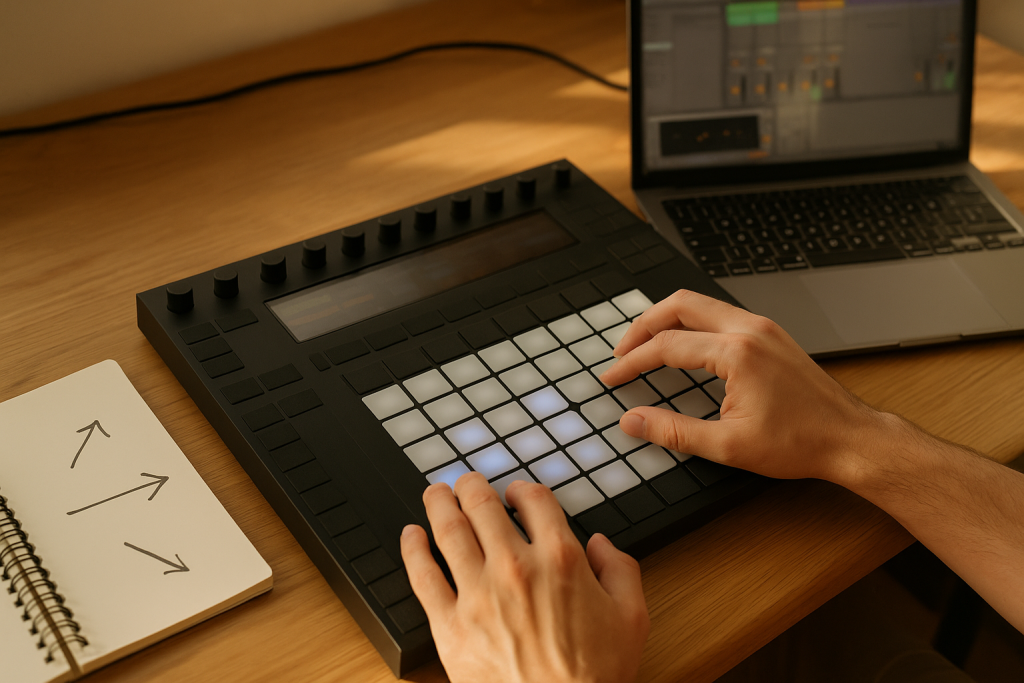
Judge the producer on finished records, not promises or plugin lists. A weak producer can name-drop FabFilter, Ozone, Serum 2 and Ableton Push 3 all day. The bounce still tells the truth.
When reviewing a ghost production portfolio, listen on more than AirPods. Use studio headphones, a car, small Bluetooth speakers and, if possible, a club-style setup. The low end should stay controlled. The vocal should sit without fighting the hats. The drop should not collapse when you turn it down.
What to Listen For in Demos
Skip the first impressive drop and check the boring details. Are the transitions smooth every 4 or 8 bars? Does the kick mask the bass? Is the stereo width useful, or are the sides full of messy reverb?
A real producer makes choices. For example, they may cut a bass layer around 220 Hz, sidechain duck the pad by 3 dB, and keep the vocal delay mostly in the sides with mid/side EQ. That is craft, not decoration.
- Check kick and bass translation at low volume
- Listen for clean 4-bar and 8-bar phrasing
- Compare against a released reference track
- Avoid portfolios with only short loud snippets

6. Ask for Stems, Project Files and Clean Versions
Stems protect your release after the first master is done. If a label asks for a shorter intro, a radio edit, a vocal-up mix or an instrumental, stems make the request manageable.
In ghost production, stems are also proof of organization. You should receive files labeled by musical role, exported from the same start point, usually 24-bit WAV at 44.1 or 48 kHz. If every file starts at a different bar, your remix engineer will hate you.
Stems Versus Multitracks
Stems are grouped audio bounces. Multitracks are the individual channels, such as kick, clap, closed hat, bass sub, bass mid, lead, pad and FX riser. Stems are enough for most release edits. Multitracks are better for full remixing or a detailed mix pass.
Project files are useful if you want to study the arrangement, but only if you own the right plugins. An Ableton project using third-party synths will not magically open with every sound intact.
- Mastered WAV and MP3 reference
- Unmastered premaster with safe headroom
- Grouped stems from bar one
- Instrumental, extended and clean versions when needed
- Project file only if agreed before payment
7. Budget for Mix, Master and Revisions
The cheapest quote often hides the cost in revisions, mastering or missing files. Before paying for ghost production, ask exactly how many revisions are included and what counts as a revision.
A kick swap is small. Rebuilding the track from melodic techno into Afro house is a new brief. Good producers set boundaries because endless changes kill momentum and usually make the record worse. Two focused revision rounds are often enough if your brief was clear.
Where the Money Usually Goes
Custom music production includes writing, arrangement, sound design, mixing and mastering time. A vocal track may add session singer fees, topline writing, tuning, comping and extra mix passes.
Mastering should not be a mystery button. Ask for a club master that keeps punch, not just loudness. For dance music, I would rather have a master peaking cleanly around -1 dBTP with solid low end than a crushed file that looks loud and feels flat.
- Confirm revision count before payment
- Ask whether mastering is included
- Budget extra for vocals and toplines
- Keep one reference master for comparison
8. Avoid the Red Flags That Waste Time
If the seller dodges rights, stems or references, walk away. A professional ghost production service can explain what you get, when you get it, and what you own. Confusion is not a vibe. It is a risk.
Be careful with producers who promise a label-ready hit in 24 hours for a tiny fee. Fast delivery can happen with catalog tracks, but proper custom work needs feedback time. Arrangement, mix balance and revisions do not respect wishful deadlines.
Bad Signs Before You Pay
The biggest warning sign is pressure. If someone rushes you to pay before answering rights questions, keep your card in your pocket. Another bad sign is no full-length audio preview. A 20-second drop clip hides weak breakdowns, clumsy transitions and poor mix translation.
Also watch for fake scarcity. If every track is apparently almost sold, nothing is special. Serious ghost production sounds specific, not copy-pasted from a template pack.
- No written rights agreement
- No full-length preview
- No clear revision policy
- No stem delivery details
- Pressure to pay before questions are answered

9. Keep Your Artist Identity Intact
The best outside production still sounds like it belongs in your set. If the track clashes with your DJ style, it will feel fake even if the mix is clean. Ghost production should sharpen your direction, not replace it with someone else’s taste.
Send the producer clips from your mixes, not just famous references. A 30-minute club recording tells them how you build energy, where you like vocals, and whether your sets lean percussive, melodic, raw or polished.
Make the Track Useful on Stage
Think like a DJ while approving the arrangement. Does the intro mix cleanly over another track? Are the first 32 bars too crowded? Can you loop the outro on a CDJ-3000 without a crash cymbal smashing every two bars?
Good ghost production should give you a record you can play confidently, send to labels, and build around in future sessions. If the track teaches you nothing about your own sound, you bought a mask.
- Share your DJ mixes and past demos
- Approve arrangement with club mixing in mind
- Keep signature sounds consistent across releases
- Use the finished track as a reference for your next session
| Option | Best fit | Rights position | Main risk |
|---|---|---|---|
| Non-exclusive catalog track | Practice sets, low-budget content, private testing | Shared or limited usage | Another artist may use the same track |
| Exclusive catalog track | Fast release under your artist name | Usually master transfer or exclusive license | May not fit your sound perfectly |
| Custom ghost production | Artist identity, label pitching, long-term direction | Defined by contract | Needs a clear brief and revision control |
| Co-production | Learning while finishing your own idea | Split depends on contribution | Credit and publishing must be agreed early |
Further reading
- Ableton Live — Official Ableton page for a widely used DAW referenced in production workflows and project delivery.
- Sound On Sound techniques — Long-running professional audio publication with detailed, reputable mixing and production education.
Frequently asked questions
What is ghost production in music?
ghost production is when a producer creates music for another artist who releases it under their own name. It can be a finished catalog track, a custom production, or help finishing an existing demo. The key details are rights, credit, deliverables and whether the track is exclusive.
Is ghost production legal?
Yes, ghost production is legal when both sides agree on the terms. The agreement should cover master ownership, publishing, payment, credit, exclusivity and delivery files. Problems usually start when artists buy tracks without a written license or assume ownership that was never transferred.
How much does a ghost producer cost?
Pricing varies by producer, genre, exclusivity and complexity. A non-exclusive track is usually cheaper than a custom record. Vocals, stems, project files, extra revisions and rush delivery can raise the cost. Judge the quote against the producer’s finished work, not just the number.
Can I release a ghost produced track on Spotify?
You can release it if your license or contract allows distribution under your artist name. Before uploading, confirm that you own or can use the master, composition, samples and vocals. Keep the agreement and invoice in case your distributor, label or publisher asks for proof later.
Should I ask for stems from a ghost producer?
Yes. Stems make edits, radio versions, label changes and future remixes much easier. Ask for grouped 24-bit WAV stems exported from bar one. At minimum, get drums, bass, synths, vocals, FX and returns, plus mastered and unmastered versions of the full track.
Is using a ghost producer bad for an artist?
It depends on how you use it. Hiring help to finish strong music is normal across the industry. The weak move is building an artist identity you cannot support live, creatively or professionally. Use outside production to sharpen your sound, not fake a whole personality.
Conclusion
ghost production works best when you treat it like a professional music project, not a shortcut. Define the rights. Bring a tight brief. Check the producer’s full tracks. Ask for stems. Keep your own DJ identity in the room from the first reference to the final master.
The goal is not to collect random polished records. The goal is to build releases you can stand behind, play in a set, pitch with confidence and learn from. Before your next session, write a one-page brief with BPM, three references, delivery needs and rights questions. If that page is clear, the whole process gets cleaner.
My Career makes videos from your own track and posts them for you, pitches your release to 34,000+ labels, playlists, radio stations, YouTube channels and blogs, puts it in every store and briefs you every morning. Free plan, no card, two minutes to set up.