Key takeaways
- Human custom production wins for finished releases, ghost production, and tracks that need clean ownership.
- Suno and Udio are useful for fast vocal moods and rough song sketches, but weak for final mix control.
- LANDR Composer is the best machine option for producers who want editable starting points.
- Club arrangement still needs human judgment, especially for intros, drops, transitions, and low-end movement.
- For serious artists, stems, rights, revisions, and mix translation matter more than instant speed.
Ai music production can spit out a convincing sketch fast, but it still falls apart when the brief needs club taste, clean rights, and a mix that survives a CDJ-3000 at 2 a.m. ai music production is not useless, though. I use machine tools for rough hooks, lyric sparks, and throwaway arrangement tests. I would not hand one a paid artist brief and expect release-ready work.
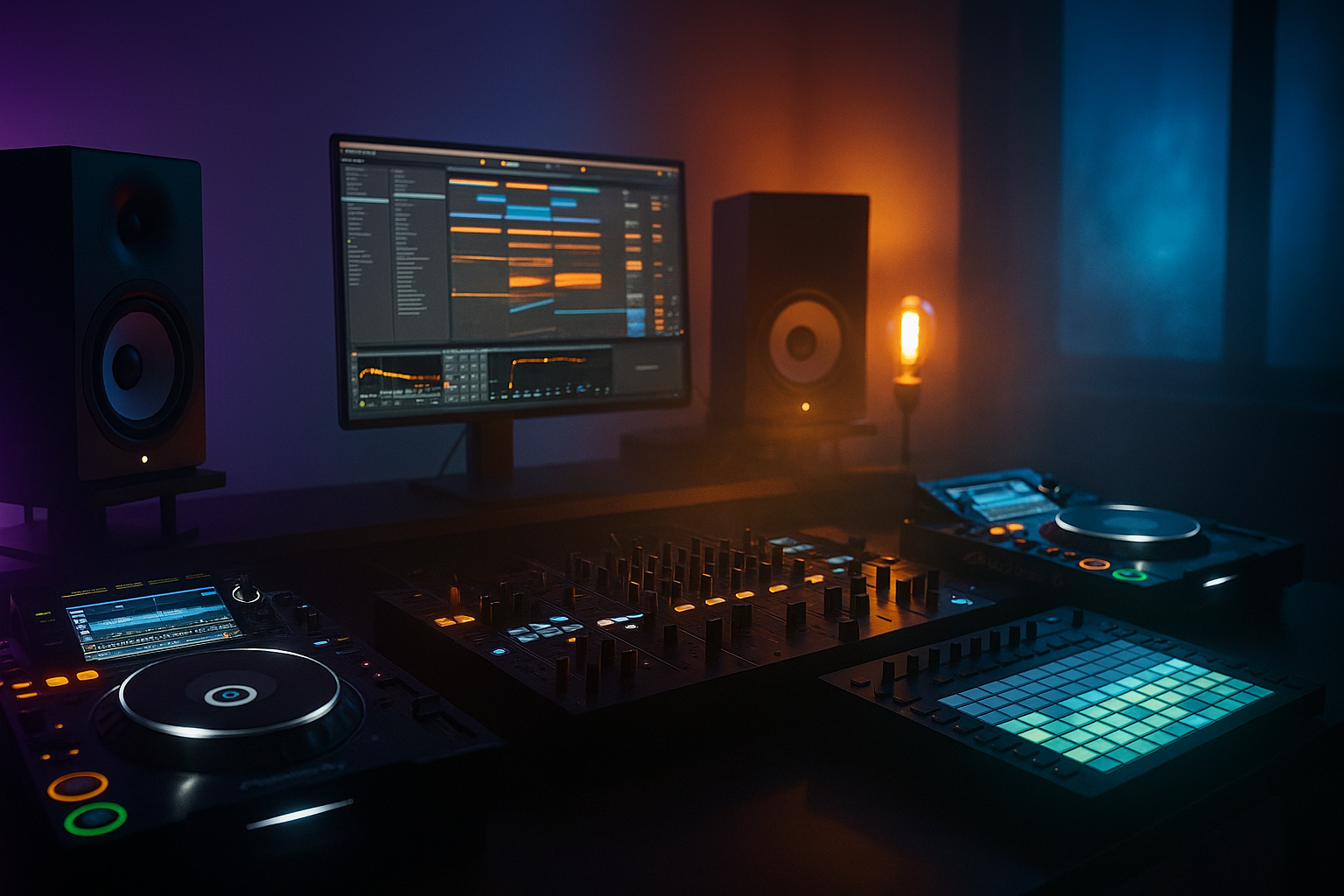
So this is a head-to-head: Suno, Udio, LANDR Composer, and a human custom production workflow built around Ableton Live 12, Serum 2, FabFilter Pro-Q 4, Soothe2, and actual reference checking. The question is not which side sounds shinier after one prompt. The question is which option gets a DJ, bedroom producer, or artist to a track they can release, pitch, own, and play without apologizing for it.
Where ai music production Wins and Loses
The fair way to judge this fight is by jobs, not slogans. Suno and Udio are strong at instant sketches. LANDR Composer is better as a writing assistant inside a broader production setup. A human producer is slower at the first blank-page moment, but better once taste, structure, mix translation, and ownership enter the room.
That matters for ghost production and custom music production. A 30-second idea is not a finished club record. A finished club record has intro length, DJ-friendly phrasing, low-end discipline, mix headroom, and a hook that still works after 40 listens.
The Machine Options: Suno, Udio, and LANDR Composer
Suno and Udio are the fastest here. Type a mood, genre, and vocal idea, then you get something that feels like a record sketch. Sometimes the chorus lands. Sometimes the drums sound like a karaoke backing track wearing expensive shoes.
LANDR Composer is less flashy, but more useful for producers who already work in Ableton Live 12, FL Studio, or Logic Pro. It helps with chords, melodies, and variations rather than pretending to be the whole producer. That restraint is a point in its favor.
The Human Option: Ableton Live 12 and Real Taste
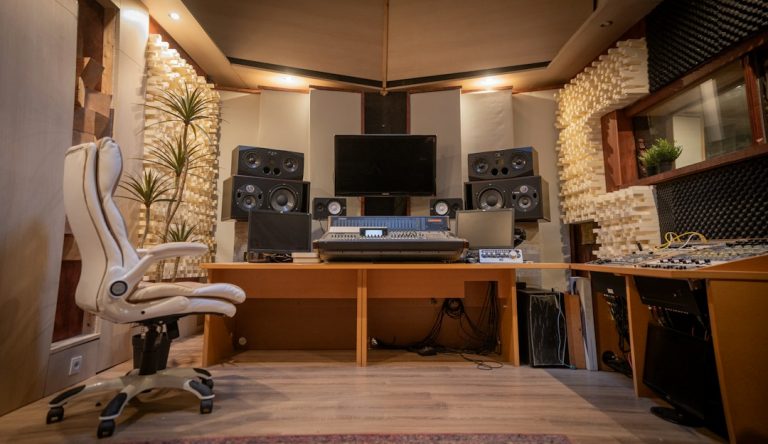
A human producer using Ableton Live 12, Push 3, Serum 2, Kick 3, Decapitator, Pro-Q 4, and Metric AB will not always beat the machine in the first five minutes. After two hours, the gap opens. Humans make ugly but useful decisions: cut the second pre-drop, tune the kick tail, mute the clever pad that ruins the vocal, and leave -6 dB of headroom for mastering.
That is where ai music production starts losing points. It can imitate a style, but it does not know why a tech house bassline needs to duck 3 dB under the kick instead of 8 dB.
- Suno wins at instant full-song sketches.
- Udio often gives stronger vocal-style ideas.
- LANDR Composer fits better inside a real DAW workflow.
- Human production wins on arrangement, mix translation, and release control.
- For paid custom work, taste beats speed.
Round One: Briefs, Taste, and References
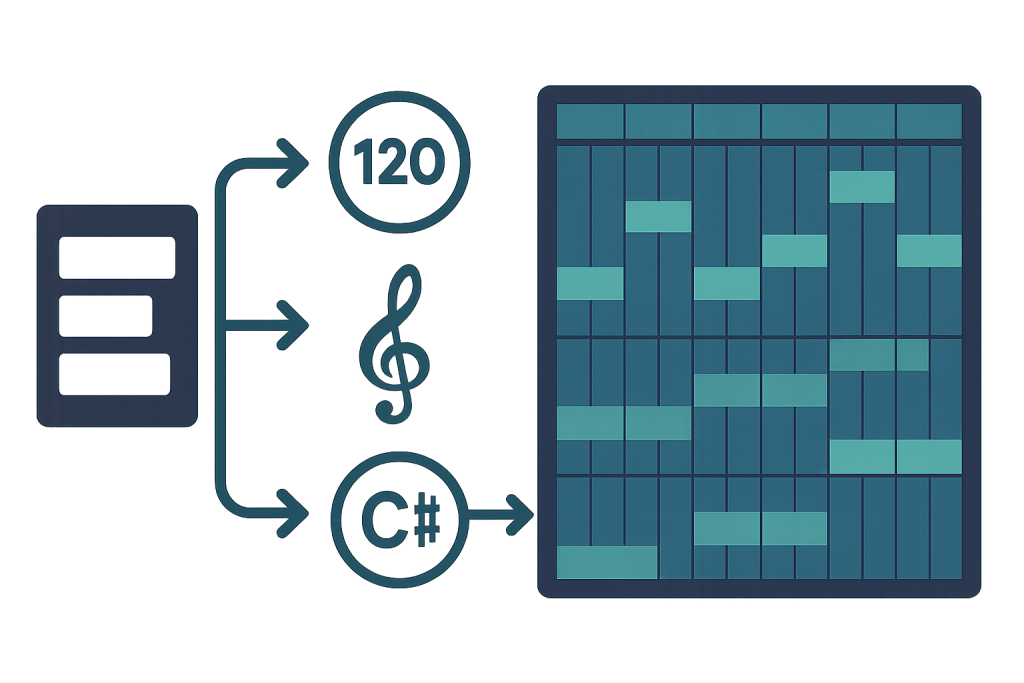
A brief is where the shootout gets uncomfortable. A weak brief says make it like Anyma meets John Summit with emotion. A useful brief says 124 BPM, A minor, 16-bar DJ intro, vocal chop hook, no supersaw drop, reference low-end from Dom Dolla, and a darker break like CamelPhat.
ai music production can react to the first kind. A good human producer can interrogate the second kind.
How ai music production Reads a Brief
Suno and Udio are literal. If you ask for melodic house with a moody vocal, they will usually give you a moody vocal and a four-on-the-floor pulse. The problem is the middle detail. Ask for a restrained groove with a 4-bar call-and-response bass phrase and the result can still feel like a generic trailer for a club track.
The tools also struggle with negative instructions. No cheesy EDM snare roll does not always mean no cheesy EDM snare roll. I dock points hard for that because clients often define a brief by what they hate.
How a Human Producer Reads a Brief
A human producer hears the references under the words. If an artist says they want a Fred again.. emotional feel but also wants a harder warehouse drop, the real job is translation. Maybe that means a chopped vocal texture, a dry 909 rim, a Reese bass tucked under 120 Hz, and a break that leaves space instead of stacking seven pads.
Humans also push back. If the reference track is mastered at -5 LUFS but the artist wants a warm vocal sitting upfront, someone needs to explain the trade-off before the mix collapses.
- Use BPM, key, references, and structure in every brief.
- Name what you dislike, not only what you want.
- Ask for 4-bar and 8-bar arrangement notes, not just mood words.
- Check whether the first demo follows the brief or only the genre label.

Round Two: Arrangement and Club Function
Arrangement separates a listenable sketch from a track a DJ can actually mix. Bedroom producers often underrate this. Club music is physical logistics: when the kick enters, when the vocal exits, how long the intro runs, and whether the drop gives the floor a clear reason to stay locked.
This is where ai music production sounds most impressive on headphones and most suspect on decks.
How the Machine Builds the Track
Suno and Udio tend to think like song machines, not DJs. They chase verse, hook, lift, and finish. That can work for pop-leaning dance music, but it often misses DJ intro and outro discipline. Try mixing one of those exports after a 32-bar intro from a Rekordbox playlist and you will feel the problem fast.
LANDR Composer is better here because it does not force a final arrangement. You can pull a chord idea into Ableton, build your own 16-bar intro, add a 1-bar reverse crash, then keep the first drop lean enough for a club system.
How Humans Build the Track
A human producer thinks in phrases. Eight bars for the first drum layer. Sixteen bars before the bass gives away the full pattern. A 4-bar vocal tease before the break. A 2-beat silence before the second drop if the groove earns it.
That sounds basic until you compare it with machine-made sections that change because they feel bored, not because the floor needs a lift. ai music production still has a habit of over-arranging. Humans are better at deleting.
- For tech house, start with a 16 or 32-bar DJ intro.
- Keep the first drop simpler than the second drop.
- Use 4-bar phrases for fills, reverses, and vocal answers.
- Check transitions on CDJ-3000 style cue points, not only in the DAW.
- Mute one musical layer before adding another.

Round Three: Sound Design, Mix Decisions, and Mastering
Now we get to the part where hype dies. A track can have a decent topline and still fail because the kick and bass fight at 55 Hz, the vocal hisses through 7 kHz, or the stereo bass makes the limiter choke.
Good mixing is not polish sprinkled at the end. It is thousands of small decisions made while producing.
How ai music production Handles Mix Polish
ai music production often produces a flattened, already-baked sound. That is convenient if you only need a demo. It is painful if you need stems. When the vocal, snare, synth bus, and room smear are glued together, you cannot open Pro-Q 4 and cut 220 Hz from only the muddy layer.
The machine can sound loud, but loud is cheap. The better test is whether the kick transient stays clean after limiting, whether mono playback keeps the bass centered, and whether the hi-hats survive without slicing your ears at club volume.
How Human Producers Handle Mix Polish
A human producer can fix problems at the source. Kick too long? Shorten the tail in Kick 3. Bass masking the vocal body? Cut 180 to 250 Hz with Pro-Q 4, then automate the bass filter in the pre-chorus. Harsh vocal resonance? Soothe2 can catch 3.5 kHz without making the singer sound like a blanket.
For EDM and house, sidechain ducking is not optional decoration. I want the kick to move the bass musically, usually 2 to 5 dB of gain reduction depending on genre. ai music production gives you the sound of sidechain. A human decides the groove of it.
- Keep sub-bass mono below 120 Hz.
- Leave around -6 dB peak headroom before mastering.
- Check harshness around 2.5 to 5 kHz before blaming the master.
- Use parallel compression on drums when the groove needs density.
- Reference against released tracks with Metric AB, not memory.
Round Four: Rights, Originality, and Ghost Production Risk
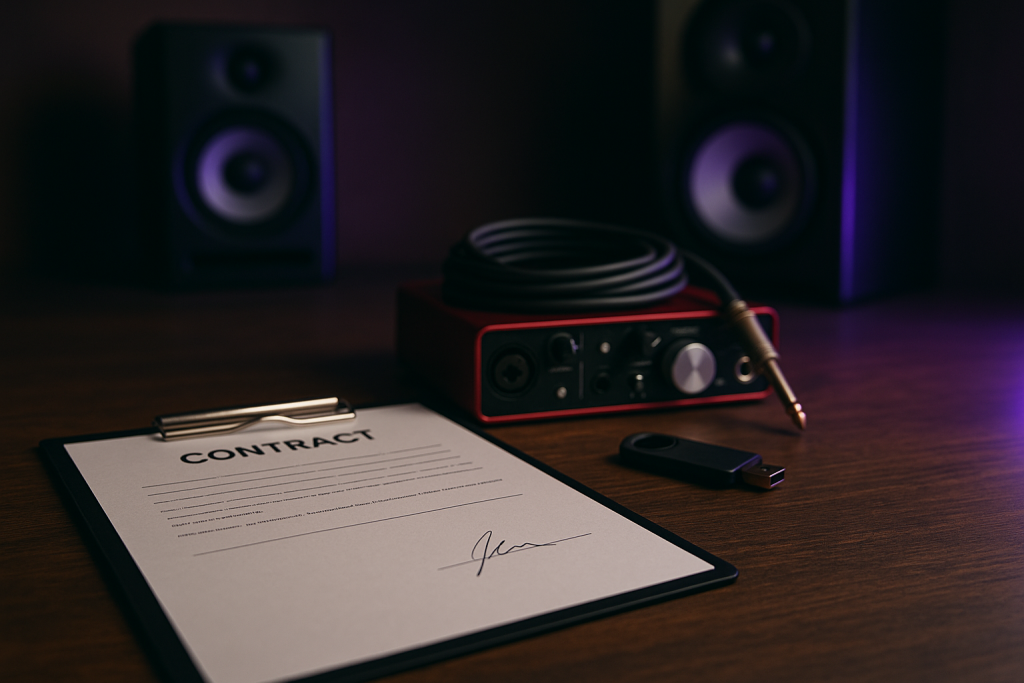
For artists looking at ghost production or custom music production services, rights are not admin fluff. They decide whether you can release, monetize, pitch to labels, and sleep after the track starts moving.
ai music production raises more questions here than it answers. That does not mean every machine-assisted idea is unusable. It means you need tighter quality control than most beginners expect.
How ai music production Affects Ownership
The big risk is not only legal. It is sameness. If thousands of users can ask for a similar mood, genre, vocal tone, and drop shape, you may get something that feels yours for one afternoon and anonymous by the next morning.
Stems are another issue. If you cannot get clean separated drums, bass, music, and vocal parts, remixing and proper mix repair become limited. That is a bad place to be if a label asks for an instrumental, extended mix, or clean radio version.
How Custom Human Production Handles Rights
A serious human workflow starts with an agreement: who owns the master, who owns the composition, whether the producer keeps any publishing, whether the vocalist is cleared, and whether the track is exclusive. No vague handshake. No mystery samples from a dusty pack with unknown licensing.
Originality is also easier to steer. A producer can replace a Serum 2 preset, resample a vocal chop, replay a bassline, or rebuild a drum groove until it sits away from the reference. That is the boring work that protects a release.
- Ask for master and publishing terms before production starts.
- Confirm whether vocals and samples are cleared for commercial release.
- Request stems, an instrumental, and an extended mix when relevant.
- Avoid tracks that sound too close to one reference record.
- Keep project files organized if future edits are likely.

Verdict: Who Should Pick Which Workflow
I am not calling this a tie. For finished releases, custom human production wins. For sketching, lyric sparks, and mood boards, machine tools are useful. That is the line.
If your goal is to post a rough idea, ai music production is fast and fun. If your goal is a track with your name on it, clean rights, and a mix that can sit near commercial references, do not hand the whole job to a prompt box.
Pick Suno, Udio, or LANDR Composer If
Use Suno or Udio when you need to test a vocal concept, mood, or topline direction before spending real studio time. Use LANDR Composer when you already produce and want chord or melody prompts that you can rewrite inside Ableton Live 12 or FL Studio.
Do not treat the output as sacred. Bounce the idea, steal the useful direction, then rebuild. The best use of ai music production is as a sketchpad, not as the final painter.
- Suno: best for fast song-shaped demos.
- Udio: strongest for vocal-style inspiration.
- LANDR Composer: best for producers who want editable musical starting points.
Pick a Human Producer If
Pick a human producer when money, rights, branding, and release quality matter. That includes artist singles, DJ exclusives, label demos, sync pitches, and custom tracks built around your vocal or stage identity.
A human can hear that your drop needs less melody, not more. A human can make a bassline talk to the kick instead of smothering it. A human can send stems, revisions, alternate mixes, and a clear paper trail. That wins the shootout for serious releases.
- Use machine tools for ideas, not final masters.
- Use human production for paid releases and custom artist identity.
- LANDR Composer is the most producer-friendly machine option here.
- Suno and Udio are better as reference generators than replacement producers.
- For ghost production, rights and revisions decide the real value.
| Option | Best Use | Where It Fails | Score |
|---|---|---|---|
| Suno | Fast full-song sketches, vocal mood tests, rough topline direction | Weak stem control, generic arrangement choices, risky for final release identity | 6/10 |
| Udio | Vocal-style inspiration, chorus ideas, lyric and genre experiments | Can overcook structure and produce mixes that are hard to repair | 6.5/10 |
| LANDR Composer | Chord, melody, and variation prompts inside a real DAW workflow | Needs a producer to turn ideas into a finished, mixed record | 7/10 |
| Human producer in Ableton Live 12 | Custom tracks, ghost production, stems, revisions, club arrangement | Slower and more expensive than instant machine sketches | 9/10 |
| Hybrid workflow | Using machine sketches for mood, then rebuilding with human production | Only works if the human producer is ruthless about replacing weak parts | 8/10 |
Further reading
- Ableton Live 12 — Official product source for the DAW workflow referenced throughout the comparison.
- Sound On Sound techniques — Long-running professional recording and production publication with detailed mixing and studio technique coverage.
Frequently asked questions
Is ai music production good enough for a DJ release?
ai music production can create a strong demo, but I would not rely on it alone for a serious DJ release. The weak points are stem control, arrangement discipline, mix repair, and ownership clarity. Use it for ideas, then rebuild and finish the record properly.
Can labels tell if a track was made with machine tools?
Sometimes, yes. The giveaway is usually not one sound. It is the combination of generic structure, odd vocal phrasing, smeared mix detail, and weak low-end control. A label may not care how the first idea started, but they will care if the final track feels anonymous.
Are Suno and Udio better than hiring a ghost producer?
For throwaway ideas, they are cheaper and faster. For a release with clean rights, revisions, stems, and an artist-specific sound, a ghost producer wins. Suno and Udio can suggest a direction. They do not replace arrangement taste, mix decisions, and accountability.
What should I ask for when buying custom music production?
Ask for ownership terms, commercial-use clearance, stems, instrumental versions, revision limits, delivery format, and whether the track is exclusive. You should also provide references with BPM, key, structure notes, and mix targets instead of only naming artists you like.
Can I use machine-made ideas in Ableton or FL Studio?
Yes, but treat them as references, not finished parts. Pull the chord mood, vocal rhythm, or arrangement idea into Ableton Live 12 or FL Studio, then replay, resample, edit, and mix from scratch where possible. That gives you more control and a more personal result.
What is the best workflow for a bedroom producer on a budget?
Use LANDR Composer or similar tools for chord and melody starts, then build the track yourself in your DAW. Spend your budget on a proper mix review, vocal editing, or final master rather than paying for endless idea tools. Finish fewer tracks, but finish them properly.
Conclusion
ai music production belongs in the studio, but it should not run the session. Use Suno and Udio when you need a rough vocal mood or a fast writing prompt. Use LANDR Composer when you want chords and melodies that can be rebuilt inside your DAW. For a release that needs identity, clean rights, DJ-friendly structure, and a mix that holds up beside commercial references, pick a human producer.
My call is simple: machines are sketchpads, humans are finishers. Try this in your next session: generate one rough idea, rebuild the hook from scratch in Ableton or FL Studio, then compare it against two released references before you touch the limiter.
Ai music production — Quick Recap
The fastest way to lock in ai music production is to internalise the workflow above and repeat it on every project. Start small: pick one technique from this ai music production guide, apply it to your next session, and audit the result against a reference track.
- Human custom production wins for finished releases, ghost production, and tracks that need clean ownership.
- Suno and Udio are useful for fast vocal moods and rough song sketches, but weak for final mix control.
- LANDR Composer is the best machine option for producers who want editable starting points.
- Club arrangement still needs human judgment, especially for intros, drops, transitions, and low-end movement.
Treat ai music production as a habit, not a one-off — the producers who consistently nail ai music production are the ones who run the same checks on every track. That’s the difference between a clean, club-ready master and a track that sounds great at home but falls apart on a real system.
In a real studio session, ai music production comes down to the order in which you make decisions: reference first, gain stage second, then the creative work. Producers who treat ai music production as a checklist instead of a vibe end up shipping more tracks.
Most producers and DJs undervalue ai music production because the wins are invisible until the track plays back on a real system. Bake ai music production into your template and the next ten projects benefit automatically.
When you struggle with ai music production, the fix is rarely a new plugin. Loop a problem section, A/B against a reference, and isolate which element is breaking your ai music production.
Treat ai music production as a craft, not a chore. The producers releasing on the biggest labels lock ai music production in early so they can spend their energy on melody and arrangement instead of fighting the mix.
Document your ai music production process — even a short note in the project file. Future-you will rebuild the same ai music production win in half the time.
My Career makes videos from your own track and posts them for you, pitches your release to 34,000+ labels, playlists, radio stations, YouTube channels and blogs, puts it in every store and briefs you every morning. Free plan, no card, two minutes to set up.