Key takeaways
- AI tools are strongest at early sketches, variations, and reference planning.
- Human producers still make the critical calls on arrangement, low end, vocals, and rights.
- The textbook answer is often wrong once the track hits a club system.
- Clean briefs save more time than clever tools.
- For custom or ghost-produced records, written ownership and sample notes are not optional.
- A hybrid workflow works best when AI output is checked like any other raw source.
Ai music production is useful until the track has to survive a PA, a label inbox, and a DJ transition at 2:13.
That is the line. ai music production helps with sketches, chord options, lyric variants, drum patterns, and reference matching. It does not replace taste, monitoring, arrangement discipline, legal judgment, or the last 15 percent of mix work. The argument around ai music production is usually framed as machine versus human. That framing is lazy. The better question is simpler: which tasks can be delegated without damaging the record?
This matters if you are an aspiring DJ, a bedroom producer, or an artist looking at ghost production or custom music production. You do not need slogans. You need a workflow that gets from idea to 24-bit WAV without phase junk, muddy low mids, and ownership confusion.
Where ai music production Actually Helps
ai music production is good at generating options. That is not a small thing. A blank Ableton Live 12 set at 124 BPM can waste two hours before the kick even lands in the right place. A machine can throw out eight chord loops, twelve topline shapes, and a folder of drum one-shots in less time than it takes to patch Serum 2 from scratch.
Use it there. Early. Before ego enters the room.
Fast sketches, not finished masters
The safe use case is the sketch stage: chord progressions, MIDI motifs, alternate bass rhythms, vocal phrasing prompts, and reference-map notes. If ai music production gives you a 4-bar synth idea at 126 BPM, print it to audio, name it properly, and move on. Do not fall in love with the first pass.
I would cap machine sketching at 30 minutes per idea. After that, you are not producing. You are browsing.
Where ai music production fails first
The failure points are boring and consistent: kick-to-bass phase, low-mid masking from 180 to 350 Hz, transient shape, vocal sibilance, and arrangement pacing. A generated bass may look fine on a piano roll. Then it hits a club limiter and folds into the kick.
The textbook answer says use more data and better prompts. Wrong in practice. You need monitoring, reference tracks, and a producer willing to delete half the loop.
- Use machine output for options, not judgment.
- Print useful MIDI to audio before editing hard.
- Check every low-end idea in mono below 120 Hz.
- Keep -6 dB peak headroom before mix processing.
- Reject loops that only work for 4 bars.
Machine Speed Versus Human Arrangement
Speed is real. ai music production can produce rough material quickly. That does not mean it understands why a DJ needs a clean 16-bar intro, why the pre-drop should not waste 12 seconds, or why the second breakdown needs less information than the first.
Club arrangement is mechanical. Phrases are usually 4, 8, 16, or 32 bars. The crowd does not care how the loop was made. It cares whether the energy lands on the grid.
Arrangement under pressure
A human producer hears when a record is too polite. At 124 BPM, a 32-bar breakdown lasts about 62 seconds. That is a long time if the vocal says nothing and the pad has no harmonic movement. ai music production often fills space instead of creating pressure.
Good arrangement removes. Eight bars of filtered drums can do more work than a new arpeggio, a riser, and three impact samples stacked at -9 dB.
The export problem
Artists buying custom music need more than a stereo demo. They need clean stems: kick, bass, drums, music, FX, lead, backing vocals, and sometimes dry vocal comps. Ideally 24-bit, 44.1 or 48 kHz, same start point, no normalisation, no limiter unless printed as a separate reference.
Most rough machine-assisted workflows become messy here. File discipline is still human labour.
- Write intros that DJs can mix, usually 16 or 32 bars.
- Leave eight clean bars before the first hook when the genre allows it.
- Print stems from bar 1, beat 1, even if audio starts later.
- Export a limited reference and an unlimited mix separately.
- Label BPM and key in every delivery folder.

Sound Quality: The Meter Does Not Care Who Made It
ai music production does not hear a bad room. Neither does a beginner with KRK Rokit 5 monitors pushed into a wall. The difference is that a human can learn the room, compare references, and make smaller decisions after the first mistake.
Sound quality is not a vibe. It is gain staging, frequency balance, dynamics, stereo control, and translation.
The 220 Hz test
Most amateur dance mixes fail between 180 and 300 Hz. Kick body, bass harmonics, low piano, toms, and reverb tails all collect there. Cut 2 to 4 dB around 220 Hz on the wrong bus and the record clears up. Cut it on the wrong element and the drop loses weight.
That is where a human mix engineer earns the chair. FabFilter Pro-Q 4 in mid/side mode is useful. Taste decides where it goes.
Timing and dynamics
Sidechain ducking is not just a pump setting. For a house record at 124 BPM, a 40 to 80 ms release may sit tight. For slower melodic material at 118 BPM, 120 ms can breathe better. The preset is usually wrong.
Parallel compression on drums can work at 4:1 with 10 ms attack and 100 ms release, blended around -12 dB under the dry kit. If it flattens the clap, mute it.
- Check mono compatibility below 120 Hz.
- High-pass non-bass elements only when the filter improves the mix.
- Use Soothe2 lightly on harsh vocals, not as a personality remover.
- Leave true peak safety for mastering, usually below -1.0 dBTP.
- Reference on headphones, monitors, and one poor speaker.

How to Brief ai music production and Human Producers
A bad brief wastes money. A vague brief wastes more. ai music production takes vague input literally, and human producers are not mind readers. If the target is a tech house record at 126 BPM with a dry vocal chop and a rolling bass, say that. If the target is melodic house at 122 BPM with a long pad tail, say that too.
The brief should be dull. Dull briefs make finished records easier.
Spec the boring data
For ai music production or a human commission, write down BPM, key, genre, reference tracks, vocal status, target length, stem requirements, and release use. Add what you do not want. “No future rave lead, no slap-house bass, no sax riff” is useful.
References need timestamps. “Use the drum dryness at 0:32” is better than “make it sound professional.” That phrase should be banned from studios.
- BPM: exact or acceptable range, such as 124 to 126.
- Key: fixed key or singer-safe range.
- References: three tracks, each with timestamp notes.
- Delivery: stereo mix, instrumental, stems, MIDI if required.
The revision trap
Unlimited revisions sound generous. They are usually a sign that nobody has defined the target. Better: two structured revision rounds. Round one for arrangement and parts. Round two for mix details, vocal rides, and final edits.
Do not revise the kick at mastering. Fix the kick when the bass is still MIDI and the sidechain is still adjustable.
- Send reference links with timestamps, not adjectives.
- Define whether the track must work for DJs, streaming, or both.
- Confirm who owns the topline, samples, and master.
- Request dry and wet vocal exports when vocals are involved.
- Lock the arrangement before detailed mix revisions.
Ownership, Samples, and Ghost Production Risk
ai music production is not just a workflow question. It is a rights question. If a tool creates a melody, drum loop, or vocal-like phrase, you still need to know whether you can release it, register it, pitch it, and sell it. The boring paperwork matters.
If using ai music production inside a ghost production or custom music job, ask how source material is handled. Ask before the first invoice. After delivery is late.
Sample packs are not all equal
A royalty-free kick from a reputable pack is not the same as a ripped vocal from a streaming track. A generated vocal texture is not the same as a cleared singer. A one-shot from Splice, Loopmasters, or Native Instruments still has licence terms. Read them.
Human producers make mistakes here too. The difference is accountability. A proper delivery folder should include notes on third-party samples, vocals, and any replayed parts.
Ghost production needs clean transfer
For an exclusive ghost-produced record, get the transfer terms in writing. You want master ownership, publishing terms if relevant, permission to release under your artist name, and a statement on unapproved samples. If vocals are involved, get the singer agreement sorted.
Do not accept “trust me” as a rights document. It has no value at distributor review.
- Keep licence PDFs or screenshots with the project archive.
- Avoid uncleared recognisable vocals, even if heavily processed.
- Request a sample disclosure note with custom work.
- Separate exclusive rights from non-exclusive beat leasing terms.
- Archive final WAV, stems, project notes, and agreements together.
A Practical Hybrid Workflow for Finished Records
ai music production should live at the front of the session, not across the whole record like wet paint. Use it to generate raw material. Then turn the session into engineering work: edit, replace, tune, phase-align, arrange, mix, print, check, revise.
This is slower than pressing one button. It also produces records that can be played on a CDJ-3000 without making the room sound like a cardboard box.
Session chain that holds up
Start at 24-bit, 48 kHz if video content is likely, or 44.1 kHz for standard music release. Set the project tempo. Build drums first. Lock kick and bass relationship before adding expensive decoration. I would not use ai music production for final low-end design unless I can inspect every layer.
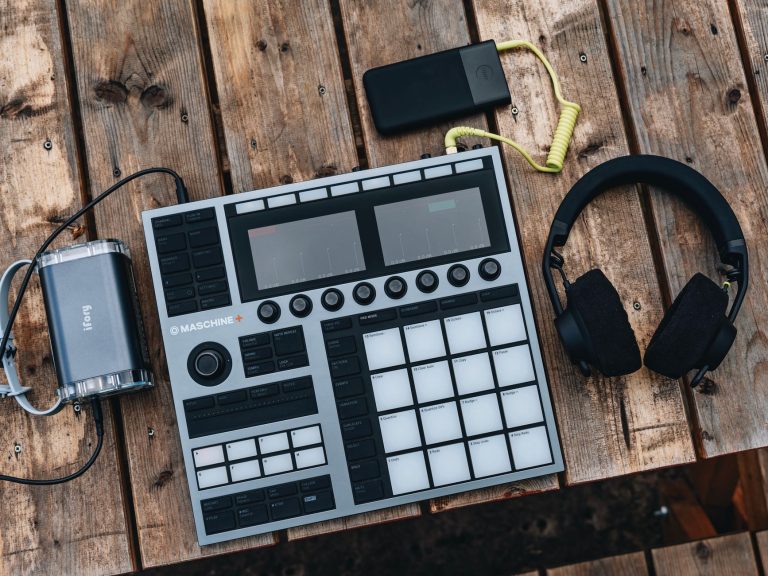
Use Ableton Push 3, Maschine, or a Pioneer DDJ-FLX10 only if the hands-on control changes decisions. Gear does not fix weak source material.
A working QA pass
Before calling a track finished, run a dull checklist. Peak level before mastering around -6 dBFS is fine. Check integrated loudness for reference, but do not mix to LUFS like it is a recipe. Listen at 75 dB SPL, then very quiet. Print a 320 kbps MP3 and abuse it.
The record should still make sense after a 20-minute break. If not, the arrangement is probably lying to you.
- Run ai music production ideas through the same checks as recorded audio.
- Null-test duplicate layers when the low end feels smeared.
- Bypass the limiter every 10 minutes while mixing.
- Check the drop on one small mono speaker.
- Generate ideas, then commit the useful ones to audio.
- Replace weak drums before mixing, not during mastering.
- Automate filters and sends by phrase, usually every 4 or 8 bars.
- Export stems with identical start points and clear names.
- Keep a dated archive of every approved mix version.
| Task | AI Tool Strength | Human Producer Strength | Practical Call |
|---|---|---|---|
| Chord and melody sketches | Fast variations in seconds or minutes | Taste, editing, key choice for singers | Use AI early, then rewrite hard |
| Kick and bass relationship | Can suggest patterns | Phase, tuning, envelope, club translation | Human decision required below 120 Hz |
| Arrangement | Can extend loops and draft sections | Energy control across 4, 8, 16, and 32 bars | Human producer should own the structure |
| Mix balance | Reference matching and rough EQ ideas | Monitoring judgment, masking fixes, automation | Use tools as assistants, not final authority |
| Stem delivery | Can batch or label if supervised | Clean routing, print discipline, version control | Human QA before delivery |
| Rights and release safety | Can create uncertainty if sources are unclear | Contracts, sample notes, disclosure | Get written terms before release |
Further reading
- Ableton Live manual — Ableton's official documentation is authoritative for DAW workflow, audio routing, exporting, and production setup.
- Sound On Sound — Sound On Sound has long-running technical editorial coverage on mixing, engineering, monitoring, and studio practice.
Frequently asked questions
Is ai music production replacing human producers?
No. It replaces some sketching and admin work, not judgment. Human producers still handle arrangement pressure, low-end translation, vocal direction, mix decisions, rights checks, and delivery standards. A finished club record needs more than generated parts.
Can I release a track made with AI tools?
Sometimes, but check the tool terms, sample sources, vocal rights, and distributor policy. Keep records of licences and any third-party material. If the track is for a label, disclose anything that could create ownership or clearance problems before signing.
Is AI useful for beginner DJs who want original tracks?
Yes, for rough ideas, edits, chord options, and reference planning. It will not teach clean gain staging, phrase structure, or how a track behaves in Rekordbox on a CDJ-3000. Beginners still need to test intros, outros, and drops in real DJ sets.
Should I hire a human ghost producer instead of using AI tools?
If you need an exclusive, release-ready record with clean stems and clear terms, a human ghost producer is safer. AI tools can help you brief the idea. They should not be the only quality-control step before release, especially with vocals or samples.
What files should I ask for in custom music production?
Ask for a 24-bit WAV master, unlimited mix, instrumental, radio edit if needed, and grouped stems from bar 1. For vocal tracks, request dry vocals, wet vocals, backing vocals, and tuning notes. Confirm BPM, key, and sample disclosures in writing.
Can AI tools mix and master my song properly?
They can produce a loud reference and sometimes a useful starting balance. Proper mixing still needs source fixes, automation, phase checks, and monitoring decisions. Mastering is not just loudness. It is translation, sequencing, true-peak control, and knowing when not to process.
Conclusion
ai music production is a useful front-end tool, not a replacement for production judgment. Use it to create options, then make the record with normal engineering standards: clean gain staging, phase-safe low end, controlled 180 to 350 Hz, sensible sidechain timing, and export discipline.
The human part is still the expensive part because it decides what to remove, what to keep, and when the track is actually finished. That is not romantic. It is just the job. For your next session, set a 30-minute limit for machine-assisted sketching, print the best idea to audio, and finish the arrangement without asking the tool for another loop.
Ai music production — Quick Recap
The fastest way to lock in ai music production is to internalise the workflow above and repeat it on every project. Start small: pick one technique from this ai music production guide, apply it to your next session, and audit the result against a reference track.
- AI tools are strongest at early sketches, variations, and reference planning.
- Human producers still make the critical calls on arrangement, low end, vocals, and rights.
- The textbook answer is often wrong once the track hits a club system.
- Clean briefs save more time than clever tools.
Treat ai music production as a habit, not a one-off — the producers who consistently nail ai music production are the ones who run the same checks on every track. That’s the difference between a clean, club-ready master and a track that sounds great at home but falls apart on a real system.
In a real studio session, ai music production comes down to the order in which you make decisions: reference first, gain stage second, then the creative work. Producers who treat ai music production as a checklist instead of a vibe end up shipping more tracks.
My Career makes videos from your own track and posts them for you, pitches your release to 34,000+ labels, playlists, radio stations, YouTube channels and blogs, puts it in every store and briefs you every morning. Free plan, no card, two minutes to set up.