Key takeaways
- Owned channels build control; paid ads buy temporary reach.
- A useful release campaign starts with assets, rights, tracking, and clean file management.
- Small ad tests should measure saves, follows, signups, and landing conversion.
- DJ-led records usually need selector outreach before broad paid traffic.
- Ghost-produced releases need rights clarity before any public campaign starts.
- A simple spreadsheet beats a bloated dashboard if it changes decisions.
Edm marketing strategy breaks first at the tracking layer, not the creative layer. A workable edm marketing strategy needs the same discipline as a mix recall: fixed inputs, named buses, and numbers that can be checked after the room is empty. If you are an aspiring DJ, a bedroom producer, or an artist buying ghost production or custom music production, your problem is not a lack of platforms. It is leakage.
Owned channels give you control but take time. Paid ads give you reach but burn cash at 1.0x speed whether the track is ready or not. The useful question is not which one sounds better in a webinar. The useful question is where your next $300, 20 hours, and 30-day release window should go. The answer changes if your track is a 128 BPM tech house tool, a vocal future rave record, or a private-label track with exclusive rights.
Edm marketing strategy: Owned Channels vs Paid Ads
The textbook answer says use every channel at once. That is wrong in practice. Small artists do not have enough usable content, conversion data, or release volume to feed six platforms properly. A lean edm marketing strategy should pick one main acquisition path and one backup path.
Owned channels are assets you can reach without paying again: email list, SMS list, Discord, YouTube subscribers, Instagram followers, SoundCloud followers, DJ pool contacts, promoter spreadsheet. Paid ads are rented distribution: Meta, TikTok, YouTube, Spotify Marquee where available, and display retargeting. Treat them differently. They behave differently under load.
Where edm marketing strategy usually fails
Most campaigns fail because the producer ships a 44.1 kHz, 24-bit master and then invents the marketing on upload day. That is too late. The ad clips are wrong length. The link has no UTM tags. The pre-save page has no pixel. The artist bio still says “upcoming” from 2021.
Marketing has gain staging. If your profile converts at 0.6 percent from click to follow, buying more traffic just prints the problem louder.
The practical split
For a first serious release, put 70 percent of labor into owned channels and 30 percent into paid testing. Put 70 percent of cash into assets and 30 percent into ads. The boring assets matter: 9:16 video cuts, clean artwork, 15-second drops, 30-second DJ intro clips, and one plain landing page.
- Owned channels are slow but compound.
- Paid ads are fast but forget you when the card stops.
- Neither fixes a weak hook at bar 17.
- Start tracking 14 days before release, not on release day.
- Use one landing page per release, not five loose links.
- Export short clips at 1080×1920, 30 fps, with headroom under -1 dBTP.
- Keep ad tests below $20 per day until click quality is proven.
- Log every post, email, spend, CPM, CPC, save rate, and follow rate.
The Release Asset Stack Before Any Spend
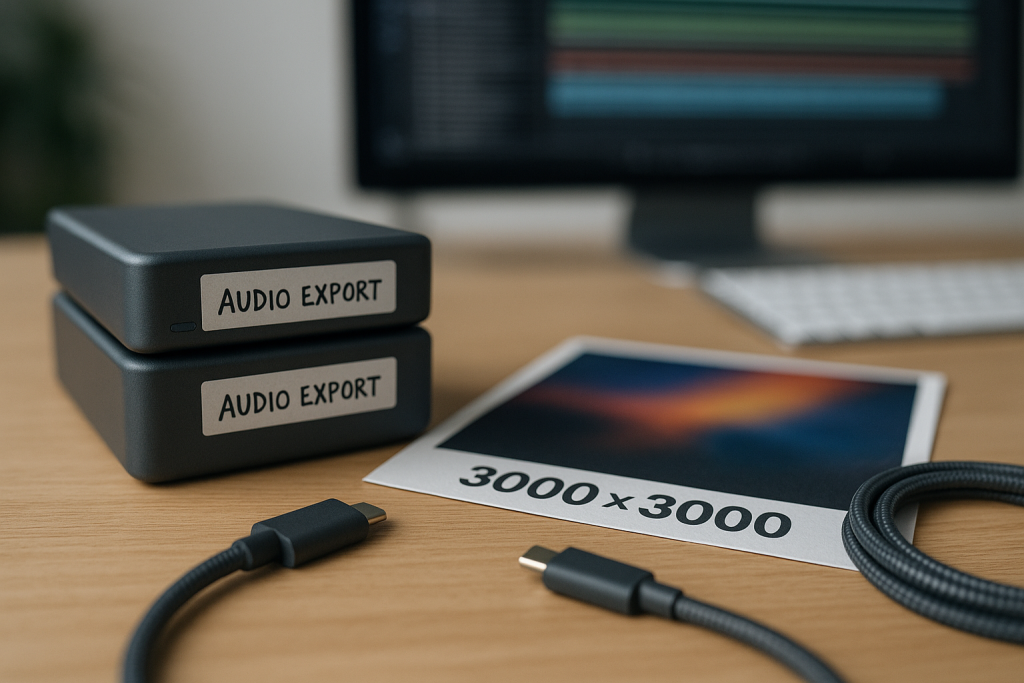
An edm marketing strategy without assets is a blank session with the limiter already loaded. Do the dull prep first. A campaign needs clean source material before it needs reach. If the track came from a ghost producer or custom production service, confirm rights, filenames, edit lengths, and whether stems can be used for social cuts.
Do not hand a 5:42 extended mix to the algorithm and expect mercy. Build edits. Make them specific.
Audio and video deliverables
Export the master as WAV, 44.1 kHz or 48 kHz, 24-bit. Keep a distribution master under -1 dBTP. Keep a louder club preview if you need it, but label it. Do not upload the wrong file because every version is called final_master_v7.wav.
For clips, render at 1080×1920 for vertical and 1920×1080 for YouTube. Make 7-second, 15-second, and 30-second cuts. If the drop starts after a 64-bar intro, cut it down. Nobody owes your arrangement patience.
Metadata, rights, and claims
Artists using bought tracks need boring paperwork in order. Confirm exclusive or non-exclusive rights, vocal sample clearance, publishing splits, and whether the producer name stays private. Your edm marketing strategy can stall if a Content ID claim appears 48 hours after launch.
Keep one folder with ISRC, UPC, artwork at 3000×3000, lyric text if relevant, credits, short bio, long bio, press photo, and private streaming links. That folder is the marketing master bus.
- One WAV master for distribution, one MP3 for email, one private link for pitching.
- Three vertical clips: intro hook, drop, second-drop variation.
- One 3000×3000 artwork file and one cropped square profile version.
- UTM-tagged landing page before any paid traffic starts.
- Rights document stored beside the master, not buried in email.
Owned Channels: Slow Signal, Better Control
Owned channels look weak because the numbers are small. That is not the problem. A list of 350 real DJs, fans, and local promoters often beats 12,000 passive followers. The signal is cleaner. The noise floor is lower.
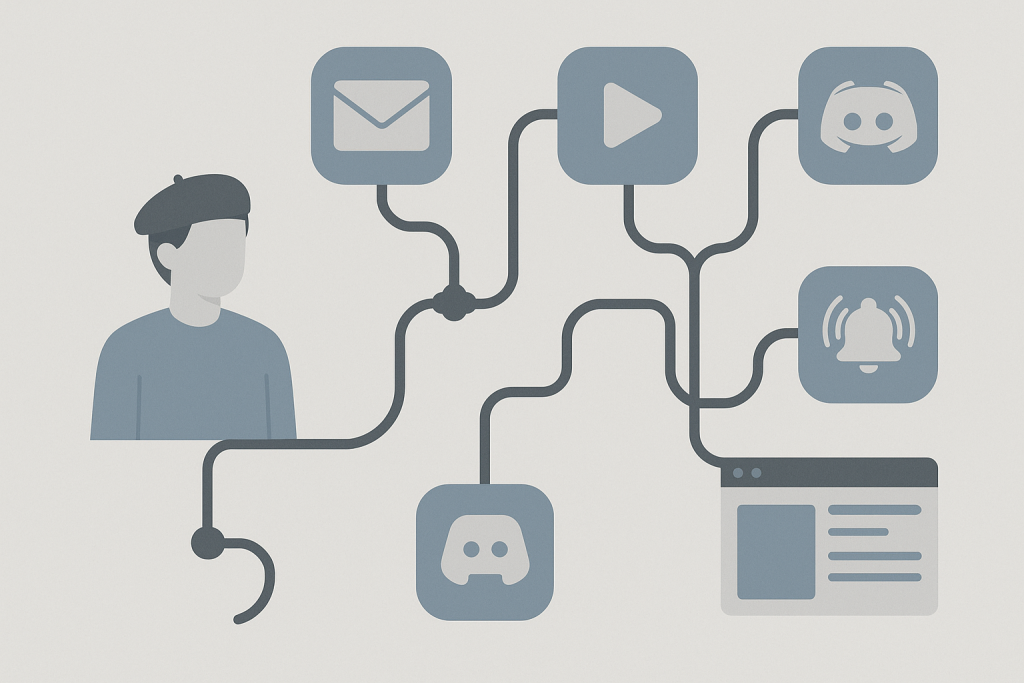
A strong edm marketing strategy uses owned channels for repeat contact, proof, and conversion. Paid reach can introduce people. Owned channels make the second and third touch cheaper.
Email still works when the list is real
Email is ugly and measurable. That is why it stays. A 28 percent open rate and 3 percent click rate on a 600-person list gives you around 18 high-intent clicks. A cold ad campaign can spend $50 just finding 18 clicks that do not bounce in 4 seconds.
Send fewer emails with better segmentation. DJs get extended mix links, BPM, key, and clean/dirty notes. Fans get the story, short clip, and streaming link. Promoters get one sentence, one proof point, one private link.
Social followers are not owned, but use them anyway
Instagram, TikTok, and YouTube are rented rooms, but they still matter. Post natively. Do not upload a landscape Ableton screen capture and call it a campaign. If you are showing production, frame the Ableton Push 3, Pioneer DDJ-FLX10, or CDJ-3000 clearly. Hands are fine. Face lectures are optional and usually worse.
For an edm marketing strategy based on owned channels, the goal is capture. Push viewers toward an email signup, Discord, SMS list, or YouTube subscription. A view with no second contact is a meter peak that never prints.
- Email list target: 5 percent monthly growth from real opt-ins.
- Discord target: fewer channels, tighter moderation, weekly posts.
- YouTube target: one searchable upload and two Shorts per release.
- DJ pool target: direct feedback from 20 relevant selectors.
- Promoter target: one clear private link, no attachment dump.

Paid Ads: Fast Data, Fast Waste
Paid ads are not evil. They are just meters. They show you what your track, thumbnail, hook, and landing page can do under traffic. A paid-led edm marketing strategy is useful when the release has a clear audience, strong visual assets, and enough budget to exit the guessing phase.
The minimum useful test is not $5 boosted for one afternoon. That only buys confusion. Use small but structured tests: 3 creatives, 2 audiences, 2 placements, 72 hours. Kill the weak cells.
Do not optimize for vanity metrics
Cheap views mean little if average watch time is 1.2 seconds on a 15-second clip. Cheap clicks mean little if the landing page bounce rate sits above 85 percent. Paid ads need a hard event: follow, save, email signup, ticket click, or private-link request.
Use UTMs. Use pixel events where possible. Check Spotify for Artists after 48 to 72 hours, but do not pretend one spike is a fanbase. A spike is a spike.
Budget numbers that are not fantasy
For a small artist, a sensible first test is $150 to $300 over 7 to 10 days. Split it into controlled cells. If one 15-second drop clip gets a $0.42 click and another gets $1.80, you have learned something. If both convert badly, stop spending and fix the asset.
An edm marketing strategy with paid ads should cap loss early. I would rather see $80 wasted cleanly than $600 smeared across weak targeting, weak clips, and no event tracking.
- Test 3 creatives before testing 10 audiences.
- Use 7-day click attribution for simple release campaigns.
- Pause any ad with high clicks and zero downstream action.
- Retarget video viewers only after the first creative test.
- Do not scale spend until saves, follows, or signups move.
Measurement: The Numbers That Survive Contact
The textbook answer says track everything. Wrong again. Track the few numbers that change decisions. A bedroom producer does not need a 40-column dashboard. A dry edm marketing strategy needs source, spend, creative, click cost, landing conversion, saves, follows, and repeat listeners.
Measure weekly. Daily checking makes people stupid. Campaigns need enough data to settle, especially on small budgets.
A practical dashboard
Use a spreadsheet before buying software. Columns should include date, channel, creative ID, spend, impressions, CPM, clicks, CPC, landing conversion rate, Spotify saves, follower gain, email signups, and notes. Keep creative names functional: drop_clip_15s_vocal, studio_clip_7s_bass, cdj_test_30s.
If your edm marketing strategy cannot be read by another person in 90 seconds, the system is too complex.
Reference tracks are marketing tools too
Reference the market like you reference a mix. If your track is 126 BPM melodic house, compare it against tracks in the same tempo, energy, and vocal density. Do not benchmark a sparse deep house record against a festival mainstage edit at -7 LUFS.
Use the same cold logic you use with FabFilter Pro-Q 4 or Soothe2. Find the resonance. Cut it. If the audience mismatch is at 220 Hz, do not boost 10 kHz.
- Decision metric: cost per save, not cost per impression.
- Health metric: repeat listeners after 28 days.
- Creative metric: 3-second hold rate on short video.
- Channel metric: email signup rate from landing pages.
- Reality metric: direct messages from DJs and promoters.
Choosing the Right Mix for Your Release Type
No single edm marketing strategy fits every artist. A DJ tool, a vocal single, a ghost-produced alias launch, and a custom brand track need different routing. The release type decides where the signal should go first.
This is where most advice gets too soft. A tech house DJ trying to get club support should not spend like a pop vocalist chasing fan saves. A new alias with no history should not pretend a cold audience knows the story.
DJ-led records
For club records, start with DJs, mixes, and short proof clips. Export the extended mix. Include BPM, key, clean intro length, and drop timestamps. If the track works at 128 BPM between two CDJ-3000 decks, show that. A clean phone clip from the booth can outperform a polished lyric video if the record is a tool.
Owned channels usually win first here. Paid ads come after you have DJ reactions or live footage.
Artist-led singles and ghost-produced launches
For artist singles, use narrative only if there is one. Do not manufacture struggle around a bought track. Focus on sound, positioning, and consistency. If the record came from custom production, build content around arrangement choices, vocal direction, or the final master, without exposing private production terms.
A paid-supported edm marketing strategy works better here if the hook is immediate and the artist profile is complete. Profile photo, bio, links, and pinned posts need to look current before traffic arrives.
- Club tool: prioritize DJs, private links, and booth clips.
- Vocal single: prioritize short hooks, saves, and retargeting.
- New alias: prioritize profile completion and repeated visual identity.
- Ghost-produced release: prioritize rights clarity and consistent branding.
- Custom production rollout: prioritize behind-the-session assets without exposing contracts.
| Decision Point | Owned Channels | Paid Ads | Practical Call |
|---|---|---|---|
| Speed | Slow start, compounding over months | Immediate traffic within hours | Use ads for testing, owned channels for repeat contact |
| Control | Higher control over message and contact list | Platform rules, auction cost, account risk | Keep your best contacts outside ad platforms |
| Budget | Mostly labor, tools, and consistency | $150 to $300 minimum for a useful first test | Do not run paid ads before tracking is installed |
| Best fit | DJ support, email, Discord, YouTube, promoter lists | Hook testing, retargeting, audience discovery | Pick based on release type, not fashion |
| Failure mode | Too little volume, slow feedback | Fast spend with weak conversion | Owned fails quietly, paid fails on the invoice |
| Key metric | Email clicks, replies, repeat listeners, saves | CPC, hold rate, landing conversion, cost per save | Track downstream actions, not applause numbers |
Further reading
- Spotify for Artists — Official Spotify documentation for artist profiles, analytics, and release visibility.
- Google Analytics events — Official Google documentation for event measurement used in campaign tracking.
Frequently asked questions
What is the best edm marketing strategy for a new producer?
Start with owned channels, then use paid ads for controlled tests. Build a clean profile, one landing page, three vertical clips, and an email capture path. Spend no serious ad money until you can measure clicks, saves, follows, and signups from each source.
Should DJs use paid ads to promote every release?
No. Paid ads make sense when the track has a clear hook, finished profile assets, and tracking installed. For DJ tools, direct outreach to selectors, private links, and booth clips often produce better early signal than broad cold ads.
How much should I spend marketing an EDM release?
For a first structured test, $150 to $300 over 7 to 10 days is enough to expose weak creatives and rough audience fit. Spending less often gives noise. Spending more before conversion data is just a larger mistake.
Do ghost-produced tracks need a different promotion plan?
They need cleaner administration. Confirm rights, credits, sample clearance, and Content ID status before release. The promotion can look normal, but the campaign should avoid claims that conflict with the production agreement or expose private commercial terms.
What metrics matter most for EDM promotion?
Track cost per save, follower gain, email signup rate, repeat listeners after 28 days, and direct replies from DJs or promoters. Impressions and cheap views are weak indicators unless they lead to a measurable downstream action.
Are playlists still useful for EDM marketing?
Yes, but they are not a complete plan. Playlist adds can create discovery, especially around niche subgenres, but they rarely build durable contact. Use them beside email capture, DJ outreach, social retargeting, and consistent release assets.
Conclusion
An edm marketing strategy is not a mood board. It is a signal path. Owned channels sit closer to the artist and improve with use. Paid ads sit closer to the market and tell you what breaks under pressure. Use both, but do not pretend they do the same job.
For your next release, build the asset folder first: master files, vertical clips, artwork, landing page, UTM links, rights notes, and a small tracking sheet. Then choose the route. If the track is for DJs, start with selectors and proof clips. If the hook is obvious and the profile is ready, run a small paid test. Check the numbers after 72 hours, cut the weak signal, and adjust before spending again.
Edm marketing strategy — Quick Recap
The fastest way to lock in edm marketing strategy is to internalise the workflow above and repeat it on every project. Start small: pick one technique from this edm marketing strategy guide, apply it to your next session, and audit the result against a reference track.
- Owned channels build control; paid ads buy temporary reach.
- A useful release campaign starts with assets, rights, tracking, and clean file management.
- Small ad tests should measure saves, follows, signups, and landing conversion.
- DJ-led records usually need selector outreach before broad paid traffic.
Treat edm marketing strategy as a habit, not a one-off — the producers who consistently nail edm marketing strategy are the ones who run the same checks on every track. That’s the difference between a clean, club-ready master and a track that sounds great at home but falls apart on a real system.
In a real studio session, edm marketing strategy comes down to the order in which you make decisions: reference first, gain stage second, then the creative work. Producers who treat edm marketing strategy as a checklist instead of a vibe end up shipping more tracks.
Most producers and DJs undervalue edm marketing strategy because the wins are invisible until the track plays back on a real system. Bake edm marketing strategy into your template and the next ten projects benefit automatically.
When you struggle with edm marketing strategy, the fix is rarely a new plugin. Loop a problem section, A/B against a reference, and isolate which element is breaking your edm marketing strategy.
Treat edm marketing strategy as a craft, not a chore. The producers releasing on the biggest labels lock edm marketing strategy in early so they can spend their energy on melody and arrangement instead of fighting the mix.
My Career makes videos from your own track and posts them for you, pitches your release to 34,000+ labels, playlists, radio stations, YouTube channels and blogs, puts it in every store and briefs you every morning. Free plan, no card, two minutes to set up.