Key takeaways
- Ableton Live 12 is the strongest overall EDM DAW because it moves fastest from loop to finished arrangement.
- FL Studio 2024 is the best choice for producers who write drums, hooks and basslines in patterns.
- Logic Pro 11 is the best value for Mac users who also record vocals and want a full stock toolkit.
- Bitwig Studio 5 is the specialist pick for producers who care most about modulation and experimental sound design.
- The wrong DAW is usually the one that slows arrangement, stem export and low-end control.
Best daw for edm comes down to how fast you can turn a loop into a finished record without fighting the software. I’m putting Ableton Live 12, FL Studio 2024, Logic Pro 11 and Bitwig Studio 5 against each other because those are the names bedroom producers actually argue about at 2 a.m. after the drop still sounds thin.
The best daw for edm is not automatically the one with the biggest feature list. It is the one that lets you sketch drums, bend audio, build automation, mix low end, export stems and fix mistakes without killing the idea. Ableton is still the club producer’s workbench. FL Studio is stupidly fast for patterns and melodies. Logic gives you a lot for the money. Bitwig is the modular oddball that rewards sound-design nerds. I’ll dock points where the workflow gets clumsy.
Best daw for edm: The Four-Way Shootout
The best daw for edm question gets messy because EDM is not one job. A tech house producer needs fast drum programming and tight bass editing. A melodic techno artist needs automation lanes that do not feel like admin. A future bass producer may care more about audio warping, resampling and crazy modulation than a traditional mixer page.
Here is the blunt framing: Ableton Live 12 wins on speed and audio handling. FL Studio 2024 wins on pattern writing. Logic Pro 11 wins on value if you are already on Mac. Bitwig Studio 5 wins for experimental modulation, but it asks more from you.
Where the best daw for edm debate actually starts
The best daw for edm is the one that gets you through three boring jobs cleanly: arranging past the first drop, keeping the low end controlled, and printing stems without drama. If a DAW slows those jobs down, I do not care how pretty the synth bundle is.
Ableton’s Session View makes it easy to test 4-bar and 8-bar phrases before committing. FL Studio’s Channel Rack gets drum ideas moving almost instantly. Logic’s Drummer, Step Sequencer and stock instruments give beginners a lot of usable material. Bitwig’s Grid and modulators make standard EDM patches feel less standard.
The options on the table
Ableton Live 12 is the benchmark for clip launching, warping, resampling and live-performance thinking. It feels built by people who understand club loops.
FL Studio 2024 is still the fastest place to write catchy MIDI, especially if you grew up clicking hi-hats into a piano roll. Logic Pro 11 is the sensible Mac pick with strong stock tools. Bitwig Studio 5 is the modulation lab, brilliant when you want movement everywhere.
- Pick Ableton if audio warping and arrangement speed matter most.
- Pick FL Studio if your beats and melodies start in patterns.
- Pick Logic if you want a complete Mac studio for one fair price.
- Pick Bitwig if modulation and sound design are your main obsession.
Writing Beats, Basslines and Hooks
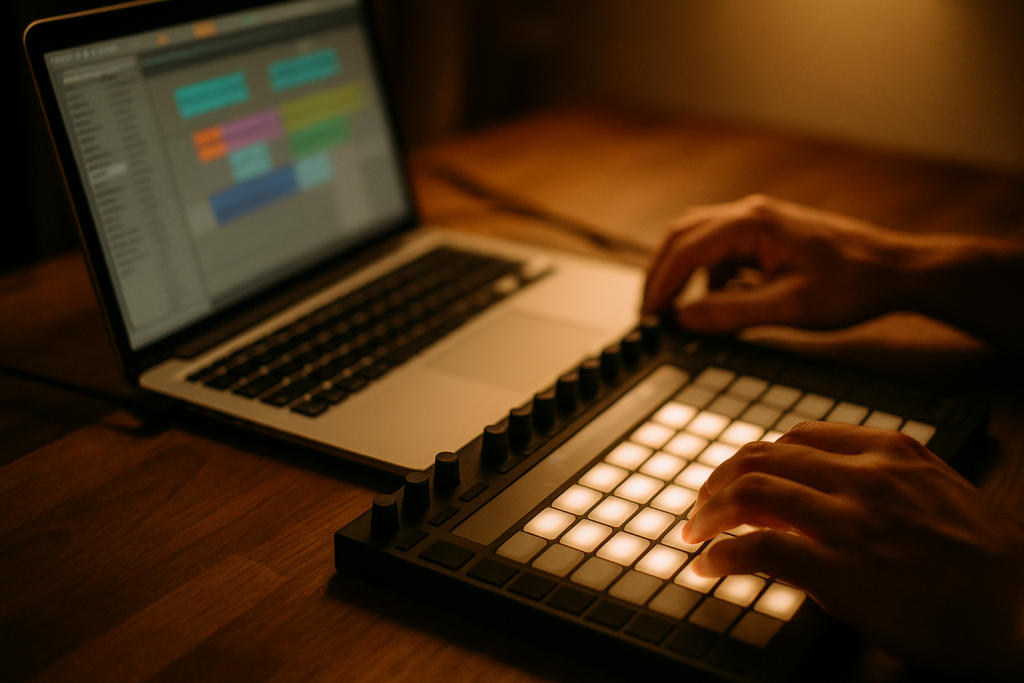
A strong EDM session starts with drums and bass that lock before the mix bus gets involved. The best daw for edm should make that stage feel physical, not like spreadsheet work. I tested the same rough idea across all four: 124 BPM kick, offbeat bass, shuffled hats, one vocal chop and a 16-bar build.
How Ableton Live 12 handles writing
Ableton is fast once you stop treating it like a tape machine. Drop a kick into Simpler, write a 4-bar MIDI clip, duplicate it, then drag variations into Session View. Drum Rack is still excellent for house and techno kits, especially with choke groups on open hats and percussion.
For basslines, Live’s MIDI tools are better than they used to be, but FL still beats it for pure piano-roll comfort. Ableton pulls ahead when you start resampling. Freeze a Serum bass, flatten it, reverse one hit, filter another with Auto Filter, then sidechain duck it against the kick in under a minute.
How FL Studio 2024 handles writing
FL Studio is ridiculous for pattern writing. The Channel Rack, Step Sequencer and Piano Roll are why so many EDM producers start there and stay there. Ghost notes, slide notes, strum, chop and randomise tools make hooks happen quickly.
The downside is arrangement discipline. FL lets you scatter Pattern 12, Pattern 31 and Pattern 48 across the Playlist until the session looks like a messy bedroom floor. If you name and colour-code from bar one, it sings. If you do not, the best daw for edm can turn into the best way to lose your hook.
How Logic Pro 11 and Bitwig Studio 5 handle writing
Logic’s Step Sequencer is better than many producers give it credit for. It is clean for drums, quick for automation-style pattern changes, and Drummer can throw out useful groove references if you strip away the cheesy parts. Logic’s Piano Roll is solid, not exciting.
Bitwig is less immediate for basic beats but nastier for moving bass. Add an LFO modulator to filter cutoff, map velocity to wavetable position, then modulate the modulator depth. That is where Bitwig earns points. For simple tech house drums, I would still rather be in Ableton or FL.
- Fastest drum sketch: FL Studio.
- Fastest audio resampling: Ableton Live.
- Best bundled starting palette: Logic Pro.
- Most flexible modulation while writing: Bitwig Studio.
Audio Warping, Sampling and Resampling
Sampling separates a loop collector from a producer. The best daw for edm needs clean time-stretching, fast slicing and painless resampling because modern dance records are full of bent vocals, chopped fills, reversed impacts and printed synth layers.
Ableton Live 12 is still the warping king
Ableton wins this round clearly. Warping a vocal to 126 BPM, pulling one word late by a few milliseconds, then pitching the final syllable down 7 semitones is simple. Complex Pro still has that slightly rubbery sound on extreme moves, but for EDM that can be a feature.
Resampling is also clean. Set an audio track to Resampling, record your drop bus, cut out a fill at bar 29, reverse it, high-pass at 220 Hz with EQ Eight, then automate Utility down 2 dB before the impact. That workflow is why Ableton remains the best daw for edm for many club producers.
FL Studio can sample fast, but it feels fragmented
FL Studio has strong sampling tools: Edison, Slicex, Fruity Slicer and the Playlist all do useful work. The issue is that they feel like separate rooms in the same building. You can get fast, but you need muscle memory.
For vocal chops, FL’s Piano Roll control is excellent once the audio is mapped. For quick linear edits, Ableton feels smoother. I dock FL here because bouncing, stretching and reorganising audio takes more clicks than it should when the arrangement gets dense.
Logic Pro and Bitwig take different paths
Logic’s Flex Time and Quick Sampler are good enough for most EDM jobs. Quick Sampler is especially friendly for one-shot vocals and tonal hits. Drag audio in, set root note, trim the start, and you are writing. Flex can get fussy on complex rhythmic loops, so check transients before trusting it.
Bitwig handles audio clips with confidence and gets weird quickly. Its operators and clip modulation let one sample behave differently each pass. If you make left-field bass music or glitchy melodic techno, that matters. For mainstream EDM speed, Ableton still lands the punch harder.
- Best vocal warping: Ableton Live.
- Best sample-to-melody workflow: FL Studio.
- Best simple one-shot sampling on Mac: Logic Pro.
- Best generative sample variation: Bitwig Studio.
Mixing Tools and Low-End Control
The best daw for edm has to survive the sub test. If your kick and bass collapse on a club system, nobody cares that the arpeggio has clever automation. I want clear metering, fast EQ moves, reliable sidechain routing and enough headroom discipline to keep the master from lying.
Ableton Live 12 mixing workflow
Ableton’s mixer is not glamorous, but it is fast. EQ Eight, Glue Compressor, Saturator, Utility and Roar cover a lot of ground. For an EDM low end, I like kick peaking around -8 dB, bass around -10 dB, and the pre-master sitting with roughly -6 dB headroom before limiting.
Sidechain ducking is easy. Put Compressor on the bass group, feed it from the kick, set attack around 1 ms, release around 90 ms for house, and pull 3 to 5 dB. For detailed cleanup, I still reach for FabFilter Pro-Q 4 or Soothe2, but Ableton’s stock chain is usable.
FL Studio 2024 mixing workflow
FL’s Mixer is powerful, but routing can turn ugly if you do not label channels. Fruity Parametric EQ 2 is still one of the best visual stock EQs, and Maximus can be excellent if you do not abuse it. Many beginners do abuse it.
Sidechain routing is more fiddly than Ableton. Once set, it works fine with Fruity Limiter or Gross Beat-style volume shaping, but the first setup is not as clean. The best daw for edm should make kick-bass control feel automatic. FL gets the sound, but Ableton gets you there faster.
Logic Pro 11 and Bitwig Studio 5 mixing workflow
Logic has the most traditional mixer here. Channel EQ, Compressor, Multipressor, Clip Distortion and Adaptive Limiter can absolutely finish an EDM record. The metering is readable, buses are sensible, and gain staging feels grown-up. I like Logic for vocal-heavy EDM because comping and channel-strip work are tidy.
Bitwig’s mixing tools are clean and flexible, but the real strength is modulation inside effects. You can modulate EQ frequency, distortion amount or delay feedback without building a silly workaround. That is great sound design. For straight mix speed, Logic beats it.
- Best stock EQ feel: FL Studio’s Parametric EQ 2.
- Best quick sidechain setup: Ableton Live.
- Best traditional mixer: Logic Pro.
- Best modulated effects: Bitwig Studio.
Arrangement, Automation and Finishing Tracks
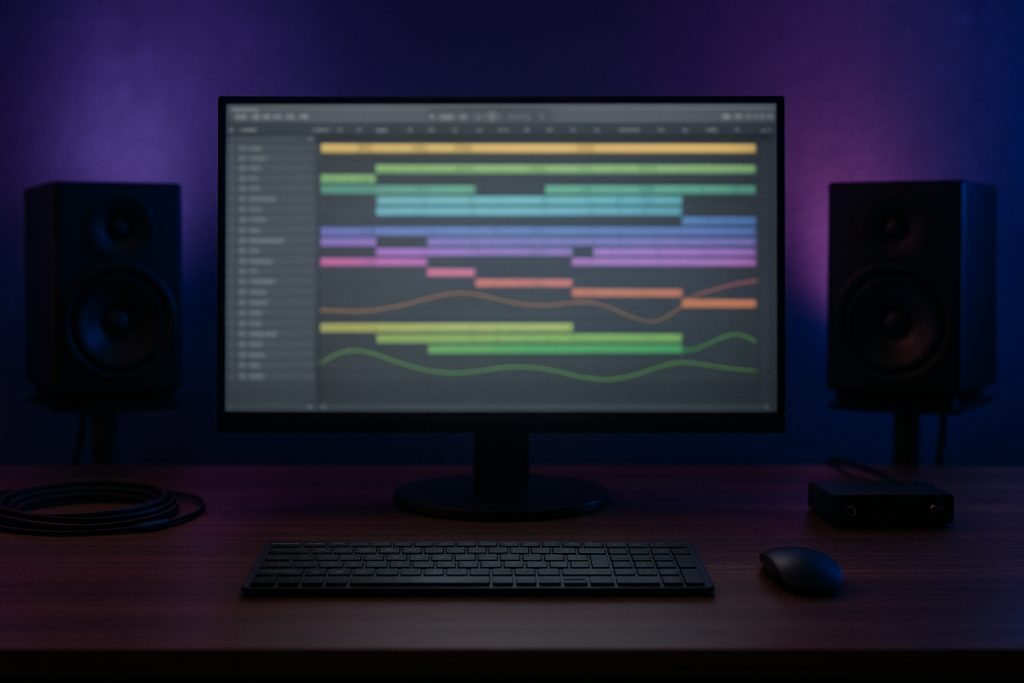
Finishing exposes the weak DAW choice. The best daw for edm must help you stretch a 16-bar loop into a full record with tension, contrast and clean transitions. Most unfinished projects die because the producer cannot see the song clearly after the first drop.
Ableton Live 12 keeps arrangement moving
Ableton’s Session View into Arrangement View is still the strongest loop-to-track bridge. Jam scenes, record the rough structure, then clean it up. Automation lanes are easy to read, and clip envelopes let you create small variations without duplicating entire tracks.
For builds, Ableton is fast: automate Auto Filter from 180 Hz to 12 kHz over 8 bars, pitch a snare roll up 12 semitones, mute the kick for two beats, then slam the drop back in. It feels direct. That directness is why the best daw for edm argument keeps circling back to Ableton.
FL Studio 2024 needs discipline
FL can arrange full records, but it lets you be chaotic. Automation clips are powerful, visual and easy to copy. The Playlist is flexible. The problem is that everything can go anywhere, so bad habits survive longer.
If you use FL, build a template with named sections: intro, groove, break, build, drop, second break, final drop, outro. Keep drums, bass, music, vocals and FX in fixed Playlist zones. Do that and FL finishes tracks. Skip it and you will spend an hour hunting for the white-noise riser.
Logic Pro 11 and Bitwig Studio 5 at the finish line
Logic is comfortable for linear arrangement. Markers, track alternatives, folder stacks and automation are sensible. It is not the fastest for loop jamming, but once the song structure exists, Logic feels calm. That matters when you are cleaning edits at bar 97.
Bitwig’s Clip Launcher and Arranger give it some Ableton-style flexibility, with stronger modulation baked in. The trade-off is mental load. When every parameter can move, you can over-design a transition instead of writing a better one. I dock Bitwig for that, even though I love what it can do.
- Best loop-to-arrangement bridge: Ableton Live.
- Best automation clip visibility: FL Studio.
- Best linear editing comfort: Logic Pro.
- Best evolving transitions: Bitwig Studio.

Price, Hardware and Collaboration
The best daw for edm also has to fit your room, your controller and the people you work with. A solo producer on a MacBook has different needs from a DJ using a Pioneer DDJ-FLX10, a vocalist sending stems, or a ghost producer delivering clean multitracks to an artist.
Ableton Live 12 with Push 3 and DJ-minded workflows
Ableton gets extra points if you perform, remix or think like a DJ. Push 3 integration is tight, and warping makes it easy to pull ideas from DJ edits, acapellas and reference loops. If you test arrangements against a CDJ-3000 style club structure, Ableton feels natural.
Collaboration is also easier because so many EDM producers use Live. Sending stems is simple, and exporting grouped drums, bass, music, vocals and FX is painless. For ghost production handoff, that matters more than another bundled synth.
FL Studio 2024, Logic Pro 11 and Bitwig Studio 5 costs
FL Studio’s lifetime free updates are a serious advantage. If money is tight, that matters. Its ecosystem is huge, and plenty of producers can open FL projects, though stem delivery is still the safer professional move.
Logic Pro is the best value if you already own a Mac. The catch is obvious: Windows users are out. Bitwig is not cheap, and its upgrade plan annoys some producers, but it is worth paying for if modular thinking is central to your sound. If not, do not buy Bitwig just to make basic festival drops.
Plugin and stem compatibility
No DAW saves you from bad file hygiene. If you use third-party tools like Serum, Spire, FabFilter Pro-Q 4, Valhalla VintageVerb or Soothe2, freeze or print important parts before sending the session. Better yet, export 24-bit WAV stems from bar 1 with dry and wet versions for vocals.
The best daw for edm in a professional service context is usually the one that exports cleanly and opens quickly under pressure. Ableton and Logic feel strongest there. FL is fine with discipline. Bitwig is excellent for audio stems, less common for shared project files.
- Best hardware pairing: Ableton Live with Push 3.
- Best long-term update value: FL Studio.
- Best Mac-only bargain: Logic Pro.
- Best specialist sound-design buy: Bitwig Studio.
Who Should Pick What
No fence-sitting: the best daw for edm for most aspiring producers is Ableton Live 12. It is not the cheapest, and its piano roll still does not feel as slick as FL Studio, but it moves from idea to arrangement to exported stems with the least friction.
Pick Ableton Live 12 if you want finished club tracks
Choose Ableton if you make tech house, melodic techno, bass house, drum and bass, trance, afro house or anything that leans on audio edits and arrangement energy. It is the safest main DAW for producers who want to finish releases, deliver stems and remix quickly.
I would start with Ableton before buying more plugins. Learn Drum Rack, Simpler, EQ Eight, Compressor, Utility, Saturator and Audio Effect Racks. Add Serum or Vital later. A clean Ableton template beats a bloated plugin folder every time.
Pick FL Studio if melodies come first
Choose FL Studio if your best ideas start as MIDI hooks, trap-influenced drums, big chord stacks or fast piano-roll work. It is the most fun DAW here for writing topline-style melodies without touching a keyboard.
Do not pick FL if you hate organising. You need naming, colour-coding and a routing template from day one. With that handled, FL can absolutely make release-ready EDM. Without it, you will drown in patterns.
Pick Logic or Bitwig for specific reasons only
Choose Logic Pro 11 if you are on Mac, want strong stock instruments, record vocals often, and care about value. It is not my first pick for aggressive EDM sound design, but it is reliable and complete.
Choose Bitwig Studio 5 if modulation is your sound. If you want basses that mutate every 2 bars, FX racks that breathe, and synth patches that feel semi-modular, Bitwig is the fun pick. For a first DAW, I would still steer most EDM producers to Ableton or FL.
- Overall winner: Ableton Live 12.
- Best for MIDI hook writers: FL Studio 2024.
- Best value for Mac producers: Logic Pro 11.
- Best for experimental sound design: Bitwig Studio 5.
| Category | Winner | Why It Wins | Docked Points |
|---|---|---|---|
| Fast beat sketching | FL Studio 2024 | Channel Rack and Piano Roll are extremely quick for drums, bass notes and hook ideas. | Playlist organisation can get messy without a strict template. |
| Audio warping and resampling | Ableton Live 12 | Warp markers, Simpler, clip editing and resampling are the fastest of the four. | Complex Pro can sound rubbery on extreme vocal stretches. |
| Stock mixing workflow | Logic Pro 11 | Traditional mixer, strong Compressor, Channel EQ and sensible bus routing feel polished. | Mac-only, and loop jamming is slower than Ableton. |
| Modulation and sound design | Bitwig Studio 5 | Modulators and The Grid make movement easy across instruments and effects. | Can encourage over-design instead of finishing the arrangement. |
| Club arrangement speed | Ableton Live 12 | Session View into Arrangement View is still the cleanest loop-to-track workflow. | The Piano Roll is improved, but FL still feels better for MIDI details. |
| Long-term value | FL Studio 2024 | Lifetime free updates make it friendly for bedroom producers on a budget. | Audio editing feels more fragmented than Ableton. |
Further reading
- Ableton Live features — Ableton's official product page is the primary source for Live 12 feature details and edition differences.
- Sound On Sound reviews — Sound On Sound is a long-running professional audio publication with detailed DAW, plugin and studio technology coverage.
Frequently asked questions
What is the best daw for edm for beginners?
Ableton Live 12 is my first pick for most beginners because it teaches loop building, arrangement, audio warping and exporting in one clear workflow. FL Studio is better if you mainly write melodies with a mouse. If you use Mac and need the cheapest complete setup, Logic Pro is hard to ignore.
Is FL Studio good enough for professional EDM?
Yes. Plenty of professional EDM records have been made in FL Studio. The weak point is not sound quality, it is organisation. Use named mixer tracks, colour-coded Playlist lanes, clean buses and printed stems. If you treat FL like a professional workspace, it can deliver professional results.
Do I need Ableton Live Suite for EDM production?
You do not need Suite on day one, but it is the version I would buy if you can afford it. Max for Live devices, extra instruments and deeper sound-design tools are useful. Standard is enough for serious work if you already own synths like Serum, Spire or Pigments.
Is Logic Pro better than Ableton for EDM?
Logic Pro is better for value, recording vocals and traditional mixing on Mac. Ableton is better for EDM arrangement, warping, resampling and performance-style writing. If your tracks rely heavily on audio edits, drops and fast transitions, Ableton wins. If you record singers often, Logic makes more sense.
Why do some producers choose Bitwig over Ableton?
Bitwig gives producers deeper modulation without extra routing gymnastics. You can attach LFOs, envelopes, randomisers and step modulators to almost anything. That is brilliant for bass music, glitchy techno and evolving textures. Ableton is still faster for standard club arrangements, but Bitwig is more playful.
Can I switch DAWs after learning one?
Yes, but do it for a clear reason. Switching because a famous producer uses another DAW usually wastes time. Switch if your current DAW blocks a real task: audio editing, MIDI writing, vocal recording, collaboration or stem delivery. Finish three tracks before blaming the software.
Conclusion
The best daw for edm is Ableton Live 12 if you want the highest chance of finishing club-ready tracks without wrestling the software. FL Studio 2024 is the one I would hand to a melody-first producer who lives in the Piano Roll. Logic Pro 11 is the sensible Mac studio, especially for vocals and stock value. Bitwig Studio 5 is the sound designer’s pick, not the safest first DAW.
Do not spend six months comparing screenshots. Download two demos, rebuild the same 16-bar drop in both, then arrange it to three minutes and export stems. The DAW that gets you there with fewer excuses is the one to use in your next session.
Best daw for edm — Quick Recap
The fastest way to lock in best daw for edm is to internalise the workflow above and repeat it on every project. Start small: pick one technique from this best daw for edm guide, apply it to your next session, and audit the result against a reference track.
- Ableton Live 12 is the strongest overall EDM DAW because it moves fastest from loop to finished arrangement.
- FL Studio 2024 is the best choice for producers who write drums, hooks and basslines in patterns.
- Logic Pro 11 is the best value for Mac users who also record vocals and want a full stock toolkit.
- Bitwig Studio 5 is the specialist pick for producers who care most about modulation and experimental sound design.
Treat best daw for edm as a habit, not a one-off — the producers who consistently nail best daw for edm are the ones who run the same checks on every track. That’s the difference between a clean, club-ready master and a track that sounds great at home but falls apart on a real system.
In a real studio session, best daw for edm comes down to the order in which you make decisions: reference first, gain stage second, then the creative work. Producers who treat best daw for edm as a checklist instead of a vibe end up shipping more tracks.
Most producers and DJs undervalue best daw for edm because the wins are invisible until the track plays back on a real system. Bake best daw for edm into your template and the next ten projects benefit automatically.
When you struggle with best daw for edm, the fix is rarely a new plugin. Loop a problem section, A/B against a reference, and isolate which element is breaking your best daw for edm.
Treat best daw for edm as a craft, not a chore. The producers releasing on the biggest labels lock best daw for edm in early so they can spend their energy on melody and arrangement instead of fighting the mix.
Document your best daw for edm process — even a short note in the project file. Future-you will rebuild the same best daw for edm win in half the time.
If best daw for edm sounds great in headphones but bad in the car, you have a translation problem, not a creative one. The best daw for edm tweaks above are designed to survive every system.
Schedule a recurring best daw for edm pass on every project: same checklist, same reference tracks. Repeating best daw for edm drills is what separates a consistent producer from a lucky one.
Ultimately, best daw for edm is a craft you compound. Every project you finish raises the floor of your next attempt at best daw for edm, which is why shipping consistently matters more than chasing perfection.
My Career makes videos from your own track and posts them for you, pitches your release to 34,000+ labels, playlists, radio stations, YouTube channels and blogs, puts it in every store and briefs you every morning. Free plan, no card, two minutes to set up.