
Custom Ghost Production for DJs: What You Buy
You can be on a three-city run, get a label ping asking for a new record by Friday, and still need your next release to sound like you – not like a rushed edit built in a hotel room. That is the real problem custom ghost production solves: consistent output under real-world constraints, without sacrificing brand identity.
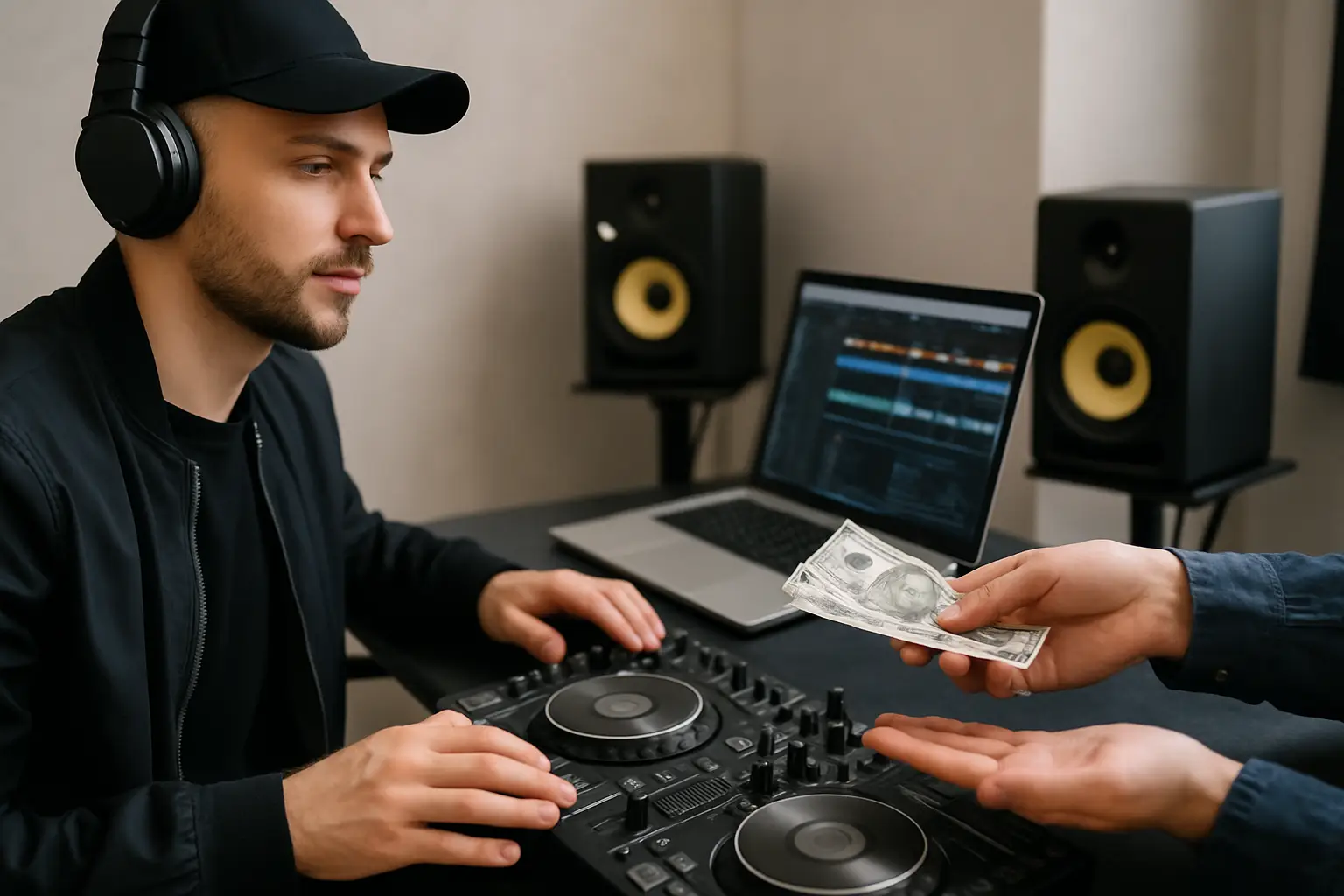
Custom ghost production for djs is not “buying a random track.” It is commissioning a verified producer to build an exclusive, release-ready record around your direction, your reference tracks, and your release requirements – then delivering the full assets and rights so you can distribute under your artist name with confidence.
What custom ghost production for DJs actually is
A custom ghost production is a made-to-order track created to match your target sound and use case. Instead of browsing a catalog and hoping a track lands close to your lane, you define the lane up front: subgenre, tempo range, arrangement style, drum character, synth palette, vocal approach, mix density, loudness targets, and the “moment” the track is designed for (warm-up, peak-time, closing).
The deliverable standard is the point. A serious custom job includes the final master plus the full stem set and project files so you can version the record, cut DJ edits, swap a lead, rework the break, or tailor the intro for your sets. Just as important: proper rights transfer and an NDA framework that supports confidentiality.
If you are comparing this to co-producing with a friend, it is different. A ghost production is built for speed, clarity, and ownership. You are paying for outcomes and deliverables, not a vague collaboration that might drift for weeks.
Why DJs use custom work instead of “ready tracks”
Ready-made tracks are fast, and they can be a great option when a record already fits your sound and release plan. Custom work exists for the moments when “close enough” is expensive.
If your brand lives in a tight niche – think rolling Tech House with specific drum programming, or darker peak-time Techno with a particular rumble and synth movement – the details matter. A record that is 80% right can still miss on the dancefloor, or feel off compared to your last release.
Custom production is also the cleanest way to protect continuity when your schedule is the constraint. Touring, content, label communication, and promo cycles compress your studio time. Outsourcing the technical production workload while keeping the creative direction in your hands is how many working artists maintain a reliable release cadence.
There is a trade-off: custom is typically more expensive than buying a finished track from a one-off catalog. You are paying for bespoke sound design, arrangement choices tailored to your references, and revisions. The upside is you are not forcing your brand to adapt to someone else’s track.
The non-negotiables: exclusivity, rights, and confidentiality
Custom ghost production should reduce risk, not add it. Three areas are worth treating as non-negotiable.
Exclusivity means your commissioned track is made for you and only you. That matters for brand protection and for label trust. The goal is simple: you do not want a second artist dropping the same record or a slightly modified version.
Rights transfer should be explicit. “You can use it” is not the same as owning it. For professional releases, you want full copyright transfer so the track can be distributed, monetized, and licensed under your name with clear ownership.
Confidentiality is part of the business model. An NDA is not a gimmick; it is how ghost production stays professional. If you are building a long-term release plan, you need a partner that treats privacy as standard operating procedure, not a special request.
What you should deliver to your producer (to get a track that fits)
A custom brief is where most projects either stay on-brand or drift into generic territory. You do not need to write a novel, but you do need to be precise about the few things that control the outcome.
Start with two to three reference tracks that represent the mixdown and energy you want. One reference for drums and groove, one for sound palette, and one for arrangement and peak moment is usually enough. Include timestamps: “I want the drop impact from 1:12” or “Build tension like 2:05 to 2:40.”
Then define the functional requirements. Are you targeting a label that prefers extended intros and outros? Do you need a radio edit? Do you want a DJ tool with a longer drum intro for mixing? This affects arrangement, not just style.
Finally, specify your signature constraints. That might be your preferred BPM range, key tendencies, kick type, or the kinds of vocals you avoid. These guardrails help the producer build something that sounds like a continuation of your catalog, not a detour.
The custom ghost production process, end to end
A professional workflow is predictable. It should feel closer to commissioning mix work than “hiring a random freelancer.” Here is what a strong process looks like in practice.
You start with a brief and references, then align on a rough direction before the producer goes deep. Many clients get value from a short concept phase – a groove sketch, primary sounds, and a basic arrangement outline. It is faster to correct course at this stage than after a full mix is built.
Next comes the full production: sound design, arrangement, transitions, ear candy, and energy shaping. This is where custom work earns its keep. A producer who lives in your subgenre will make the small decisions that separate a functional track from a record that actually competes.
Then you move into professional mixing and mastering. The goal is a release-ready master that translates in clubs, cars, earbuds, and streaming. “Loud” is not the target by itself; translation and control are. If you have a preferred loudness range, low-end weight, or top-end brightness based on your prior releases, call it out.
Revisions should be structured. You want clarity on how many revision rounds are included and what counts as a revision versus a direction change. Tight feedback is how you keep timelines short. Instead of “make it harder,” say “more mid-bass movement in the drop” or “shorten the break by eight bars.”
Finally, delivery should include the master plus stems and project files, organized and labeled so you can open the session, export alt versions, or hand off to your label without cleanup.
If you want a model built specifically for exclusivity, verified producers, and sold-once ownership standards, this is exactly what platforms like The Ghost Production are designed to provide.
How to evaluate a ghost producer like a label would
Most DJs evaluate a track by the first 30 seconds. You should evaluate a production partner with the same directness.
First, listen for genre literacy. In Tech House, do the drums swing the right way and does the low-end sit cleanly under the groove? In Techno, does the kick-bass relationship stay stable as the arrangement intensifies? In Afro House, does the percussion feel human and forward without turning messy? If a producer does not speak the subgenre fluently, you will pay for that gap in revisions.
Second, look for mix discipline. You are not just buying ideas; you are buying a record that can ship. Pay attention to the low-end clarity, transient control, and stereo decisions. A track can feel exciting and still be technically unstable.
Third, confirm deliverables and rights in writing. Professionalism is the ability to answer basic business questions without hesitation: exclusivity, file delivery, copyright transfer, confidentiality, revision policy, and turnaround time.
Common mistakes that waste time and money
The fastest way to burn budget is to be vague and then ask for a new direction late in the process. If you are unsure about your sound, do not pretend you are certain. Say what you know and where you are flexible. A good producer can propose options early.
Another mistake is treating custom work like a rescue mission for a weak concept. Custom ghost production is at its best when you have a clear target and need elite execution. If your references are all over the map, the output will be, too.
Finally, do not skip the operational details. If you need an extended mix for Beatport, a clean intro for DJ pools, or a no-vocal version for certain venues, specify it up front. These are small changes when planned and annoying changes when tacked on at the end.
When custom ghost production is the right call (and when it isn’t)
Custom is the right call when your release needs to hit a specific lane, on a specific timeline, with a specific level of polish. It is also the right call when you are building a signature sound and want your catalog to feel coherent across months of releases.
It might not be the best fit if you are still experimenting with your identity and do not yet know what “you” sounds like. In that case, buying an exclusive ready track or commissioning smaller components (like a drop idea, a drum kit, or a bass patch) can be a smarter stepping stone.
And if what you really want is mentorship and creative partnership, be honest about that. Ghost production is a professional service designed for outcomes. Coaching and collaboration are different products.
A practical way to think about it: custom ghost production for djs is a release pipeline tool. It is how you keep the calendar full while keeping the sound consistent.
If you treat your next track like a deliverable instead of a dream, you will give better direction, approve faster, and end up with music that earns its place in your sets and on your artist profile.