If you are buying a ghost track to release under your artist name, the music itself is only part of the deal. The real question is what files come with a ghost produced track, because that determines how fast you can release it, how much you can customize it, and how protected you are if you need edits later.
For serious EDM artists, labels, and managers, deliverables are not a small detail. They are the difference between buying a finished asset you control and buying a demo that still creates work. A professional ghost production package should give you release-ready audio, the technical files behind the record, and the legal clarity to use the track as your own.
What files come with a ghost produced track?
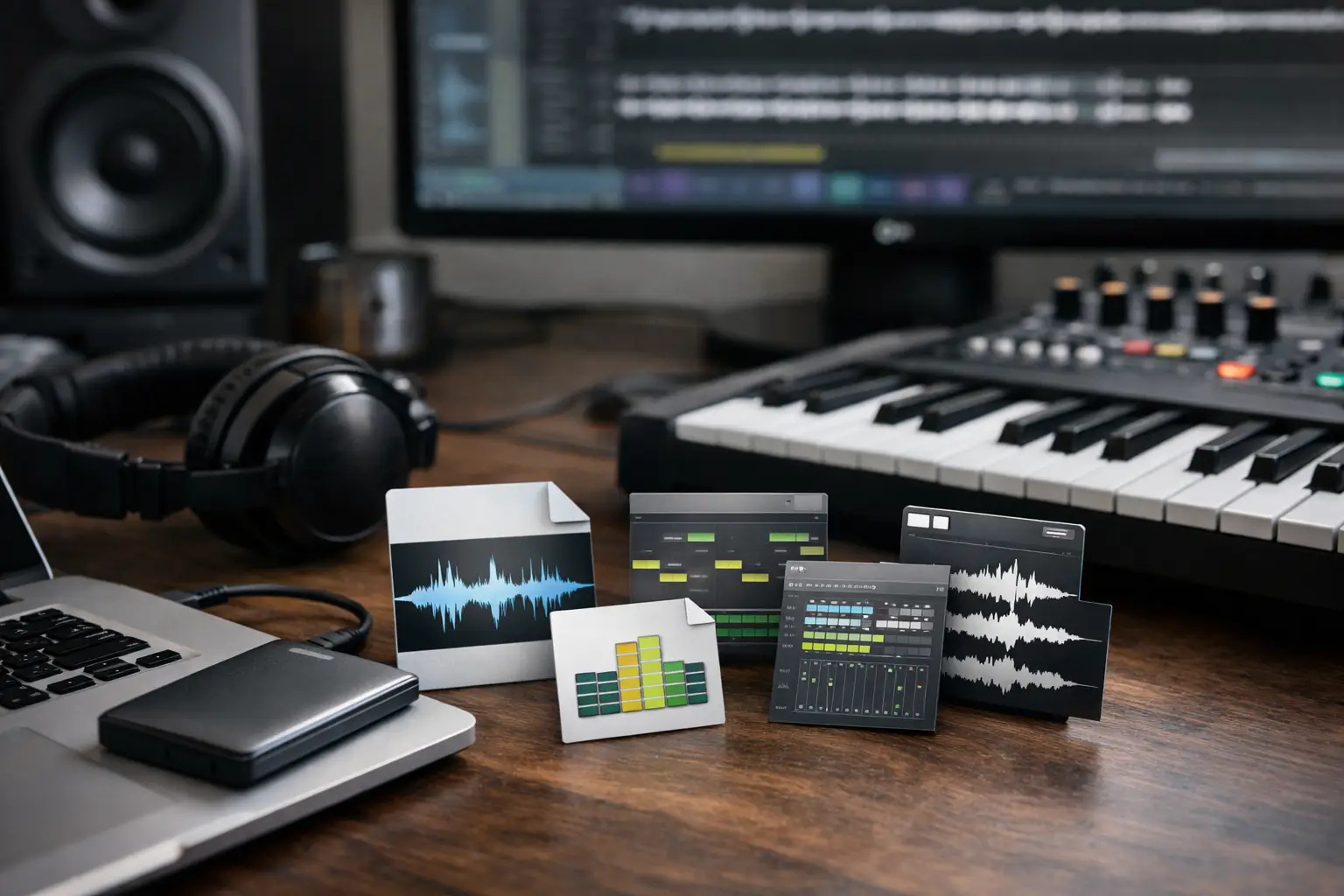
At a professional level, a ghost produced track should include the final master, the mixed version, stems, and the project file. In many cases, it should also come with radio edits or instrumental versions if those are part of the agreement. Just as important, it should include full rights transfer and a confidentiality structure so the track is actually usable in a commercial release strategy.
That sounds straightforward, but standards vary. Some sellers provide only a bounced WAV and call it a ghost production. Others deliver the full production package, which is what serious buyers actually need. If you are comparing providers, this is where the difference between low-cost content and professional-grade ghost production becomes obvious.
The core files you should expect
Final master WAV
This is the release-ready version of the track, mastered for distribution. It is the file you can send to a distributor, label, or mastering reference archive. In EDM, this matters because your release needs to compete sonically with tracks already in Beatport charts, Spotify playlists, and DJ sets.
A proper master should be clean, balanced, and commercially usable. If the master is missing, you are not buying a finished product. You are buying more studio time.
Mixed full-track WAV
Some providers also include the pre-master or mixed version without final mastering processing. This gives you flexibility if you want a different mastering engineer to finish the track or if a label requests a pre-master for their own final chain.
This file is especially useful for artists and A&R teams that want more control over the last stage of the release. It is not always essential, but it is a strong sign that the provider understands professional workflow.
MP3 reference file
An MP3 is not the main asset, but it is convenient for fast review, team approvals, promo planning, and mobile playback. Managers, vocalists, and label contacts often want something lightweight they can open immediately.
On its own, an MP3 means very little. As a companion file, it is useful.
Stems
Stems are one of the most valuable parts of a ghost production package. These are grouped audio exports of the track elements, such as drums, bass, leads, pads, vocals, FX, and percussion. They let you make changes without rebuilding the record from scratch.
If you want to swap a vocal, remove a melody layer, tighten a break, or create an extended intro for club play, stems make that possible. They also help if you want a mixing engineer to revise the balance or if a label asks for alternate versions.
Not all stems are organized equally. A professional delivery should label them clearly and export them so they line up from the same starting point. That saves time and avoids unnecessary confusion when you open the files in your DAW.
Project file
The project file is where the full value of ghost production becomes clear. This is the original DAW session, typically in Ableton Live, FL Studio, Logic Pro, or another agreed platform. It gives you access to the arrangement, MIDI, automation, plugin chains, and sound design structure behind the finished track.
If your goal is to personalize the record, the project file matters. You can change transitions, adjust drops, replace synths, edit arrangement details, and adapt the track to your brand. For artists building a consistent sound, this is often more important than the master itself.
There is one practical limitation here: project files depend on software compatibility. If the session uses third-party plugins you do not own, you may need bounced stems as your main working files. That is why serious buyers should want both stems and project files, not one or the other.
Why stems and project files matter more than buyers think
A lot of artists focus on whether the track sounds good in the preview. That matters, but it is not enough. A strong preview does not tell you how flexible the track will be once it is in your hands.
Stems give you edit freedom. Project files give you production control. Together, they reduce risk.
This becomes critical when release plans change. Maybe your vocalist sends a topline after purchase. Maybe your label asks for a shorter edit. Maybe you want to remove a hook that feels too recognizable for your current branding. Without stems and project files, those requests turn into delays and extra cost.
For touring DJs, this also affects live usability. You may want a longer intro for mixing, a more stripped breakdown for tension, or a version tailored to your set flow. A ghost track should work for your calendar, not force you into a fixed arrangement.
What legal and ownership files should come with a ghost produced track?
Audio files are only half the package. The other half is ownership.
A professional ghost production deal should include full copyright transfer or a clear rights assignment that gives you the legal authority to release the track under your own name. If that is vague, the deal is weak no matter how good the production is.
There should also be a confidentiality structure, typically supported by NDA terms or equivalent contractual protection. This matters because ghost production is built on discretion. Artists use it to protect brand positioning, release strategies, and business relationships.
If you are buying for a label or management roster, rights clarity is not optional. You need to know exactly who owns the master, whether the composition rights are included, and whether there are any usage restrictions. Ambiguity creates downstream problems with distribution, Content ID, licensing, and royalty claims.
At The Ghost Production, that full-package standard is central to the offer: exclusive tracks, sold once, with stems, project files, rights transfer, and confidentiality built into the process.
Files that may also be included depending on the provider
Some ghost producers include additional assets that can make the release process easier. These may include an instrumental mix, a radio edit, an extended mix, MIDI files, or dry vocal files if vocals are part of the production.
Whether you need these depends on your use case. A label may want multiple versions for platform delivery. A DJ may care more about the extended mix. An artist planning post-purchase customization may want MIDI for melody and bass edits.
These extras are valuable, but they should not distract from the core standard. If the package does not include the master, stems, project file, and full rights clarity, bonus files do not fix the gap.
Red flags when evaluating deliverables
If a seller is vague about file formats, that is a warning sign. If they only promise an MP3 and WAV, that is usually not enough for a serious release strategy. If they avoid clear language around copyright transfer, exclusivity, or confidentiality, you are taking on avoidable risk.
Another common issue is partial access. Some sellers advertise project files but do not mention missing plugins, unorganized sessions, or locked routing that makes editing inefficient. Others provide stems that are poorly labeled or exported incorrectly. Technical delivery quality matters because speed matters.
The best ghost production providers understand that buyers are not just purchasing music. They are purchasing time, control, exclusivity, and reduced operational friction.
What should you verify before you buy?
Before purchasing, confirm the DAW format, what stem groups are included, whether the master and pre-master are both delivered, and how rights transfer is handled. If vocals are involved, verify whether they are royalty-free, fully cleared, or subject to any restrictions.
You should also ask whether the track is sold exclusively to one buyer. In ghost production, exclusivity is a core value driver. If the same record can appear elsewhere, it weakens your release positioning immediately.
A strong provider will answer these questions directly because their process is built for professional use.
When you buy ghost production the right way, you are not just buying a song. You are buying a release-ready asset with the files, ownership, and flexibility to move at the speed your brand demands.
My Career makes videos from your own track and posts them for you, pitches your release to 34,000+ labels, playlists, radio stations, YouTube channels and blogs, puts it in every store and briefs you every morning. Free plan, no card, two minutes to set up.