Sorry, no results.
Please try another keyword
Looking for exclusive Trap ghost production? Browse professionally crafted, release-ready Trap tracks created by experienced producers.
Each track is sold exclusively with full rights included — ready to release under your name. Need something fully custom? Order a custom-made Trap production.
Trap music, originating from the Southern United States, particularly Atlanta, Georgia, has become a cornerstone of modern electronic dance music (EDM). It emerged in the late 1990s as a subgenre of hip-hop, characterized by its aggressive lyrical content and distinctive sound. The genre features hard-hitting 808 kick drums, fast hi-hat rolls, and layered synthesizers.
The transition of Trap into the EDM scene began around 2012, with artists like Flosstradamus spearheading the movement. Their track “Original Don (Flosstradamus Remix)” introduced a new audience to Trap’s potential in a festival environment, blending hip-hop elements with electronic production techniques.
Today, Trap music typically operates within a BPM range of 130–160, offering a high-energy experience that resonates with festival crowds. Its core sonic elements include rolling hi-hats, heavy 808 sub-bass lines, and syncopated snares, making it a staple in clubs and festivals worldwide.
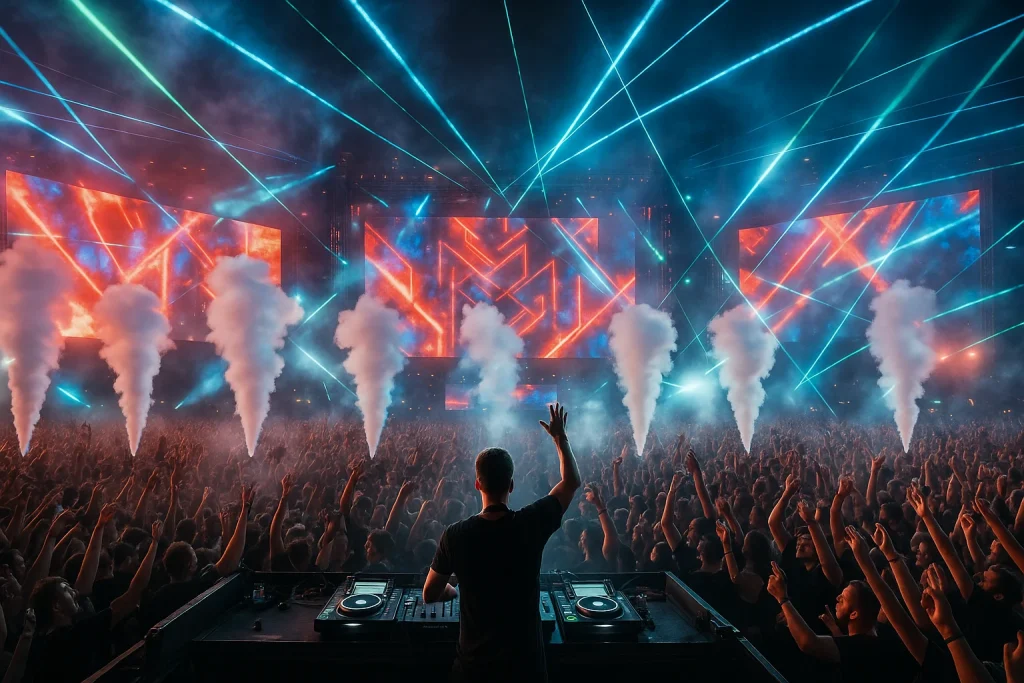
Several key figures have been instrumental in shaping Trap music into the powerhouse it is today. RL Grime, for instance, is often credited with refining the EDM Trap sound. His 2013 single “Tell Me” with What So Not showcased his ability to blend atmospheric elements with hard-hitting drops, setting a new standard for the genre.
Another pivotal artist is Baauer, whose 2012 viral hit “Harlem Shake” played a significant role in bringing Trap to mainstream audiences. The track’s success demonstrated the genre’s potential for crossover appeal, cementing its place in the electronic music ecosystem.
Valentino Khan and Getter have also significantly contributed to Trap’s evolution, each bringing their unique flair to the genre. Khan’s “Deep Down Low” (2015) was a defining moment, further expanding Trap’s reach. Getter’s diverse approach combines elements of dubstep and Trap, reflecting the genre’s adaptability.
Ghost production plays a critical role in the careers of these high-profile artists, enabling them to maintain rigorous release schedules while ensuring consistent quality. It’s estimated that 60–80% of charting electronic music tracks involve some form of ghost production, illustrating its prevalence in the industry.
A professional Trap track is characterized by meticulous attention to detail in its production. The kick pattern is often punchy and layered with a sub-bass to create depth. The bass design typically involves modulating 808s, a staple of the genre. Harmonic choices lean towards minor keys, providing a darker, more intense atmosphere.
The arrangement structure usually includes dramatic buildups and impactful drops, maintaining listener engagement. High-quality Trap tracks are distinguished by their polished mixdowns, where elements like hi-hats and snares are balanced to enhance the overall energy.
Producers frequently use digital audio workstations (DAWs) like Ableton Live and FL Studio for their intuitive interfaces and robust plugin support. Popular plugins include Serum for synth design and FabFilter Pro-Q for precise EQ adjustments. Mixing approaches often involve sidechaining and multiband compression to ensure clarity.
For those looking to excel in Trap production, resources like Splice offer sample packs and presets specifically tailored to the genre. Understanding the nuances of Trap production can also be expanded by exploring related genres, such as Hybrid Trap and Dubstep.

Ghost production has become an integral part of the modern music industry, especially within the Trap genre. The pressures of maintaining a consistent release schedule while touring can be overwhelming for artists. This is where ghost producers come in, offering their expertise to bridge the skill gap between DJing and producing.
In 2026, labels continue to rely heavily on A&R strategies that involve scouting tracks with strong commercial potential. Ghost producers provide a valuable resource, enabling artists to meet the high demands of the industry without compromising on quality. According to industry surveys, ghost production is involved in approximately 60–80% of charting electronic music tracks.
Notably, positions often require quick turnarounds, pushing artists to collaborate with ghost producers who can deliver high-quality tracks efficiently. This collaboration allows artists to focus on other aspects of their career, such as performances and brand development.
For DJs and producers interested in exploring ghost production, platforms like The Ghost Production offer a wide array of options across various genres, including Future Bass and Afro House.
Ordering a ghost-produced Trap track requires a well-defined brief to ensure the final product aligns with your vision. Key elements to include in the brief are reference tracks, desired key and BPM, overall mood, and structure. This information helps the ghost producer understand your expectations and deliver a track that meets your needs.
Typically, deliverables include a mastered WAV file, stems for further customization, and MIDI files for flexibility. Pricing can vary significantly based on factors like exclusivity and the producer’s reputation, ranging from $200 to over $5,000. It’s essential to discuss these details upfront to avoid misunderstandings.
Red flags to watch out for include producers unable or unwilling to provide samples of previous work, vague pricing structures, and a lack of clear communication. Ensuring the producer has a track record of successful collaborations can save time and resources.
For those seeking the best services, exploring platforms like The Ghost Production can provide access to vetted producers capable of crafting high-quality Trap tracks tailored to your specifications.
| Service | Quality Level | Turnaround | Pricing | Rights |
|---|---|---|---|---|
| Service A | High | 2-4 weeks | $1,000+ | Full |
| Service B | Mid | 1-2 weeks | $500–$1,000 | Shared |
| Service C | Standard | 1 week | $200–$500 | Non-exclusive |
Integrating ghost-produced tracks into your DJ sets and releases can enhance your brand while providing fresh content. When selecting tracks, consider how they fit into the overall vibe of your set. Key and BPM compatibility are crucial for seamless transitions, ensuring the energy flow remains consistent.
It’s also beneficial to personalize the tracks by incorporating your unique sound elements, such as vocal samples or specific effects. This customization can set your sets apart and reinforce your artistic identity.
When planning releases, ensure the tracks align with your artistic vision and label requirements. Platforms like Spotify for Artists and Resident Advisor offer valuable insights into audience preferences, which can inform your release strategy.
For those looking to expand their repertoire with professionally crafted tracks, consider exploring options to buy exclusive ghost-produced tracks from a trusted source.
Trap tracks typically operate within a BPM range of 130–160, providing an energetic experience suitable for dance floors and festivals.
Ghost production is prevalent due to the high demand for frequent releases and the skill gap between DJing and music production. It allows artists to maintain quality while managing other career aspects.
Include reference tracks, desired key and BPM, mood, and structure to ensure the producer understands your vision and delivers a track that meets your expectations.
Choose a producer with a proven track record, request samples of previous work, and maintain clear communication throughout the process to ensure quality and alignment with your vision.
Ghost production is generally considered ethical as long as all parties involved agree on the terms. It is a common industry practice that enables artists to focus on performance and brand development.
Last updated:
Release more music, hit more deadlines, and build a stronger catalog — with professional ghost production that sounds exactly like you.




 FL Studio