
Sound Design Basics for Producers
Sound Design Basics for Producers
Sound design is a crucial element in music production, offering producers the tools to craft unique and memorable auditory experiences. From the groundbreaking basslines of Skrillex to the mind-bending textures in film scores, sound design is a discipline that serves multiple creative purposes. This article delves into the sound design basics every producer should know, including techniques, historical context, and how to develop a signature sound.
Renowned producers like Skrillex have revolutionized the sound design landscape, particularly within the bass music genre. His innovative approach blends aggressive bass sounds with melodic elements, showcasing the transformative power of sound design. Through understanding the intricacies of sound design, producers can elevate their tracks from ordinary to extraordinary.
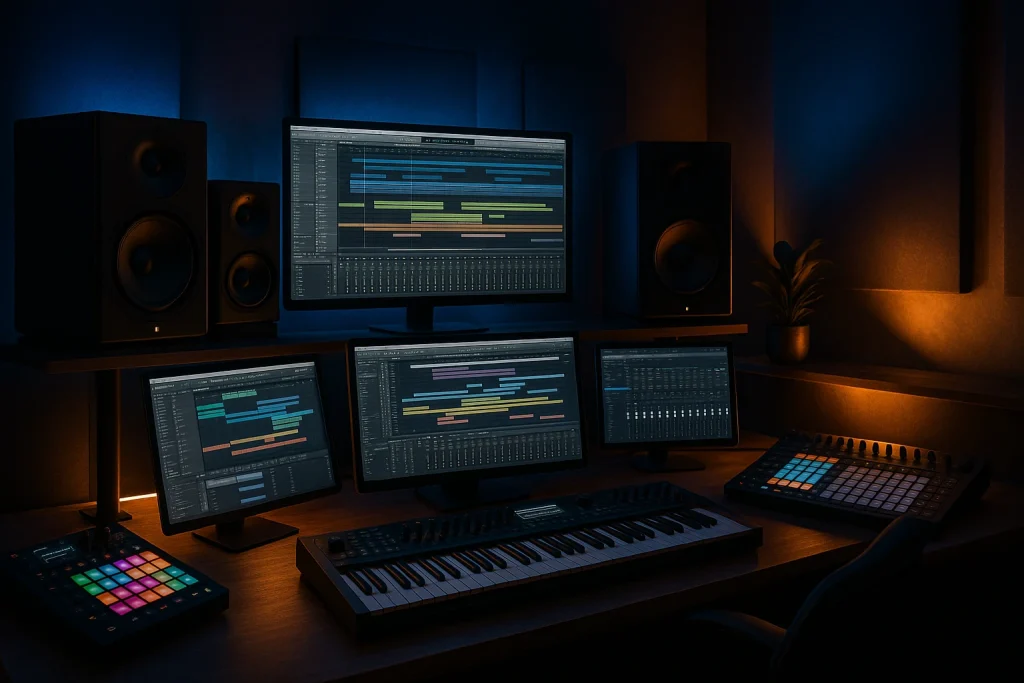
When discussing sound design, it’s vital to distinguish between its application in music versus film and TV. In music, sound design focuses on creating distinct auditory elements that enhance the track’s atmosphere or emotional impact. In contrast, sound design for film and TV often involves creating realistic soundscapes or enhancing the narrative through audio cues, requiring a different set of skills and tools.
The Evolution of Sound Design in Music Production
The history of sound design in music is rich with innovation. The advent of synthesizers in the 20th century marked a turning point, enabling producers to create sounds that were previously impossible. The iconic Moog synthesizer, for instance, brought new dimensions to music in the 1960s.
Over the decades, artists like Kraftwerk and Brian Eno have pioneered sound design techniques that have shaped genres. Today, digital audio workstations (DAWs) and software like Splice offer unprecedented access to sound manipulation tools.
In electronic music, sound design has birthed iconic sounds such as the “Reese bass,” the TB-303 acid sound, and the Massive x-bass wobble. These sounds not only define tracks but also entire genres, illustrating the power of sound design in shaping musical identities.
Layering Techniques for Bass Sounds
Creating a compelling bass sound often involves layering different sound elements. A typical approach involves combining sub, mid, and top layers to achieve a rich and full sonic profile. The sub layer provides the low-end rumble, the mid-layer adds texture, and the top layer delivers clarity.
Layering requires careful attention to the frequency spectrum, ensuring that each layer occupies a distinct range to prevent muddiness. Producers can learn more about this technique through resources like Resident Advisor, which offers insights into advanced sound design methods.
Granular Resynthesis for Textures
Granular resynthesis is a powerful technique for crafting unique textures and soundscapes. This process involves breaking down a sound into tiny grains and reorganizing them to create new, complex textures. Granular resynthesis can add depth and interest to a track, transforming simple sounds into intricate auditory experiences.
Software like MusicRadar provides tools for exploring granular synthesis, enabling producers to experiment with this versatile technique.
Designing a Signature Sound
Developing a signature sound is crucial for establishing an artist’s identity. A signature sound is not just about a specific timbre or effect; it’s the overall aesthetic that defines an artist’s work. Producers can achieve this by consistently using certain sound design techniques or instruments that become synonymous with their music.
Artists like Deadmau5 and Daft Punk have mastered the art of signature sound design, using distinctive elements that make their tracks instantly recognizable. For producers looking to craft their signature sound, starting with a clear vision and experimenting with different techniques is key.
Iconic Sounds in Electronic Music
Several iconic sounds have left a lasting impact on electronic music. The “Reese bass,” created by Kevin Saunderson, is a staple in drum and bass and jungle music. Its distinctive, evolving bassline adds intensity and drive to tracks.
The TB-303 acid sound, popularized by artists like Phuture, defined the acid house movement. Its squelchy, resonant tones are achieved through the Roland TB-303’s unique filter and envelope settings. The Massive x-bass wobble, a hallmark of dubstep, is created using complex modulation and filtering techniques within Native Instruments’ Massive software.
Frequently Asked Questions
What is the role of sound design in music production?
Sound design in music production involves creating and manipulating sounds to enhance the musical composition, provide texture, and establish a unique auditory identity for the artist.
How does sound design differ between music and film/TV?
In music, sound design focuses on creating unique audio elements to complement and elevate the track. In film and TV, it often involves creating soundscapes and effects that support the narrative and enhance realism.
What tools are essential for sound design in music?
Essential tools for sound design include DAWs, synthesizers, effect plugins, and modular systems. Platforms like SoundCloud also offer a community for sharing and discovering innovative sound design techniques.
How can I develop my signature sound?
To develop a signature sound, focus on a clear artistic vision, consistently use specific sound design techniques, and experiment with different sonic elements until you find what defines your musical identity.
Where can I find professional tracks for my catalog?
For producers looking to expand their catalog with professional tracks, platforms like The Ghost Production offer a range of services, including ghost production and exclusive track purchases.
Last updated:
Ready to Scale Your Music Output?
Release more music, hit more deadlines, and build a stronger catalog — with professional ghost production that sounds exactly like you.