
Music Production Basics – Start Here
Music Production Basics – Start Here
Understanding music production basics is crucial for any aspiring DJ or producer looking to carve out a niche in the competitive music industry. From beat-making to sound design, and from mixing to mastering, knowing the essential components can set you on the path to producing professional-quality tracks. Let’s delve into the world of music production, examining key elements, historical context, and expert tips that can help you get started.
The landscape of music production has evolved significantly since the early days of analog recording. In the digital era, the ability to produce music has been democratized thanks to powerful Digital Audio Workstations (DAWs) like Ableton Live, FL Studio, and Logic Pro X. These tools have enabled artists like Deadmau5 and Calvin Harris to push the boundaries of electronic music. Today, even bedroom producers can make chart-topping hits with the right knowledge and tools.
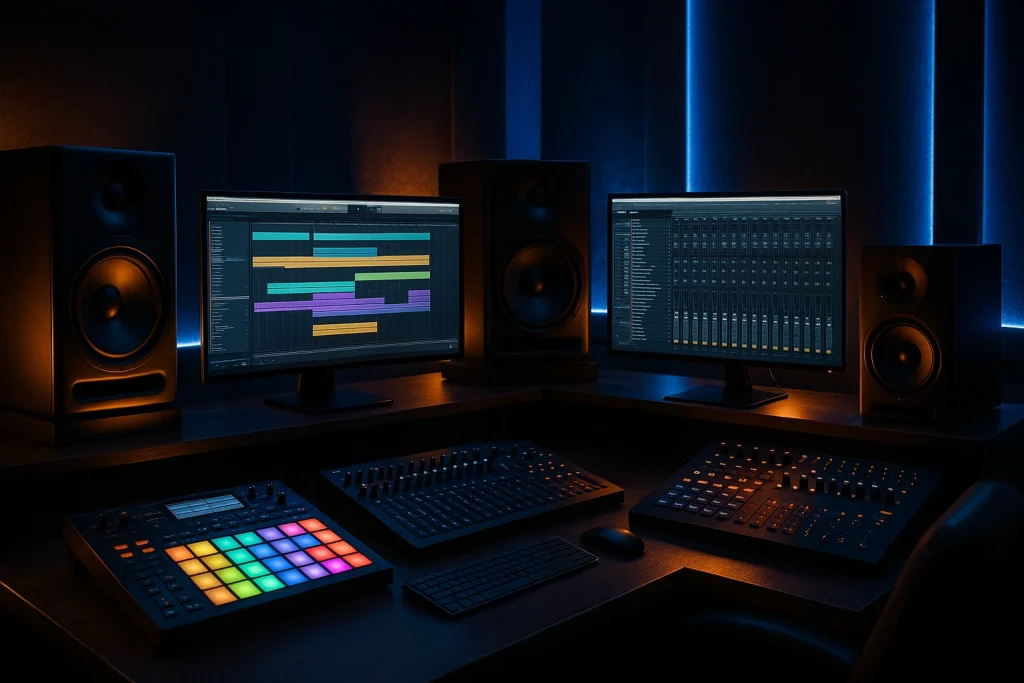
As of 2026, reports indicate that more than 60% of new music releases are produced using digital means. According to Mixmag, DAWs have not only streamlined the music creation process but also expanded creative possibilities, allowing producers to experiment with sounds and techniques that were previously unimaginable.
The Essential Components of Music Production
To navigate the music production landscape effectively, one must first comprehend its foundational elements. These components include arrangement, sound design, mixing, and mastering, each playing a pivotal role in crafting a polished final product.
Arrangement
Arrangement is the art of structuring your track to maintain listener interest. It involves organizing your musical ideas, such as intro, verse, chorus, and bridge, into a coherent flow. A well-arranged track can make the difference between a hit and a miss. Classic examples include Daft Punk’s “Around the World,” which intricately weaves loops and melodies to create a hypnotic auditory experience.
Sound Design
Sound design is the process of creating unique sounds from scratch or manipulating existing ones. This involves using synthesizers and effects to shape the sonic identity of your track. Artists like Skrillex are renowned for their groundbreaking sound design, which has played a significant role in popularizing genres like dubstep. Tools such as Splice offer a plethora of samples and presets to inspire your sound design journey.
Mixing
Mixing refers to blending all the individual elements of a track into a harmonious whole. It involves adjusting levels, panning sounds, and applying effects to achieve clarity and balance. Notable mixing engineers like Serban Ghenea have mixed hits for artists such as The Weeknd and Taylor Swift, emphasizing the importance of a professional mix.
Mastering
Mastering is the final step in music production, ensuring that your track is polished and ready for distribution. It involves applying compression, equalization, and limiting to optimize the track for various playback systems. Mastering can be a nuanced process, often best left to experts; however, online platforms like Spotify for Artists offer resources to help you understand the basics.
Choosing Your Digital Audio Workstation (DAW)
Your choice of DAW can significantly impact your workflow and creative output. While some DAWs are renowned for specific features, others offer a more comprehensive toolkit. Here’s a comparison of popular DAWs to help you choose the right one for your needs:
| DAW | Best For | Key Features | Price Range |
|---|---|---|---|
| Ableton Live | Live Performance, Electronic Music | Session View, Max for Live | $99 – $749 |
| FL Studio | Beat Making, Hip-Hop | Step Sequencer, Piano Roll | $99 – $499 |
| Logic Pro X | Recording, Songwriting | Drummer Track, Flex Time | $199 |
Each DAW has its strengths and weaknesses, and the best choice often depends on your personal preferences and production style. To explore further, check out our comparison of Ableton vs FL Studio.
Common Myths and Realities in Music Production
As with any creative field, music production is surrounded by myths that can mislead beginners. Let’s debunk some common misconceptions:
Myth: You Need Expensive Gear to Start
Reality: While high-quality gear can enhance your production, many iconic tracks were made with minimal equipment. Focus on mastering your DAW and plugins before investing in costly hardware.
Myth: You Must Know Music Theory
Reality: While understanding music theory can be beneficial, many successful producers create by ear and intuition. Tools like MIDI packs and chord generators can help bridge any gaps in theory knowledge.
Myth: Mixing and Mastering are the Same
Reality: Mixing and mastering serve distinct purposes. Mixing involves balancing and blending elements within a track, while mastering polishes the final mix for distribution. Each requires a unique skill set.
Actionable Tips for Aspiring Producers
Embarking on your music production journey can be daunting, but these tips can help you navigate the process:
- Set Clear Goals: Define what you want to achieve with your music, whether it’s releasing an album, landing a DJ residency, or collaborating with other artists.
- Practice Consistently: Dedicate time each day to hone your skills. Music production is a craft that improves with regular practice.
- Network with Others: Join online communities, attend workshops, and collaborate with other producers. Networking can open doors to new opportunities and insights.
- Consider Ghost Production: If you’re looking to expand your catalog or need help finishing tracks, services like ghost production can be invaluable.
Expanding Your Production Horizons
Beyond the basics, there are various ways to enhance your production capabilities and explore new avenues in the industry:
- Explore Different Genres: Diversifying your production style can inspire creativity and help you develop a unique sound.
- Attend Workshops and Masterclasses: Learning from industry professionals can provide valuable insights and techniques.
- Leverage Online Resources: Platforms like SoundCloud and Beatport are excellent for showcasing your music and gaining feedback from peers.
- Consider Professional Assistance: For those ready to take their music to the next level, The Ghost Production offers custom track creation and professional production services that can elevate your sound.
Frequently Asked Questions
What is the most important aspect of music production?
While all elements are crucial, many producers consider a solid arrangement the foundation of a successful track, as it dictates the flow and energy.
Do I need to learn an instrument to produce music?
No, many producers create tracks using only a DAW and virtual instruments. However, learning an instrument can enhance your musical understanding and creativity.
How can I improve my mixing skills?
Practice is key, but studying tutorials, analyzing professional mixes, and investing in quality plugins can also significantly improve your mixing abilities.
What are the benefits of using ghost production services?
Ghost production can help increase your output, refine your sound, and provide industry-standard tracks that are ready for release, saving you valuable time and effort.
How do I get my music noticed?
Promote your tracks through social media, submit demos to labels, and collaborate with other artists to expand your reach. Networking and persistence are crucial in gaining recognition.
Last updated:
Ready to Scale Your Music Output?
Release more music, hit more deadlines, and build a stronger catalog — with professional ghost production that sounds exactly like you.