
How to Design Lead Sounds – Synthesis Guide
How to Design Lead Sounds – Synthesis Guide
In the ever-evolving world of electronic music production, designing lead sounds is a critical skill for creating tracks that stand out. From the iconic supersaw leads in trance and EDM to the cutting plucks of future bass, lead synthesis can define a track’s signature sound. This guide will explore the techniques, tools, and tips you need to master the art of lead sound design.
Understanding how to design lead sounds is essential for producers aiming to create memorable melodies and hooks. Whether you’re a seasoned producer or just starting, this comprehensive guide will provide you with the knowledge needed to craft unique lead sounds that capture your audience’s attention.
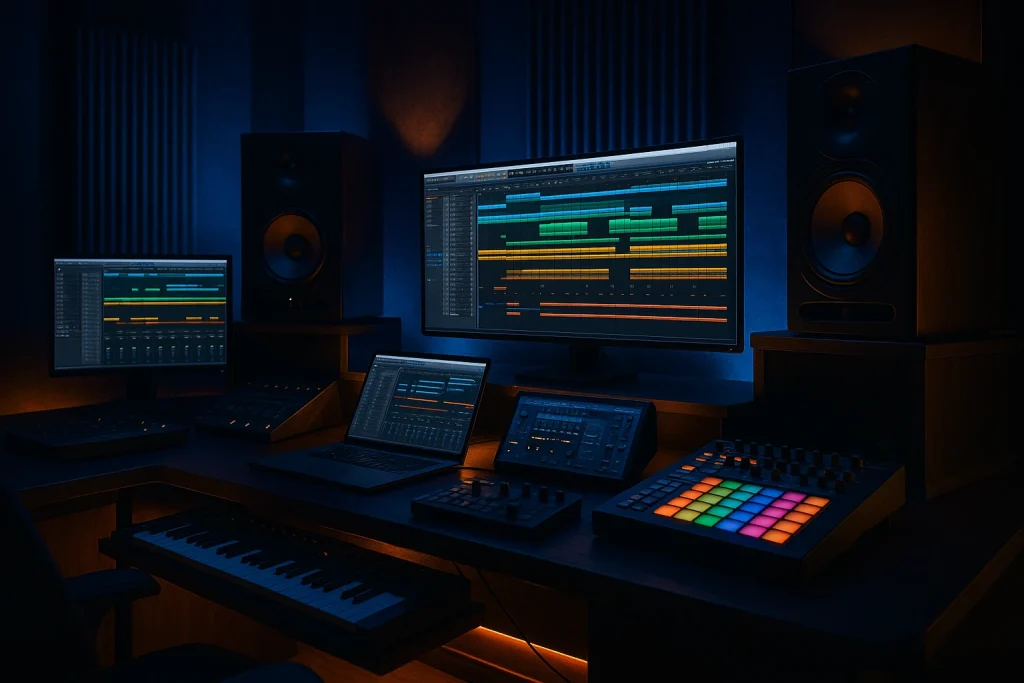
Lead sounds are often the focal point of a track, cutting through the mix to deliver the melodic content that listeners latch onto. They’re crafted using various synthesis methods, including subtractive, wavetable, and FM synthesis. Each method offers a unique palette of sounds and possibilities, allowing producers to experiment and innovate.
Key Techniques in Lead Sound Design
Subtractive Synthesis
Subtractive synthesis remains a staple in lead sound design. It operates by filtering down a rich, harmonic waveform to create a more focused sound. This method is famously used in the creation of the fat, detuned supersaw leads popularized by artists like Tiësto and Armin van Buuren. For those looking to dive deeper into this technique, our guide on using saturation in music production can enhance your sound design process.
Wavetable Synthesis
Wavetable synthesis offers a more modern approach, with a vast array of complex and evolving sounds. This method gained popularity with the release of synths like Xfer Serum and Ableton’s Wavetable. Producers such as Deadmau5 and Flume leverage wavetable synthesis to create lush and intricate lead sounds that evolve over time.
FM Synthesis
FM (Frequency Modulation) synthesis provides another dimension to lead sound design. Known for its sharp and metallic tones, FM synthesis is perfect for creating distinctive plucks and bells. Artists like Skrillex have utilized FM synthesis to craft aggressive, punchy leads that are both dynamic and memorable.
Tools of the Trade
Choosing the right tools is crucial when designing lead sounds. Software synthesizers have become the go-to for many producers due to their flexibility and power. Here’s a comparison of some popular synths:
| Synth | Type | Notable Features | Artists |
|---|---|---|---|
| Xfer Serum | Wavetable | Custom Wavetable Import, Advanced Modulation | Flume, Deadmau5 |
| Massive X | Wavetable | Hybrid Engine, Advanced Routing | Porter Robinson, Zedd |
| Spire | Hybrid | Flexible Oscillator, Unique Filters | Armin van Buuren, Hardwell |
| Arturia Pigments | Wavetable/Analog | Sophisticated Sequencer, Dual Engines | Martin Garrix, Calvin Harris |
For further exploration of music production tools, check out MusicRadar for reviews and comparisons of the latest synths and plugins.
Crafting Signature Leads with Effects
While synthesis forms the foundation of lead sound design, effects processing is what truly brings these sounds to life. Techniques such as reverb, delay, and distortion can transform a basic lead into a rich, dynamic centerpiece.
Reverb and Delay
Reverb and delay add space and dimension, creating a sense of depth in your leads. By adjusting the decay time and feedback, you can simulate different environments and enhance the emotive quality of your leads. For a deeper dive into spatial effects, our stereo width guide provides insights into creating a wide and immersive sound.
Distortion and Saturation
Distortion and saturation introduce harmonics and warmth, making your leads sound fuller and more energetic. Subtle saturation can bring a lead to life, while heavier distortion can create aggressive, attention-grabbing sounds. Mixmag offers numerous articles on creative sound processing techniques.
Integrating Lead Sounds in Your Mix
Integrating lead sounds into a mix requires careful attention to balance and clarity. Techniques such as EQ, compression, and sidechain compression ensure that your leads shine without overpowering other elements.
EQ and Compression
Use EQ to carve out space for your leads in the mix. Remove unnecessary low frequencies and enhance key areas to allow the lead to cut through. Compression can help stabilize the dynamics of your lead, ensuring consistency and presence.
Sidechain Compression
Sidechain compression is a popular technique used to create space for the kick drum, a key element in electronic music. By ducking the lead sound when the kick hits, you can maintain energy and prevent frequency clashes. Our sidechain compression guide explains this process in detail.
Common Myths and Realities
There are several myths surrounding lead sound design. One common misconception is that expensive plugins are necessary for professional results. In truth, creativity and understanding of synthesis fundamentals often outweigh the need for costly software. Free plugins like Vital and Surge can produce excellent leads when used skillfully.
Another myth is that more layers equal better leads. While layering can enhance complexity, too many layers can muddy the mix. Focus on quality over quantity, ensuring each layer serves a purpose and complements the others.
Expert Tips for Designing Lead Sounds
To excel in lead sound design, always keep these expert tips in mind:
- Experiment with modulation: Use LFOs and envelopes to add movement and variation to your leads.
- Reference tracks: Study the structure and sound design of successful tracks in your genre.
- Stay updated: Follow platforms like Resident Advisor and SoundCloud to discover the latest trends and techniques in electronic music.
- Collaborate and outsource: Consider collaborating with a ghost producer for fresh ideas and perspectives on lead sound design.
Scaling Your Production with Professional Help
If you’re looking to enhance your production capabilities, consider hiring a ghost producer. Services like our music production services can provide professional-quality tracks that align with your vision. For those interested in purchasing exclusive tracks, explore options to buy ghost-produced tracks tailored to your needs.
Moreover, for record labels seeking reliable music for their roster, our ghost production services ensure consistent output without compromising quality.
Frequently Asked Questions
What is the best synthesizer for lead sound design?
The best synthesizer depends on your style and preferences. Xfer Serum is highly recommended for its powerful wavetable capabilities, while Arturia Pigments offers a versatile hybrid engine.
How can I make my leads stand out in a mix?
Use EQ to carve out space and sidechain compression to create room for other elements like the kick drum. Experiment with effects such as reverb and distortion to add character and depth.
Do I need expensive plugins to design great lead sounds?
No, many free plugins like Vital and Surge offer excellent capabilities. Focus on mastering synthesis techniques and sound design fundamentals to achieve professional results.
Can I outsource lead sound design?
Yes, outsourcing to a ghost producer can provide fresh ideas and professional-quality leads. Check out our outsourcing services for more information.
How do I keep up with the latest trends in lead sound design?
Follow industry platforms like Beatport and Mixmag to stay informed about new trends and techniques in electronic music production.
Last updated:
Ready to Scale Your Music Output?
Release more music, hit more deadlines, and build a stronger catalog — with professional ghost production that sounds exactly like you.