
Best Studio Monitors on a Budget
Best Studio Monitors on a Budget: A Comprehensive Guide for Producers
In 2026, the landscape for music producers and DJs has evolved significantly, with technology providing more opportunities than ever to create professional-grade music from the comfort of a home studio. However, one element remains essential: the choice of studio monitors. Finding the best studio monitors on a budget can be challenging, given the plethora of options and the need for accuracy in sound reproduction.
This guide will walk you through the intricacies of selecting budget-friendly studio monitors, highlighting key features, historical context, and expert tips to assist both emerging producers and seasoned professionals. Whether you’re just starting out or looking to upgrade your setup, understanding the balance between quality and affordability is crucial.
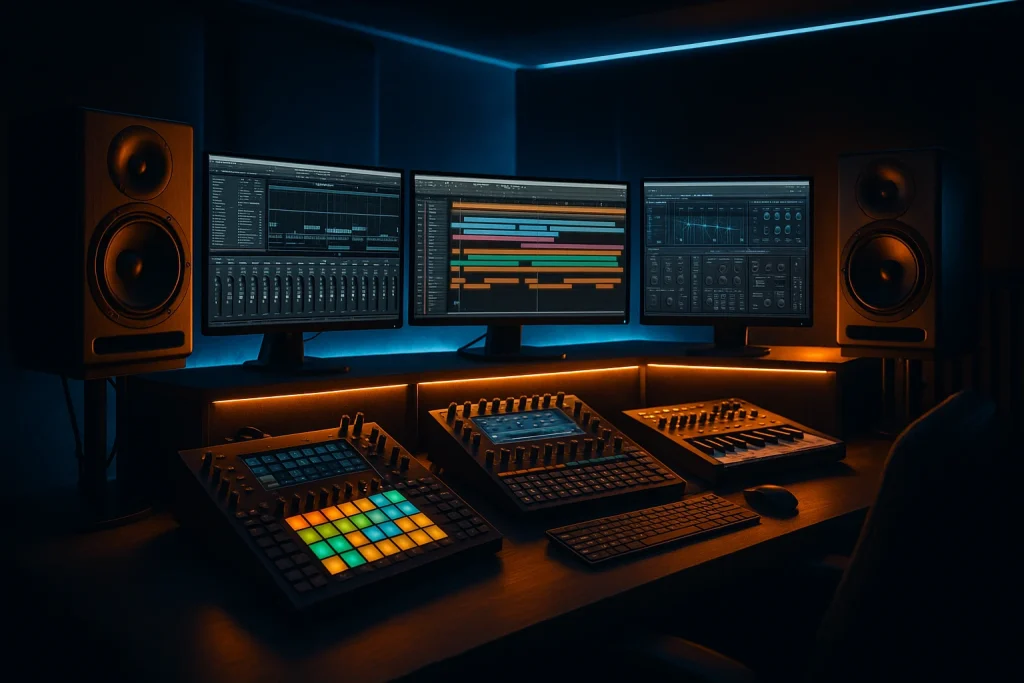
Studio monitors differ significantly from regular speakers, as they are designed to provide an accurate representation of your music without coloration. This guide will explore several options, supported by industry data, to help you make an informed decision about your studio setup.
Understanding Studio Monitors: Historical Context and Evolution
Studio monitors have undergone considerable evolution since their inception. Initially developed in the 1940s and 1950s for recording studios, they were bulky and expensive. By the 1970s, brands like Yamaha introduced more accessible models, such as the Yamaha NS-10, which became iconic in the industry.
The demand for home studios surged in the late 1990s and early 2000s, prompting manufacturers to develop cost-effective solutions without sacrificing quality. Today, producers have access to a wide range of monitors that cater to different budgets and preferences, making it easier for artists to produce music independently.
Key Features to Consider in Budget Studio Monitors
When selecting studio monitors on a budget, it’s essential to focus on several key features. Here’s a breakdown of what to look for:
Frequency Response
Frequency response indicates how accurately a monitor reproduces sound across different frequencies. A flat frequency response is ideal, as it ensures that no particular frequency is overly emphasized or suppressed. Look for monitors with a range of at least 50Hz to 20kHz.
Driver Size
The size of the drivers in a monitor affects the bass response and overall sound projection. While larger drivers can produce deeper bass, they may not be necessary in smaller rooms. Aim for a balanced size, typically between 5 to 8 inches, for versatility.
Connectivity Options
Ensure your monitors have the necessary connectivity options, such as balanced XLR or TRS inputs, to integrate with your existing gear. Flexibility in connectivity can prevent compatibility issues and enhance your studio workflow.
Build Quality
Durability and build quality are crucial, especially for budget monitors. Look for sturdy materials and good craftsmanship to ensure longevity, even if you’re spending less.
Top Budget Studio Monitors for 2026
| Model | Price Range | Frequency Response | Driver Size | Notable Features |
|---|---|---|---|---|
| Yamaha HS5 | $200–$300 | 54Hz–30kHz | 5-inch | Room control and high trim response controls |
| KRK Rokit 5 G4 | $150–$250 | 43Hz–40kHz | 5-inch | Customizable EQ settings via LCD |
| JBL 305P MkII | $150–$200 | 49Hz–20kHz | 5-inch | Image Control Waveguide for precise imaging |
| M-Audio BX5 D3 | $100–$150 | 52Hz–35kHz | 5-inch | Acoustic space control |
| PreSonus Eris E3.5 | $100–$150 | 80Hz–20kHz | 3.5-inch | Compact design, ideal for small spaces |
Myths and Realities of Budget Studio Monitors
There are several misconceptions about budget studio monitors that need addressing. It’s often assumed that more expensive monitors are inherently better, but this isn’t always the case. Many affordable options offer excellent audio fidelity suitable for both beginners and professionals.
Myth: All Budget Monitors Lack Bass
While some budget monitors may have limited bass response, models like the KRK Rokit series have become known for their robust low-end performance. Proper room treatment and positioning can also significantly enhance bass response, making budget monitors more than adequate for most producers.
Myth: Expensive Monitors are Always Better
Although high-end monitors often provide superior clarity and build quality, several affordable models offer outstanding performance due to advancements in technology and manufacturing. It’s essential to evaluate monitors based on their individual characteristics rather than price alone.
Expert Tips for Setting Up Your Budget Studio Monitors
Setting up your studio monitors properly can make a significant difference in sound quality. Here are expert tips to optimize your monitor placement:
Optimizing Room Acoustics
Before placing your monitors, consider the acoustics of your room. Use acoustic treatment like bass traps and diffusers to minimize reflections and standing waves, which can color your sound.
Monitor Placement
Position your monitors at ear level in an equilateral triangle formation with your listening position. This setup ensures accurate stereo imaging and soundstage.
Calibration and Testing
Utilize calibration tools and reference tracks to adjust your monitors for a balanced sound. Regular testing with familiar music can help you become accustomed to your monitors’ sound profile, allowing for better mixing decisions.
Integrating Budget Studio Monitors into Your Production Workflow
Once you’ve selected and set up your studio monitors, integrating them into your production workflow is the next step. For many producers, this means adjusting to a new sound environment and leveraging the monitors’ accuracy for better mixing and mastering.
For those looking to expand their production capabilities, consider outsourcing some aspects of production to ensure quality and efficiency. The Ghost Production offers a range of services, including ghost production and buying exclusive tracks.
Frequently Asked Questions
What is the main difference between studio monitors and regular speakers?
Studio monitors are designed to provide a flat frequency response for accurate sound reproduction, while regular speakers often enhance certain frequencies for more enjoyable listening.
Can I use budget studio monitors for professional production?
Yes, many budget studio monitors offer excellent sound quality suitable for professional production, especially when coupled with proper room treatment and setup.
How do I choose the right size for my studio monitors?
Choose monitor size based on your room dimensions and sound requirements. Smaller rooms may benefit from 5-inch drivers, while larger spaces might require 8-inch drivers for more bass.
Are there any brands known for high-quality budget studio monitors?
Brands like Yamaha, KRK, JBL, and M-Audio are renowned for producing high-quality budget studio monitors that offer great value for money.
How can I improve the sound of my budget studio monitors?
Improve your monitors’ sound by optimizing room acoustics, correctly positioning your monitors, and calibrating them for a balanced frequency response.
Last updated:
Ready to Scale Your Music Output?
Release more music, hit more deadlines, and build a stronger catalog — with professional ghost production that sounds exactly like you.