
AI in Music Production – Pros, Cons & What Producers Need to Know
AI in Music Production – Pros, Cons & What Producers Need to Know
Artificial intelligence (AI) has been transforming various industries, and music production is no exception. As we enter 2026, AI’s influence on music production is more pronounced than ever. For producers, understanding the capabilities, limitations, and implications of AI tools is crucial to leveraging these technologies effectively. This comprehensive guide explores AI’s role in music production, providing industry insights and practical advice for producers seeking to enhance their craft.
The rise of AI in music production has sparked a mix of excitement and concern. While AI offers unprecedented tools for creativity, it also raises questions about originality, authorship, and the future of music production as a human endeavor. In this article, we’ll delve into the real-world applications of AI, debunk myths, and provide a balanced view of its pros and cons.
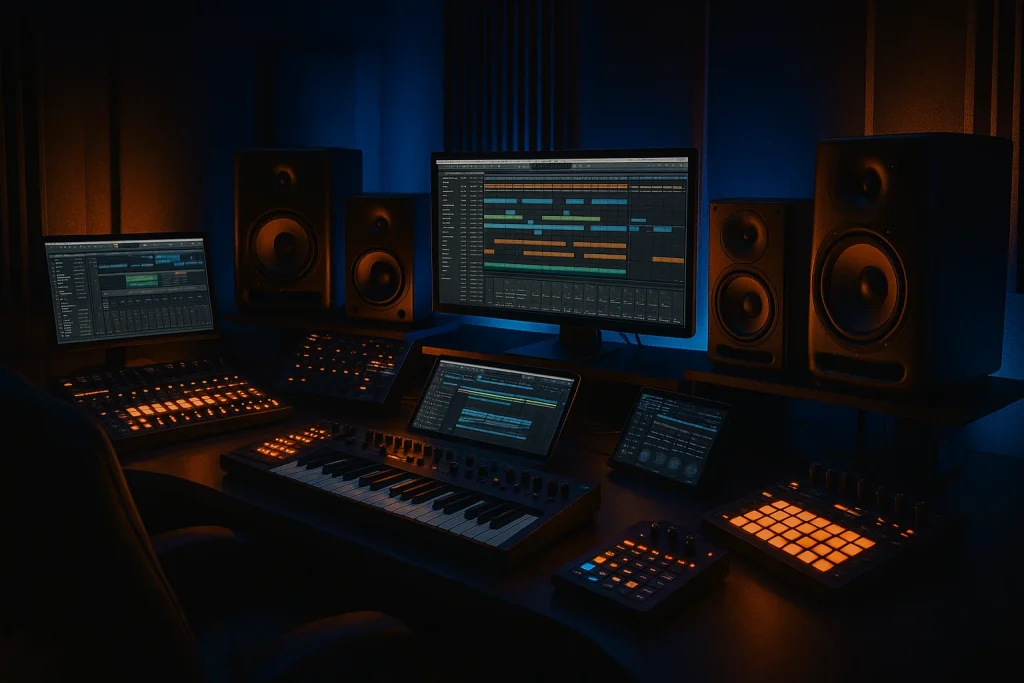
The Rise of AI in Music Production: A Historical Perspective
AI’s journey into music production began in the early 2010s, with algorithms designed to analyze and generate music. Over the years, these technologies have evolved, with tools like Google’s Magenta and OpenAI’s MuseNet setting new precedents. According to a 2025 report by DJ Mag, AI-generated tracks now account for approximately 10% of the electronic music playlists on major streaming platforms like Spotify for Artists.
Leading artists and producers, including Taryn Southern and Holly Herndon, have embraced AI, using it to create innovative compositions that challenge traditional music-making processes. In 2024, Herndon’s album “PROTO” famously used AI as a collaborative tool, blending human and machine creativity.
AI Tools Every Music Producer Should Know
AI-powered tools have become indispensable in modern studios. Platforms like Splice offer AI-driven sound design features that streamline the production process. Another notable tool is AIVA, an AI composer capable of creating symphonic music, widely used in game and film scoring.
Producers can also leverage AI for mastering and mixing tasks. LANDR, for example, provides an AI-driven mastering service that has democratized access to high-quality audio finishing. These tools not only save time but also allow producers to experiment with different sounds and genres effortlessly.
Pros and Cons of AI in Music Production
AI’s integration into music production presents numerous benefits alongside certain challenges:
| Pros | Cons |
|---|---|
| Enhanced creativity through AI-generated ideas | Potential loss of human touch in music |
| Time-saving through automated processes | Intellectual property and originality concerns |
| Access to advanced production tools for all skill levels | Dependence on technology may hinder skill development |
Understanding these pros and cons is essential for producers looking to integrate AI into their workflow. Balancing AI with human creativity remains a crucial aspect of maintaining authenticity in music.
AI and the Ethics of Music Production
The ethical implications of AI in music production are a topic of ongoing debate. Questions around authorship and originality are at the forefront, with some arguing that AI-generated music lacks the emotional depth of human-composed tracks. However, AI can be seen as a tool for augmentation rather than replacement, enhancing the creative capabilities of producers.
Industry bodies and artists are advocating for clarity in AI usage and crediting practices. For instance, the inclusion of AI as a collaborator in credits could set new standards for transparency in music production.
AI’s Impact on Ghost Production and Outsourcing
AI is reshaping the landscape of ghost production, offering tools that streamline the production process while maintaining quality. For those unfamiliar, ghost production involves creating music anonymously for other artists, a practice that has been gaining traction in the electronic music scene. AI enhances the efficiency of ghost production, allowing producers to deliver high-quality tracks quickly.
For more insights on ghost production, you can explore resources like Ghost Producer for Music Producers – Collabs & Outsourcing and Outsource Music Production – Scale Without Burnout.
Integrating AI into Your Production Workflow
For producers eager to incorporate AI into their workflow, starting small is key. Experiment with AI-driven plugins for sound design or mastering to see how they fit into your existing setup. Gradually integrating these tools can help you understand their strengths and limitations without overwhelming your creative process.
Adapting AI into your workflow also involves staying informed about the latest developments. Platforms like Resident Advisor and Mixmag are excellent resources for keeping up with industry trends and new AI technologies.
The Future of AI in Music Production
The future of AI in music production is bright, with continuous advancements expected to further integrate AI into creative processes. As these technologies evolve, they will likely become more intuitive, making them accessible to a broader range of producers. However, the challenge of maintaining a balance between human artistry and machine efficiency will persist.
Producers should remain proactive in exploring new technologies while also honing their traditional production skills. This balance will ensure that the music industry continues to thrive as an arena of human creativity, even as it embraces technological advancements.
Frequently Asked Questions
How can AI assist in music production?
AI can assist in music production by automating repetitive tasks like mixing and mastering, generating new musical ideas, and enhancing sound design. Tools like LANDR and AIVA are popular for these purposes, providing producers with more time to focus on creativity.
What are the ethical concerns related to AI in music production?
Ethical concerns include questions about authorship, originality, and the potential loss of the human element in music. Transparency in crediting AI contributions and maintaining a balance between human and machine creativity are key considerations.
Is AI replacing human producers?
No, AI is not replacing human producers. Instead, it serves as a tool to enhance the creative process, offering new ways to explore sound and music composition. Human input remains essential for emotional depth and artistic vision.
What should producers consider when integrating AI into their workflow?
Producers should start by experimenting with AI tools that complement their existing workflow. It’s important to understand the capabilities and limitations of AI technologies and to stay informed about industry trends and developments.
How does AI impact ghost production?
AI streamlines the ghost production process by providing efficient tools for creating high-quality tracks. This can benefit producers by allowing them to deliver work faster while maintaining creative control over the final product.
Last updated:
Ready to Scale Your Music Output?
Release more music, hit more deadlines, and build a stronger catalog — with professional ghost production that sounds exactly like you.