
Key takeaways
- Clean house mixing starts with prepared beatgrids, cue points and reliable monitoring.
- Phrasing is as important as beatmatching because house arrangements move in 8, 16 and 32-bar blocks.
- Strong transitions usually depend on gain control, EQ discipline and bass swaps rather than heavy effects.
- Track selection should consider key, energy, texture and vocal density, not just BPM.
- Recording practice sets is the fastest way to identify timing, EQ and flow problems.
Mix house music properly and you turn a playlist into a moving, breathing club set. To mix house music with confidence, you need more than matching BPMs: you need phrasing, gain control, EQ discipline, harmonic awareness and a sense of when to let a groove breathe.
House is forgiving in one way because the four-on-the-floor kick gives you a stable grid. It is unforgiving in another because small timing mistakes, clashing basslines and late phrase changes are easy to hear on a big system. Whether you use Pioneer CDJs, rekordbox, Traktor, Serato, VirtualDJ or Ableton Live, the principles are the same. This guide breaks the process into practical steps you can rehearse in headphones, record at home and apply in a club, livestream or artist showcase.
Set Up to mix house music With Reliable Tools
Before you touch the EQ, make sure your system is predictable. A clean setup lets you mix house music without fighting bad beatgrids, weak monitoring or random volume jumps. Most rough blends start before the transition, not during it.
Use whatever platform you know best, but prepare it properly. rekordbox with CDJ-3000s, a DJM-900NXS2 or XDJ-RX3 is a common club path. Traktor Pro, Serato DJ Pro and VirtualDJ are strong for controller setups. Ableton Live is useful if you build hybrid DJ sets with stems, loops and your own edits.
Calibrate Your Library Before the Set
Analyse every track, then check the beatgrid by ear. Do not trust software blindly, especially with older disco house, live percussion or tracks with loose intros. Zoom in on the first downbeat, align the grid and test the track against a metronome or a clean drum loop.
Set cue points at the intro, first bass drop, breakdown, final chorus and outro. Colour-code them if your software allows it. A consistent cue system means you spend less time searching and more time listening.
How to mix house music on Any Deck
The hardware changes, but the workflow stays steady: load, check grid, cue the phrase, match tempo, pre-listen, then blend. If you can mix house music on a basic two-channel controller with no sync, you can transfer that skill to almost any booth.
- Keep headphone cue volume comfortable, not painfully loud.
- Use split cue if the booth monitor is weak.
- Record practice sets to catch habits you miss live.
- Keep a backup USB or laptop library ready.
- Format USB drives in a club-friendly file system.
- Use high-quality WAV, AIFF or 320 kbps MP3 files.
- Normalise your tagging: key, energy, label, vibe and version.
- Check every downloaded promo for silence, clicks or bad exports.
- Carry spare headphones, adapters and a short USB cable.
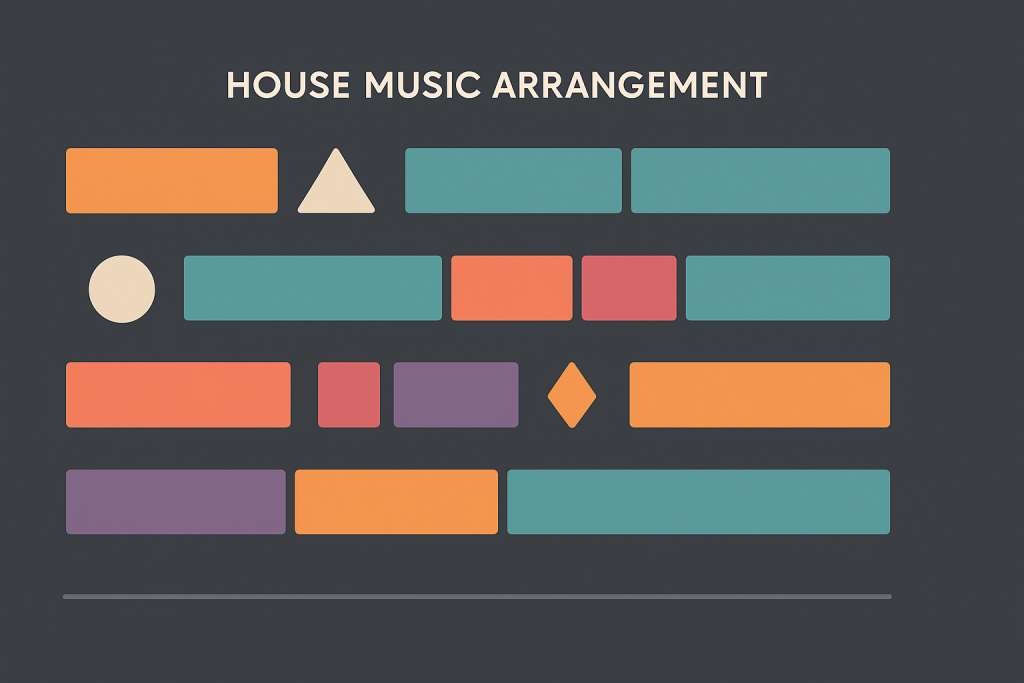
Understand House Phrasing Before You Blend
To mix house music smoothly, count phrases before counting effects. Most house arrangements move in blocks of 8, 16 or 32 bars. New percussion, bass changes, vocal hooks and breakdowns usually land at phrase boundaries. If your incoming track starts halfway through a phrase, the blend may feel awkward even if the beats are locked.
Think like an arranger, not just a DJ. You are lining up musical events so the crowd feels a natural lift, release or reset.
Count the 32-Bar Structure
Start by counting kicks: 1, 2, 3, 4. Four beats make a bar. Eight bars often introduce a small change. Sixteen bars may add or remove a main element. Thirty-two bars usually mark a major transition point. In house, a safe mix often starts 32 bars before an outro or drop.
Practise with two loop-friendly tracks. Start Track B on the first beat of a 32-bar phrase in Track A. If both drops or bass changes happen together, you are phrase-aligned.
Use Cue Points Like Arrangement Markers
Place hot cues at musically useful points, not random waveform shapes. A good cue label might mean intro drums, bass in, vocal start, breakdown, drop, outro or mix-out. This helps you mix house music under pressure because the visual system supports what your ears already know.
For vocal house, mark the first vocal phrase and avoid layering two lead vocals unless you want a deliberate mashup effect. For deep house, mark where the sub bass enters because that is often the moment that can clash with the outgoing track.
- Start long blends at 16 or 32-bar boundaries.
- Avoid dropping a new bassline over a busy chorus.
- Let important vocal hooks finish before introducing another lead.
- Use loops to extend short intros without losing phrase alignment.
Beatmatch and Tempo-Match Without Losing Feel
Beatmatching is still the core skill when you mix house music, even if sync is part of your workflow. Sync can lock tempo, but it cannot decide whether two grooves feel good together. Swing, percussion placement and bass length all affect how a transition lands.
House often sits between 120 and 128 BPM, but subgenres vary. Deep house may live around 120-124, tech house often sits around 125-128, and classic funky house can jump around depending on the source material.
Match BPM, Then Match Groove
Start with the pitch fader or tempo control. Bring the incoming track close to the outgoing BPM, then nudge the jog wheel or platter until kicks align. In headphones, listen for flamming: that double-hit sound means one track is slightly early or late.
Once the beats are locked, listen to the hi-hats and claps. Some tracks push hats slightly ahead for energy. Others sit back for a lazy groove. If the hats feel messy, choose a shorter blend or swap the track pairing.
Use Sync as a Tool, Not a Crutch
There is nothing wrong with sync when used professionally. The mistake is relying on it while ignoring grids, phrases and musical fit. If you mix house music with sync enabled, still learn to nudge, ride the pitch and recover when a grid is wrong.
A strong practice drill is to mix one hour with sync off, then one hour with sync on. Compare recordings. The goal is not to prove a point; it is to build ears that can survive any booth setup.
- Practise tempo changes of 1-2 BPM before attempting bigger jumps.
- Use pitch bend for tiny corrections, not constant panic nudging.
- Check the master tempo setting if vocals sound unnatural.
- Avoid huge tempo shifts during recognisable hooks.
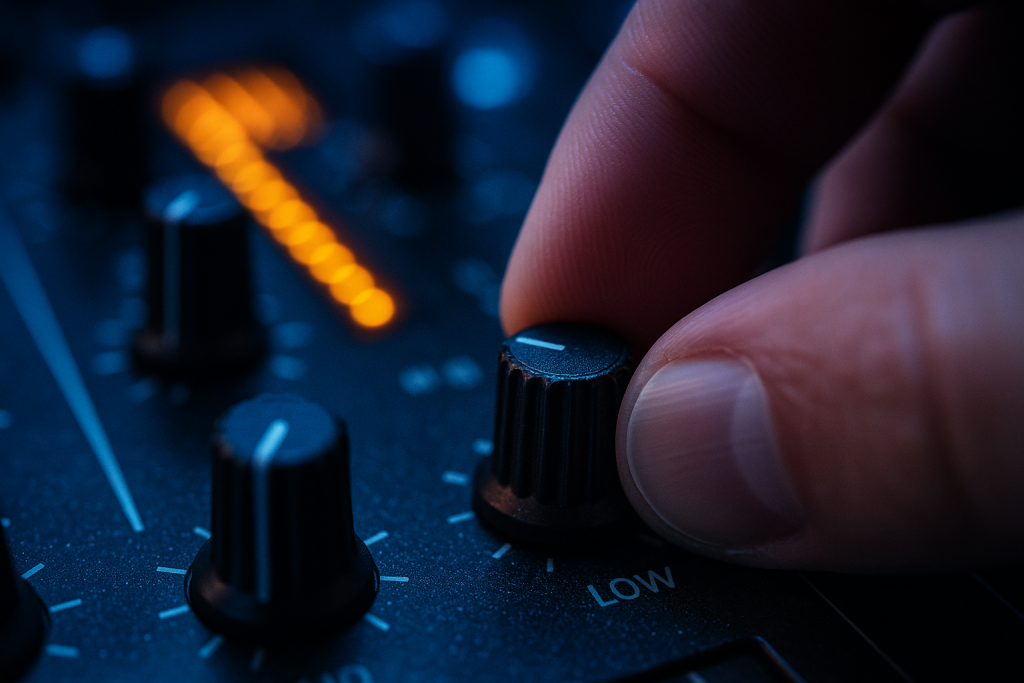
Control Gain, EQ and Filters Like a Mixer Engineer
Clean level control is what separates amateur blends from club-ready transitions. When you mix house music, two kick drums and two basslines can overload the mixer fast. Your channel meters, trim knobs and EQs should work together before you reach for effects.
Think of the mixer as a small live sound console. Every track has low, mid and high energy, and your job is to make space while preserving momentum.
Set Trim Before the Transition
Use channel gain or trim to match perceived loudness before the track is live. Do this in headphones with the cue mix, then glance at the meters. Peaks should be healthy but not pinned red. If one mastered track is much louder, reduce trim instead of pulling the fader halfway down.
House masters vary widely. A modern tech house track may be dense and loud, while an older soulful record may have more dynamics. Match energy, not just meter height.
Swap Bass, Do Not Stack It
The safest way to mix house music is to avoid running two full basslines at once. Bring in Track B with its low EQ reduced, then swap the bass at a phrase boundary. On a Pioneer-style mixer, this can be a clean low EQ exchange. On a rotary mixer, ride the isolator gently.
Use high-pass filters carefully. A filter sweep can create excitement, but an aggressive resonance spike will sound harsh on a club PA. If the incoming track has a huge sub, introduce it after the outgoing kick has space.
- Set trims before moving the channel fader.
- Keep the master output out of the red.
- Cut low frequencies on the incoming track during long blends.
- Use mids to manage vocal and synth clashes.
- Avoid boosting EQ heavily unless you know the room.

Choose Compatible Tracks by Key, Energy and Texture
Track selection does most of the heavy lifting when you mix house music. A perfect technical blend will still feel wrong if the songs fight emotionally. Key, energy, drum texture and vocal density matter as much as BPM.
Use Mixed In Key, rekordbox key analysis, Traktor tags or your own ear to group compatible tracks. Do not let key rules trap you, but use them to avoid obvious clashes when pads, vocals and melodic basslines overlap.
Think in Energy Curves
Energy is not only loudness. A stripped groove with a tight kick can feel powerful, while a busy record can feel flat if the drums are soft. Rate your tracks from 1 to 5 for intensity, then build mini-arcs: warm-up, lift, peak, reset and rebuild.
If you jump from a deep, rolling track into a peak-time banger too early, the floor may not be ready. If you stay at the same energy for too long, the set becomes wallpaper.
Use Harmonic Mixing Practically
Harmonic mixing helps when melodies overlap. Compatible Camelot moves include same key, one step up or down, and relative major/minor options. However, drums-only intros give you more freedom because there is little melodic information to clash.
When you mix house music with vocals, check the key and the lyric timing. Two emotional vocal lines can sound messy even if the keys technically match. In that case, wait for an instrumental phrase or use a shorter transition.
- Tag tracks by mood: warm, dark, funky, peak, hypnotic or vocal.
- Keep a crate of emergency groove tools for awkward moments.
- Separate radio edits from extended mixes.
- Use key data as guidance, not law.
- Listen for kick weight before pairing two tracks.
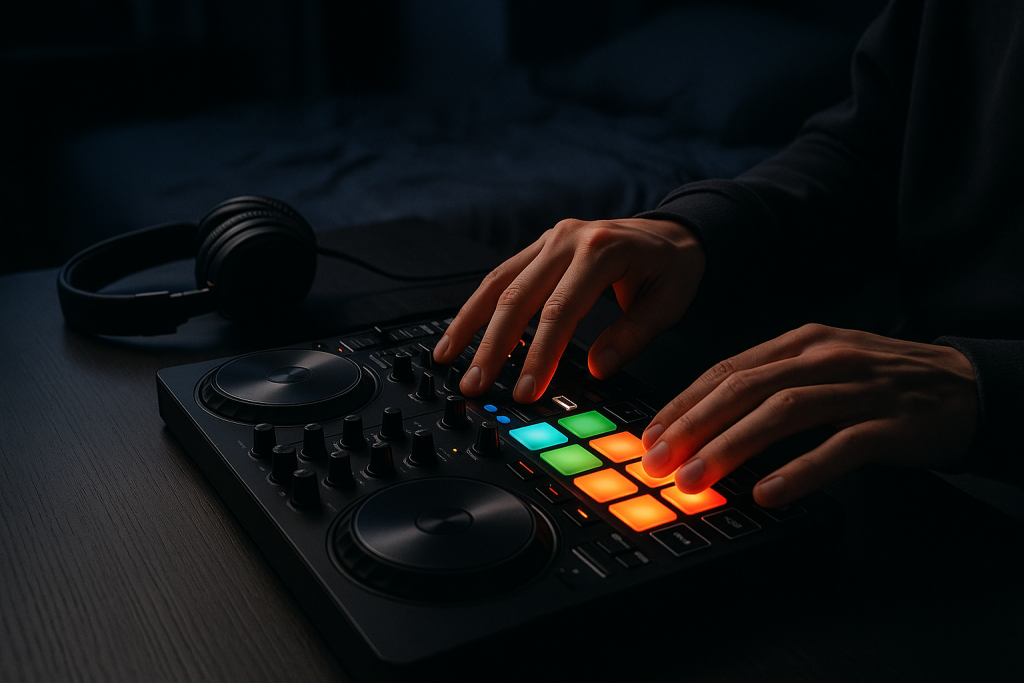
Build Transitions With Loops, Cues and Effects
Effects should enhance a transition, not hide uncertainty. If you can mix house music cleanly with no effects, delays and reverbs become creative choices instead of emergency cover-ups. The best transitions usually start with timing and EQ, then add small movement.
Loops are especially useful in house because intros and outros are often groove-based. A tight 8 or 16-bar loop can extend a mix point, create tension or give you time to recover if a phrase arrives too soon.
Loop With Intention
Use loops on percussion, not on busy vocals unless you want a deliberate stutter. An 8-bar intro loop on Track B can sit under Track A while you prepare the bass swap. A 4-beat loop on an outgoing snare roll can create a quick build, but overusing it sounds predictable.
Always exit the loop on a phrase boundary. If your loop release lands on bar 13 of a 16-bar phrase, the crowd may feel the transition stumble even if the beat stays locked.
Pick Two Effects You Really Know
Most DJs need fewer effects than they think. A clean echo out, a short reverb wash and a subtle filter are enough for many house sets. On a DJM mixer, Echo, Spiral, Reverb and Color FX filters are common. In Traktor, delay and filter combinations can work well if mapped carefully.
To mix house music professionally, set effect timing to the track grid and keep wet/dry levels conservative. A 1/2 echo can clear a vocal. A 3/4 delay can add swing. Full-wet chaos rarely sounds as good in a room as it does in headphones.
- Use 8 or 16-bar loops for controlled long blends.
- Echo out vocals instead of cutting them abruptly.
- Filter slowly during breakdowns to avoid harsh spikes.
- Practise effect exits, not only effect starts.
- Record transitions with and without effects for comparison.
Create a Set Flow That Feels Like a Story
The strongest DJs do more than mix house music from one record to the next. They shape tension across 30, 60 or 120 minutes. A bedroom practice session, label showcase or peak-time club set all need a sense of direction.
Think in chapters. Your opening tracks establish the world. Mid-set selections deepen the groove or raise pressure. Peak records deliver payoff. Resets give the audience room to breathe before the next lift.
Plan Crates, Not Rigid Playlists
A fixed playlist can work for a short recorded mix, but live rooms change. Prepare crates by function: openers, groove builders, vocal moments, peak tools, dark rollers, classics and closers. Then choose based on crowd response.
If a vocal hook gets hands up, follow with another emotional record or a tougher groove that keeps the lift. If the room starts talking, simplify the rhythm and rebuild with a cleaner drum track.
Control Tension and Release
House thrives on repetition, but repetition needs contrast. Use breakdowns, drum-only sections and bass drops as tension points. Avoid stacking too many breakdown-heavy tracks in a row or the floor will stop moving.
When you mix house music for a brand set, radio show or artist identity, consistency matters. Your transitions should support the musical signature you want listeners to remember: soulful, underground, techy, melodic, funky or peak-time.
- Open with tracks that invite movement without demanding peak energy.
- Save your biggest hooks for moments that need payoff.
- Alternate dense tracks with simpler groove tools.
- Use one or two surprise records to create memory points.
- End with intention rather than fading out randomly.
Record, Analyse and Improve Every Practice Session
You improve fastest when you record yourself. To mix house music at a higher level, stop judging only in the moment. A transition that felt exciting live may reveal clashing mids, rushed phrasing or volume jumps on playback.
Use your controller’s record function, rekordbox, Serato, Traktor, Ableton Live, Audacity or a portable recorder from the mixer output. Label each recording with date, BPM range, style and what you were practising.
Review Like a Producer
Listen once casually, then again with notes. Mark the time of every strong blend and every weak one. Ask specific questions: Did the kick disappear? Did the vocal clash? Was the new track too loud? Did the transition arrive at the right phrase?
This is where bedroom producers have an advantage. If you understand arrangement, you can hear why a transition works. You may also notice that your own tracks need longer intros, cleaner outros or DJ-friendly drum sections.
Build a Repeatable Practice Routine
Set one focus per session. Spend 30 minutes on bass swaps, 30 minutes on harmonic transitions or 30 minutes on long three-track blends. Repetition turns technique into muscle memory.
If you want to mix house music for gigs, record at least one full uninterrupted hour each week. Do not stop after mistakes. Recovering smoothly is part of the craft, and recorded pressure teaches you how to keep moving.
- Record practice sets in WAV when possible.
- Take notes with timestamps.
- Compare your transitions against professional DJ mixes.
- Practise recovery from late starts and wrong cue points.
- Keep a folder of your best blends for future set planning.
| Technique | Best Use | Tools | Watch Out For |
|---|---|---|---|
| Long EQ blend | Deep, minimal and progressive house grooves | 3-band EQ, channel faders, headphones | Stacked basslines and muddy low mids |
| Bass swap | Tech house, classic house and peak-time transitions | Low EQ, isolator, phrase cue points | Swapping off-phrase or too late |
| Echo out | Clearing vocals or ending a busy record | DJM Echo, Traktor Delay, Serato FX | Wet/dry too high or feedback runaway |
| Intro loop | Extending short DJ edits or lining up phrasing | 8-bar loop, hot cues, quantize | Loop fatigue if repeated too often |
| Harmonic blend | Melodic, vocal and deep house transitions | Mixed In Key, rekordbox key tags | Trusting key data over your ears |
Further reading
- Ableton audio clips — Ableton's official manual is an authoritative source for tempo, warping and audio clip handling.
- Pioneer DJ rekordbox support — Pioneer DJ's official support hub is a primary source for rekordbox preparation and performance workflows.
Frequently asked questions
How do you mix house music smoothly?
To mix house music smoothly, align tracks by phrase, match BPM, pre-listen in headphones, control gain and swap basslines instead of stacking them. Start with extended mixes, use 16 or 32-bar transitions, and record your practice so you can hear timing, EQ and volume issues clearly.
What BPM is best for house DJ sets?
Most house sits between 120 and 128 BPM. Deep house often works around 120-124 BPM, while tech house and peak-time club tracks often sit around 125-128 BPM. The best tempo depends on the room, track energy and how quickly you want the set to move.
Should beginner DJs use sync for house music?
Beginners can use sync, but they should still learn manual beatmatching. Sync helps with tempo, but it does not fix poor phrasing, bad beatgrids, clashing keys or heavy bass overlap. Practise both ways so you can play confidently on different systems.
How long should a house music transition be?
A typical house transition lasts 16 to 64 bars. Deep and progressive tracks often suit longer blends, while vocal or high-energy tech house may need shorter, cleaner swaps. Let the arrangement decide: mix during intros, outros and drum sections rather than over important hooks.
Why do my house mixes sound muddy?
Muddiness usually comes from stacked low frequencies, mismatched gain or too many midrange elements playing together. Cut the low EQ on the incoming track, swap bass at a phrase boundary, reduce trims when needed and avoid layering two busy vocals or synth hooks.
What is the best software for preparing house sets?
rekordbox is ideal for Pioneer DJ club setups, Serato DJ Pro is popular with controller and turntable DJs, Traktor Pro is strong for creative mapping, and Ableton Live suits hybrid sets. The best option is the one that lets you prepare cue points, grids and playlists reliably.
Conclusion
Learning to mix house music properly is a practical craft: prepare the library, count phrases, lock the groove, manage gain and choose tracks that make musical sense together. Once those foundations are solid, loops, effects and harmonic tricks become creative details rather than shortcuts.
Do not try to master everything in one session. Pick one technique from this guide, such as 32-bar phrasing or clean bass swaps, and record a focused 30-minute practice mix. Listen back the next day, take notes, then repeat with a new goal. That simple loop of playing, recording and reviewing will improve your confidence faster than any secret trick.
Mix house music — Quick Recap
The fastest way to lock in mix house music is to internalise the workflow above and repeat it on every project. Start small: pick one technique from this mix house music guide, apply it to your next session, and audit the result against a reference track.
- Clean house mixing starts with prepared beatgrids, cue points and reliable monitoring.
- Phrasing is as important as beatmatching because house arrangements move in 8, 16 and 32-bar blocks.
- Strong transitions usually depend on gain control, EQ discipline and bass swaps rather than heavy effects.
- Track selection should consider key, energy, texture and vocal density, not just BPM.
Treat mix house music as a habit, not a one-off — the producers who consistently nail mix house music are the ones who run the same checks on every track. That’s the difference between a clean, club-ready master and a track that sounds great at home but falls apart on a real system.
In a real studio session, mix house music comes down to the order in which you make decisions: reference first, gain stage second, then the creative work. Producers who treat mix house music as a checklist instead of a vibe end up shipping more tracks.
Most producers and DJs undervalue mix house music because the wins are invisible until the track plays back on a real system. Bake mix house music into your template and the next ten projects benefit automatically.
When you struggle with mix house music, the fix is rarely a new plugin. Loop a problem section, A/B against a reference, and isolate which element is breaking your mix house music.
Treat mix house music as a craft, not a chore. The producers releasing on the biggest labels lock mix house music in early so they can spend their energy on melody and arrangement instead of fighting the mix.
Document your mix house music process — even a short note in the project file. Future-you will rebuild the same mix house music win in half the time.
My Career makes videos from your own track and posts them for you, pitches your release to 34,000+ labels, playlists, radio stations, YouTube channels and blogs, puts it in every store and briefs you every morning. Free plan, no card, two minutes to set up.