A track can sound release-ready in the preview and still become a liability the moment you try to sign it, distribute it, or build a campaign around it. That is why artists and labels asking how to buy ghost tracks safely are usually not worried about the music first. They are worried about ownership, exclusivity, deliverables, and whether the deal will hold up once money changes hands.
In EDM, speed matters, but so does control. If you are buying ghost production to stay consistent with releases, support a tour cycle, or fill a label schedule, you need more than a good demo. You need a professional transaction that protects your brand and gives you assets you can actually use.
What safe ghost track buying actually means
Safe does not just mean the payment goes through. It means the track is legally transferable, commercially usable, and operationally complete. A safe purchase gives you clarity on who made the track, what rights you receive, whether anyone else can buy it, and what files are included after checkout.
This is where a lot of buyers get burned. They focus on genre fit, drop energy, and arrangement quality, then realize later that the seller cannot provide project files, cannot prove authorship, or never transferred copyright in a way that supports a proper release. A cheap track becomes expensive fast when it creates release delays or legal risk.
If you want to know how to buy ghost tracks safely, start by treating the purchase like a business acquisition, not a casual music download.
Start with exclusivity, not price
The first question is simple: is the track sold once, or can multiple buyers access the same production? In a professional ghost production setup, exclusivity should be explicit. If the same track can be resold, leased, or reused in any form, your release loses strategic value immediately.
For an artist, non-exclusive music weakens identity. For a label, it creates avoidable risk. If another version of the same track appears under a different name, your campaign can become messy fast. Safe buying means getting written confirmation that the track is exclusive and removed from sale once purchased.
Price still matters, but only after exclusivity is clear. A lower-cost track with uncertain ownership is not a better deal. It is just a lower-cost problem.
Verify the producer and the platform
One of the biggest differences between a professional ghost production platform and a random seller is verification. You need confidence that the person behind the track has the right to sell it and the technical standard to deliver commercial-grade work.
That does not mean every producer needs public credits. Ghost production often runs on confidentiality. But the platform or service should have a clear vetting process, quality control, and consistent delivery standards. If there is no structure behind the sale, you are relying on trust alone.
Professional buyers should look for signs that the platform operates like a production partner, not a loose marketplace. That includes producer screening, clear file delivery policies, secure payment processing, and a defined transfer process. If those details are vague, the risk is not.
Make sure rights transfer is explicit
This is where safe purchases are won or lost. You should know exactly what you own after payment. In a proper ghost production transaction, the buyer receives full copyright transfer or an equivalent assignment that grants full ownership of the composition and master, depending on the agreement structure.
If the seller uses vague language like royalty-free, premium use, or full access without clearly stating ownership transfer, stop there. Those phrases can sound reassuring while leaving major gaps. What you need is a direct statement that the rights are transferred to you and that you can release the track under your own artist identity.
Confidentiality matters here too. Many buyers want an NDA framework or a clear confidentiality policy so the relationship remains private. That is standard for serious ghost production and should not feel optional.
Check the deliverables before you pay
A safe purchase includes more than a WAV and MP3. If you are buying professionally, you should expect the assets needed for release, customization, and future edits. That usually means stems, project files, and a properly mixed and mastered final version.
Why does this matter? Because your release rarely ends with the first export. You may want to change the intro for DJ sets, tighten the breakdown, swap a lead, create a radio edit, or hand the files to a mix engineer for revisions. Without stems and project files, your flexibility drops sharply.
This is especially important for artists and labels working on a schedule. Immediate access to all core assets reduces friction between purchase and release. It also protects you if you want to adapt the track to fit your brand more precisely.
How to evaluate whether a track is safe to release
Even with the legal side covered, the production itself has to be commercially usable. A safe track is one you can release without hidden technical problems. That means checking the mix, master, arrangement, and sound selection with the same discipline you would apply to your own productions.
Listen for obvious red flags: over-limited masters, weak low-end control, unresolved sample issues, or arrangement sections that feel unfinished. Ask whether the hook fits your artist brand and whether the track can survive comparison with current releases in your subgenre. Safety is not only about legal risk. It is also about protecting your release quality.
For EDM buyers, practical details matter. BPM, key, energy curve, and project organization all affect whether the track is usable in the real world. If the files arrive messy or the arrangement is hard to adapt, you lose the speed advantage you paid for.
Use a platform with a defined buying process
The safest transactions are boring in the best way. You know what you are buying, how payment works, what files you receive, and when ownership transfers. That predictability is a strength.
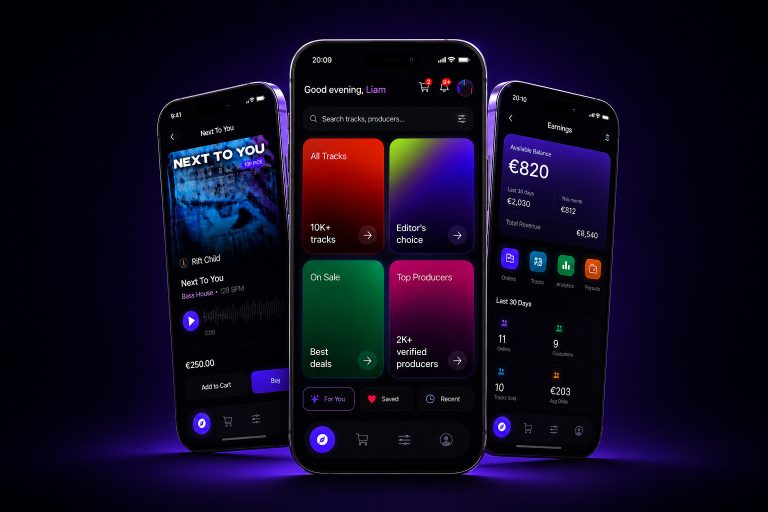
A professional process should cover track previews, transparent deliverables, secure checkout, exclusive takedown after sale, and a clear handoff of files and rights. Ideally, it should also give you enough track information upfront to make fast decisions, including genre, BPM, key, and production style.
That is why many serious buyers prefer structured services over informal direct deals. A platform like The Ghost Production reduces risk by combining verified producers, sold-once exclusivity, full rights transfer, and release-ready file delivery in one process. That is what safe purchasing looks like at the operational level.
Red flags that should stop the deal
Some risks are obvious, others are hidden behind attractive pricing or fast promises. If a seller cannot explain ownership clearly, does not offer stems or project files, or refuses to confirm exclusivity, that is enough reason to walk away.
Be careful with sellers who overpromise custom changes before purchase but provide no written scope, or who claim anonymity as a reason to avoid basic business documentation. Confidentiality is normal in ghost production. Lack of process is not.
Another common issue is sample clearance ambiguity. If the track relies on uncleared vocals or questionable third-party material, your release can run into problems later. You do not need legal theater. You just need direct answers before money is committed.
How to buy ghost tracks safely without slowing down releases
The best buying process balances speed with due diligence. You do not need to turn every purchase into a legal project, but you do need a repeatable checklist. Confirm exclusivity. Confirm rights transfer. Confirm confidentiality. Confirm deliverables. Confirm that the production quality meets release standards.
Once those boxes are checked, buying ghost tracks becomes a strategic advantage, not a gamble. You can move faster, keep your catalog active, and protect your artist identity at the same time. For touring DJs, independent artists, and label teams, that combination is what makes ghost production valuable in the first place.
A safe purchase should leave you with one feeling: this track is yours, the files are complete, and the path to release is clear. If any part of that feels uncertain, the deal is not ready yet.
The smart move is not buying the cheapest track or the fastest track. It is buying the one backed by clear ownership, verified production, and a process built for professional release. That is how careers stay consistent without taking unnecessary risk.
My Career makes videos from your own track and posts them for you, pitches your release to 34,000+ labels, playlists, radio stations, YouTube channels and blogs, puts it in every store and briefs you every morning. Free plan, no card, two minutes to set up.