
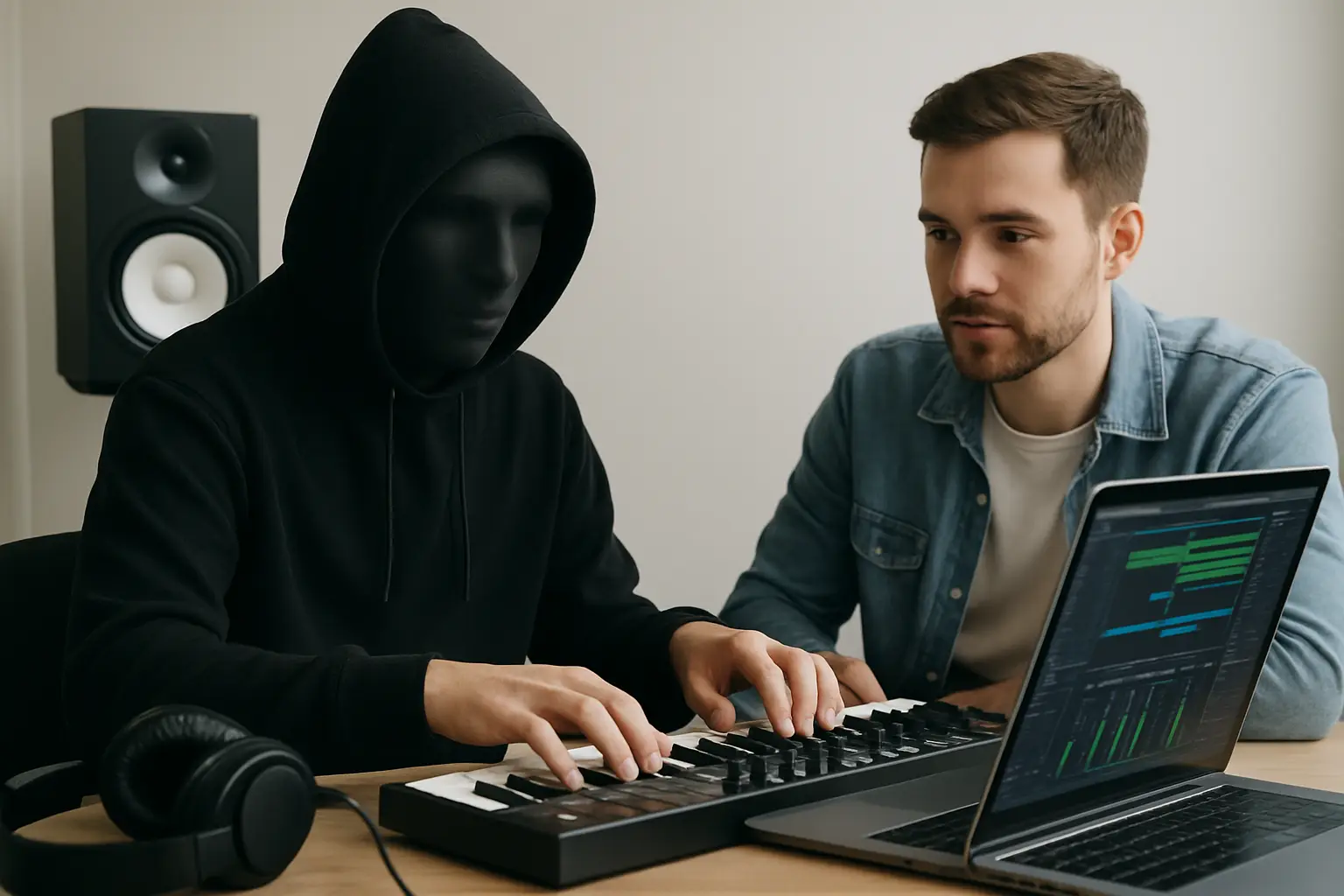
Hardstyle Ghost Production Service: What You Get
Hardstyle doesn’t forgive “almost.” If the kick doesn’t hit with authority, if the screech isn’t controlled, if the drop doesn’t translate on a festival rig, the track gets skipped fast. That reality creates a practical problem for working DJs and release-focused artists: you can have the brand, the bookings, and the release plan – and still be stuck waiting on production time you do not have.
A hardstyle ghost production service exists for that exact gap. Not as a shortcut for hobbyists, but as a professional production supply chain for artists and labels who need release-ready records on schedule, with the ownership and confidentiality handled correctly.
What a hardstyle ghost production service actually is
A hardstyle ghost production service is a paid production arrangement where a verified producer creates an original hardstyle track you can release under your artist name. The point is not simply “getting a track.” The point is obtaining a professional deliverable package – audio, assets, and rights – that you can distribute commercially without risk.
In practical terms, that means you are paying for arrangement, sound design, mixing, mastering, and the engineering decisions that make hardstyle translate across clubs, cars, headphones, and large systems.
Hardstyle is also a technical genre. The kick and bass relationship is the record. Your service should be built to handle the core hardstyle requirements: controlled distortion, clean low-end management, midrange presence that survives loudness, and impact without harshness. If a provider can’t speak confidently about that, you’re not buying a “hardstyle” solution – you’re buying a generic EDM track wearing hardstyle clothing.
Ready track vs custom production: the real trade-off
Most serious providers offer two models.
A ready track is pre-produced, release-ready, and available for immediate purchase. The best version of this model is sold once, then removed from the catalog. That gives you speed and predictability. If you are managing a release calendar around touring weekends or label deadlines, speed is not a luxury – it is the plan.
Custom ghost production is commissioned to match your exact reference tracks, signature palette, and brand constraints. You trade speed for precision. It’s the right choice when you need your next release to sit next to your existing catalog without listeners hearing a “new producer” behind the curtain.
It depends on your situation. If you have a tight release window and can do light personalization in your DAW, a sold-once ready track is often the most efficient play. If your project has a recognizable kick identity, specific screech character, or a particular drop structure your audience expects, custom production reduces the risk of sounding off-brand.
The non-negotiables: deliverables that protect you
If you are paying for a hardstyle ghost production service, the deliverables should be explicit. Vague promises are how artists end up with a bounced WAV and a rights headache.
Full rights transfer, in writing
You want full copyright transfer for the composition and master recording, not a “license to use.” That’s what allows you to monetize normally: DSP distribution, YouTube Content ID, sync opportunities, label deals, and paid ads with the audio. If the provider retains rights, you are exposed.
NDA framework and confidentiality
Hardstyle scenes are tight. Word travels. A real service treats confidentiality as standard operating procedure. The NDA should cover the provider, their subcontractors (if any), and delivery methods. Confidentiality is not a bonus feature. It’s the product.
Stems and project files
This is where buyers separate “a track” from “an asset.” Stems let you create radio edits, extended intros for DJ sets, alternate drops, and label-requested adjustments without going back to the producer every time. Project files matter even more if you want to learn from the arrangement, swap sound sources, or keep continuity across releases.
Professional mix and master that’s release-ready
Hardstyle mastering isn’t just about loud. It’s about controlled aggression. A legitimate deliverable should be ready for distribution without you hiring a separate engineer just to make it viable.
How to evaluate a hardstyle ghost production service
Most buyers don’t fail because they picked the “wrong” style. They fail because they didn’t qualify the service like a business vendor.
Start with producer verification. Hardstyle relies on niche competence – kick development, distortion staging, transient control, and midrange management. Verified producers reduce the odds of paying for a track that collapses under real playback.
Then test process clarity. A professional service can tell you exactly what happens after payment: timeline, revision rounds (if custom), what files you receive, and how rights transfer is handled.
Finally, confirm exclusivity terms. “Exclusive” can mean different things. You want a clear statement that the exact track is sold to one buyer only, plus a commitment that the producer won’t recycle signature elements in a way that makes your release sound duplicated in the market.
What you should provide to get a track that fits your brand
Even if you are buying a ready track, you improve outcomes by treating your purchase like a brief.
Give reference tracks that match your intended lane. Not ten random favorites – two or three that share the same energy, kick approach, and arrangement philosophy. If you play live, include a recent set clip with timestamps of where you need intros, breaks, and mix-out space.
Share your release constraints. If your label prefers certain loudness targets or hates clipped highs, say it. If you need a 16-bar DJ intro because you mix fast, say it. If your audience expects anti-climax drops or specific melodic phrasing, make that clear.
If you have an established sound, provide one of your own tracks and explain what must stay consistent. Hardstyle listeners notice when the kick identity changes. They also notice when your lead palette suddenly shifts. Consistency is part of the brand.
Common risks – and how a professional service reduces them
The biggest fear buyers have is reputational risk. The second is legal risk. A legitimate hardstyle ghost production service addresses both with structure.
Reputationally, the risk is receiving a track that sounds generic, dated, or poorly translated. This is why you need verified producers and deliverables that allow customization. Stems and project files let you make the track feel like “you,” even if you didn’t build it from scratch.
Legally, the risk is unclear ownership, uncleared samples, or ambiguous agreements. Full rights transfer, clear contracts, and a strict no-leaks policy are what keep your release clean.
There is also a practical risk: dependency. If you outsource everything without maintaining any internal capability, you can’t pivot quickly. The fix is simple – use the project files to learn your own release pipeline, and reserve custom commissions for the releases that truly define your identity.
Where this fits in a serious release strategy
Ghost production works best when it supports consistency. Many working DJs don’t need to produce every track personally to be credible. They need a catalog that matches their stage presence, a release cadence that keeps algorithms and fans engaged, and records that labels can confidently push.
Think of the service like adding a production department to your operation. If you are touring, running ads, shooting content, negotiating gigs, and managing releases, it is rational to outsource the most time-intensive technical work – as long as ownership and confidentiality are handled the way a professional business would require.
For labels, it can stabilize the pipeline. Instead of waiting for artists to finish tracks on uncertain timelines, a hardstyle ghost production service can fill gaps with tracks that meet a defined standard, delivered on schedule.
What “good” looks like when the files arrive
When the delivery hits your inbox, you should be able to move straight into release prep.
You have a full-quality master file, plus stems that are logically organized and named. You have the project file in the agreed DAW format, with third-party plugins either printed to audio or clearly documented. You have a written rights transfer. You have NDA terms that match the reality of releasing under your own identity.
If you are buying a ready track, you should also have confirmation of sold-once exclusivity. If you commissioned custom work, you should feel that the track sits naturally next to your existing releases without a noticeable shift in identity.
Choosing a provider that operates like a partner
The best providers act like production partners, not file sellers. They are strict about verification, clear about deliverables, and built for speed. If you want a platform that sells sold-once ready tracks and also offers custom commissions with stems, project files, rights transfer, and an NDA framework, you can review how it’s handled at The Ghost Production.
Hardstyle rewards momentum. If your audience expects consistent heat, the smart move is to treat production like operations: define the standard, buy or commission to that standard, and keep your release calendar moving with zero guesswork. Your name goes on the record – make sure the process behind it is just as professional as the drop.