
EDM Production – Professional EDM Tracks
EDM Production: Anatomy of Professional EDM Tracks
In the ever-evolving world of electronic dance music (EDM), staying at the cutting edge of production techniques is essential for any aspiring DJ or music producer. The art of EDM production involves a deep understanding of musical structure, sound design, and the latest industry trends. In 2026, the landscape is more competitive than ever, with a focus on creating tracks that are both festival and radio-ready. This comprehensive guide will delve into the anatomy of modern EDM tracks, exploring the evolution of the 128BPM standard, the use of sidechain compression, and what Spotify’s algorithm favors today.
EDM tracks have a distinct structure that evolved from the early days of electronic music. The typical 128BPM tempo became the industry standard due to its ideal balance for danceability and energy. This tempo allows producers to create tracks that are versatile enough for both club environments and commercial radio play. Understanding the frequency spectrum in EDM is crucial for crafting powerful mixes; for instance, the sub-bass ranges from 20–80Hz, while the kick drum’s fundamental frequency lies between 60–100Hz. Hi-hats and other high-frequency elements typically occupy the 8–12kHz range, adding sparkle and presence to the mix.
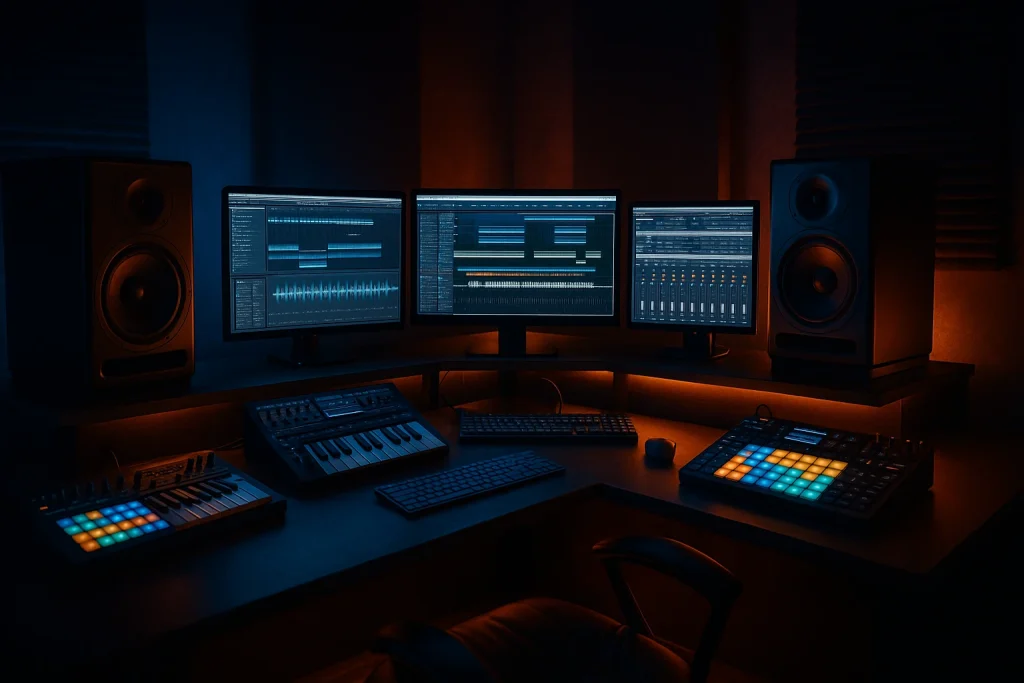
The Evolution of the 128BPM Structure
The 128BPM structure has its roots in the early 2000s when electronic music began merging with mainstream pop. Its evolution was driven by DJs and producers who needed a consistent and energetic tempo that could seamlessly blend tracks during live performances. Artists like Calvin Harris and David Guetta popularized this tempo, making it a staple in EDM production. Today, it remains prevalent due to its adaptability and universal appeal, allowing DJs to maintain energy throughout their sets.
Producers continue to experiment within this framework, introducing variations in tempo and rhythm to create unique listening experiences. This adaptability is evident in sub-genres like Future Bass and Deep House, where producers manipulate the 128BPM structure to craft distinct sonic landscapes, often using techniques like syncopation and polyrhythms.
Sidechain Compression and the Iconic Drop
One of the key elements in EDM production is the use of sidechain compression, particularly during the track’s drop. This technique creates the signature ‘pumping’ effect, allowing the kick drum to cut through the mix while other elements are momentarily subdued. This effect not only enhances the rhythmic drive but also adds dynamic energy to the track.
Producers like Nicky Romero have popularized sidechain compression, often using plugins that simplify the process. For instance, the Kickstart plugin by Nicky Romero provides an intuitive interface for achieving this effect, making it accessible to both novice and experienced producers. For a deeper understanding of this technique, check out our Sidechain Compression Guide.
The Frequency Spectrum in EDM Production
Understanding the frequency spectrum is vital for crafting a polished EDM track. Each element in a mix occupies a specific frequency range, and balancing these frequencies ensures clarity and power. The sub-bass, ranging from 20–80Hz, provides the foundational rumble that moves the crowd, while the kick drum’s fundamental frequency, typically between 60–100Hz, gives the track its punch.
High-frequency elements, such as hi-hats and synth leads, occupy the 8–12kHz range, adding brightness and presence. Properly balancing these frequencies is essential for a professional-sounding mix. Techniques such as equalization and spectrum analysis can help producers carve out space for each element, preventing frequency clashes and ensuring that the mix remains clean and impactful.
How Major Labels A&R EDM Tracks in 2025–2026
In 2026, the process of scouting and signing EDM tracks by major labels involves a blend of traditional and data-driven approaches. A&R representatives rely heavily on analytics from platforms like Spotify for Artists and Apple Music for Artists to identify tracks with high potential. Metrics such as energy levels, danceability scores, and algorithmic recommendations play a crucial role in these decisions.
Labels look for tracks that not only possess high-quality production but also have a strong potential for virality and playlist placements. In the competitive landscape of 2026, tracks that can quickly gain traction on streaming platforms are more likely to be picked up by major labels, as these metrics often predict commercial success.
Spotify’s Algorithm and What It Rewards
Spotify’s algorithm in 2026 is more sophisticated than ever, rewarding tracks with certain characteristics that enhance user engagement. High energy levels and danceability scores are key factors that the algorithm favors, as these traits often correlate with higher listener retention and playlist additions. The algorithm also considers user interaction data, such as skips, replays, and shares, to determine a track’s potential for discovery and prominence on the platform.
Producers aiming to optimize their tracks for Spotify should focus on crafting engaging intros, maintaining consistent energy throughout the track, and ensuring high production quality. For more insights on optimizing your music for streaming success, explore our Producer Resources.
Production Costs of a Commercial EDM Track
The cost of producing a commercially released EDM track can vary widely, ranging from minimal investments for bedroom producers to substantial budgets for label-backed projects. A basic home studio setup, which includes a computer, DAW (Digital Audio Workstation), and essential plugins, can cost as little as $0 to a few thousand dollars if using already-owned equipment and free or affordable software options.
On the other hand, a professionally produced track with label support can involve costs up to $50,000. This includes expenses for professional studio time, high-end plugins, session musicians, mixing and mastering engineers, and marketing efforts. The table below illustrates typical production costs:
| Production Element | Cost Range |
|---|---|
| Basic Home Studio Setup | $0 – $3,000 |
| Professional Studio Time | $500 – $2,500/day |
| High-End Plugins | $100 – $5,000 |
| Mixing and Mastering | $200 – $2,000 |
| Marketing and Promotion | $1,000 – $10,000 |
These costs highlight the financial commitment involved in producing a track that meets professional standards. For producers seeking quality without the overhead, services like The Ghost Production’s Music Production Services offer a viable alternative, providing access to professional-grade production at competitive rates.
Frequently Asked Questions
What is the significance of a 128BPM tempo in EDM?
The 128BPM tempo is significant in EDM because it strikes an ideal balance between danceability and energy, making it suitable for both clubs and radio play. It allows for seamless mixing and maintains a consistent energy level throughout performances.
How does sidechain compression enhance EDM tracks?
Sidechain compression enhances EDM tracks by creating a ‘pumping’ effect, allowing the kick drum to stand out while other elements are temporarily reduced in volume. This adds dynamic energy and helps maintain a clear, powerful mix.
What do major labels look for when signing EDM tracks?
Major labels look for EDM tracks with high production quality, strong potential for virality, and favorable streaming analytics, such as energy levels and danceability scores. Labels use data-driven approaches to identify tracks likely to succeed commercially.
How can producers optimize their tracks for Spotify’s algorithm?
Producers can optimize their tracks for Spotify’s algorithm by maintaining high energy levels, ensuring production quality, and creating engaging intros. Focus on increasing listener retention and interaction to improve visibility on the platform.
What are typical costs involved in producing a commercial EDM track?
Typical costs for producing a commercial EDM track range from basic home studio setups costing as little as $0 to label-backed projects that can reach $50,000. Costs include studio time, high-end plugins, mixing and mastering, and marketing efforts.
Last updated:
Ready to Scale Your Music Output?
Release more music, hit more deadlines, and build a stronger catalog — with professional ghost production that sounds exactly like you.