
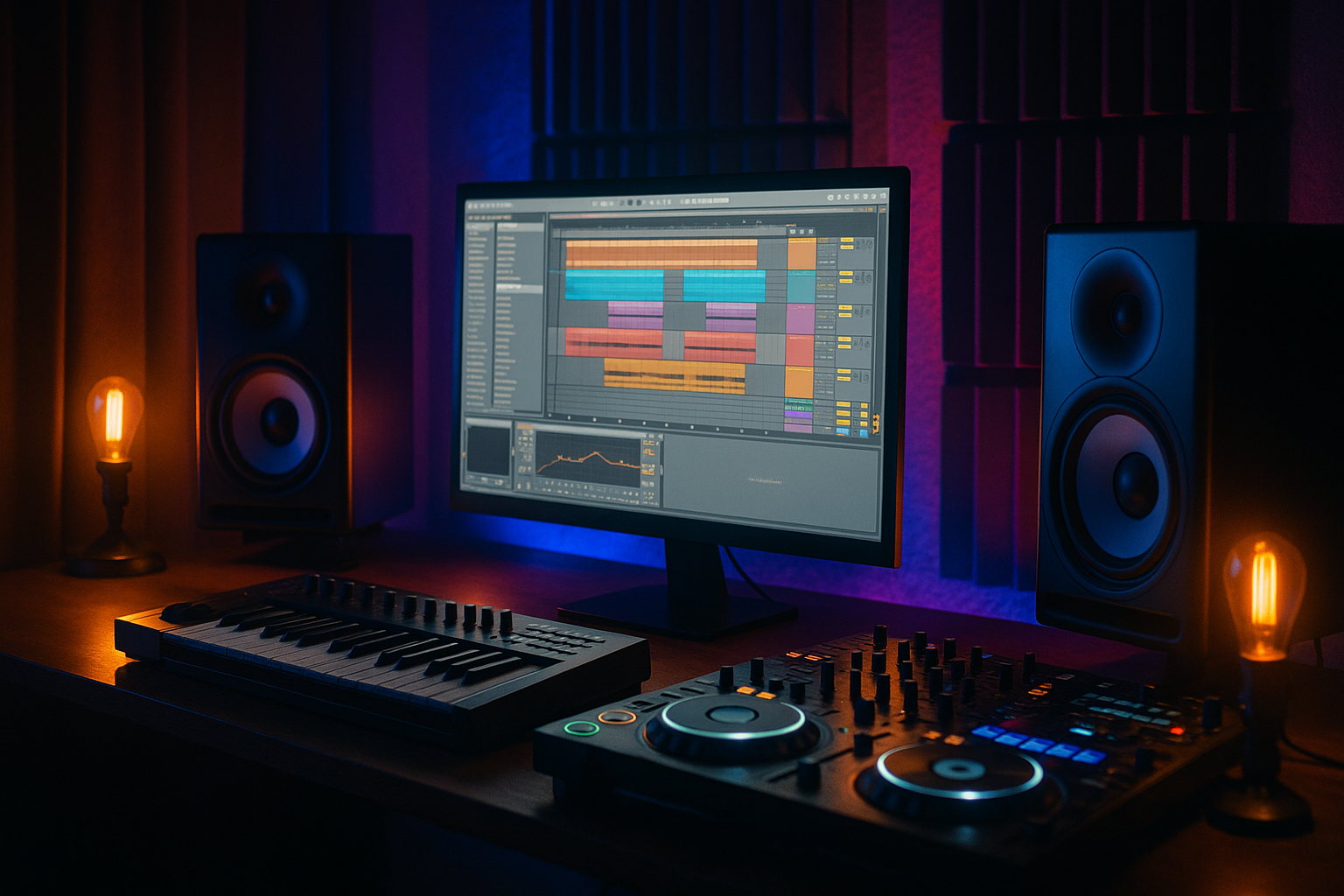
Key takeaways
- Start with clean routing, gain staging and level-matched references before processing.
- The kick and bass relationship is the foundation of a festival-ready mix.
- Wide drops still need a strong mono center and controlled low end.
- Clipping, saturation and bus processing can create loudness before mastering.
- Test every bounce in DJ software to judge real set compatibility.
- Export organised stems and premaster versions for faster revisions and mastering.
Edm mixing is where a good festival idea becomes a record that can survive big subs, open-air stages, DJ transitions and unforgiving club systems. If your drop feels huge in the bedroom but collapses next to Martin Garrix, Anyma, Fisher, Hardwell or Charlotte de Witte references, the problem is usually not one magic plugin. It is balance, headroom, low-end control, stereo discipline and smart loudness decisions working together.
This guide breaks down edm mixing in a practical way for aspiring DJs, bedroom producers and artists managing custom productions or ghost-produced stems. You will see specific tools such as Ableton Live, FL Studio, FabFilter Pro-Q 3, Valhalla VintageVerb, Xfer OTT, Kickstart 2 and Ozone, but the principles work in any DAW. The goal is simple: make your track hit hard, translate cleanly and feel ready for a festival set.
EDM Mixing Starts With a Festival-Ready Session
Before touching EQ or compression, organise the project so your decisions are fast and repeatable. A messy session makes edm mixing slower because every move feels isolated. A clean session lets you hear the relationship between drums, bass, synths, vocals, FX and the master bus.
Set up groups for drums, bass, music, vocals, effects and reference tracks. Color-code them, name important channels clearly and remove unused layers. If you received stems from a producer, ask for dry stems, wet stems and tempo/key information so the mix can be adjusted without guessing.
Set Gain Before You Chase Loudness
Start with all faders down, then build the mix around the kick. In edm mixing, the kick is often the anchor because it controls the perceived size of the drop. Aim for the kick peaking around -10 to -8 dBFS on the channel, then bring in bass, claps, hats, synths and vocals around it.
Leave the master peaking around -6 dBFS before mastering. This is not a law, but it gives your limiter, clipper and mastering chain room to work. If your premaster is already red, you are mixing into distortion rather than making musical choices.
Use References Like a DJ, Not a Fan
Pick three reference tracks that match your subgenre and intended set time. A big-room drop, a melodic techno peak-time record and a tech house roller do not use the same low end or transient shape. Level-match your references with a utility gain plugin so louder does not automatically sound better.
The fastest edm mixing reality check is switching between your mix and a mastered WAV reference at similar loudness. Listen for kick length, bass weight, clap brightness, vocal placement and how much reverb remains during the drop.
- Create drum, bass, music, vocal and FX buses before detailed processing.
- Keep a muted reference track routed directly to the master for quick checks.
- Use meters such as Youlean Loudness Meter and Voxengo SPAN from the start.
- Remove unused audio, hidden layers and duplicated MIDI that distract from balance.
Lock the Kick and Bass Before Anything Else
The low end decides whether a festival mix feels expensive or amateur. In edm mixing, the kick and bass should act like one machine, not two sounds fighting for the same frequency space. This is especially important for mainstage EDM, techno, tech house, trance, hardstyle and bass house.
Choose sounds that already fit. A long 808-style kick under a rolling offbeat bass can work, but only if the timing and tails are controlled. If the sample choice is wrong, EQ will not save it.
Tune and Shape the Kick
Use a spectrum analyser to find the kick fundamental, then check whether it supports the key of the track. You do not always need perfect tuning, but a kick that clashes with the bass note can make the drop feel cloudy. Shorten the kick tail with a sampler envelope or transient shaper before reaching for heavy EQ.
For four-on-the-floor records, keep the sub part of the kick focused and mono. Many festival systems sum the lowest frequencies, so wide sub energy can disappear or create phase problems.
Sidechain With Rhythm, Not Habit
Modern edm mixing depends on sidechain movement, but the curve matters more than the plugin. Kickstart 2, LFO Tool, ShaperBox, Trackspacer, Pro-C 2 and DAW stock compressors can all work. The key is matching the release to the groove.
A common edm mixing mistake is over-ducking the entire bass bus until the drop loses weight. Try splitting bass into sub and mid layers. Duck the sub strongly for kick clearance, then use lighter sidechain or dynamic EQ on the mids to keep the bass audible between kicks.
- Keep most sub energy below 100 Hz in mono.
- Use volume automation or sidechain curves for cleaner kick space.
- Check kick and bass phase by flipping polarity and listening for low-end loss.
- High-pass non-bass elements so the sub range stays uncluttered.
- Compare kick length against references, not just kick volume.
Build a Drop That Feels Wide Without Falling Apart
A festival drop needs impact, but impact is not the same as filling every frequency with stereo information. Good edm mixing creates contrast: mono punch in the center, wide harmonics at the sides and controlled ambience behind the lead elements.
Think in layers. Your main drop may have a mono or narrow core synth, a wide detuned layer, a high sparkle layer, a noise layer and short impact effects. Each layer should have a job. If two layers do the same thing, one of them is probably masking the other.
A Practical EDM Mixing Signal Chain for Leads
Start with cleanup EQ, then tone shaping, saturation, compression if needed, stereo control and final bus processing. For example: FabFilter Pro-Q 3 to remove mud around 250-500 Hz, Soundtoys Decapitator or Saturn 2 for harmonic bite, a light compressor for stability and Ozone Imager or Ableton Utility for width control.
In edm mixing, lead stacks often sound better when the bus is processed as one instrument. Route supersaws, plucks and support layers to a lead bus, then apply gentle glue. Avoid making every individual layer huge; the bus should be huge.
Control Width by Frequency
Do not widen the full spectrum blindly. Keep low mids tighter and push width in upper mids and highs. Mid/side EQ is useful here: trim harsh side information around 2.5-5 kHz if the drop feels painful, or add a small high shelf to the sides when the mix feels too narrow.
Check your drop in mono. If the main hook vanishes, your width is based on phase tricks rather than solid arrangement. Mono compatibility is still crucial when the track plays through club fills, livestreams, phones and festival delay stacks.
- Put the strongest hook element near the center.
- Use wide layers for excitement, not for the foundation.
- High-pass reverb returns to prevent low-mid fog.
- Automate width between breakdown, build and drop for contrast.
Make Drums Cut Through Big Synths
Drums give the crowd something to move to, so they must stay present when the synths and bass arrive. In edm mixing, a loud lead that hides the clap or snare will make the drop feel smaller, even if the master meter looks impressive.
Balance drums in context. Soloing a clap until it sounds perfect often leads to harshness in the full mix. Instead, loop the busiest part of the drop and make small moves while the lead, bass and FX are playing.
Use Transient Control Before More Volume
If a clap is buried, try a transient shaper such as SPL Transient Designer, Native Instruments Transient Master or Ableton Drum Buss. Add attack for snap, reduce sustain if the tail clouds the lead, then adjust level. This often works better than adding 6 dB of high shelf.
In edm mixing, drum transients compete directly with limiters. If you push every transient too hard, the final limiter will clamp down and flatten the groove. Clipping individual drum peaks lightly with StandardCLIP, KClip or Ableton Saturator can make drums sound louder without overloading the master.
Layer With Purpose
A festival clap stack might include a short center clap, a wider clap, a snare body layer and a tiny noise burst. EQ each layer so it owns a range. The body might sit around 180-250 Hz, the crack around 1-3 kHz and air around 8-12 kHz.
For hats and rides, watch 6-10 kHz. Brightness helps energy, but brittle highs become tiring on large PA systems. Use dynamic EQ to tame harsh hits only when they jump out.
- Clip drum buses lightly before the master limiter.
- Keep the main clap or snare consistent through the drop.
- Use room reverb sparingly so drums stay forward.
- Automate hat brightness for builds instead of leaving it static.
- Check drums at low volume; the groove should still be obvious.
Create Loudness Without Destroying Movement
Festival records are loud, but loudness should come from arrangement, clipping, saturation and controlled dynamics, not only from crushing the master limiter. Smart edm mixing makes the premaster feel powerful before mastering starts.
Use a staged approach. Instead of asking one limiter to do 8 dB of gain reduction, control peaks at the source, then groups, then master. This keeps the drop energetic and reduces pumping that does not follow the groove.
Clip Strategically
Soft clipping works well on drums, aggressive bass mids and sometimes the full premaster if used carefully. The idea is to shave fast peaks that steal headroom without changing the musical balance. Use oversampling when available to reduce aliasing.
A practical edm mixing chain might clip the kick by 1-2 dB, clip the drum bus by another 1 dB and let the master limiter work less. Always bypass-match levels because clipping can trick your ear by sounding louder.
Know Your Loudness Target
Club and festival masters are often louder than streaming-normalised playback, but there is no single magic LUFS number. Many modern EDM masters land roughly between -8 and -5 LUFS integrated, depending on genre and distortion tolerance. A hardstyle master and a melodic house master should not be treated the same.
Check short-term loudness during the drop, true peak level and how the mix feels after loudness normalisation. If the mix only sounds exciting because it is louder, it needs more arrangement contrast or better transient design.
- Control peaks on individual channels before the master.
- Use saturation for density, not just distortion.
- Compare references at matched loudness.
- Leave emotional breakdowns more dynamic than the drop.
- Avoid chasing loudness until the balance already works.
Use FX, Reverb and Automation Like an Arranger
Reverb, delay, risers, downlifters and impact FX are not decoration. They tell the crowd when to expect tension, release and movement. In edm mixing, FX should support the arrangement without washing out the groove.
Set up dedicated return tracks for short room, long hall, delay throws and special effects. This gives you consistent space across the mix and makes automation easier.
Keep Reverb Out of the Way
Use pre-delay to keep vocals and lead synths upfront. A 20-50 ms pre-delay can separate the dry sound from the reverb tail, especially in breakdowns. High-pass reverb returns around 150-300 Hz and low-pass them if the top end becomes fizzy.
For edm mixing, sidechaining reverb returns to the kick or lead can create space without muting the ambience completely. This is useful on supersaw drops where long reverb makes the hook feel big but can blur the transient.
Automate Energy Into the Drop
Automation is the hidden difference between a loop and a record. Raise noise, open filters, shorten reverb just before the drop, mute a few elements for a micro-break and automate delay throws on vocal words that lead into the chorus.
Use tools like Cableguys ShaperBox, Ableton Auto Filter, Gross Beat, Endless Smile or simple volume automation. The plugin matters less than the intention: create expectation, then leave enough empty space for the drop to hit.
- Automate reverb size between breakdown and drop.
- Sidechain long FX returns when the kick enters.
- Use reverse cymbals and uplifters to point toward transitions.
- Cut FX tails if they mask the first kick of the drop.
- Print complex FX to audio so you can edit them tightly.
Test the Mix Like a Working DJ
A mix is not finished when it sounds good on studio monitors at midnight. It is finished when it translates across headphones, small speakers, car systems and DJ playback. edm mixing should include real-world testing because festival tracks are designed to be played against other records.
Bounce a premaster and load it into Rekordbox, Serato or Traktor. Set cue points, check the waveform and mix it between two reference tracks. If the intro is too thin, the drop is too quiet or the outro is too crowded, you will feel it immediately.
Check DJ-Friendly Structure
Count your intro and outro in phrases. Most festival and club DJs prefer clean 8, 16 or 32-bar sections for mixing. If your track starts with a vocal, huge riser and no rhythm, it may be harder to blend in a set unless that is the creative point.
In edm mixing, the intro does not need full power, but it should contain enough rhythm and frequency information for beatmatching. Keep sub drops, surprise silence and extreme filter sweeps away from practical mix-in sections unless they are clearly intentional.
Export Versions for Honest Testing
Export a full mix, instrumental, extended mix and clean radio edit if relevant. Test the extended mix in a DJ flow, not only as a standalone song. A record can sound impressive on its own but still feel awkward between two tracks.
Listen at low volume the next morning. If the vocal, hook, kick and bass relationship still makes sense quietly, the balance is probably strong. If everything disappears except the hi-hats, revisit midrange and low-end decisions.
- Test the bounce in DJ software with beat grids and cue points.
- Compare the waveform density against similar released tracks.
- Play the mix quietly, loudly and through consumer earbuds.
- Check the first drop, final drop and outro separately.
- Take notes before reopening the DAW so you fix problems, not moods.
Prepare Stems for Mastering, Labels and Revisions
Whether you are finishing your own production or reviewing a custom track, clean file delivery makes revisions faster. edm mixing is easier to evaluate when stems are organised and exported from the same start point.
Print groups such as drums, kick, bass, music, vocals and FX, plus full wet and dry versions where useful. Use 24-bit WAV files at the project sample rate, and avoid normalising exports unless the engineer specifically requests it.
Print Safety Versions
Keep a premaster without master limiting, a loud reference bounce and stems with important effects printed. If the lead relies on a specific delay throw or sidechain rhythm, printing it avoids confusion later.
A strong edm mixing handoff includes BPM, key, sample rate, bit depth, mix notes and any plugins that are essential to the sound. If a label requests edits, you can respond quickly without rebuilding the session from memory.
Avoid Revision Chaos
Name files clearly: Artist_TrackName_126BPM_Fmin_Premaster_24bit.wav is much better than final_final_v7.wav. Keep revision numbers and dates consistent.
When you receive feedback, separate taste from technical issues. “Make it bigger” might mean louder drums, wider leads, more low-mid density or a stronger pre-drop gap. Ask for time-stamped notes and reference examples whenever possible.
- Export all stems from bar one so they line up perfectly.
- Keep a no-limiter premaster for mastering.
- Include BPM, key and version notes in the delivery folder.
- Save a loud demo bounce so collaborators know the intended energy.
- Archive the project before making major revision changes.
| Mix Task | Recommended Tools | Best Use | Watch Out For |
|---|---|---|---|
| Kick and bass space | LFO Tool, Kickstart 2, FabFilter Pro-Q 3 | Sidechain curves, dynamic EQ and sub cleanup | Over-ducking the bass until the groove loses weight |
| Drum loudness | StandardCLIP, KClip, Ableton Saturator | Shaving peaks before the master limiter | Clipping too hard and removing punch |
| Lead width | Ozone Imager, Ableton Utility, mid/side EQ | Widening upper harmonics while keeping the core stable | Phase cancellation when summed to mono |
| Reverb control | Valhalla VintageVerb, Pro-R, sidechain compression | Creating size without masking the drop | Low-mid buildup on return channels |
| Loudness checks | Youlean Loudness Meter, Ozone Maximizer, SPAN | Comparing LUFS, true peak and frequency balance | Chasing numbers instead of translation |
Further reading
- Ableton Live manual — Ableton provides official documentation on routing, audio effects, warping and exporting, which supports accurate production workflow guidance.
- Sound On Sound mixing — Sound On Sound is a respected professional audio publication with in-depth engineering, mixing and production technique articles.
Frequently asked questions
What is edm mixing for festival tracks?
edm mixing for festival tracks is the process of balancing drums, bass, synths, vocals, FX and loudness so the record translates on large sound systems. It focuses heavily on kick and bass control, mono-compatible sub, clear transients, wide but stable leads and enough headroom for a powerful master.
How loud should an EDM premaster be?
A premaster should usually peak around -6 dBFS and avoid master limiting unless a loud demo is also requested. The exact level is less important than clean headroom, no clipping on the master and a balanced mix. Keep a separate loud reference bounce for A/B listening.
Should EDM bass always be mono?
The deepest sub bass is usually safest in mono, especially below about 80-100 Hz. Mid-bass harmonics can be wider if they remain phase-stable. Use a correlation meter and mono checks to make sure the bass does not disappear on club systems or summed playback.
What plugins are best for EDM drop mixing?
Useful choices include FabFilter Pro-Q 3 for EQ, Kickstart 2 or LFO Tool for sidechain, StandardCLIP for clipping, Valhalla VintageVerb for space, OTT for controlled excitement and Ozone for final limiting checks. Stock DAW plugins can also work if the balance and routing are strong.
Why does my EDM drop sound small after mastering?
The drop may be over-limited, too wide in the low end, masked by reverb or lacking midrange punch. A small-sounding master often starts with mix issues. Check kick length, bass phase, lead layering, drum transients and whether the limiter is doing too much gain reduction.
How do I test if my mix is club ready?
Load the bounce into DJ software, mix it between reference tracks, check cue points and listen on several systems. A club-ready mix should keep its kick, bass, hook and groove at low and high volume. Also check mono compatibility and extended intro/outro usability.
Conclusion
edm mixing for festival style is not about copying one loudness number or adding the same sidechain preset to every channel. It is a chain of decisions: clean gain staging, a locked kick and bass relationship, purposeful width, controlled drums, musical FX and honest testing in a DJ context. When those pieces work together, the master can become loud without losing movement.
For your next session, choose one reference track, rebuild your low end around the kick, then test the bounce in your DJ software before making final tweaks. That practical loop will teach you more than endlessly adjusting plugins in solo.
Edm mixing — Quick Recap
The fastest way to lock in edm mixing is to internalise the workflow above and repeat it on every project. Start small: pick one technique from this edm mixing guide, apply it to your next session, and audit the result against a reference track.
- Start with clean routing, gain staging and level-matched references before processing.
- The kick and bass relationship is the foundation of a festival-ready mix.
- Wide drops still need a strong mono center and controlled low end.
- Clipping, saturation and bus processing can create loudness before mastering.
Treat edm mixing as a habit, not a one-off — the producers who consistently nail edm mixing are the ones who run the same checks on every track. That’s the difference between a clean, club-ready master and a track that sounds great at home but falls apart on a real system.
In a real studio session, edm mixing comes down to the order in which you make decisions: reference first, gain stage second, then the creative work. Producers who treat edm mixing as a checklist instead of a vibe end up shipping more tracks.
Most producers and DJs undervalue edm mixing because the wins are invisible until the track plays back on a real system. Bake edm mixing into your template and the next ten projects benefit automatically.
When you struggle with edm mixing, the fix is rarely a new plugin. Loop a problem section, A/B against a reference, and isolate which element is breaking your edm mixing.
Treat edm mixing as a craft, not a chore. The producers releasing on the biggest labels lock edm mixing in early so they can spend their energy on melody and arrangement instead of fighting the mix.
My Career makes videos from your own track and posts them for you, pitches your release to 34,000+ labels, playlists, radio stations, YouTube channels and blogs, puts it in every store and briefs you every morning. Free plan, no card, two minutes to set up.


