
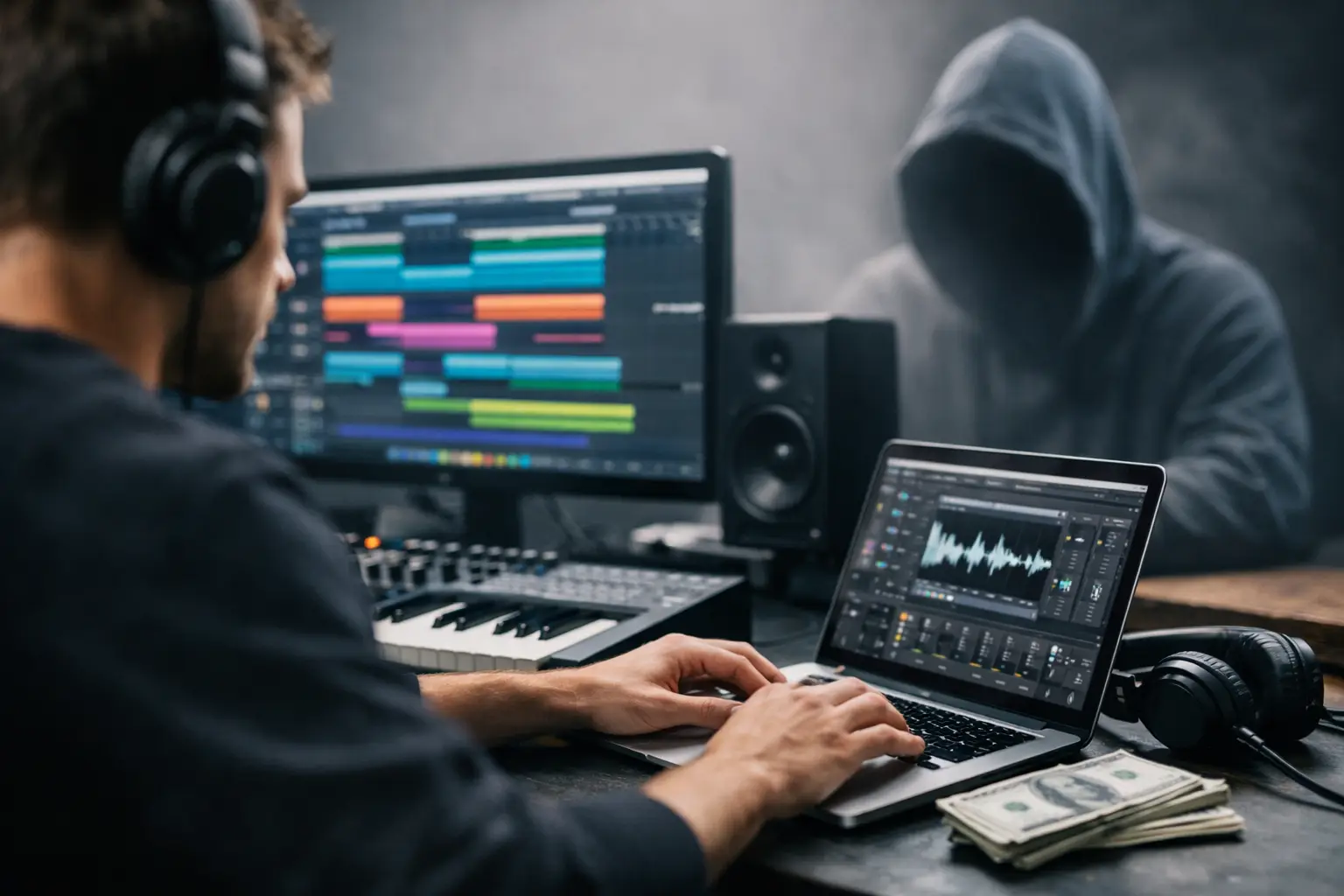
How an EDM Ghost Producer Marketplace Works
Release schedules do not slow down because your studio time disappeared. If you are touring, running a label, or trying to stay visible in a crowded EDM niche, the real problem is rarely ideas. It is execution at a professional level, on a deadline, without compromising your brand.
That is where an EDM ghost producer marketplace becomes a practical business tool rather than a shortcut. For serious artists and label teams, the value is not just getting a track. It is getting a release-ready asset with clear ownership, confidentiality, and enough production quality to hold up on streaming platforms, DJ sets, and label submissions.
What an EDM ghost producer marketplace actually sells
A true EDM ghost producer marketplace is not just a listing board where anonymous producers upload unfinished demos. At a professional level, it functions more like a specialized production supply chain for electronic music.
The core offer is usually one of two models. The first is a catalog of finished tracks that are available for exclusive purchase. The second is custom ghost production, where a buyer commissions a producer to create a track around a target sound, subgenre, tempo range, arrangement style, or release brief.
The difference matters. A ready track is built for speed. You can review the preview, confirm the production level, and move quickly if it fits your artist project. Custom work is better when your release needs to sound highly specific or align with an established sonic identity.
In both cases, serious buyers should expect more than an audio file. The standard should include stems, project files, professional mix and master, and full copyright transfer. Without those deliverables, you are not really buying production infrastructure. You are only buying a song file, and that limits your flexibility later.
Why artists use an EDM ghost producer marketplace
The usual assumption is that ghost production is only for artists who cannot produce. That is an outdated view of how the EDM business works.
Many buyers are already producers. They know arrangement, sound selection, and mix decisions well enough to judge quality. What they do not have is unlimited time. Touring artists lose studio hours to travel. Label owners need a consistent stream of commercially viable music. Emerging acts often need stronger releases now, not six months from now after endless revisions.
An EDM ghost producer marketplace solves a specific operational problem. It compresses the time between needing music and having a professional release package in hand.
That speed has strategic value. In fast-moving genres like Tech House, Afro House, Techno, and Hardstyle, momentum matters. If your release schedule becomes inconsistent, audience growth slows, label relationships weaken, and your catalog starts to look thin compared to competitors who stay active.
There is also a quality-control advantage. A marketplace built around verified producers gives buyers access to specialists who already understand genre conventions, sound design expectations, arrangement structure, and commercial polish. That is very different from hiring random freelancers with no proven EDM track record.
The non-negotiables buyers should look for
Not every marketplace deserves the same level of trust. If you are evaluating one, the real question is not whether tracks sound good in a preview. It is whether the transaction protects your brand and your release process.
Exclusivity should be the first filter. A sold-once model is critical if you are releasing under your artist name or signing music to a label. If a track can be sold more than once, you are taking on avoidable risk. Your release could end up sounding identical to someone else’s, and that is a brand problem, not just a legal one.
Producer verification is the next issue. Serious platforms do not rely on open uploads from anyone with a DAW. They vet producers for technical quality, genre fit, and consistency. That reduces the chance of buying a track that sounds polished in a 60-second preview but falls apart in the full arrangement.
Rights transfer also needs to be explicit. You should know whether you are receiving full copyright ownership, whether project files are included, and whether an NDA framework is available. If those details are vague, the risk shifts to the buyer.
The last non-negotiable is deliverable quality. Release-ready should mean exactly that. The track should be professionally mixed and mastered for immediate distribution, with stems and source files available if you want edits, alternate versions, or future performance use.
Ready tracks vs custom ghost production
For many buyers, this is the decision that matters most.
Ready tracks work best when speed is the priority. You can browse by subgenre, BPM, key, or mood, identify a track that fits your project, and secure it before another buyer does. This model is efficient for artists who want immediate access to high-quality music and for labels that need to fill release slots without waiting through a full production cycle.
The trade-off is obvious. Even with exclusive ownership, the track was not originally built around your exact artistic brief. It may fit your sound closely, or it may need some edits after purchase to feel fully aligned.
Custom ghost production is the better route when precision matters more than speed. If you are trying to match a specific brand identity, reference a current live set direction, or build a release around a label strategy, custom work gives you more control. You can define the arrangement energy, drum style, bass character, vocal treatment, and overall emotional profile from the start.
The trade-off there is timeline. Custom production usually involves revisions, approval stages, and more communication. That is not a drawback if the objective is a stronger fit. It simply means the best option depends on whether your pressure point is speed or specificity.
How the buying process should work
A professional marketplace should remove friction, not add it.
For ready tracks, the process should be simple. You review previews, filter by the details that matter to your release plan, purchase the track, and receive the full package quickly. That package should include the mastered version, stems, project files, and clear rights documentation. At that point, you can release the music under your own artist identity, make approved edits from the source files, or hand it to your label team for distribution prep.
For custom projects, the process should still be structured. You provide a brief, genre direction, references, and technical preferences. The producer delivers according to that brief, revisions are managed professionally, and the final files are transferred with the same ownership and confidentiality standards as a catalog purchase.
This is where process transparency matters. Buyers are not just paying for creativity. They are paying for predictability. A marketplace that defines what is included, how revisions work, and what rights transfer at completion is far easier to trust.
Why confidentiality and ownership matter so much
In EDM, perception is part of the product. Your audience sees the artist name, not the production chain behind it. That is why confidentiality is not a side feature. It is part of the commercial value.
A proper NDA framework gives buyers room to build and release under their own brand without creating unnecessary exposure around the production process. For many professionals, that is standard risk management. It keeps the focus where it belongs – on the release, the audience response, and the growth of the artist project.
Ownership is just as important. If you are investing in a track, you need the legal and practical ability to exploit it fully. That includes release rights, monetization rights, and the freedom to adapt assets for edits, radio versions, instrumental cuts, or future derivative use where permitted by the agreement.
Without full rights transfer, a ghost-produced track can become a limitation later. With it, the track becomes part of your catalog like any other owned asset.
What separates a serious marketplace from a risky one
The best platforms are built for repeat buyers, not one-off impulse purchases. They understand that artists, managers, and labels need consistency, not just occasional luck.
That means exclusive inventory, verified producers, secure payment handling, and clear deliverables are not marketing extras. They are baseline infrastructure. It also means the platform should make it easy to source tracks by practical release criteria instead of forcing buyers to guess. Filters by genre, BPM, and key are useful because they match how working artists and A&R teams actually evaluate material.
A marketplace like The Ghost Production is positioned around exactly those professional standards – exclusive tracks sold once, verified producers, full rights transfer, and release-ready delivery. That model reduces uncertainty for buyers who need dependable output, not experiments.
The bigger point is simple. An EDM ghost producer marketplace works best when it is treated as a professional production partner. If you choose based only on price, you may save money upfront and lose time later on poor quality, unclear ownership, or tracks that do not hold up in the market.
The smarter move is to buy like a business. Choose exclusivity, verified quality, and full control over the final asset so every release adds value to your catalog instead of adding risk.