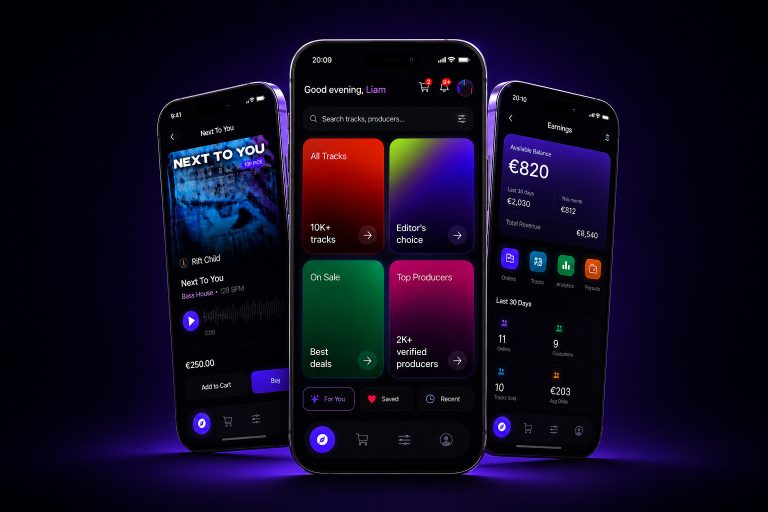
If you are buying from an EDM catalog, you are not shopping for inspiration. You are making a release decision that affects your brand, schedule, and revenue. A solid EDM catalog buying guide starts there. The right track can fill a gap in your release calendar and strengthen your sound. The wrong one creates avoidable problems – weak fit, unclear rights, poor mixdowns, or a track that needs more work than expected.
That is why serious buyers do not evaluate catalog music like casual listeners. They evaluate it like operators. You need to know whether a track is exclusive, whether the producer is credible, whether the files are complete, and whether the record can move from purchase to release without slowing down your campaign.
What an EDM catalog buying guide should help you avoid
Most mistakes happen before checkout. Buyers hear a strong drop, get excited, and ignore the details that actually determine value. In this market, exclusivity matters, but exclusivity alone is not enough. You also need professional arrangement, current sound selection, clean engineering, and paperwork that leaves no ownership ambiguity.
A catalog track only saves time if it arrives ready for real-world use. That means the mix and master should already meet release standards. The stems and project files should be organized well enough for your engineer or team to work fast. The rights transfer should be explicit. If any of those pieces are weak, a supposedly fast purchase turns into revision management.
For independent artists, that usually means release delays and extra cost. For labels and management teams, it means friction across A&R, branding, and delivery.
How to evaluate an EDM catalog before you buy
The first filter is musical fit. Not whether the track is good in isolation, but whether it sounds like something your audience will accept under your name. That includes subgenre, groove, energy curve, vocal style, and overall polish. A hard-hitting Tech House record may be excellent, but still wrong for an artist who has built momentum around darker, more minimal club records.
Pay attention to the details that define identity. BPM and key are useful technical filters, but they do not tell you enough on their own. The real question is whether the track supports your positioning. Does it sound current without feeling generic? Can you imagine it next to your recent releases or within your label’s catalog? If the answer is uncertain, the track may create more brand confusion than momentum.
The second filter is arrangement quality. Strong catalog tracks are not just built around a big hook. They are structured to hold attention in DJ sets, on streaming platforms, and in editorial review. Listen for transitions, tension control, and payoff. A track that peaks too early or drags through the break may still sound impressive for 30 seconds but underperform once released.
The third filter is engineering. You are buying speed, so the mixdown and master need to reduce work, not create it. Low-end balance, vocal placement, stereo width, transient control, and limiter behavior all matter. If the master is overcooked or the mix feels narrow and unstable, your team may end up rebuilding parts of the record.
The rights questions that belong in every EDM catalog buying guide
This is where many buyers cut corners, and it is one of the costliest places to do it. Before you purchase, confirm whether the track is sold once or licensed multiple times. If you are building a real artist project, sold-once exclusivity is the safer standard. It protects your release from appearing in another artist’s catalog and reduces long-term brand risk.
Then verify what ownership actually includes. You should know whether you receive full copyright transfer, whether all underlying production elements are cleared, and whether you can release the track commercially under your own artist identity without future claims. If the platform uses NDA protections, that is another positive signal because confidentiality is part of the value proposition in professional ghost production.
Do not treat rights language as a formality. It is part of the product.
What files you should expect with a serious catalog purchase
A professional catalog purchase should include more than a WAV and MP3. If you want flexibility after purchase, stems and project files matter. They allow you to customize the arrangement, swap vocals, tighten the low end, extend DJ intros, or adapt the record to your label’s final spec.
Project files are especially valuable for artists who want ownership with room to personalize. They give your engineer or co-producer direct access to the structure and sound design choices behind the track. That speeds up revisions and makes the purchase more usable across different release scenarios.
File quality also signals whether the seller understands professional workflows. Cleanly labeled stems, consistent exports, and usable session files save hours. Messy delivery does the opposite.
EDM catalog buying guide for artists vs labels
Artists and labels should buy differently because their risk profile is different.
If you are an artist, your main concern is fit. The track has to sound credible under your name and support your long-term positioning. A great catalog record is not just a shortcut. It is a release that your audience believes in. That is why many artists should be more selective than they think, even when a track sounds commercially strong.
If you are a label buyer, you are balancing fit with operational efficiency. You may be filling multiple release slots across several artists or testing records for different directions. In that case, consistency of deliverables becomes just as important as the music itself. Verified producers, reliable files, full rights transfer, and immediate access all reduce friction in the release pipeline.
For both groups, speed matters. But speed without control is not a real advantage.
Red flags to watch for in an EDM catalog buying guide
There are a few signals that should slow you down.
If the platform does not clearly state exclusivity terms, assume you need more information. If deliverables are vague, ask what is included before you commit. If the producer quality seems inconsistent across the catalog, that usually points to weak curation. If the audio preview sounds strong but the process for rights transfer is unclear, the risk is higher than the convenience is worth.
Another red flag is catalog volume without quality control. A large catalog can be useful, but only if the tracks are curated to a professional standard. More options are not better if most of them would never survive your release review process.
Price can also be misleading. The cheapest track is often the most expensive one after revisions, legal uncertainty, and missed release timing. Serious buyers calculate total release cost, not just purchase cost.
How to make the final buying decision
Once a track passes your music, rights, and file checks, make the final decision based on release utility. Ask yourself how quickly this can become a finished asset in your campaign. Can it be released as is? Does it need minor personalization? Will it strengthen your catalog, support your next show cycle, or help maintain consistency while you focus on touring or other production work?
That is the real benchmark. Not whether the track is exciting for a moment, but whether it helps you move with less friction.
This is also where a platform like The Ghost Production fits naturally for serious buyers. The value is not only in access to ready tracks. It is in sold-once exclusivity, verified producers, full rights transfer, stems, project files, and release-ready delivery that reduces production risk from day one.
Why the best catalog buyers think beyond the preview
A preview gets your attention. The backend determines whether the purchase performs.
Experienced buyers know that catalog music is not a compromise when the process is built correctly. It is a professional production solution. If your schedule is full, your standards are high, and your brand cannot afford weak releases, then buying from a curated catalog can be one of the most efficient ways to maintain output without sacrificing ownership or confidentiality.
The key is buying like a professional. Choose tracks that match your market position, confirm every rights detail, and prioritize deliverables that let you release fast without losing control. The best purchase is not the one that sounds biggest in the browser. It is the one that still looks smart when the release date is on the calendar.
My Career makes videos from your own track and posts them for you, pitches your release to 34,000+ labels, playlists, radio stations, YouTube channels and blogs, puts it in every store and briefs you every morning. Free plan, no card, two minutes to set up.