
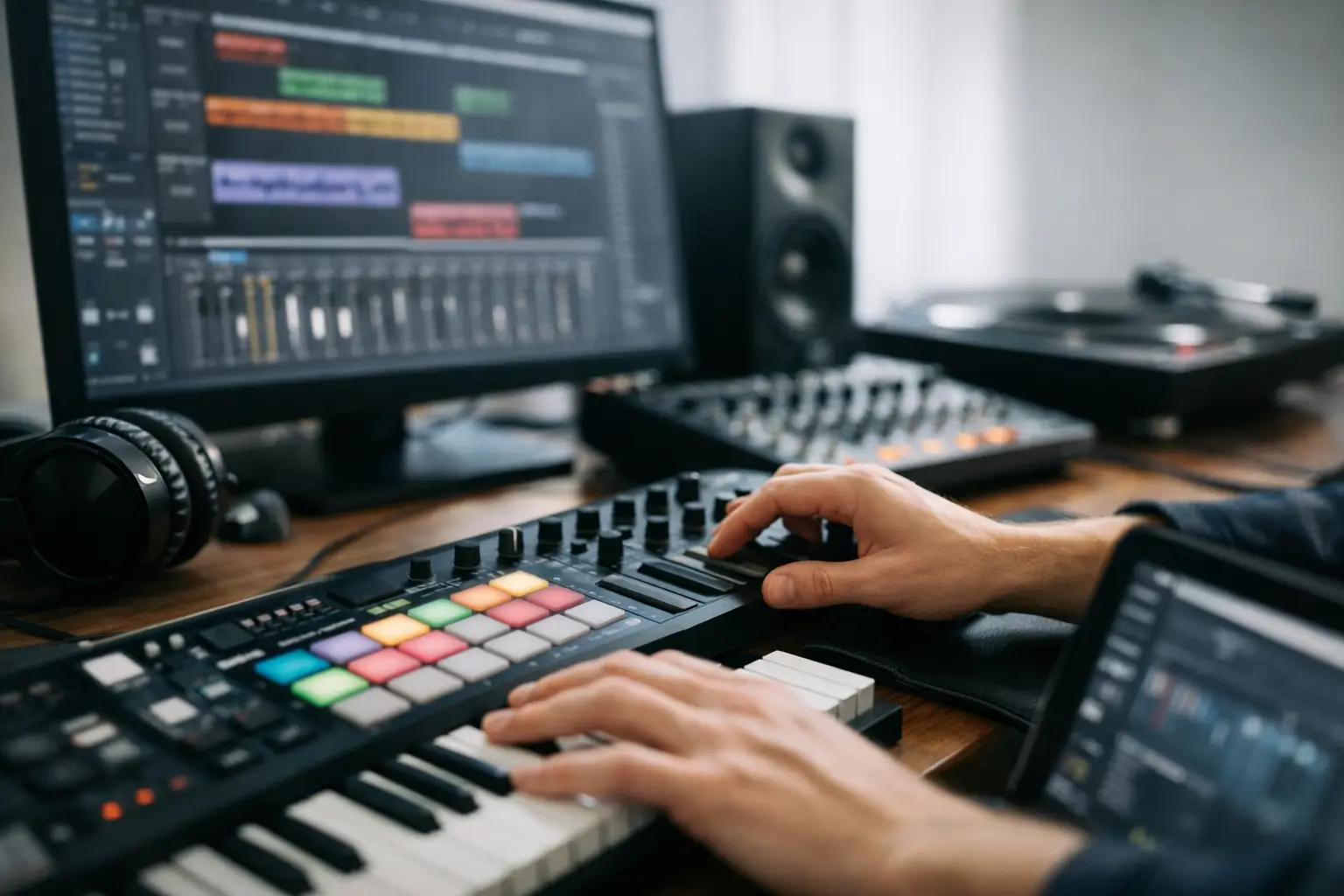
Custom Tech House Tracks Without the Wait
A release calendar does not care that you were on the road all weekend, stuck in revisions on another record, or trying to force an idea that never turned into a strong drop. If you need fresh Tech House that fits your brand and is ready to release on schedule, custom ghost production is not a shortcut. It is a professional production solution.
That distinction matters. In a crowded genre where small details decide whether a record feels playlist-ready or forgettable, a Tech House ghost production custom track gives artists and labels a way to stay consistent without sacrificing quality, exclusivity, or ownership.
What a Tech House ghost production custom track actually means
A custom track is built around your direction, not pulled from a catalog and lightly edited. You define the reference point – groove, energy level, vocal approach, bass character, arrangement style, BPM range, key preferences, and intended use. That might be a club-focused roller for peak-time sets, a more minimal cut for warm-up slots, or a crossover Tech House record with stronger commercial hooks.
The ghost producer handles the production workload from the ground up. That usually includes composition, sound selection, drum programming, arrangement, mixing, and mastering. In a professional model, you also receive the stems and project files, not just a bounced master. That gives you practical control after delivery if you want to edit, test alternate intros, adjust vocals, or prepare label-specific versions.
The business side is just as important as the creative side. A serious custom production deal should include full copyright transfer and an NDA framework so you can release the record under your own artist name with confidentiality protected. If that is missing, you are not getting the level of control most buyers actually need.
Why Tech House is one of the strongest use cases for custom production
Tech House moves fast, but not always in obvious ways. Trends can shift from punchy, stripped grooves to denser low-end design, from spoken-word hooks to more rhythmic vocal chops, from rolling percussion to harder festival-driven drops. If you are trying to keep up while touring, managing releases, or building a label pipeline, production bottlenecks become expensive.
This is where custom work outperforms a generic production service. Tech House is simple enough on paper that weak production gets exposed quickly. The swing feels wrong. The kick and bass do not lock. The vocal sits awkwardly. The drop lacks tension. The arrangement drags. In this genre, small flaws are not hidden by complexity.
A custom process allows you to dial in the details that define artist identity. Maybe your records need a more underground drum palette. Maybe you want cleaner topline space for guest vocals. Maybe your audience responds better to darker groove structures than to mainstream festival energy. Custom production solves for those specifics.
Custom vs ready-made tracks
Both models can work. The right one depends on your timeline and how specific your creative target is.
A ready-made exclusive track is ideal when speed is the priority and you find something that already fits your sound. If the groove, arrangement, and sonic direction are close enough, buying a sold-once track can be the fastest route from search to release.
A custom track makes more sense when the fit needs to be exact. That includes artists refining a signature sound, labels commissioning records for a defined roster, and DJs who need music tailored to their set energy rather than browsing for a near match. It is also the better option when references matter. If you can clearly say what you want more of and what you want less of, custom work gives you tighter control.
The trade-off is time. A custom record takes longer than purchasing something already finished. But if you are trying to build a catalog that sounds coherent from release to release, that extra precision often pays off.
What to ask for before commissioning a custom Tech House track
The brief determines the outcome. Vague direction leads to generic results, and generic results are usually what serious buyers are trying to avoid.
Start with the role of the track. Is this meant for club testing, streaming growth, label pitching, or a specific event window? Then define the sonic lane. BPM, key preferences, groove references, vocal style, bass weight, percussion density, and energy arc all help narrow the target.
It also helps to be explicit about what you do not want. If you are avoiding overly commercial builds, techier drum textures, certain sample clichés, or trend-heavy vocal edits, say so upfront. The fastest way to a usable final version is a clean brief with clear guardrails.
Deliverables should be equally clear. At minimum, you should know whether the package includes the master, mixdown, stems, and project files, and whether the rights transfer is complete. If you plan to adapt the track later, project assets are not optional. They are part of the value.
The production process that serious buyers should expect
A professional custom workflow should feel controlled, not improvised. First comes the brief and reference review. The producer needs enough direction to define the sonic target and release objective.
Next comes composition and arrangement. In Tech House, this stage matters more than many buyers realize. A strong loop is not a finished record. The track needs movement, tension, transitions, and a structure that supports both club play and listener retention.
Then comes mixdown and master. This is where many low-cost services fall apart. The idea may be usable, but the record is not release-ready. A proper service closes that gap so the track can move directly into distribution, promo, or label submission without requiring another round of outside engineering.
Revision handling is another key indicator of quality. Efficient custom production does not mean unlimited guesswork. It means there is a defined process for refining the result against your brief. If revisions are structured around practical checkpoints, the project moves faster and the final record stays aligned with your goals.
Why ownership and confidentiality are not minor details
For many buyers, the biggest question is not whether ghost production works. It is whether the business framework is secure.
That concern is valid. If you are investing in custom music for your artist brand or label, you need clarity on who owns what, what files are included, and whether the producer has any residual claim. Full rights transfer matters because it eliminates ambiguity. You are not licensing a beat with restrictions. You are acquiring a track for your own release strategy.
Confidentiality matters for the same reason. Professional ghost production is built around discretion. With an NDA framework in place, artists can protect their process, maintain brand consistency, and release with confidence.
That is one reason platforms like The Ghost Production are positioned as production partners rather than casual marketplaces. Verified producers, sold-once exclusivity, full rights transfer, stems, project files, and release-ready delivery reduce the risk buyers usually worry about most.
Who benefits most from this model
Touring DJs benefit because production time is usually the first thing to disappear when travel ramps up. Independent artists benefit because they can maintain release frequency without trying to do every stage of production themselves. Labels benefit because they can source exclusive records faster and keep a schedule moving without sacrificing consistency.
This model also works well for producers who have strong taste and market awareness but do not want every release bottlenecked by technical execution. If you know your lane, know your audience, and know what makes a Tech House record effective, custom ghost production can help you scale output without diluting your identity.
That said, it is not for everyone. If you want full hands-on creative control over every channel strip and arrangement decision, you may prefer to produce internally. If budget is the only decision factor, low-cost options will always exist, but they often create more work later in revisions, re-mixing, or rights confusion.
How to know you are choosing the right service
The right provider is transparent about process, deliverables, ownership, and exclusivity. You should know what you are receiving, when you are receiving it, and how the rights are handled. You should also know whether the producer has credible experience in the genre you are buying.
In Tech House, genre fluency is non-negotiable. A capable producer understands groove tension, drum placement, bass movement, and arrangement pacing specific to the style. That is different from simply being able to make electronic music.
Look for a service built around release-ready standards, not just idea generation. A custom track is only valuable if it arrives as an asset you can actually use.
The best custom records do not sound outsourced. They sound like your project moved forward on time, at a professional standard, with your identity intact. That is the real advantage. Not less effort for the sake of convenience, but a cleaner path from concept to release when your schedule leaves no room for missed cycles.
If your next Tech House release needs to be precise, exclusive, and ready to go, the smartest move is often the one that keeps momentum on your side.